
How To Introduce A New Dog To Cats: Calm, Safe Steps
Learn how to introduce a new dog to cats with stress-free steps, timelines, and pro tips for harmony at home. Start right and prevent fights from day one.
Go slow: swap scents, use barriers, reward calm, and build trust step by step.
You want a home where whiskers and wagging tails can share space without stress. I’ll show you how to introduce a new dog to cats with a method I use in real homes. It is clear, kind, and backed by behavior science. If you follow this guide, you can avoid chaos and set up peace from day one.

Start With Temperament: Are They Ready?
Before you plan how to introduce a new dog to cats, study who they are. Temperament matters more than breed. Look at their past, their play style, and how they handle change. Go slow if your dog has prey drive or your cat spooks easy.
Signs they may be ready for a careful intro:
- The dog can relax near small animals at a distance.
- The cat will eat, groom, or nap with mild noise around.
- Both can learn a simple cue with treats.
- Neither guards food or space from people.
Green flags I watch for:
- The dog can look away when called.
- The cat can pass a door where the dog waits and still purr or play.
Red flags that need a plan first:
- Hard stare, stalking, or lunging.
- Hiding, hissing, or not eating for a day or more.
Prep The Home For Success
Good prep is half the job in how to introduce a new dog to cats. Set the home so no one feels trapped. Give the cat safe height, safe rooms, and quiet paths. Give the dog a calm place to rest and chew.
Do this first:
- Set up at least one cat-only room with litter, food, water, and beds.
- Add baby gates with cat doors or use tall gates the cat can clear.
- Place cat trees and shelves so your cat can travel high.
- Create a dog zone with a crate or bed, chews, and a water bowl.
- Scent-swap with two clean towels. Rub one on the cat, one on the dog. Trade daily.
Feeding plan:
- Feed near the closed door at first. Close means safety. Reward calm.
- Use food puzzles to drain energy and lower stress.
:strip_icc()/puppy-and-cat-look-at-each-other-through-babygate-167062144-5c3b7b40c9e77c000104ee0a.jpg)
The 5-Phase Plan To Introduce Dog And Cat
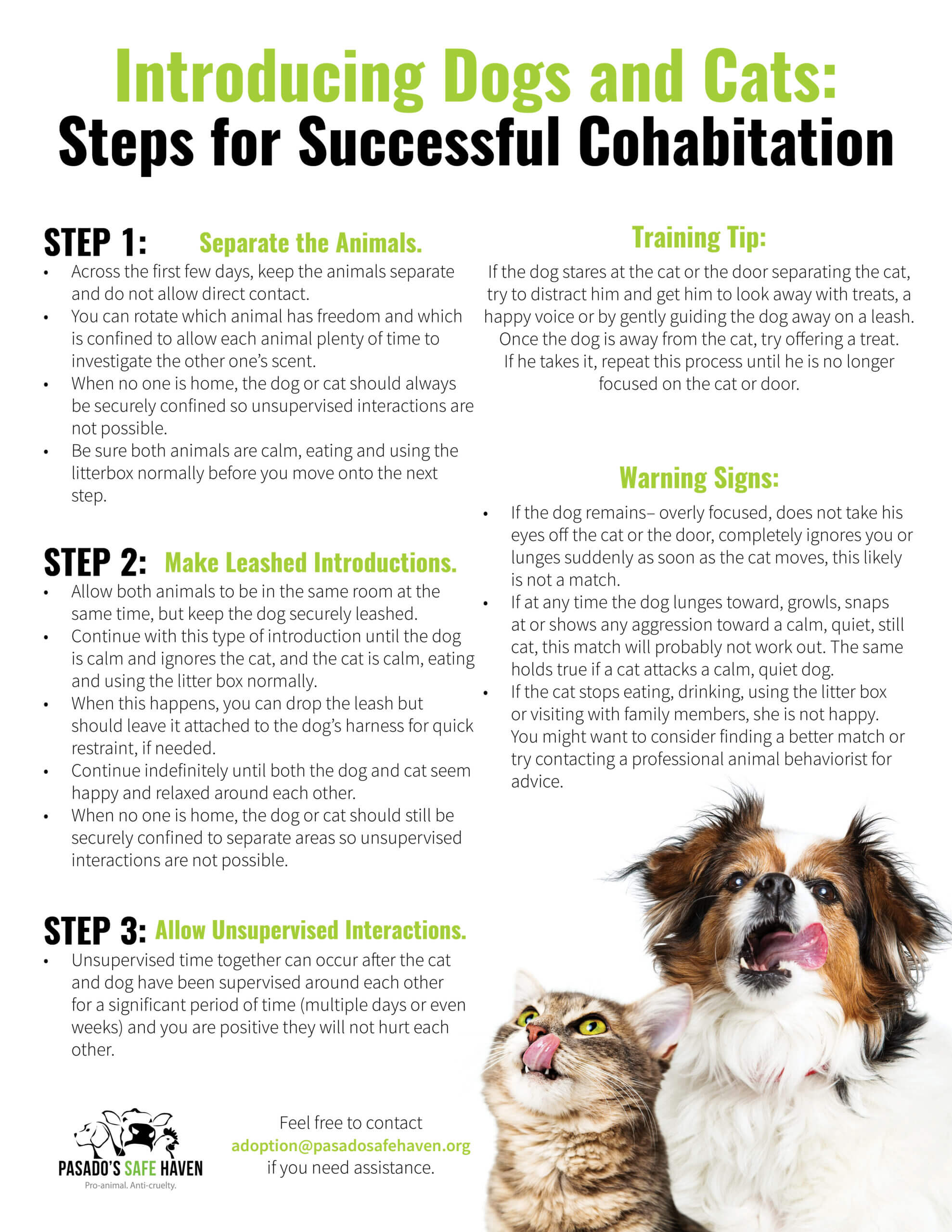
Here is my field-tested plan for how to introduce a new dog to cats. Move to the next step only when both are calm for two days in a row.
Phase 1: Scent only
- Swap bedding each day.
- Place the dog towel near the cat’s food. Place the cat towel near the dog’s bed.
- Reward any calm sniff and walk-away.
Phase 2: Sounds and doors
- Feed on both sides of a closed door.
- Play recorded pet sounds at low volume while they eat or chew.
- Train the dog to settle on a mat in view of the door.
Phase 3: Barrier views
- Use a gate or cracked door with a wedge.
- Keep the dog on leash. Let the cat choose to look or leave.
- Mark and reward any glance-and-look-away from the dog.
- Keep sessions short, about 3 to 5 minutes, a few times per day.
Phase 4: Parallel time
- Walk the dog and carry the cat in a carrier across the room. Keep space.
- Or let the cat roam while the dog stays on a mat, on leash.
- Practice “Leave it,” “Watch,” and “Mat.” Pay well for calm.
Phase 5: Supervised loose time
- Drop the leash but keep it attached as a “drag line.”
- Keep exits clear for the cat. Keep toys and food put away.
- End on a calm note after 2 to 5 minutes. Build time slowly.
Progress rules:
- If either shows stress, go back a phase for a day or two.
- Small wins beat long sessions.
Read Their Body Language Like A Pro
Knowing how to introduce a new dog to cats means you must read the room. Calm is the cue to move on. Tension means slow down.
Cat signs:
- Relaxed tail, soft blinks, and slow grooming mean chill.
- Puffed tail, ears flat, fast swishing tail, and freeze mean stress.
- Hiding and not eating mean you moved too fast.
Dog signs:
- Loose body, soft eyes, and slow tail sweeps are good.
- Hard stare, still body, stiff tail, and closed mouth mean risk.
- Whining while fixating means slow down and add distance.
Quick reset tips:
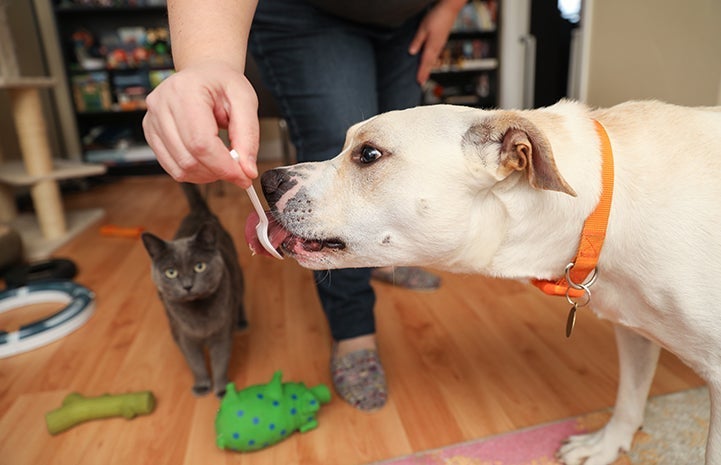
- Feed or scatter treats away from each other.
- Ask for a known cue. Reward the turn of the head or any blink.

Training That Makes It Work
Solid skills make how to introduce a new dog to cats much safer. Train short, fun reps. Pay with tiny, tasty treats.
Teach your dog:
- Leave it. Dog looks away on cue. Mark and treat.
- Watch. Dog makes eye contact with you. Pay big.
- Mat or Place. Dog lies on a bed while the cat moves. Reward often.
- Recall. Keep it easy and joyful.
Help your cat too:
- Clicker train a target touch to move them to safe spots.
- Reward calm near the gate with a lick treat.
- Teach “Up” to a perch for quick escapes.
Make rewards smart:
- Pay for calm looks away from the other pet.
- Use sniff breaks. Sniffing drops arousal for most dogs.

Safety And Management You Can Trust
Strong management is the backbone of how to introduce a new dog to cats. It keeps small errors from turning big.
Use these tools:
- Baby gates, pens, and doors to split space.
- A drag line on the dog during the first loose times.
- Vertical space for cats in every shared room.
- Covered litter boxes in cat-only zones, not shared halls.
Daily rhythm:
- Rotate free time. One out, one resting, then swap.
- Short, sweet meetings. End before someone gets amped.
- Put food, toys, and chews away during meets.
Night plan:
- Keep them split at night for the first weeks.
- Give both a last snack and potty break to lower fuss.

Troubleshooting Common Setbacks
Even with a good plan for how to introduce a new dog to cats, hiccups can pop up. That is normal. Fix the cause, not just the scene.
If the dog fixates or stalks:
- Add distance. Ask for Watch or Mat. Reward a head turn.
- Do more short barrier sessions. Use higher value treats.
- Add scent work or sniff walks to tire the brain.
If the cat swats or chases:
- Raise perches. Add more exits. Offer play to drain energy.
- Slow the pace. Shorten sessions. Pay for relaxed body and blinks.
If there is guarding of you or space:
- Remove food and toys from shared zones.
- Trade up with treats when moving pets off the couch.
- Teach the dog to settle on a mat while you pet the cat elsewhere.
Know when to call a pro:
- If there is a bite or hard chase.
- If stress lasts more than a week with no gains.
- Look for a certified behavior pro who uses kind methods.

Mistakes And Myths To Avoid
Avoid these traps when you plan how to introduce a new dog to cats. They are common and costly.
Mistakes:
- Rushing the first face-to-face.
- Letting them “work it out.”
- Free feeding near shared spaces.
- Skipping training and hoping time will fix it.
Myths:
- “All herding or sighthounds will chase cats.” Temperament and training matter more.
- “Kittens fix dog issues.” Kittens can trigger chase. Keep the plan.
- “A single bad meet ruins it.” You can reset and rebuild trust.

Real-World Lessons From The Field
Clients ask me all the time how to introduce a new dog to cats when one is shy. Here is a quick story. Luna the cat hid for two days. Max the rescue dog stared and whined at doors. We slowed down, fed at a distance, and trained Watch and Mat for one week. By day ten, Luna walked past Max on a shelf. Max glanced, then looked back to me for a treat. That look-away was our green light. Short, calm reps won the day.
What worked best:
- Two-minute meetings, three times per day.
- Drag line on Max and three high cat perches.
- Chews after sessions to lower arousal.
What we changed:
- No loose time near the litter box.
- No fetch or chase games in shared rooms.
Frequently Asked Questions of how to introduce a new dog to cats
How long does it take for a dog and cat to get along?
Most pairs need two to four weeks. Some take months. The key is steady, calm steps and no forced meets.
Should the first meeting be face-to-face?
No. Start with scent and barriers. Face-to-face comes later when both show calm near a gate.
What if my dog keeps staring at the cat?
Increase distance and ask for a Watch cue. Mark any head turn away and reward well.
Can I leave them alone together?
Not at first. Wait until you have weeks of calm meets with no chasing and both pets can relax.
What if my cat stops eating after the new dog arrives?
Separate fully and make the cat’s room extra safe. Call your vet if the cat skips meals for more than a day.
Does neutering or spaying help with introductions?
It can reduce roaming and some tension. It does not replace training or good management.
Is it different with a kitten and an adult dog?
Yes. Kittens can trigger chase, so use more barriers and very short sessions. Protect the kitten’s rest and litter spaces.
Conclusion
Peace between paws is not luck. It is a plan. You now know how to introduce a new dog to cats with clear steps, kind training, and strong safety. Keep sessions short, mark the small wins, and move at the calmest pet’s pace. Start today with scent swaps and a gate, and build a home where both can thrive. If this guide helped, share it, subscribe for more tips, or drop your questions in the comments.

Pet Care Writer & Researcher
Daniel writes practical guides on daily care, feeding, and safety, turning complex topics into simple, actionable advice.