How To Teach A Puppy Basic Commands Easily: 2026 Guide
Teach sit, stay, and come fast with positive methods. Learn how to teach a puppy basic commands easily and build a calm, responsive dog in weeks.
Use short sessions, high-value treats, and clear cues; practice every day.
If you want a calm, confident companion, start early and keep it simple. In this guide, I’ll show how to teach a puppy basic commands easily with proven, humane methods. I’ve trained shelter puppies, family dogs, and first-time pet parents for years. You’ll get step-by-step plans, fixes for common problems, and real-life tips you can use today.
Start with the right foundation
Puppies learn best when they feel safe and curious. Set up a quiet, distraction-free spot for training. Keep sessions short, about 3 to 5 minutes, and end on a win.
Use positive reinforcement. Reward what you like. Ignore or redirect what you do not like. Leading veterinary behavior guidelines support rewards over punishment. Rewards build trust and speed up learning. This approach is the heart of how to teach a puppy basic commands easily.

What you need and how to set up
Gather simple tools that make learning clear and fun. This keeps you consistent and helps your puppy succeed faster. The right setup is part of how to teach a puppy basic commands easily.
- Soft pea-sized treats Your puppy should be eager to work for them.
- A clicker or a marker word A crisp yes marks the exact moment your puppy got it right.
- A lightweight 4–6 ft leash Use it for safety and gentle guidance.
- A flat collar or harness Choose a comfy, well-fitted option.
- A quiet training area Reduce distractions to build focus.
- A treat pouch Keep your hands free and timing fast.

The game plan: Sessions, timing, and rewards
If you wonder how to teach a puppy basic commands easily, think about timing and fun. Reward the behavior within one second. That is how your puppy connects the cue to the reward.
- Schedule brief sessions Do 3 to 5 minutes, 2 to 4 times a day.
- Use a marker Click or say yes the instant the behavior happens.
- Choose the right reward Start with high-value treats. Mix in toys and praise as your pup improves.
- Lure, then fade Show with a treat at first. Then move the treat away and reward after the action.
- Build a variable schedule Reward often at first. Later, reward at random to make skills strong.
- Keep a log Track cues, wins, and where your pup struggles.
Step-by-step: Teach core puppy commands
Below is how to teach a puppy basic commands easily with clear steps you can use today. I include real tips I use with clients and fosters.
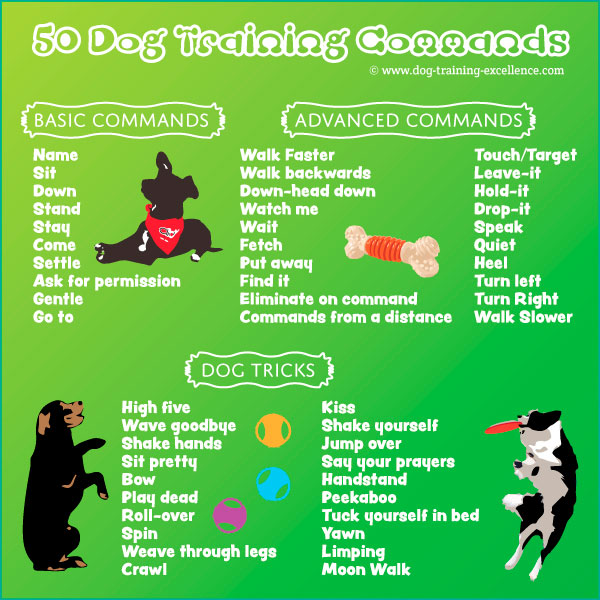
Name and focus
Name is step one in how to teach a puppy basic commands easily. Your pup should look at you when you say the name.
- Say the name once in a happy voice. The moment your pup looks, mark and treat.
- Repeat 5 to 10 times. Keep it easy. Do not repeat the name over and over.
- Add distractions later. Reward fast glances to you.
Common pitfall Saying the name as a scold. Keep it positive so your puppy loves responding.
Sit
Sit shows you how to teach a puppy basic commands easily with a simple lure.
- Hold a treat to your pup’s nose. Move it slowly up and back. As the head lifts, the hips drop.
- The instant the butt hits the floor, mark and treat.
- Add the cue sit right before the lure. Then fade the hand lure over a few sessions.
Pro tip If your pup pops up, feed two or three tiny treats while sitting to build duration.
Down
Down builds calm and impulse control.
- From sit, lower a treat to the floor between the paws. Then slowly move it out along the ground.
- When elbows hit the floor, mark and treat.
- Add the verbal cue down once your puppy is following the hand well.
If your puppy pops up, go back a step. Reward small moves toward the floor.
Come when called
For many parents asking how to teach a puppy basic commands easily, recall is the big one.
- Start inside on a short distance. Say puppy, come in a happy voice. Back up to invite a chase.
- When your puppy races to you, mark, then reward with a treat party and brief play.
- Never call to end fun. Go to your puppy to leash up when play is over.
Pro tip Use a long line outside so you can keep it safe while building big wins.
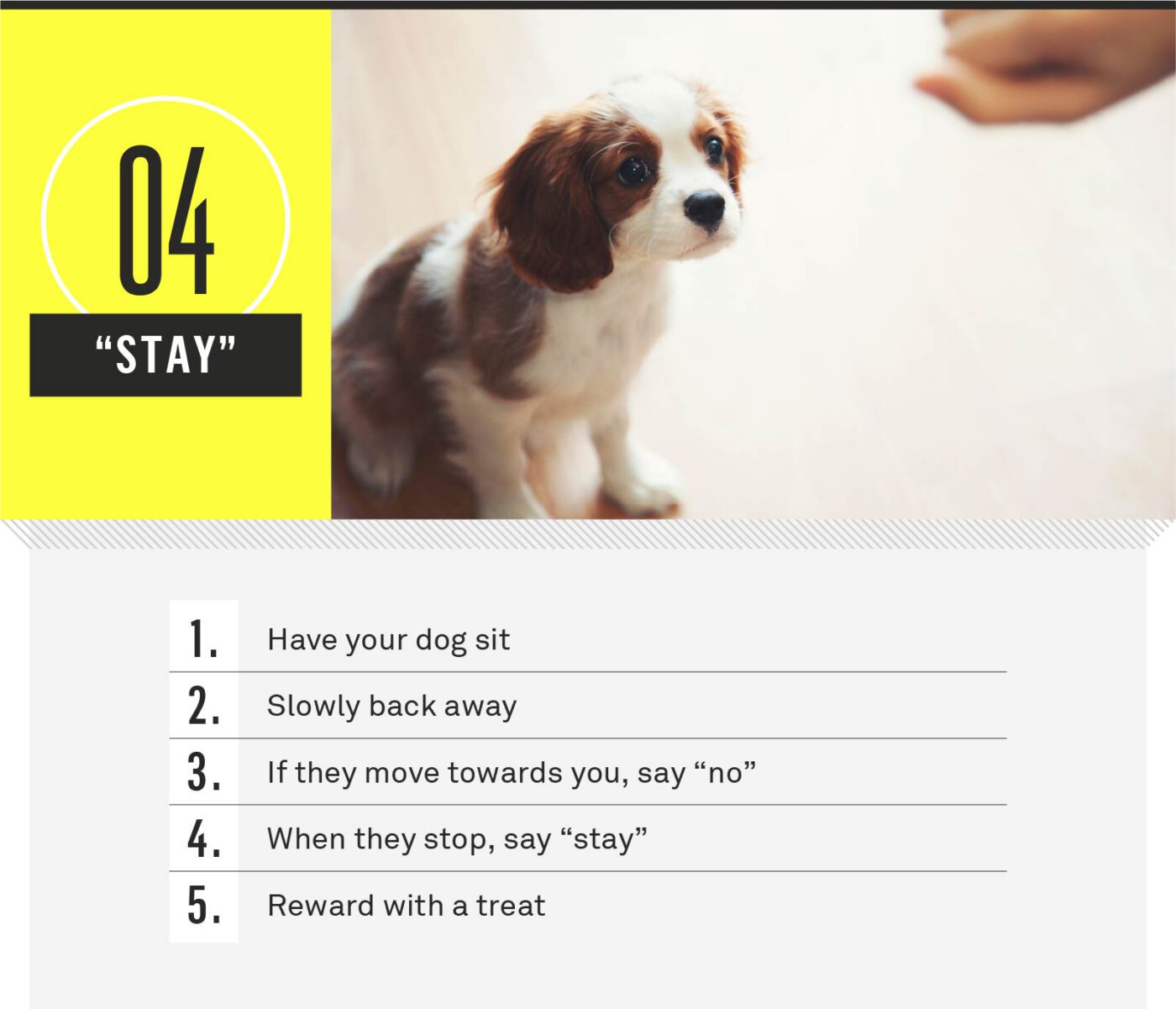
Stay
Stay teaches patience and safety.
- Ask for sit. Say stay. Show a flat hand for one second. Mark and treat.
- Add tiny bits of time. One second, then two. Then add one step back. Return and reward.
- Change only one thing at a time. Time, distance, or distractions. Not all at once.
If your puppy breaks, reset with less time or shorter distance. Keep success high.
Leave it
Leave it stops your puppy from grabbing unsafe things.
- Put a treat in your closed fist. Let your puppy sniff, lick, or paw. Say leave it once.
- When your puppy backs off or looks at you, mark and treat from the other hand.
- Place a treat on the floor under your foot. Repeat. Then uncover for short moments as your pup improves.
Drop it
Drop it makes fetch and toy play safe.
- Offer a toy. After your puppy grabs it, present a treat to the nose. When the mouth opens, mark and treat.
- Trade back the toy. Keep the game going so your puppy loves to let go.
- Add the cue drop as your puppy learns the pattern.
Loose-leash walking
Leash manners lower stress for both of you.
- Start indoors. Reward at your side for one or two steps with a slack leash.
- Turn before your puppy pulls. When your puppy chooses to follow, mark and treat.
- Take it outside once you can do 10 calm steps inside. Keep sessions short.
If pulling starts, stop. Wait for slack. Reward the choice to come back to your side.
Personal note I once rushed a high-energy foster onto busy sidewalks. We failed hard. When I moved back indoors, used a long hallway, and paid every two steps, the dog got it in two days. Small steps win fast.

Proofing skills with real-life distractions
This is where many people stall on how to teach a puppy basic commands easily. Dogs do not generalize well. You must practice in new places.
- Change one factor at a time Increase time. Or increase distance. Or add light distractions.
- Use the 3-Ds rule Distance, duration, distractions. Move up slowly.
- Keep the 80% rule When your puppy wins 8 out of 10 tries, make it a bit harder.
Research shows gradual proofing locks in behavior. It builds reliable responses under stress.

Troubleshooting and common mistakes
You can fix most training snags fast. This is a big part of how to teach a puppy basic commands easily.
- You repeat cues Your puppy tunes out. Say it once. Help with a lure. Reward success.
- Long sessions Your puppy gets tired and sloppy. Keep it short and fun.
- Low-value treats Your puppy ignores you outside. Use better rewards. Think tiny cheese or soft chicken.
- Punishment You may get fear or shutdown. Reward what you want instead.
- Jumping or biting Give a quick time-out from attention. Then reward four paws on the floor or calm sits.
If progress stalls for a week, lower the bar and stack easy wins. Then move up again.

Schedules, socialization, and real-life routines
Structure makes learning stick. It also makes home life calm. It ties back to how to teach a puppy basic commands easily without stress.
- Daily rhythm Potty, play, train, rest. Repeat this cycle.
- Two to four micro-sessions per day Pair them with meals or walks.
- Socialization Expose your puppy to new sights, sounds, and surfaces. Keep it positive and brief.
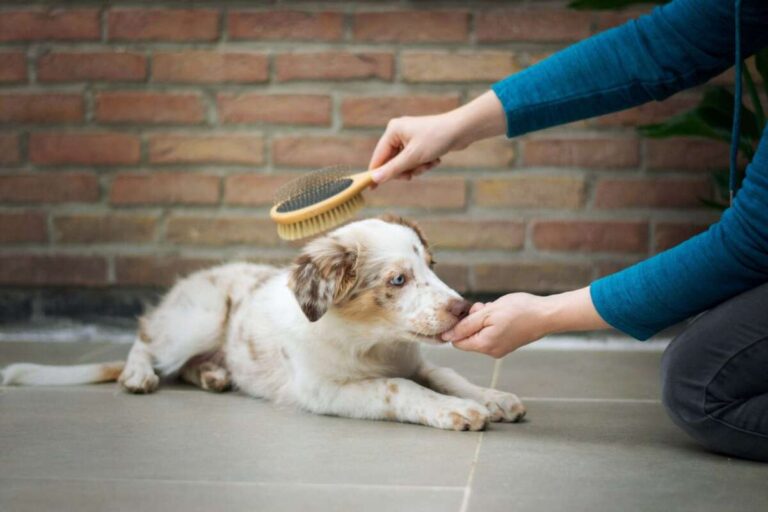
- Handling practice Touch paws, ears, and collar. Treat while you do it. Vet visits get easier later.
I log three good reps of two skills each day. That steady drip builds rock-solid habits.
Fun games that speed up learning
Games boost focus and joy. They also keep you consistent, which is key in how to teach a puppy basic commands easily.
- Find it Toss tiny treats in the grass after a sit or down. Builds recall and nose work.
- Ping-pong recall Two people call the puppy back and forth. Pay each arrival.
- Red light, green light Walk. Stop. Ask for sit. Walk again. Teaches impulse control.
- Toy switch Trade toys on cue to sharpen drop it.
Short, happy games beat long drills. End while your pup still wants more.
Safety, welfare, and when to get help
Your puppy’s body and mind are still growing. Protect both as you plan how to teach a puppy basic commands easily.
- Use force-free tools Avoid choke, prong, and shock. They carry welfare risks and can increase fear.
- Watch for pain Limping or reluctance can look like disobedience.
- Get help early Call a certified trainer or vet behavior pro if you see fear, biting, or resource guarding.
Good training is kind, clear, and safe. That is how skills last for life.
Frequently Asked Questions of how to teach a puppy basic commands easily
When should I start training my puppy?
Start as soon as your puppy comes home, often at 8 weeks. Keep it fun and very short so your puppy stays engaged.
How many minutes should a training session last?
Aim for 3 to 5 minutes, several times a day. Puppies learn best with short, frequent practice.
What treats work best for fast learning?
Use soft, pea-sized, high-value treats like tiny chicken pieces. Save the best for tough skills or busy places.
How do I fix a puppy that won’t come?
Start indoors on a short distance and pay big when your puppy arrives. Use a long line outside and never call to end fun.
Can I train without treats?
Yes, but it is slower. Start with treats, then mix in toys, praise, and life rewards like going outside.
Why does my puppy listen at home but not outside?
Distractions make skills harder. Rebuild the skill outside with easier steps and higher-value rewards.
How long before commands become reliable?
Most puppies need weeks of practice across places and distractions. Aim for the 80% success rule before raising difficulty.
Conclusion
Teaching a young dog is simple when you plan, keep sessions short, and reward success. You now know how to teach a puppy basic commands easily, proof them in real life, and fix common errors with calm steps.
Start today with name and sit, then build one skill at a time. Keep it kind. Keep it fun. Share your wins or questions in the comments, and subscribe for more step-by-step training guides.

Pet Care Writer & Researcher
Daniel writes practical guides on daily care, feeding, and safety, turning complex topics into simple, actionable advice.