What Are The Best Dog Beds For Large Dogs: Comfy Choices
Wondering what are the best dog beds for large dogs? Compare supportive, durable options that help big breeds sleep comfortably and restfully.
The best dog beds for large dogs offer firm support, durable covers, enough room, and easy cleaning.
Choosing the right bed for a large dog takes more than picking the biggest cushion in the store. Weight, joint health, sleep style, chewing habits, body length, and room temperature all matter. After comparing orthopedic foam beds, washable nests, elevated cots, and durable crate mats, this guide explains what works, what to avoid, and how to find a bed your dog will use every day.
What Makes a Dog Bed Good for a Large Dog?
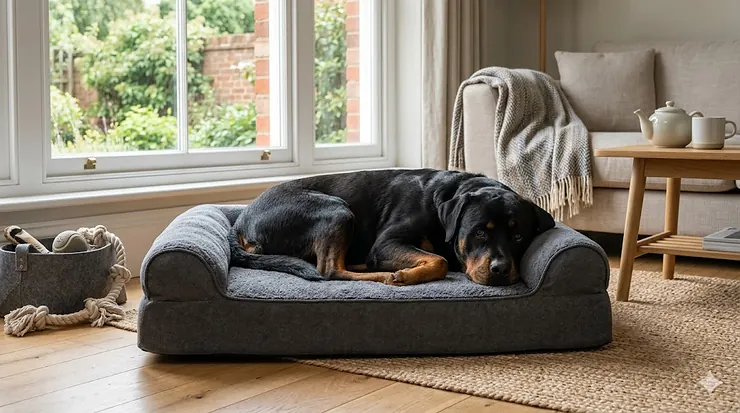
Large dogs place more pressure on a bed than small dogs. A thin cushion may feel soft at first, but it can flatten quickly under the dog’s hips, shoulders, and spine. The best dog beds for large dogs should keep their shape and support the body without creating hard pressure points.
A good bed should also match your dog’s habits. A senior Labrador may need a low-entry orthopedic mattress, while a young Great Dane may prefer a long sofa-style bed. A dog that sleeps hot may do better on a raised cot than on a thick memory foam mattress.
Look for these core features:
• Firm, supportive foam that does not collapse easily
• A flat sleeping area large enough for full stretching
• A removable, machine-washable cover
• Strong seams and fabric that can handle daily use
• A non-slip base for smooth floors
• Low entry for older dogs or dogs with arthritis
• Waterproof or water-resistant protection for accidents
• A design that allows good airflow when needed
Bed size matters as much as bed quality. Measure your dog from nose to tail base, then add 10 to 12 inches. This gives your dog enough space to curl up, stretch, and change positions without hanging off the edge.
Best Dog Bed Types for Large Dogs
There is no single bed that suits every large dog. The best dog beds for large dogs usually fall into a few clear types. Each style solves a different problem, so think about your dog’s age, health, sleep position, and daily routine.
Orthopedic memory foam beds
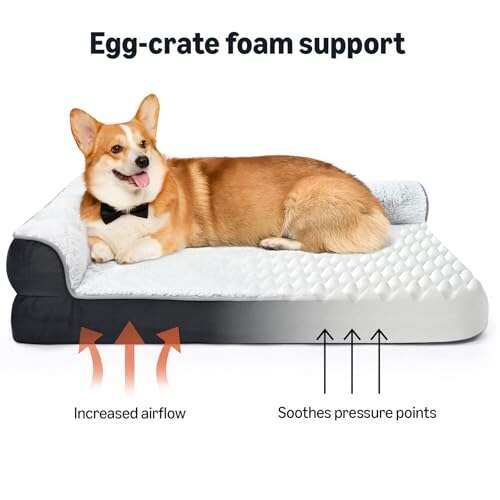
Orthopedic beds use high-density foam, memory foam, or a layered foam design. They spread body weight across the mattress and can reduce pressure on joints. These beds are often a strong choice for older dogs, large breeds, and dogs recovering from joint strain.
Memory foam should feel supportive, not like a deep pit. If your dog sinks too far, getting up may become harder. A layered bed with a firm base and softer top layer often gives the best balance.
Popular examples include the Big Barker 7-inch bed and other thick, high-density orthopedic mattresses. Check the foam thickness, weight limit, cover quality, and replacement-cover cost before buying.
Bolster or sofa beds
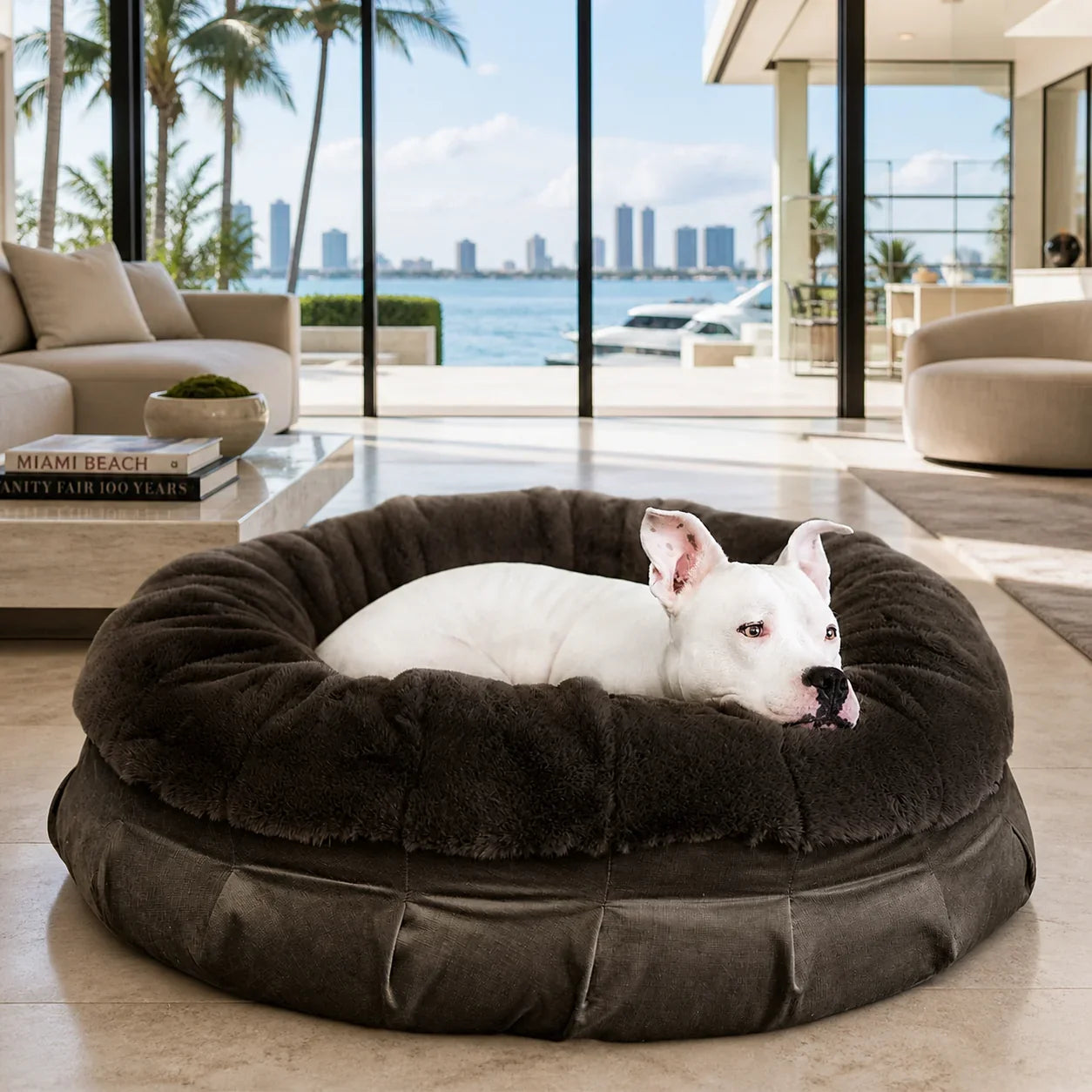
Bolster beds have raised sides that create a pillow-like border. They work well for dogs that like to lean, curl up, or rest their heads on an edge. The inner mattress should still be thick and firm enough for a large body.
A common mistake is choosing a bed with large bolsters but a small center cushion. Measure the actual sleeping area, not the outside dimensions. Some large dogs need a jumbo bed simply because the bolsters take up several inches on every side.
Elevated dog cots
Elevated beds lift your dog off the floor. Their mesh or fabric surface improves airflow and can help keep dogs cool in warm homes. They are also useful for patios, travel, camping, and muddy seasons because they are easy to wipe clean.
The K&H Original Pet Cot and Kuranda-style raised beds are examples of this design. Look for a strong frame, secure joints, and a weight rating above your dog’s current weight.
Elevated cots may not be ideal for every senior dog. Some dogs find the firm, suspended surface less comfortable, and climbing onto a tall frame can be difficult. A low-profile cot or orthopedic mattress may be safer for dogs with weak legs.
Cooling beds
Cooling beds use breathable fabric, gel, airflow, or water-based materials to help manage heat. They can help thick-coated breeds such as Newfoundlands, Bernese Mountain Dogs, and Saint Bernards rest more comfortably.
A cooling bed should not replace shade, fresh water, or proper veterinary care. Heavy panting, weakness, vomiting, confusion, or collapse can signal heat illness. Move the dog to a cool area and seek urgent veterinary advice if these signs appear.
Waterproof and washable beds
Waterproof beds are useful for puppies, incontinent dogs, messy eaters, and dogs that return from wet walks. The cover should come off easily and fit back onto the foam without a wrestling match.
Some beds have a waterproof inner liner under the washable cover. This is helpful because a cover can look dry while moisture has already reached the foam. Avoid washing memory foam in a machine unless the manufacturer clearly permits it.
Best Dog Beds for Large Dogs by Need
The best dog beds for large dogs depend on the problem you want the bed to solve. A bed for a healthy adult dog may not be right for a dog with arthritis or separation anxiety.
Best for older dogs and arthritis
Choose a thick orthopedic foam bed with a low step-in edge. Memory foam or supportive layered foam can reduce pressure on hips, elbows, and shoulders. The bed should sit on a stable floor and should not slide when the dog stands.
A waterproof liner is also valuable for senior dogs. Bladder leaks can happen during sleep, and fast cleaning helps protect the foam and prevent odors.
Speak with your veterinarian if your dog struggles to rise, limps, cries when lying down, or avoids stairs. A bed can improve comfort, but it cannot treat arthritis, hip dysplasia, or another medical problem.
Best for dogs that sleep stretched out
Choose a rectangular mattress with little or no bolster. Measure from the dog’s nose to the base of the tail while the dog is fully stretched. Add extra space so the dog can move without hitting the edge.
This design often works well for Greyhounds, Doberman Pinschers, German Shepherds, and other long-bodied dogs. A round bed may look large but still fail to provide enough usable length.
Best for dogs that curl up
A bolster bed can make a large dog feel secure. The raised edge acts like a soft boundary and gives the dog a place to rest its neck. Choose a wide interior rather than focusing only on the outside measurement.
If your dog changes from curling to stretching during sleep, select a bed with a flexible sleeping surface and a low bolster. This gives comfort without restricting movement.
Best for hot sleepers
An elevated cot or breathable mesh bed usually provides better airflow than a thick plush bed. Place it away from direct sunlight and make sure your dog can move to a cooler floor if needed.
Some dogs prefer a cooling mat placed on top of an orthopedic bed. Use a cover or check the mat often if your dog chews, scratches, or digs before settling down.
Best for chewers and diggers
No fabric bed is fully chew-proof. Strong canvas, ballistic nylon, reinforced stitching, and replaceable covers may last longer, but determined chewers can still tear them apart.
For a destructive dog, start with a simple cot or durable crate mat. Remove the bed if the dog eats fabric, foam, or stuffing. Swallowed material can cause a dangerous intestinal blockage.
Best for crates and travel
A crate bed should fit the crate floor without folding up at the edges. A flat, washable mat is usually safer than a bulky bolster bed. For travel, choose a lighter bed with a waterproof bottom and a handle.
The bed should not reduce the crate to the point that your dog cannot stand, turn, and lie down naturally. Crate size should always support safe, comfortable movement.

How to Choose the Right Size
Correct sizing is one of the most important steps when shopping for the best dog beds for large dogs. Do not rely only on breed labels such as “extra large” or “giant.” Product sizes vary widely between brands.
Use this simple process:
-
Measure your dog while relaxed and fully stretched.
-
Measure from the nose to the base of the tail.
-
Add 10 to 12 inches to the length.
-
Measure the dog from shoulder to shoulder.
-
Add several inches for side-to-side movement.
-
Compare these numbers with the bed’s inner sleeping area.
For example, if your dog measures 42 inches from nose to tail base, a bed with a 50-inch sleeping surface may offer a better fit than one marketed as “large” with only 36 inches of usable space.
Also check the bed’s height. A thick mattress may be comfortable, but a dog with weak hips may struggle to climb onto it. A low-profile bed with strong foam can be more useful than a very tall bed with a soft, unstable edge.

Materials and Construction to Look For
A large dog can test every part of a bed. Good materials do not guarantee a perfect product, but they improve comfort and service life.
Foam
High-density foam usually provides better support than loose fiber filling. Memory foam adds pressure relief, while a firm support foam layer helps prevent sinking. Ask whether the foam is CertiPUR-US certified or supported by another recognized material-safety standard.
Foam density is not always listed, which makes comparison difficult. When details are missing, read reviews for signs of flattening, sagging, odor, and poor edge support.
Covers
A removable cover is almost essential for a large dog bed. Look for durable fabric, strong zippers, and a cover that can handle repeated washing. A second replacement cover can save time and extend the bed’s useful life.
Do not assume “machine washable” means the whole bed is washable. Usually, only the cover can go into the washer.
Bottoms
A non-slip bottom keeps the bed in place when your dog stands up. This is especially important for tile, hardwood, and laminate floors. A bed that slides can make an older dog nervous or increase the risk of a stumble.
Seams and edges
Inspect photos and customer reviews for weak seams, exposed zippers, and loose threads. Large dogs often circle, dig, and paw before lying down. Reinforced stitching can make a real difference.

How Much Should You Spend?
The best dog beds for large dogs often cost more because they require more foam, stronger fabric, and larger covers. Price alone does not prove quality, but very cheap beds may flatten quickly under a heavy dog.
A reasonable buying approach is to compare value, not just the first price:
• Check the foam thickness and support layers
• Confirm the inner sleeping dimensions
• Review the warranty length and coverage
• Check whether replacement covers are available
• Read reviews from owners of similarly sized dogs
• Consider washing and drying costs
• Look for signs of sagging after several months
A premium bed may cost less over time if it keeps its shape for years. Still, an expensive bed is not automatically the best dog bed for large dogs. A poorly sized luxury bed can be less useful than a simple, correctly sized mattress.

Common Mistakes to Avoid
Even well-meaning owners often buy the wrong bed for practical reasons. These mistakes are easy to prevent.
Choosing by outside size
The outer measurement may include thick bolsters and padding. Always find the inner sleeping area before buying.
Buying the softest bed
Very soft beds can feel inviting in a store but may provide poor support. Large dogs need cushioning with structure, much like a mattress that supports a person without letting them sink to the floor.
Ignoring the floor
A bed on a cold tile floor may need extra insulation. A bed on carpet may need a breathable base. A slippery wood floor calls for a non-slip bottom.
Skipping the return policy
Dogs can be selective. Some dislike the smell of new foam, the feel of a raised cot, or the movement of a plush cushion. A clear return policy gives you room to test the bed safely.
Forgetting the cover
A bed that cannot be cleaned is difficult to manage. Mud, drool, shed hair, and accidents are part of life with a large dog. Washable covers are not a luxury; they are a practical need.
Buying one bed for every location
Many dogs benefit from different beds in different places. A supportive indoor mattress, a raised outdoor cot, and a washable travel mat may work better than forcing one bed to do every job.

How to Help Your Dog Use a New Bed
Even the best dog beds for large dogs may be ignored at first. New materials can smell unfamiliar, and the location may feel wrong.
Place the bed where your dog already likes to rest. Add a familiar blanket or toy, then reward calm behavior near the bed. Do not drag your dog onto it or force a stay.
Keep the first sessions relaxed. You can offer a chew or a food puzzle while the dog lies on the bed, as long as the item is safe and supervised. Most dogs learn faster when the bed becomes a calm, rewarding place rather than a command.
If your dog repeatedly avoids the bed, check for practical problems. It may be too hot, too soft, too slippery, too high, or too small. Dogs are often excellent product testers; their behavior gives useful clues.

Cleaning and Care Tips
Routine care helps a large dog bed stay comfortable and reduces odor. Follow the manufacturer’s washing instructions, especially for foam and waterproof liners.
A simple care routine includes:
• Vacuum loose hair each week
• Wash the cover as directed
• Clean stains quickly with a pet-safe product
• Dry the cover fully before use
• Check seams, zippers, and foam for damage
• Rotate or flip the mattress if the design allows it
• Replace foam when it stays compressed or develops deep dips
Avoid harsh fragrances and strong cleaners that may irritate a dog’s skin or nose. If the bed develops mold, a strong persistent odor, or damaged foam, replacement is safer than trying to hide the problem.
Our Practical Buying Checklist
Before choosing among the best dog beds for large dogs, use this quick checklist:
• Is the inner sleeping area long enough for full stretching?
• Does the foam support your dog without excessive sinking?
• Can your dog step onto the bed safely?
• Is the cover removable and machine washable?
• Does the base stay in place?
• Can you buy a replacement cover?
• Is the bed suitable for your dog’s temperature needs?
• Does the warranty cover flattening or structural failure?
• Does the bed fit your room, crate, vehicle, or travel plan?
• Can your dog chew or swallow any loose material?
For many healthy adult large dogs, a thick orthopedic mattress is the safest starting point. For hot sleepers, add an elevated cot or cooling surface. For seniors, focus on firm support, low entry, and easy cleaning.
Frequently Asked Questions
What are the best dog beds for large dogs with arthritis?
The best dog beds for large dogs with arthritis usually have firm orthopedic foam, a supportive base, and a low entry edge. A waterproof cover and non-slip bottom can also improve daily comfort and safety.
How thick should a large dog bed be?
A large dog bed often needs at least 4 inches of supportive foam, while heavier dogs or dogs with joint problems may benefit from 6 to 7 inches. Thickness matters less than foam quality, density, and resistance to flattening.
Is memory foam safe for large dogs?
Quality memory foam is generally safe when used as directed and covered with a durable, breathable cover. Choose a bed with a firm support layer, and allow new foam to air out if it has a noticeable odor.
Should large dogs sleep on elevated beds?
Elevated beds can suit healthy dogs, hot sleepers, outdoor use, and homes with hard floors. Dogs with arthritis or weak legs may prefer a low orthopedic mattress that is easier to enter and exit.
How often should a large dog bed be replaced?
Replace a large dog bed when the foam stays compressed, the cover cannot be cleaned, or the base becomes unstable. A well-made bed may last several years, but heavy use, moisture, chewing, and frequent washing can shorten its life.
Can a large dog bed help with hip dysplasia?
A supportive bed may reduce pressure on sore joints and make resting more comfortable, but it cannot correct hip dysplasia. Dogs with pain, stiffness, or trouble standing should receive an evaluation from a veterinarian.
What is the best washable bed for a large dog?
The best washable bed has a removable cover, a waterproof inner liner, durable stitching, and foam that stays protected from moisture. A spare cover is helpful because large covers can take time to dry.
Conclusion
The best dog beds for large dogs combine proper size, firm support, durable materials, and easy cleaning. Orthopedic foam is often the strongest choice for daily indoor use, while elevated cots can improve airflow and portability. Senior dogs may need low entry, and messy or destructive dogs need washable, sturdy designs.
Measure your dog’s real sleeping space, check the inner dimensions, and match the bed to your dog’s age and habits. A comfortable bed can support better rest and make daily life easier for both of you. Compare reliable options, read the care instructions, and share your dog’s bed preferences in the comments.

Pet Care Writer & Researcher
Daniel writes practical guides on daily care, feeding, and safety, turning complex topics into simple, actionable advice.