Why Do Dogs Bark At The Vacuum: Causes And Solutions
Why do dogs bark at the vacuum? Learn the common triggers and simple, gentle ways to help your dog stay calm during cleaning.
Dogs bark at the vacuum because its loud, sudden movement feels threatening, confusing, or exciting to them.
If you have ever started cleaning and watched your dog rush over, bark, or snap at the vacuum, you are not alone. Understanding why do dogs bark at the vacuum can help you respond with patience instead of punishment. The behavior often comes from fear, instinct, noise sensitivity, or a learned reaction. With calm training and gradual exposure, many dogs can learn that the vacuum is not a danger.

Why Do Dogs Bark at the Vacuum?
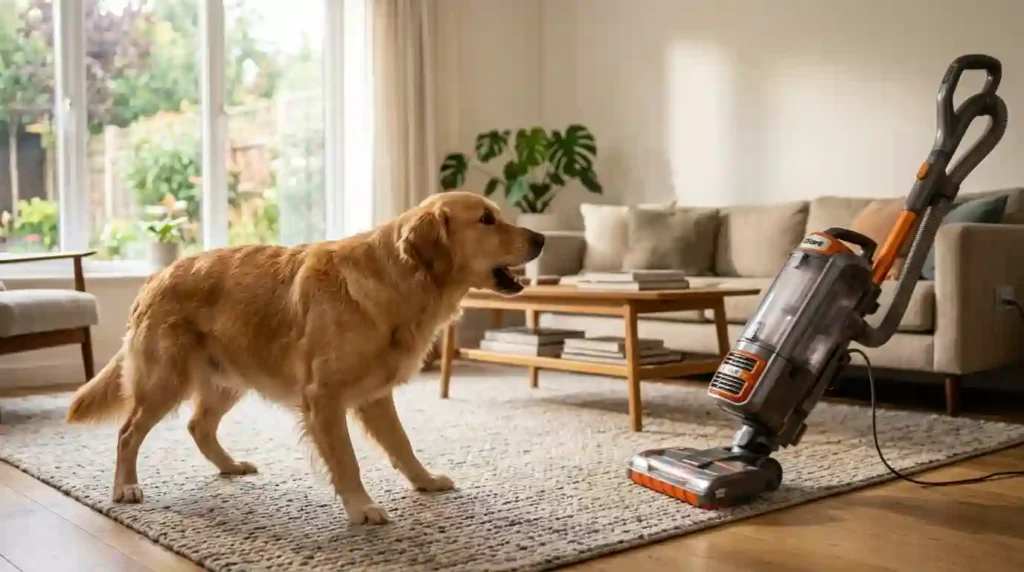
Dogs bark at the vacuum because they do not understand what it is or why it moves around the home. To your dog, the machine may look like a strange object that suddenly comes alive, makes a sharp noise, and moves toward them.
Several causes may work together:
• The vacuum is loud and unpredictable.
• Its movement can trigger a dog’s chase or herding instinct.
• The dog may feel that the vacuum is entering its safe space.
• Barking may have made the vacuum stop before.
• The dog may be sensitive to deep sounds, vibrations, or strong airflow.
A vacuum cleaner changes the normal pattern of the home. It rolls across the floor, turns quickly, reaches under furniture, and makes a loud motor sound. Dogs notice these changes much more than people do because they rely heavily on sound, scent, and movement.
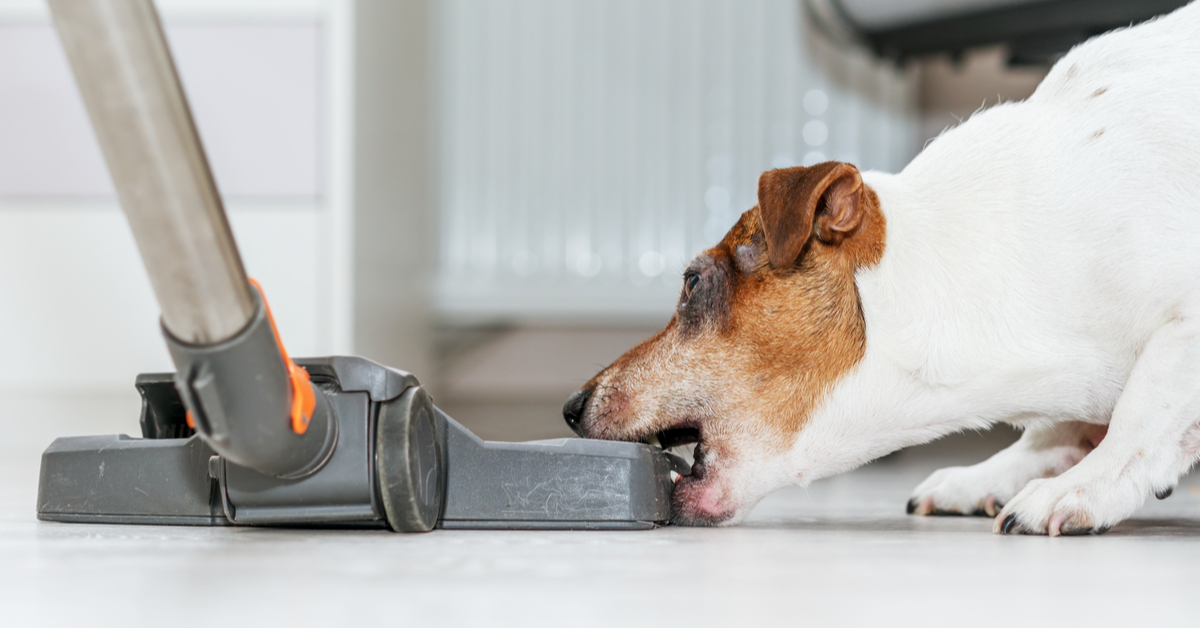
For some dogs, barking is a warning. For others, it is a way to release stress or invite play. A dog that barks and backs away may be afraid. A dog that barks, jumps forward, and tries to bite the vacuum may be chasing what it sees as moving prey.
Common Reasons Dogs React to Vacuum Cleaners
Fear of loud or sudden noise
Vacuum cleaners can reach a high noise level, especially in a small room. Dogs have sensitive hearing, so the sound may feel much stronger to them than it does to you.
The noise also starts without much warning. Even a calm dog may react when the motor turns on close by. This is similar to how some dogs respond to thunder, fireworks, hair dryers, or smoke alarms.
A fearful dog may show signs such as:
• Barking from a distance
• Hiding behind furniture
• Tucking the tail
• Panting or trembling
• Licking the lips
• Trying to escape
• Pacing or freezing
Fear is not bad behavior. It is an emotional response. Scolding a frightened dog can make the fear stronger because the dog may connect the vacuum with both the noise and your anger.
Movement that triggers the chase instinct
The vacuum moves in a way that can activate a dog’s natural chase response. It rolls quickly, changes direction, and comes toward the dog before moving away again.
Herding breeds may be especially interested in controlling its movement. Terriers and other dogs with strong prey drive may treat the vacuum like a strange animal. Their barking can be part of an attempt to stop, chase, or control it.
This is one reason why do dogs bark at the vacuum can have more than one answer. Two dogs in the same home may react in very different ways. One may be frightened, while the other may be excited by the movement.
A threat to the dog’s personal space
Dogs often rest in areas they consider safe. This may be a bed, crate, corner, or favorite rug. When the vacuum enters that space, the dog may feel pushed away.
A dog that guards its food, toys, bed, or owner may also guard the room from the vacuum. The machine does not need to be alive for the dog to treat it as an intruder.
Give your dog a safe place to retreat. A quiet room, gated area, or covered crate can help the dog feel in control while you clean.
Frustration and lack of control
Some dogs bark when they cannot understand or control an object. The vacuum may seem to ignore all warning signals. Your dog barks, but the machine keeps coming.
This can create frustration. The dog may bark louder, rush closer, or bite at the hose. If the vacuum is then turned off, the dog may learn that barking works.
This does not mean the dog is being stubborn. It means the behavior has been rewarded by accident. The dog learns, “When I bark, the scary thing stops.”
Sensitivity to vibration and airflow
Dogs do not experience the vacuum through sound alone. They may feel vibration through the floor and notice air moving from the hose or brush head.
These sensations can be surprising. A dog resting on a hardwood floor may feel the machine before it reaches the room. A vacuum hose can also resemble a long moving object, which may increase a dog’s alertness.
Older dogs, small dogs, and dogs with poor vision may be more startled because the machine is harder to predict.
How to Tell Whether Your Dog Is Afraid or Excited
Knowing the emotion behind the barking is important. Training works better when you address the real cause.
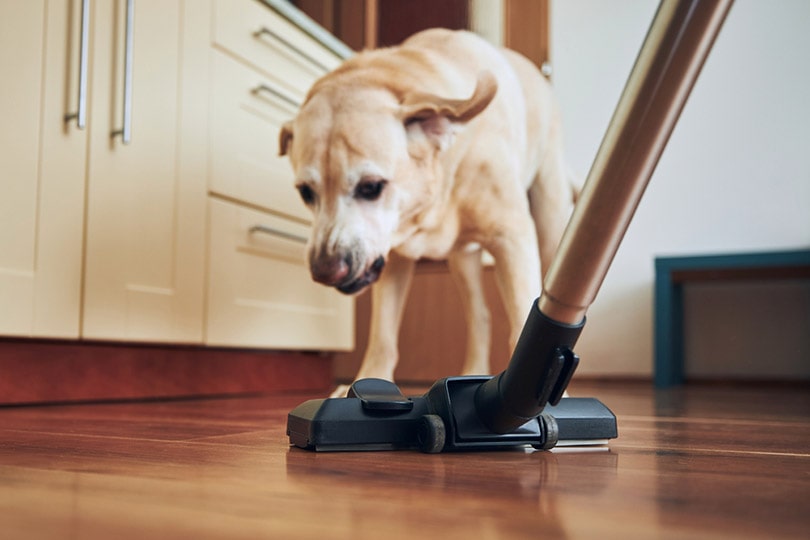
A fearful dog often:
• Moves away from the vacuum
• Keeps its body low
• Tucks its tail
• Pins its ears back
• Avoids eye contact
• Trembles, pants, or drools
• Hides or tries to leave
An excited or frustrated dog may:
• Move toward the vacuum
• Bounce or jump
• Wag with a stiff body
• Bark in a high, quick tone
• Stare closely at the machine
• Nip at the wheels or hose
A dog can also feel both fear and excitement. It may rush forward, then retreat. This mixed response is common. The dog wants to investigate but also feels unsure.
Watch the full body, not only the tail. A wagging tail does not always mean happiness. A stiff wag can show stress or high arousal.

How to Stop a Dog From Barking at the Vacuum
The best approach is slow desensitization. This means exposing your dog to the vacuum at a level it can handle, then building up over time.
1. Create a safe space
Before training, choose a place where your dog can relax. Use a baby gate, another room, or a comfortable crate if your dog already enjoys crate time.
Add familiar items such as:
• A bed or blanket
• A favorite toy
• A food puzzle
• Fresh water
• A long-lasting chew
Never force a dog into a crate as punishment. The safe space should feel like a calm retreat, not a place of isolation.
2. Start with the vacuum turned off
Place the vacuum several feet away while it is off. Let your dog notice it without pressure.
When your dog looks at the vacuum and stays calm, offer a small treat. Repeat this several times. The goal is to build a new connection:
“Vacuum appears, good things happen.”
Do not move the vacuum toward the dog. Keep the first sessions easy and brief.
3. Reward calm behavior
Reward your dog for calm actions, such as:
• Looking at the vacuum and looking back at you
• Sitting or lying down
• Sniffing without barking
• Walking away calmly
• Staying relaxed near the machine
Use small, tasty treats. Give the reward before your dog becomes overwhelmed. If the dog is already barking hard, increase the distance or stop the session.
4. Add small movements
Once your dog can remain calm near the stationary vacuum, move it a few inches while it is still off. Reward calm behavior.
Over several sessions, increase the movement slowly. You might move it across one part of the room, then pause. Later, move it for a longer period.
Training should feel boring. That is a success. Your dog is learning that the vacuum is ordinary.
5. Introduce the sound from a distance
Ask another adult to turn the vacuum on in a different room for one or two seconds. Keep your dog far enough away to remain calm.
Immediately offer treats while the sound is present. Then turn the vacuum off. Repeat only if your dog remains relaxed.
If your dog barks, freezes, or tries to escape, the sound is too intense. Move farther away or reduce the sound exposure. Never keep running the vacuum in the hope that the dog will simply “get used to it.”
6. Practice short cleaning sessions
When your dog can tolerate the sound, use very short sessions. Clean one small area, then stop.
You can give your dog a food puzzle in a separate room while you vacuum. This reduces direct contact and gives the dog something positive to do.
Over time, slowly increase the cleaning period. Progress may take days or weeks. Some dogs need longer, especially if they have a history of noise fear.
Mistakes to Avoid When Your Dog Barks at the Vacuum
Many well-meaning owners make the reaction worse without realizing it. Avoid these common errors.
Do not punish the barking
Yelling can increase fear and excitement. Your dog may hear your raised voice as another warning that the vacuum is dangerous.
Punishment may also stop the visible barking while leaving the fear untouched. The dog might then hide, shake, or react more strongly later.
Do not force the dog to approach
Pulling your dog toward the vacuum removes its ability to retreat. A trapped dog may panic or bite.
Let your dog choose the distance. Choice helps build confidence.
Do not chase the dog with the vacuum
This may seem funny to some people, but it can create a lasting fear. The dog may begin to fear not only the machine but also the room where cleaning happens.
Never point the hose at your dog or use the vacuum to move the dog away from furniture.
Do not reward frantic behavior
Comfort is helpful, but timing matters. If you give treats while your dog is barking intensely, you may reinforce the high-energy response.
Instead, create distance and wait for a small moment of calm. Then reward that calm moment.
Do not rush the process
A dog that handles the vacuum for ten seconds may not be ready for ten minutes. Increase exposure in small steps.
If your dog has a setback, return to the last level that worked. Training is not a straight line.

When to Seek Help From a Professional
Most mild vacuum reactions can improve with patient training. Professional help is wise when the response is intense or dangerous.
Contact a qualified positive-reinforcement trainer or veterinary behavior professional if your dog:
• Tries to bite the vacuum
• Redirects bites toward people
• Breaks through doors or gates
• Injures itself while escaping
• Shows severe panic
• Reacts to many household sounds
• Has a sudden new fear
A sudden change in behavior can sometimes relate to pain, illness, hearing changes, or age-related confusion. Your veterinarian can check for medical causes and discuss treatment options.
In serious cases, behavior work may be combined with medication. Medication does not replace training, but it can lower anxiety enough for learning to occur. Only a veterinarian should recommend or prescribe medication for your dog.

Helpful Tools for Vacuum Training
The right tools can make training easier, but no product replaces careful exposure.
Useful options include:
• Baby gates to create distance
• A quiet room for your dog
• High-value treats
• A food puzzle or lick mat
• A white-noise machine
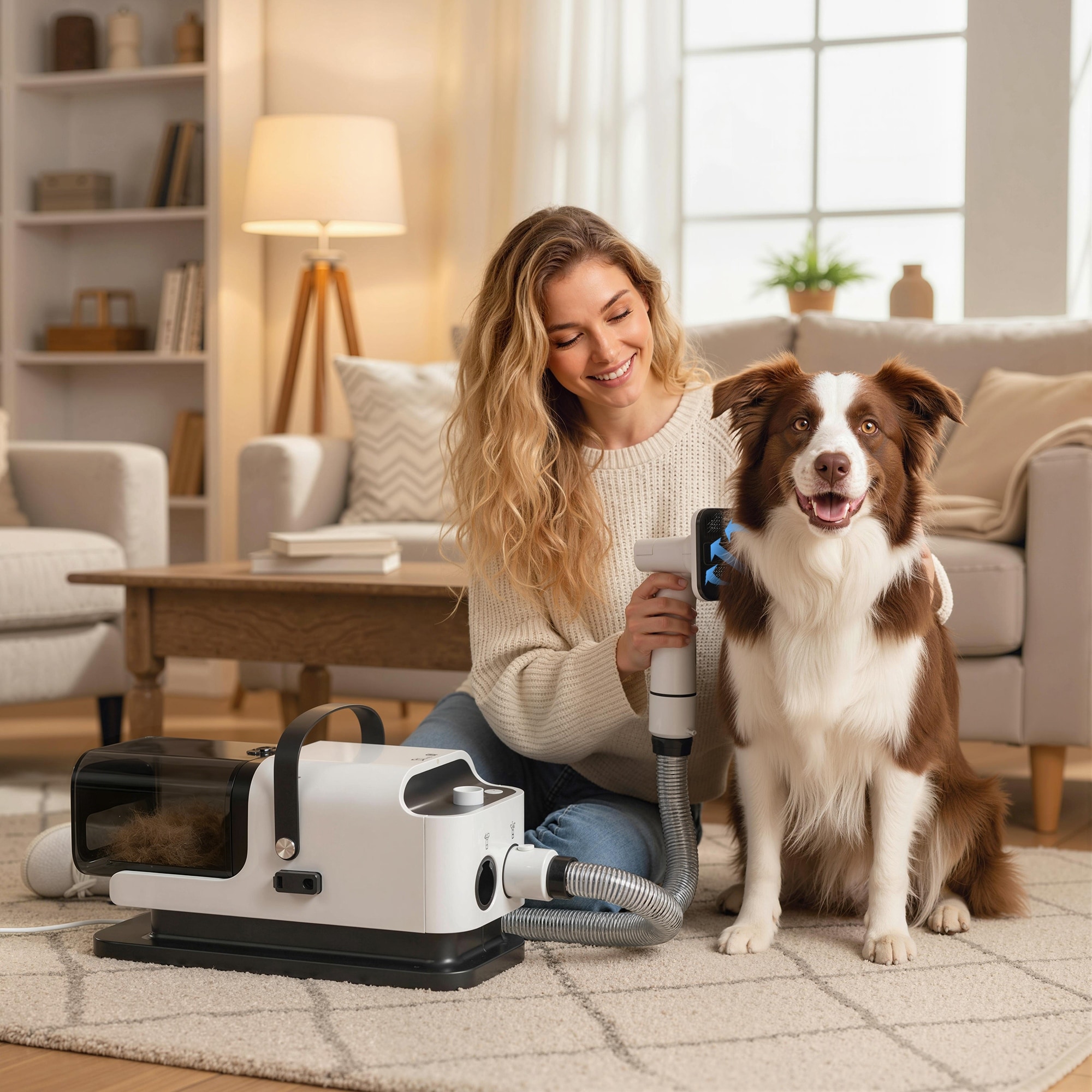
• A quieter vacuum model
• A long lead used only with supervision
A quieter vacuum may help, but it may not solve the problem. Dogs can still react to movement, airflow, and vibration.
Noise-canceling headphones made for people should not be placed on a dog unless a veterinarian or qualified professional recommends a safe, proper option. Poorly fitted equipment can cause discomfort or prevent a dog from hearing important sounds.
Why Do Dogs Bark at the Vacuum More Than Other Appliances?
The vacuum combines several triggers at once. It is loud, mobile, close to the floor, and aimed directly at areas where dogs spend time.
A blender may be loud but stays in one place. A hair dryer may move, but it is usually held by a person. The vacuum combines noise and movement in a way that feels more like an active intruder.
The machine also changes the scent and texture of the floor. Dogs may notice dust, hair, and airflow changes that people miss. This adds to the mystery.
The answer to why do dogs bark at the vacuum often becomes clearer when you look at the entire sensory experience rather than just the sound.

A Simple Seven-Day Training Plan
Every dog learns at a different pace, so use this plan as a guide rather than a strict schedule.
Day one and two
Keep the vacuum off and far away. Reward your dog for looking at it calmly.
Day three
Move the switched-off vacuum a short distance. Offer treats for relaxed behavior.
Day four
Place the vacuum in another room. Let your dog hear one brief burst of sound from far away.
Day five
Repeat the sound for a few seconds. Give treats during the sound, then stop.
Day six
Move the vacuum slowly while it is running. Keep the session short and maintain plenty of distance.
Day seven
Practice a brief cleaning session while your dog stays behind a gate with a food puzzle.
If your dog reacts strongly on any day, pause and return to an easier step. The goal is not to finish the schedule. The goal is to build trust.
Frequently Asked Questions
Why do dogs bark at the vacuum but not the broom?
A vacuum makes a much louder and more complex sensory impact than a broom. Its motor, vibration, airflow, and unpredictable movement can trigger fear or chase behavior.
Is my dog barking at the vacuum because it wants to play?
Sometimes. A dog that play-barks may bounce, wag loosely, and move toward the vacuum. However, barking can also show fear, so watch the dog’s posture and give it space.
Should I let my dog attack the vacuum?
No. Allowing attacks can strengthen the behavior and may lead to broken teeth, injuries, or redirected bites. Keep the dog at a safe distance and reward calm observation instead.
Can a dog get used to the vacuum?
Many dogs improve through gradual desensitization and positive reinforcement. Progress depends on the dog’s age, temperament, past experiences, and level of fear.
Why do dogs bark at the vacuum even when it is turned off?
The dog may have learned to associate the machine with its loud sound. The shape, movement, hose, or past experience may also trigger a warning response before the motor starts.
Should I vacuum while my dog is in the room?
Only if your dog can remain calm and has enough space to move away. For a fearful dog, using a separate room during cleaning is often kinder and more practical.
Can a veterinarian help with vacuum fear?
Yes. A veterinarian can check for medical factors and refer you to a qualified behavior professional. Severe anxiety may need a structured plan that includes behavior training and, in some cases, medication.
Conclusion
Dogs bark at the vacuum for understandable reasons. The machine is loud, strange, fast, and often enters the dog’s personal space. Some dogs feel afraid, while others feel excited, frustrated, or driven to chase.
The most effective response is calm management, safe distance, gradual exposure, and rewards for relaxed behavior. Avoid punishment and never force your dog to face the vacuum before it is ready.
Start with the vacuum turned off, keep sessions short, and let your dog progress at its own pace. If the reaction is severe, ask your veterinarian or a qualified positive-reinforcement professional for help. Share your dog’s vacuum story in the comments, and explore more evidence-based training guides for calmer days at home.

Pet Care Writer & Researcher
Daniel writes practical guides on daily care, feeding, and safety, turning complex topics into simple, actionable advice.