Do Labs Need Large Breed Dog Food: Vet Guide
Do labs need large breed dog food? Learn about Labrador nutrition, growth, joint health, and how to choose the right diet for your dog.
Yes, Labrador Retrievers often benefit from large-breed dog food, especially during puppyhood—but not every Lab needs a formula labeled “large breed.” The right choice depends on age, adult size, body condition, health, activity, and the food’s nutritional adequacy statement.
In the United States, adult Labrador Retrievers commonly weigh about 55 to 80 pounds, according to the American Kennel Club. That puts many Labs at or near the size range used for large-breed nutrition. However, the label alone does not decide whether a food is suitable. The most important checks are life stage, calorie content, nutrient balance, and portion size.

What makes a Labrador a large-breed dog?
A Labrador is usually considered a large-breed dog because of its adult weight and body structure. Many pet food makers use “large breed” for dogs expected to weigh more than about 50 pounds as adults, although the exact cutoff varies by brand.
Adult size matters most during growth. A Lab puppy’s bones and joints develop quickly, and too much energy or an unbalanced mineral supply can encourage growth that is faster than the skeleton can safely support.
A few useful size facts:
- Adult male Labs often weigh about 65 to 80 pounds.
- Adult female Labs often weigh about 55 to 70 pounds.
- Some Labs fall below or above those ranges.
- Working, field, and show lines may differ in build and energy needs.
- A dog’s healthy body condition matters more than its number on the scale.
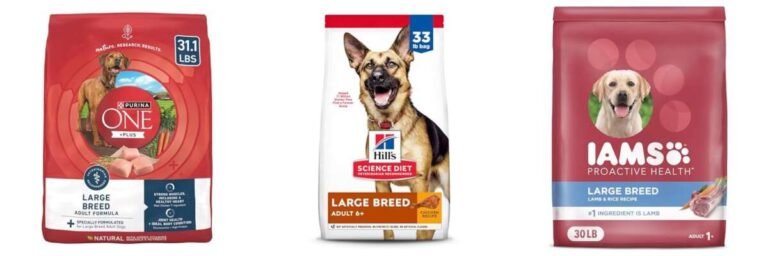
The term large-breed dog food usually means a food designed with the needs of bigger dogs in mind. It may provide:
- Fewer calories per cup than some regular formulas
- Larger kibble for some adult dogs
- Nutrient levels suited to controlled growth in puppies
- Feeding directions based on expected adult weight
- Support for maintaining a lean body
“Large breed” is not a substitute for reading the label. Some regular adult foods are fully suitable for an adult Lab. Some large-breed foods may not be right for a growing puppy if they are made only for adult maintenance.
Do Labrador puppies need large-breed puppy food?
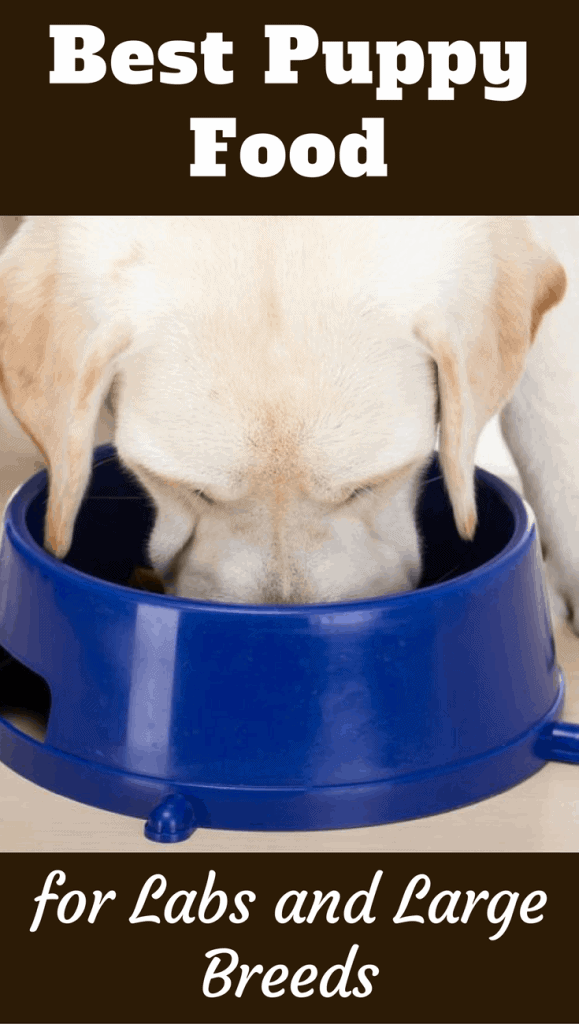
Most Labrador puppies should eat a complete and balanced large-breed puppy formula until they reach skeletal maturity. This is usually around 12 to 18 months, but your veterinarian can help choose the right transition time for your dog.
Large-breed puppy food is made to support steady growth rather than rapid weight gain. The goal is not to make a Lab puppy grow as fast as possible. The goal is controlled growth with enough nutrients for healthy bones, muscles, and organs.
Look for these details on the package:
- A puppy or growth life-stage statement
- A statement that includes growth of large-size dogs, when applicable
- Complete and balanced nutrition
- Feeding directions based on expected adult weight
- Clear calorie information
The Association of American Feed Control Officials, or AAFCO, includes special nutrient considerations for the growth of large-size dogs. In the United States, a food intended for large-size puppy growth should meet the applicable nutrient profile and feeding requirements shown on its label.
Why controlled growth matters
A Lab puppy’s bones are still developing. Extra calories can lead to excess body fat and faster weight gain. That can increase stress on developing joints.
Calcium and phosphorus also need to be in the right balance. Adding calcium powder, bone meal, or mineral supplements to a complete puppy food can create an imbalance. Do not add these products unless your veterinarian specifically prescribes them.
Large-breed puppy food does not prevent every joint problem. Genetics, injury, exercise, body weight, and overall health also play major roles. It simply helps reduce one avoidable risk: overfeeding an unbalanced diet during growth.
How long should a Lab stay on puppy food?
Many Labs stay on large-breed puppy food until they are about 12 to 18 months old. The best timing depends on:
- Current body condition
- Growth rate
- Expected adult weight
- Spay or neuter status
- Activity level
- Health concerns
- The food’s feeding instructions
Your Lab should look lean, not round. You should be able to feel the ribs under a thin layer of fat, see a waist from above, and see an abdominal tuck from the side.

Do adult Labs need large-breed dog food?
An adult Labrador does not always need food labeled “large breed,” but a large-breed adult formula can be a useful choice. The main goal is to provide complete nutrition while preventing excess calories.
An adult Lab may do well on either:
- A complete and balanced adult-maintenance food, or
- A complete and balanced large-breed adult food
The better option is the one that helps your dog maintain a healthy body condition without hunger, digestive trouble, or unwanted weight gain.
Large-breed adult foods may help because they often have a lower calorie density or larger kibble. These features can make portion control easier for some Labs. However, formulas vary. You must compare the calorie content, not assume that every large-breed food is low in calories.
Why weight control is a major issue for Labs
Labrador Retrievers are well known for gaining weight easily. Some Labs also have a strong appetite and may continue eating after they have had enough.
Extra weight adds stress to the hips, elbows, knees, and spine. It can also make exercise harder and raise the risk of several weight-related health problems.
For that reason, a regular adult food with measured portions may be better than a large-breed food fed freely. The label matters, but body condition is the final check.
A simple adult feeding example
Suppose a food contains 350 calories per cup and your veterinarian says your Lab needs about 1,050 calories per day. A starting estimate would be:
1,050 calories ÷ 350 calories per cup = 3 cups per day
That amount is only an example. Calorie needs vary with age, sex, activity, metabolism, climate, and health. Divide the daily amount into two meals if that works well for your dog, and adjust based on body condition.
Treats count too. The feeding guide is a starting point, not a guarantee.
How should you choose food for a Lab?
Choose food by following a short decision process rather than relying on the front of the bag.
1. Check the life stage
A puppy needs growth nutrition. An adult needs adult-maintenance nutrition. A senior Lab may need fewer calories, but “senior” foods do not all follow one standard nutrient profile.
Do not feed an adult-maintenance food to a growing Lab puppy unless your veterinarian tells you to do so.
2. Read the nutritional adequacy statement
Look for wording such as:
- “Complete and balanced for growth”
- “Complete and balanced for adult maintenance”
- “Complete and balanced for all life stages”
For a Lab puppy, the statement should support growth of large-size dogs when the product is intended for that purpose.
For an adult Lab, an adult-maintenance food can be appropriate. An all-life-stages food may also work, but it may provide more calories than an adult dog needs.
3. Compare calories
Calories per cup or kilogram are more useful than vague terms such as “light,” “premium,” or “high protein.”
Compare the product’s calorie statement with your dog’s weight trend. Two foods that appear similar may differ greatly in calories per cup.
4. Consider your dog’s body condition
Use your dog’s shape as feedback:
| What you see or feel | What it may mean | Practical response |
|---|---|---|
| Ribs are hard to feel and the waist is not visible | Too much body fat | Ask your veterinarian about a calorie reduction |
| Ribs are easy to feel, with a clear waist | Usually a healthy condition | Maintain portions and activity |
| Ribs and hips are very prominent | Possible underfeeding or illness | Arrange a veterinary check |
| Weight changes quickly | Portion, health, or activity issue | Recheck calories and contact your veterinarian |
A body-condition score from a veterinarian is more reliable than weight alone. A muscular Lab may weigh more than another Lab while still being lean.
5. Match the food to health needs
Ask your veterinarian before changing food if your Lab has:
- Chronic diarrhea or vomiting
- Food allergies or suspected intolerance
- Kidney, liver, or pancreatic disease
- Diabetes
- Recurrent ear or skin problems
- A history of orthopedic disease
- Rapid weight gain or unexplained weight loss
A therapeutic diet may be needed for some conditions. A standard large-breed formula is not a treatment for disease.

Large-breed food versus regular food for Labs
Both types can work for the right dog. The key difference is usually the intended size, calorie plan, kibble design, and feeding guidance.
| Feature | Large-breed food | Regular adult food |
|---|---|---|
| Intended dog | Often medium-large or large dogs | Often a wider range of adult dogs |
| Calories | May be moderate, but varies | May be moderate or high, depending on formula |
| Kibble | May be larger | Often smaller or standard size |
| Puppy use | Must be labeled for growth of large-size dogs | May not suit large-breed puppies |
| Adult Lab use | Often appropriate | Can also be appropriate if complete and balanced |
| Main concern | Not every product is low calorie | Some formulas may encourage weight gain if overfed |
For puppies, the difference is more important. A Lab puppy should not be placed on a random regular puppy food simply because the ingredients look appealing.
For adults, the difference is less absolute. A healthy adult Lab can often eat a suitable regular adult food if the portions keep the dog lean.

How much food does a Labrador need?
There is no single correct amount for every Lab. Start with the package guide, then adjust with your veterinarian based on body condition and weight trend.
Your dog’s needs may change after:
- Spaying or neutering
- A drop in daily exercise
- A move to a colder or warmer climate
- Illness or recovery
- Pregnancy or nursing
- Aging
- A change in food calorie density
Measure food with a standard measuring cup at minimum. A kitchen scale gives more precise portions, especially for dogs that gain weight easily.
Avoid leaving food out all day if your Lab eats too much. Scheduled meals make intake easier to track. Treats, chews, table food, and food used for training should be included in the daily calorie plan.
Change foods gradually over about seven days. Start with mostly the old food and a small amount of the new food. Increase the new food step by step. If vomiting, severe diarrhea, refusal to eat, or marked lethargy occurs, stop the change and contact your veterinarian.
Common mistakes Lab owners make
Feeding for the dog’s current weight instead of its ideal weight
If your Lab is overweight, feeding directions based on current weight may provide too many calories. Ask your veterinarian which weight to use.
Choosing food by protein percentage alone
Protein is important, but one number does not show whether a food is right for a puppy or adult. Life stage, calories, fat, minerals, digestibility, and the full nutritional profile matter too.
Adding calcium to puppy food
Complete puppy foods already contain planned mineral levels. Extra calcium can upset the balance. Use supplements only under veterinary direction.
Assuming large kibble prevents overeating
Larger pieces may slow some dogs, but they do not control calories by themselves. A Lab can still overeat large-breed kibble.
Changing food too often
Frequent changes can cause digestive upset and make it hard to identify the cause of a problem. Change diets for a clear reason and do so gradually.
Ignoring treats
Treat calories can quietly add up. Keep treats small, measure them, and use part of the daily food for training when possible.
Feeding a working Lab like a couch-potato Lab
A highly active hunting or sporting Lab may need more calories than a pet that takes two short walks. Increase food based on body condition and workload, not excitement alone.
When should you call a veterinarian?
Contact your veterinarian if your Lab is gaining or losing weight without a clear reason. Also seek advice for repeated digestive problems, poor growth, lameness, pain, unusual thirst, or a major change in appetite.
A puppy that grows too fast, appears weak, has persistent diarrhea, or develops a limp needs prompt evaluation. Do not try to correct a suspected growth or mineral problem with supplements on your own.
Your veterinarian can assess body condition, growth, activity, medical history, and current food. They can also calculate a more suitable calorie range and help you choose when to move from puppy food to adult food.
Frequently asked questions
Can Labs eat regular dog food?
Yes. Adult Labs can often eat a regular adult food if it is complete and balanced and provides suitable calories. Growing Lab puppies need a formula appropriate for large-size growth.
Is large-breed food better for an overweight Lab?
Not automatically. Weight loss depends on controlled calories, adequate nutrition, and regular monitoring. A large-breed food may help if its calorie density fits your dog, but a veterinarian should guide weight-loss plans.
Should a Lab eat grain-free food?
There is no general need for a grain-free diet. Grain-free food is not automatically healthier, and diet-related heart concerns have been investigated in dogs eating some diets with unusual ingredient patterns. Use a grain-free diet only for a clear veterinary reason.
Can Labrador puppies eat adult dog food?
They should not routinely eat adult-maintenance food while growing. Puppies need nutrients for development, and large-breed puppies need careful control of calories and minerals.
When can a Lab switch from puppy food to adult food?
Many Labs switch between 12 and 18 months, but timing varies. Follow the food maker’s guidance and your veterinarian’s assessment of growth, body condition, and adult size.
Bottom line
Labrador puppies generally should eat a complete and balanced large-breed puppy food. Adult Labs may eat large-breed adult food, but they do not always require it.
Choose based on life stage, calories, body condition, and health needs. Measure meals, limit extra food, and keep your Lab lean. If you are unsure, bring the food label, feeding amount, treat list, and your dog’s recent weight to your veterinarian.
Sources and further reading
- American Kennel Club: Labrador Retriever
- U.S. Food and Drug Administration: Pet Food
- Merck Veterinary Manual: Nutritional Requirements of Small Animals
- VCA Animal Hospitals: Nutrition for Growing Puppies
- Association of American Feed Control Officials: Pet Food and Labels
Conclusion
The safest answer is simple: feed the life stage, not just the breed name. A growing Lab needs controlled large-breed puppy nutrition. An adult Lab needs a complete diet with portions that maintain a lean body. Start with the label, then let your dog’s health and body condition guide the final choice.

Pet Care Writer & Researcher
Daniel writes practical guides on daily care, feeding, and safety, turning complex topics into simple, actionable advice.