How To Read Dog Food Labels Correctly: 2026 Expert Guide
Learn how to read dog food labels correctly: decode ingredients, AAFCO statements, and serving sizes to pick safer, healthier meals for your pup.
Check the AAFCO statement, named meats, calories, and compare dry matter.
If you have ever stared at a dog food bag and felt lost, you are not alone. I have reviewed hundreds of labels for clients and shelters. In this guide, I will show you how to read dog food labels correctly in a clear, simple way. You will learn what matters, what is hype, and how to avoid pricey mistakes.
Why reading labels matters
A label is your map. It tells you if the food is safe, balanced, and right for your dog. When you know how to read dog food labels correctly, you save money and prevent health issues. You also dodge slick marketing that hides weak nutrition.
Think of the label as a contract. It should show life stage, calories, ingredients, and the AAFCO claim. If any of those are missing or vague, move on.

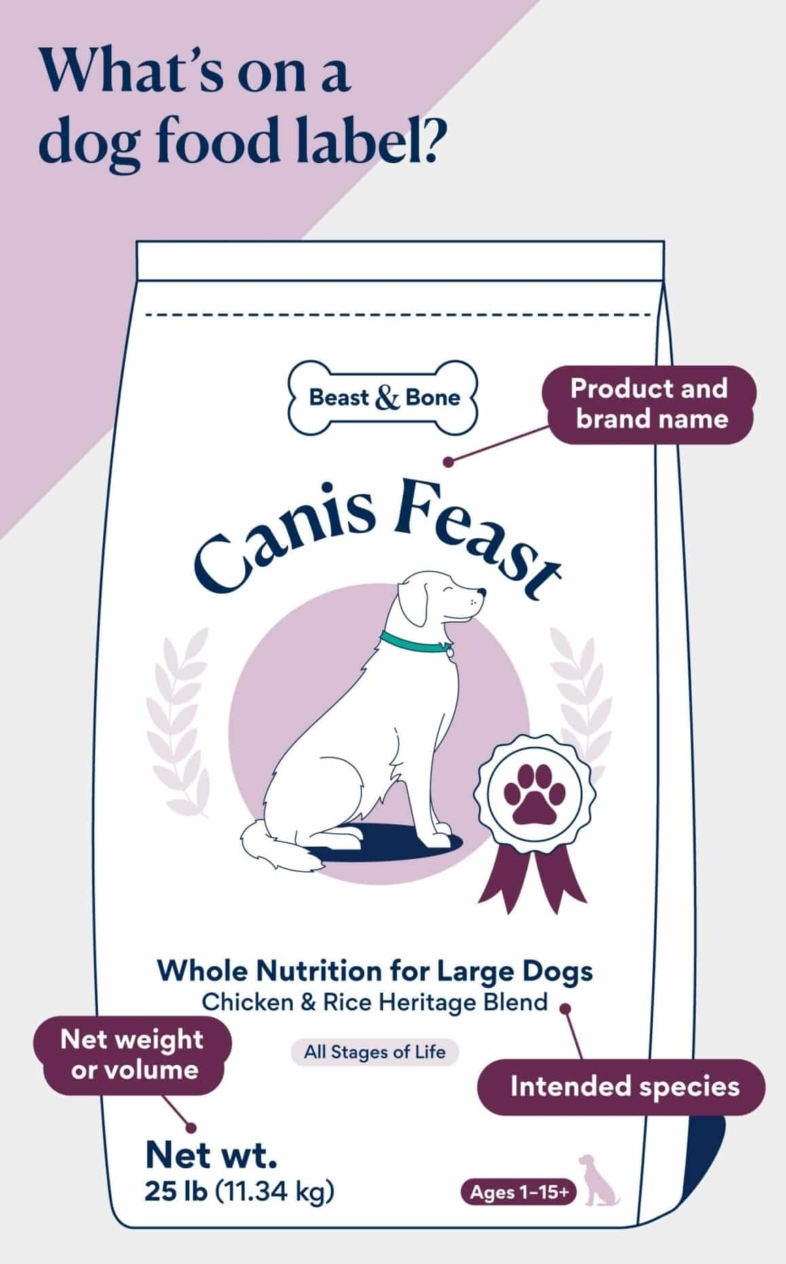
The 5-second front-of-bag scan
Start with a fast scan. Do this in the aisle or online.
- Look for the AAFCO nutritional adequacy statement for a clear life stage.
- Check the life stage: growth, all life stages, adult, or senior.
- Note breed-size targets, like large breed puppy.
- Find the calories per cup or can.
- Ignore large claims until you check the back.
When you learn how to read dog food labels correctly, this quick scan saves time. It flags weak products before you dig deeper.
Ingredient list decoded: what matters most
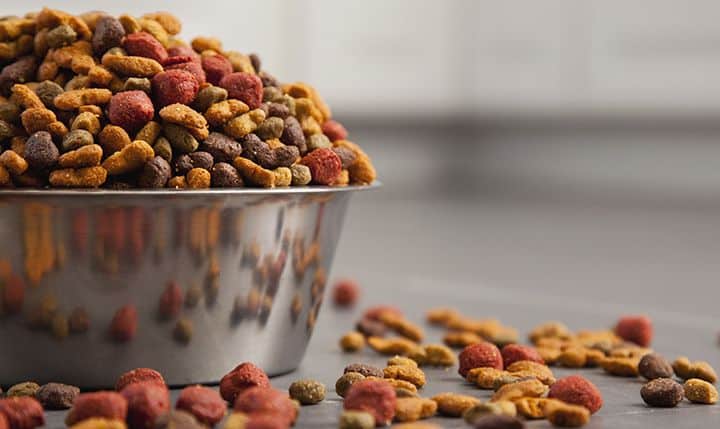
Ingredients are listed by weight before cooking. Fresh meat is heavy with water. This can push it higher on the list than it deserves.
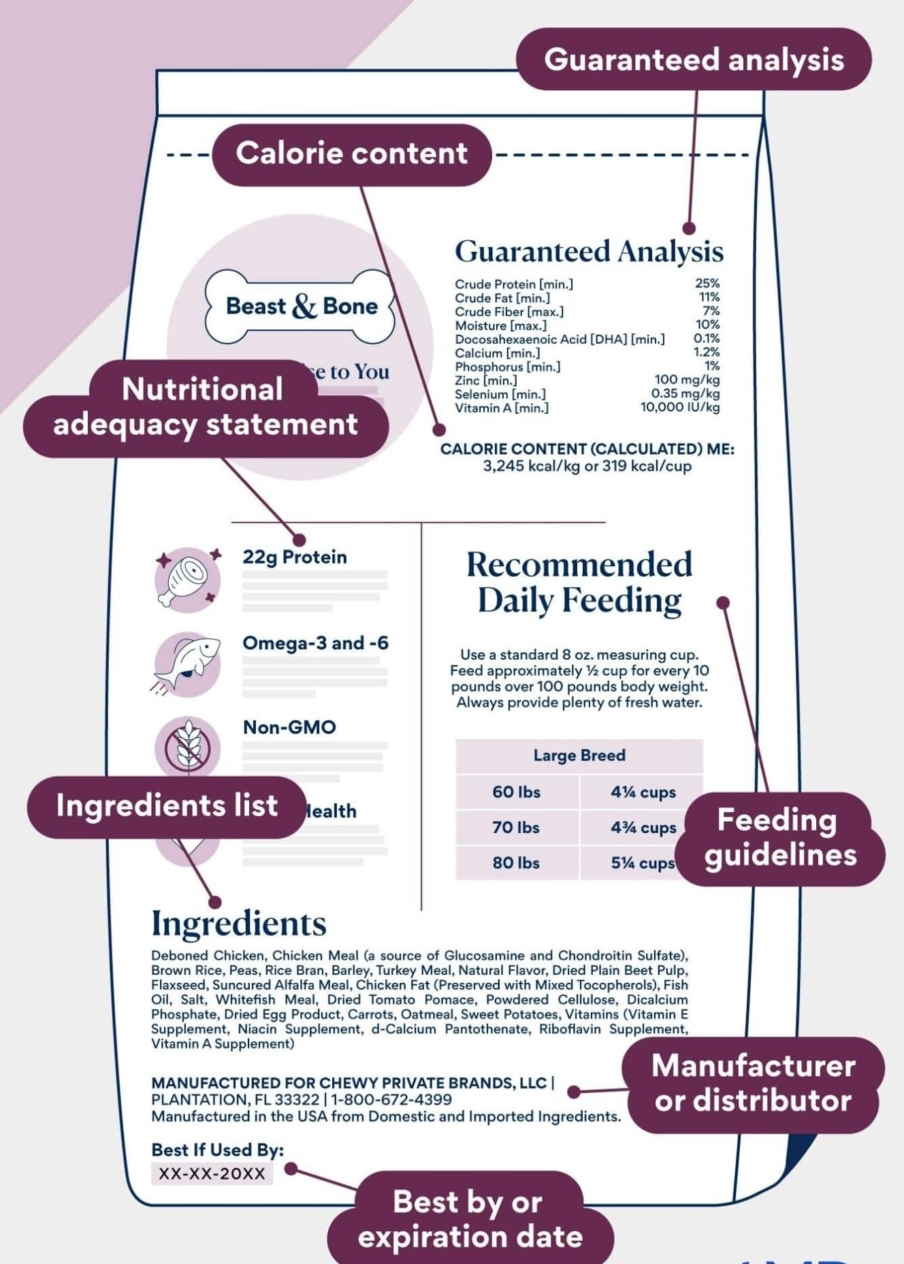
- Prefer named meats: chicken, turkey, beef, salmon.
- Meat meal is fine and very rich in protein.
- Avoid vague terms like animal meal or meat by-product without a named source.
- Carbs are fine in balance. Rice, oats, or barley can help digestion.
- Watch for long lists of plant proteins that inflate protein numbers.
- Fresh meat high on the list plus several carb sources can be a red flag.
From my work with rescue dogs, switching to a food with a named meat meal first and fewer fillers often improved coat shine in two weeks. Learn how to read dog food labels correctly, and you will spot that pattern fast.
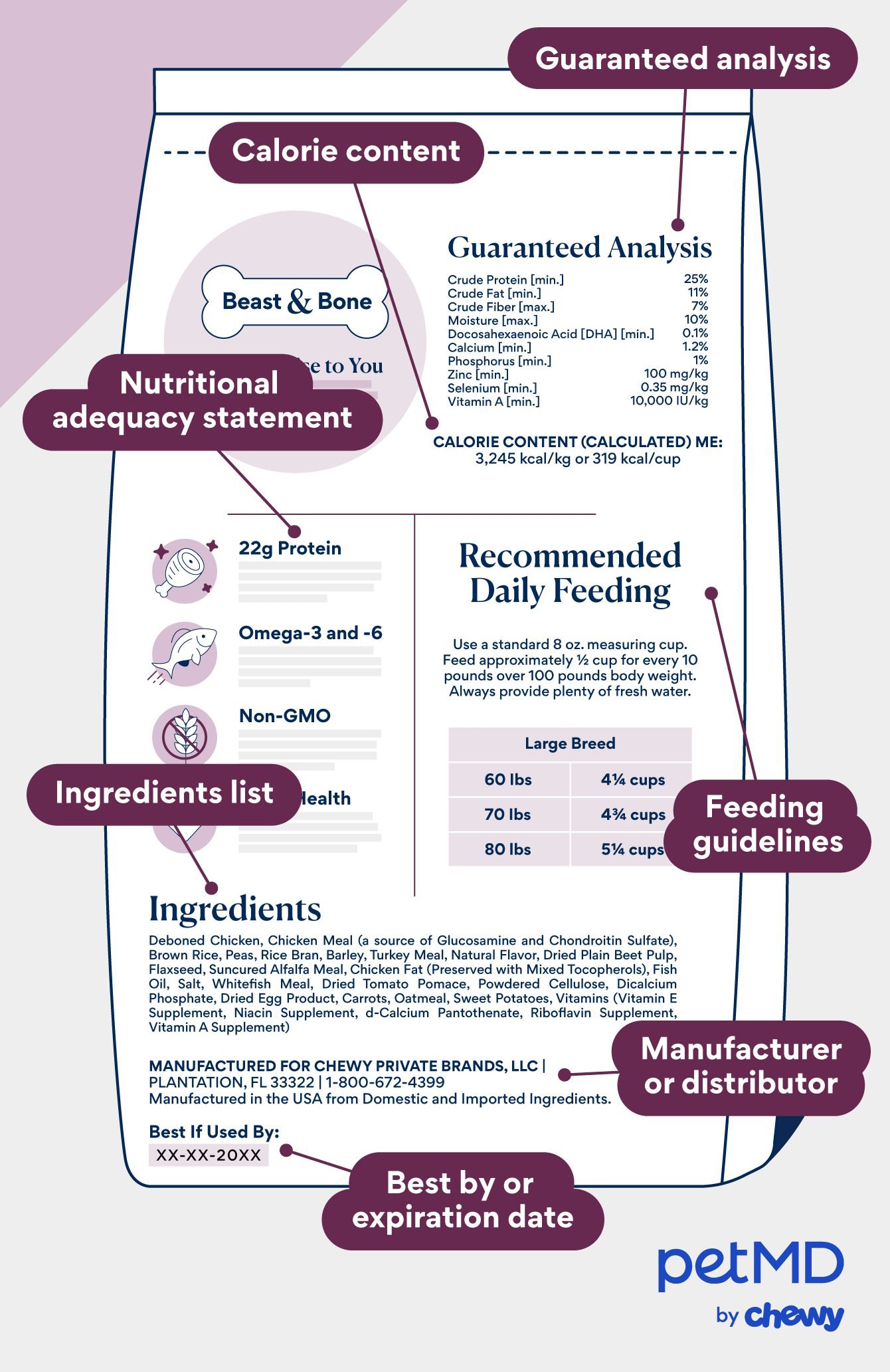
Guaranteed Analysis and what it really means
The Guaranteed Analysis lists crude protein, fat, fiber, and moisture. But it is “as fed,” which includes water. To compare foods, use dry matter.
- Subtract moisture from 100 to get dry matter.
- Divide each nutrient by that dry matter number.
- For example: 10% moisture means 90% dry matter. A 28% protein food is 31% protein on a dry matter basis.
Use dry matter to compare kibble to cans or to raw. This is key when you learn how to read dog food labels correctly. It keeps the math fair.
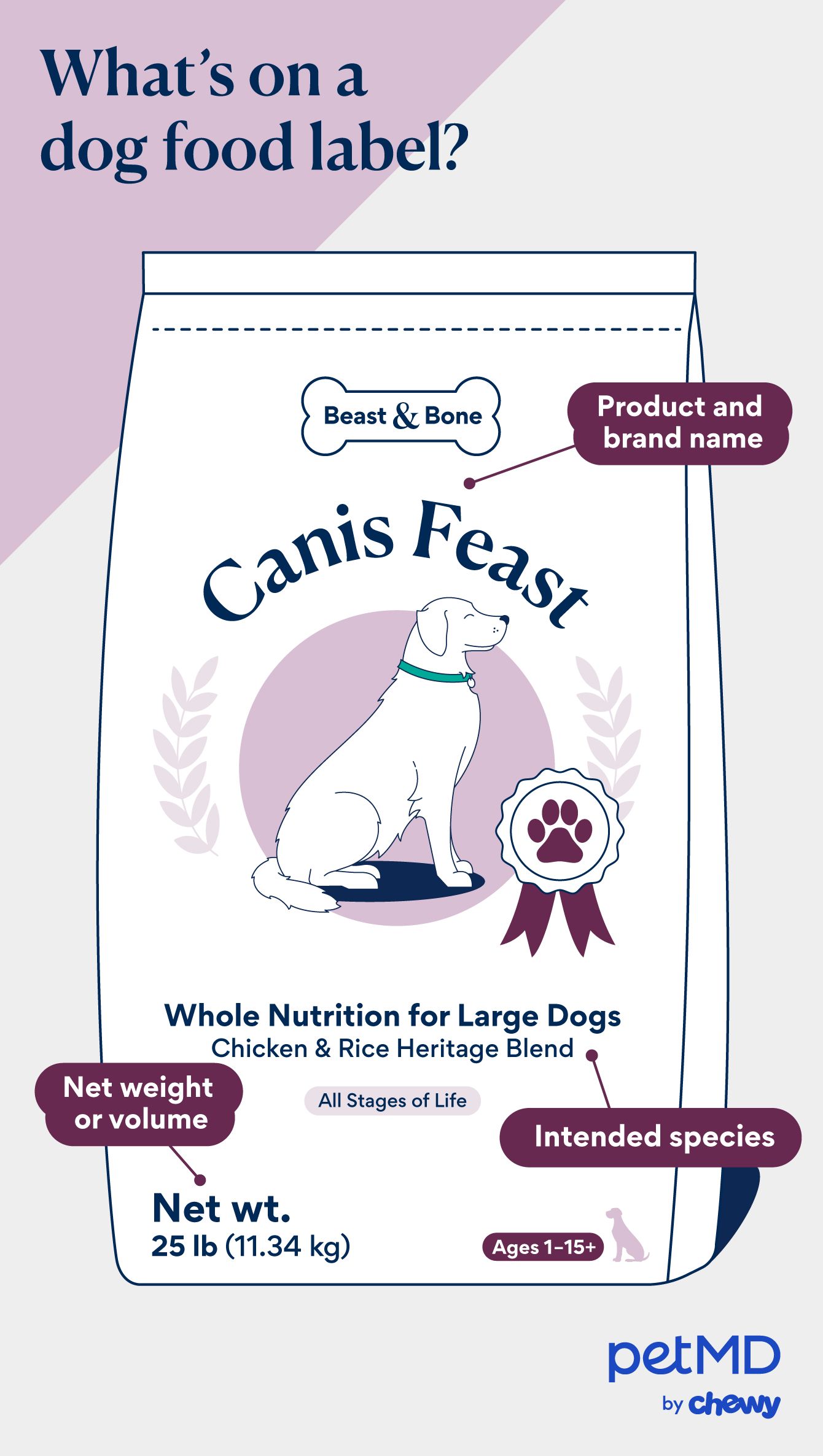
The AAFCO nutritional adequacy statement and feeding trials
Find the AAFCO statement. It shows if the food meets a complete and balanced profile.
- Formulated to meet: made to meet AAFCO nutrient levels.
- Animal feeding tests: passed a feeding trial, which can be more reassuring.
- Life stage matters. Growth and reproduction have higher needs. All life stages equals growth.
- For large breed puppies, look for proper calcium and a growth claim for large breeds.
If a food lacks this statement, it is not a complete diet. That single line is vital when you think about how to read dog food labels correctly.
Calories and feeding guidelines you can trust
Look for kcal ME per cup or per can. Without that, you cannot compare costs or plan meals.
- Start with the bag’s chart, but use it as a rough guide.
- Watch your dog’s body score. Ribs should be easy to feel, not see.
- Adjust by small steps each week until weight is steady.
In consults, I often move clients from “cups per day” to “calories per day.” It helps owners learn how to read dog food labels correctly and keep dogs fit.
Decoding additives, claims, and certifications
Labels love buzzwords. Here is how to parse them.
- Natural: allowed to use some natural preservatives like mixed tocopherols.
- Organic: must meet organic rules. It costs more but is not always better for health.
- Human-grade: strict chain of handling. Good, but not magic.
- Grain-free: not always needed. Dogs can digest grains well.
- Limited ingredient: helps with elimination trials.
- Omega-3 sources: fish oil, salmon oil, or flaxseed. EPA and DHA are best.
- Preservatives: mixed tocopherols are fine. Many avoid BHA, BHT, and ethoxyquin.
- Probiotics: look for named strains and viable counts at feeding.
- Color and dyes: not needed for dogs.
When you know how to read dog food labels correctly, these claims stop being confusing and start being useful filters.
Special cases: allergies, sensitivities, and medical diets
True food allergies often show as itchy skin or ear issues. They are rare but real.
- Try a novel-protein or hydrolyzed diet for 8 to 12 weeks.
- Keep treats strict during trials. No table scraps.
- For sensitive stomachs, pick simple formulas with named meats and modest fat.
Large breed puppies need careful calcium levels. Senior dogs may need more protein, not less. Work with your vet. Learn how to read dog food labels correctly so your choices match your dog’s needs.

Red flags and marketing traps
Skip foods that hide the basics.
- No AAFCO adequacy statement.
- No calorie info per cup or can.
- Vague proteins like animal meal.
- Claims without support like “cures allergies” or “zero shedding.”
- Misleading naming rules:
- 95% rule: “Beef Dog Food” must be at least 95% beef (excluding water).
- 25% “dinner/recipe/entrée”: “Beef Dinner” needs only 25% beef.
- With: “With Beef” means at least 3% beef.
- Flavor: “Beef Flavor” may have tiny amounts or even flavoring only.
I once audited a pricey “with salmon” food. It had only 3% salmon and many fillers. The client paid more for less. This is why you must learn how to read dog food labels correctly.
Step-by-step checklist: how to read dog food labels correctly
Use this quick list in the store.
- Find the AAFCO adequacy line and life stage.
- Check calories per cup or can.
- Scan the first five ingredients for named meats.
- Compare protein and fat on a dry matter basis.
- Look for preservatives and omega-3 sources.
- Read claims with care. Verify with the back panel.
- Confirm feeding guidelines fit your dog’s size and age.
- Price it by calories, not by bag size.
- If your dog has needs, match the diet to them.
- Keep notes and adjust based on body condition.
Follow this, and you will master how to read dog food labels correctly without stress.
Real-world example: comparing two labels in 60 seconds
Food A: AAFCO for adult maintenance, 380 kcal/cup, chicken meal first, 26% protein, 15% fat, omega-3 from fish oil.
Food B: Vague AAFCO wording, no calories listed, “with beef,” peas and potato high on list, 24% protein, 12% fat.
I would pick Food A. It states adequacy, lists calories, uses a named meat meal, and has clear omega-3s. This is a simple win when you know how to read dog food labels correctly.
Frequently Asked Questions of how to read dog food labels correctly
What is the most important part of a dog food label?
Look for the AAFCO nutritional adequacy statement first. It tells you if the food is complete and for which life stage.
How do I compare wet and dry foods fairly?
Use dry matter. Remove moisture from the math and compare protein and fat on the same basis.
Are meat by-products always bad?
No. Named organ meats can be rich in nutrients. The key is a clear, named source and overall balance.
Do grain-free foods prevent allergies?
Not by default. Most dogs do fine with grains. True allergies are often to specific proteins like chicken or beef.
How can I tell if a brand is good quality?
Check for AAFCO adequacy, clear calories, named meats, and transparent sourcing. Stable formulas and responsive customer support are also good signs.
What does “with chicken” really mean?
It means at least 3% chicken. It is not the same as a chicken-based food.
Should senior dogs eat less protein?
Not always. Many seniors do better with moderate to higher protein, as long as the kidneys are healthy. Ask your vet.
Conclusion
You now have a clear plan to judge any bag or can. Start with the AAFCO line and calories, then decode ingredients and compare on a dry matter basis. Watch your dog’s body condition, and adjust with small steps.
Open your pantry and read one label today. Use the checklist and note what stands out. If you found this helpful, subscribe for more practical pet nutrition tips or leave a question in the comments.

Pet Care Writer & Researcher
Daniel writes practical guides on daily care, feeding, and safety, turning complex topics into simple, actionable advice.