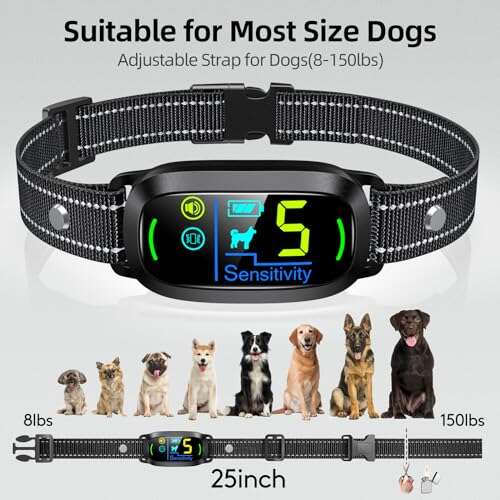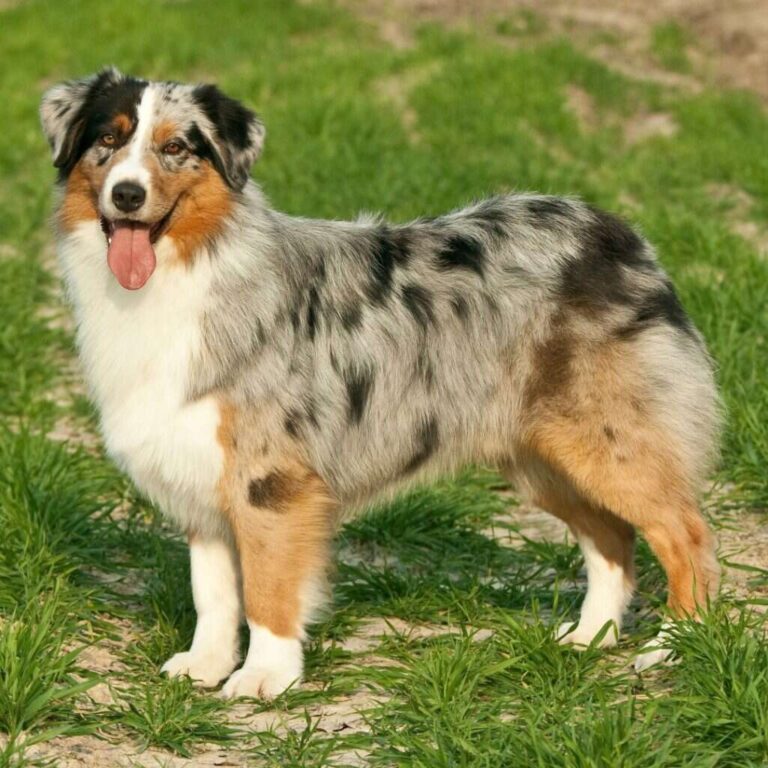
Best Bark Collars For Labrador Retrievers: Top Safe Picks
Find the best bark collars for Labrador retrievers with safe, effective options for training, comfort, and calmer days at home or outdoors.
The best bark collars for Labrador retrievers offer safe bark detection, clear training modes, comfort, and reliable waterproof use.
A Labrador can turn one passing squirrel, delivery truck, or backyard sound into a full concert. I know how hard that feels, especially when the barking wakes the family or bothers the neighbors. A bark collar can help, but it should act like a quiet coach, not a punishment. The best bark collars for Labrador retrievers detect your dog’s bark, use a gentle warning first, and fit a broad neck without rubbing. I also look for simple controls, long battery life, and a way to start with beep or vibration before using stronger settings.
4500FT Dog Training Collar for Labradors

This 4500-foot dog training collar is a remote training system rather than a stand-alone bark collar. It is listed for dogs from 10 to 120 pounds, so it gives Labrador owners plenty of room for growth and adjustment. The wide range can help when a Lab runs across a large yard or open field. A remote also lets me address barking, jumping, recall, and other habits from a distance.
I would treat the shock function as a last resort, if I used it at all. Start with voice, reward, beep, or vibration, and pair each quiet moment with praise. A Labrador often learns faster when the collar marks the right choice and I follow with food or play. The long range is useful, but the collar still needs a snug, safe fit and regular skin checks.
Pros:
- Very long 4500-foot remote range
- Fits a broad 10-to-120-pound weight range
- Useful for recall and general obedience training
- Can support training in a large yard or field
- Remote control gives the handler direct timing
- More versatile than a bark-only device
Cons:
- It may offer more power than needed for simple barking
- Remote training requires owner skill and consistency
- It is less convenient than an automatic bark collar
FAFAFROG Rechargeable Bark Collar

The FAFAFROG bark collar uses rechargeable power and offers five adjustable sensitivity levels. Its beep and vibration settings give Labrador owners a gentle starting point. That matters because many Labs respond well to a small interruption before they need a stronger correction. The product is designed for small, medium, and large dogs, which makes it a practical match for the average adult Labrador.
I like the simple idea behind this collar: notice the bark, give a clear signal, then let the dog settle. Sensitivity control can reduce false triggers from normal movement, though every automatic collar needs a careful setup period. I would test it during a calm time and watch whether it reacts only to the Lab wearing it. Rechargeable charging also saves the hassle of buying small batteries.
Pros:
- Five sensitivity levels allow fine adjustment
- Rechargeable design reduces battery waste
- Beep and vibration support gentle training
- Made for a wide range of dog sizes
- Simple automatic use for home barking
- Good entry point for first-time collar users
Cons:
- Automatic collars can still react to loud sounds
- Battery life depends on bark frequency and use
- Owners must check the fit as the dog moves
Koguzl Two-Pack Bark Collars
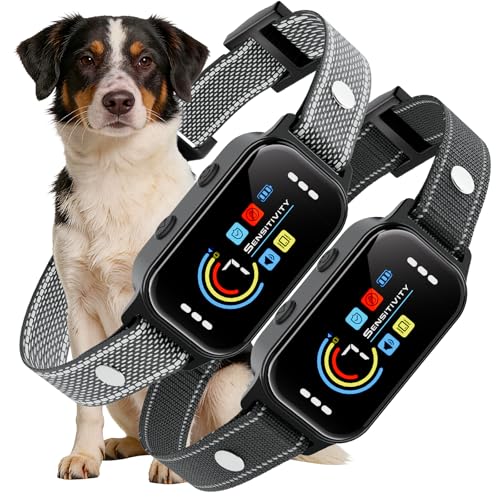
The Koguzl two-pack stands out for homes with two dogs or owners who want a spare collar ready to go. It is listed for dogs from 11 to 120 pounds and includes seven sensitivity levels. Five training modes give me more control over how the collar responds. That range is helpful for a Labrador that barks at the fence, while another dog in the home barks at indoor sounds.
A two-pack can also make sense as a backup because charging problems never happen at a convenient time. I would still train each dog alone at first. The collar should not become a substitute for finding the cause of barking, such as boredom, fear, or a need for more exercise. For the best bark collars for Labrador retrievers, I value this model’s flexibility, but I would begin with the mildest setting and reward calm behavior.
Pros:
- Two collars suit multi-dog homes
- Seven sensitivity levels offer detailed setup
- Five training modes provide useful flexibility
- Broad 11-to-120-pound listed range
- Spare unit adds convenience during charging
- Can help manage barking in separate areas
Cons:
- Two units may require more charging and care
- More settings can feel confusing at first
- It may be unnecessary for a single quiet Lab
Smart Bark Collar With IP67 Water Resistance

This smart bark collar focuses on advanced bark detection, four adjustable modes, and seven sensitivity settings. It is rechargeable and rated IP67 waterproof, which is a useful feature for a Labrador that loves wet grass, puddles, and lake trips. The collar is listed for small, medium, and large dogs. Its controls give owners a chance to match the response to the dog’s size and barking style.
I see this as a strong choice for active households. Water resistance does not mean I would leave any electronic collar submerged, but it can add peace of mind during rain or damp outdoor play. The seven sensitivity levels may help limit unwanted triggers when set with care. I would place it high on a list of the best bark collars for Labrador retrievers when outdoor durability and adjustable training are top concerns.
Pros:
- IP67 water-resistant design suits wet outdoor use
- Seven sensitivity levels support careful setup
- Four modes give owners more training choices
- Rechargeable battery keeps running costs low
- Designed for a broad range of dog sizes
- Good fit for active Labrador households
Cons:
- Water resistance does not replace proper care
- Many settings may take time to learn
- Automatic detection is not perfect in noisy yards
KJKZO Orange Smart Bark Collar

The KJKZO orange collar offers seven sensitivity levels and three training modes. Its bright orange color is easy to spot on a dark coat, which can help me find the collar during outdoor play. It is designed for large, medium, and small dogs. For a Labrador, that broad design may provide a simple way to address repeated barking without carrying a remote.
Color is not the main buying point, but visibility has real value. I can quickly see whether the collar sits in the right place, and I am less likely to leave it behind in the yard. The three modes keep the learning curve shorter than collars with many options. As with all bark collars, I would use it during short sessions and remove it when the dog rests for a long period.
Pros:
- Bright orange color improves visibility
- Seven sensitivity levels allow gradual changes
- Three modes keep operation fairly simple
- Automatic design needs no handheld remote
- Suitable for a wide dog-size range
- Useful for owners who want easy spotting outdoors
Cons:
- Bright color may not suit every owner
- Only three modes offer less choice than some rivals
- Fit and sensitivity still need careful adjustment
Oliry Smart AI Bark Collar

The Oliry smart AI bark collar offers five training modes, five sensitivity levels, rechargeable power, and an IP67 waterproof rating. Its larger set of modes may appeal to owners who want to tune the response over time. The product is listed for small, medium, and large dogs, so a Labrador should fall within its intended size group. It also has a black finish that looks discreet on many coats.
I would not assume the word “AI” means perfect bark recognition. I still watch the first several sessions and check for false responses. A collar should not punish a dog for another dog’s bark or for normal play sounds. Used with rewards and a clear quiet cue, this model may help busy owners build a more calm routine. Its water-resistant design is another plus for Labs that treat every puddle like a swimming pool.
Pros:
- Five training modes offer broad control
- Five sensitivity levels help tailor bark detection
- IP67 water resistance suits active outdoor dogs
- Rechargeable operation is convenient
- Black design looks low profile
- Broad size range fits many Labradors
Cons:
- Marketing terms do not guarantee perfect detection
- Owners must monitor the collar during early use
- It may offer more features than a mild barker needs
2-in-1 Bark and Training Collar With Remote

This 2-in-1 model combines bark control with remote training and lists a 4500-foot range. That makes it more useful than a basic no-bark device for a Labrador that needs help with recall or boundary work. A remote can deliver a prompt at the right moment, even when the dog is far across a field. The combination may reduce the need to buy separate collars for different tasks.
I would use the remote with a calm training plan, not as a shortcut. Begin with the lowest setting and teach the desired action before adding any correction. For most barking cases, voice, food, and vibration are better first steps than shock. This collar may suit experienced handlers, but a new owner should read the controls and practice timing without rushing. In my view, versatility is its main reason to consider it among the best bark collars for Labrador retrievers.
Pros:
- Combines bark control and remote training
- Long 4500-foot listed range
- Useful for recall and outdoor obedience
- Can serve more than one training purpose
- Remote control helps with timing at a distance
- May suit large properties and open spaces
Cons:
- Remote features may overwhelm new users
- Shock settings require careful, humane handling
- Less convenient for owners who want automatic use only
2-in-1 Bark and Shock Collar With 3300FT Remote

This 2-in-1 collar offers automatic bark control, a remote, five adjustable sensitivity levels, and a listed 3300-foot range. It is also described as IP67 waterproof, which fits the active nature of many Labrador retrievers. The remote can help with more than barking, including recall and basic obedience. Five sensitivity options give me a useful path from mild to more focused settings.
The main question is whether a Lab truly needs this much equipment. Many family dogs need better exercise, fewer window triggers, and reward-based training rather than a strong correction. I would reserve this type of collar for a specific training plan and use beep or vibration first. It can be a practical tool for an experienced owner, but its value depends on good timing and steady supervision.
Pros:
- Automatic bark function and remote in one system
- 3300-foot range supports large outdoor areas
- Five sensitivity levels offer useful adjustment
- IP67 waterproof design suits wet conditions
- Can support recall and obedience work
- One device may replace two separate tools
Cons:
- Shock capability is not needed for every dog
- Remote use requires careful training knowledge
- Long-range features may be excessive for home use
KJKZO Ballet Pink Bark Collar

This KJKZO bark collar has the same useful core plan as the orange version, with seven sensitivity levels and three modes. It uses a rechargeable design and is described as waterproof. The ballet pink finish gives it a softer look than the usual black or orange collar. It is made for small, medium, and large dogs, so it can work for a Labrador when adjusted correctly.
I like the balance between a simple control layout and detailed sensitivity choices. A Lab may bark loudly at a visitor but stay quiet during normal play, so careful sensitivity work matters. I would pair the collar with a “quiet” cue and reward the first pause. The color is a style choice, but it can also make the device easier to find in a light room or on a dark lawn.
Pros:
- Seven sensitivity levels support fine tuning
- Three modes keep the collar easy to manage
- Rechargeable design avoids frequent battery purchases
- Waterproof construction suits outdoor activity
- Pink finish adds a distinctive look
- Broad dog-size design may fit adult Labradors
Cons:
- Color may show dirt more quickly
- Three modes provide less choice than five-mode collars
- It still needs close supervision during setup
Rechargeable Bark Collar With Beep, Vibration, and Shock
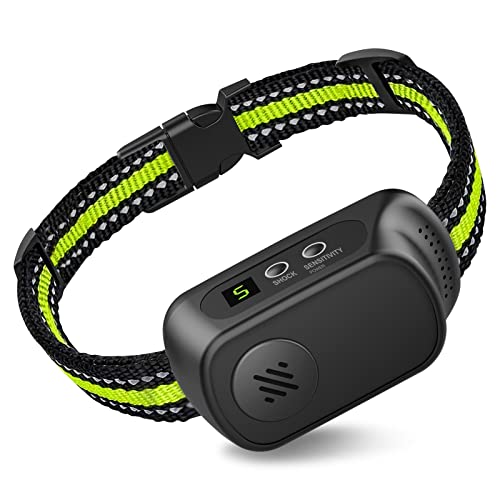
This rechargeable bark collar provides beep, vibration, and shock options with five adjustable sensitivity levels. It is listed for small, medium, and large dogs, which gives Labrador owners a flexible fit range. The three response types let me begin with the least intrusive signal. Rechargeable power also makes it easy to keep the collar ready for daily training.
This model may appeal to owners who want several correction choices in one compact device. Still, I would not jump straight to shock, and I would never use a collar to stop fear-based barking without addressing the fear. A Labrador often needs a job, a walk, or a better view-blocking plan as much as a training signal. With a proper fit and reward-based routine, this collar can serve as a budget-friendly tool for short sessions.
Pros:
- Beep and vibration allow a gentle starting point
- Five sensitivity levels help reduce overreaction
- Rechargeable battery supports regular use
- Designed for a wide range of dog sizes
- Three response types offer training flexibility
- Compact format may be easy to carry
Cons:
- Shock mode needs extra care and judgment
- Automatic bark detection may need trial and error
- It may lack the long remote range of training systems
How I Choose the Best Bark Collars for Labrador Retrievers
Labradors are often friendly, smart, strong, and very ready to explore. Those traits make them wonderful family dogs, but they can also make barking habits hard to ignore. I do not judge a collar by the number of modes alone. I look at detection, comfort, fit, control, battery design, water protection, and how easily a new owner can use it well.
Bark detection matters most
A good automatic bark collar should respond to the dog wearing it, not every sound nearby. No sensor is perfect, so I prefer collars with adjustable sensitivity. Start low, then make small changes. If the collar reacts during play, panting, or another dog’s bark, stop and reset the fit or sensitivity.
Choose the mildest useful mode
Beep and vibration are the best starting points for most family Labradors. The goal is to interrupt the pattern and guide the dog toward quiet behavior. I then reward the pause with a treat, toy, or kind voice. A collar without a reward plan is like a map without a road.
Some products in this guide list shock settings. I include them because shoppers may want to compare features, not because every dog should use them. The American Veterinary Society of Animal Behavior has advised reward-based methods and cautioned against aversive training. I agree with that approach. If a dog shows fear, pain, panic, or confusion, remove the collar and ask a qualified veterinary behavior professional for help.
Fit a Labrador collar with care
The contact area should sit high enough to detect barking but should not choke or press hard into the neck. I should be able to slide two fingers under the strap. Check the skin often, especially during the first week. Rotate the collar’s position as directed by the maker, and do not leave an electronic training collar on all day.
Waterproof does not mean careless
Many Labradors swim. An IP67 label can help with rain, splashes, and wet grass, but I still follow the product instructions. I would rinse off dirt, dry the contact area, and charge the unit only when it is dry. I would also remove the collar before a long swim unless the manufacturer clearly permits that use.
Battery life and charging
Rechargeable collars are convenient and often cheaper over time. I like a simple charge display and a spare charging cable. Automatic collars may use more power when a dog barks often. Charge the unit before a training session, but never charge it while the dog wears it.
Remote or automatic?
An automatic bark collar works well for a narrow problem, such as repeated fence barking. A remote collar gives the handler more control and can support recall. Yet a remote also demands better timing. For most families, a simple automatic model with beep and vibration is easier to use. Large yards and advanced obedience needs may justify a remote system.
Training Tips for a Labrador That Barks
First, find the reason for the barking. A Lab may bark from excitement, boredom, fear, loneliness, territorial behavior, or a desire to play. The collar can interrupt sound, but it cannot solve the cause by itself. Add daily exercise, scent games, chew time, and short training drills.
Teach “quiet” before you depend on any device. Let your dog bark once or twice, say “quiet” in a calm voice, and wait for a short pause. Mark that pause with “yes,” then give a treat. Slowly extend the quiet time. Keep sessions short and end while your dog still wants to work.
Introduce the collar when your Labrador is calm. Let the dog sniff it first. Put it on for a few minutes without turning it on, then offer praise. Watch for rubbing, scratching, tucked posture, or unusual fear. Those signs mean I should stop and review the fit or seek professional advice.
Never use a bark collar for a dog left alone with a serious separation problem. Barking may be a distress signal, and a correction can make that distress worse. A camera, enrichment plan, gradual alone-time training, and veterinary guidance can help more. For nuisance barking, combine management with training: close the blinds, move the dog from the fence, and reward calm watching.
My Recommendation
For most Labrador owners, I would start with the FAFAFROG Rechargeable Bark Collar because its five sensitivity levels and beep-and-vibration options keep the learning process simple. The Smart IP67 model is a better fit for wet, active homes that need more modes. Multi-dog families may prefer the Koguzl two-pack, while experienced handlers with large properties may want a remote model.
| Best for | Why |
|---|---|
| First-time bark collar users | FAFAFROG offers simple beep and vibration choices with five sensitivity levels. |
| Active Labradors and wet yards | The Smart IP67 collar combines rechargeable power, outdoor water resistance, and seven sensitivity levels. |
| Two dogs or large properties | Koguzl provides two collars, while the 4500FT remote models cover wide outdoor spaces. |
The best bark collars for Labrador retrievers should support calm learning, not replace attention or exercise. I would choose the least intense setting that works, supervise every early session, and inspect the neck often. Product features and stock can change, so check the current Amazon listing for fit details, included parts, and today’s price.
FAQs Of best bark collars for labrador retrievers
Are bark collars safe for Labrador retrievers?
They can be used more safely when they fit well, offer gentle modes, and support reward-based training. I prefer beep or vibration first and avoid using a collar for fear, pain, or separation barking. Always monitor the dog and check the skin.
What type of bark collar is best for a Labrador?
A rechargeable collar with adjustable sensitivity and beep or vibration is a good starting point. Labradors have strong necks and active bodies, so a secure, broad fit and water resistance can also help.
Can a bark collar stop all Labrador barking?
No. It may reduce repeated nuisance barking, but it cannot fix boredom, fear, loneliness, or poor exercise. Combine the collar with quiet training, enrichment, management, and professional help when needed.
Should I use shock on my Labrador?
I would not make shock the first choice. Begin with rewards, a calm voice, beep, or vibration. If barking is severe or linked to fear, ask a veterinary behavior expert for a plan instead of increasing correction.
How long can a Labrador wear a bark collar?
Follow the product instructions and use it only for supervised training periods. Remove it for rest, crate time, sleep, and long unsupervised periods. Check the neck often for redness or rubbing.
Final Verdict: Which Should You Buy?
For most homes, the FAFAFROG is the best bark collar for Labrador retrievers because it offers adjustable sensitivity, beep, vibration, and rechargeable power. Choose the Smart IP67 model for wet outdoor use or Koguzl for two dogs.
Use any collar as a training aid, not a stand-in for care. The best bark collars for Labrador retrievers work best with exercise, rewards, close fit checks, and patient daily practice.

Pet Care Writer & Researcher
Daniel writes practical guides on daily care, feeding, and safety, turning complex topics into simple, actionable advice.