
Why Does My Dog Keep Barking At Night: Causes & Fixes
Why does my dog keep barking at night? Learn the common causes and gentle, effective ways to help your dog sleep peacefully.
Dogs often bark at night because they hear, sense, or fear something, or because pain and anxiety disturb their sleep.
If you are wondering, “why does my dog keep barking at night,” the answer may involve noise, boredom, separation anxiety, age, health, or a change in the home. Understanding the cause is the first step toward calmer nights. This guide explains what the barking means, what you can do at home, and when your dog needs veterinary care.
Why Does My Dog Keep Barking at Night?
Night barking is a form of communication. Your dog may be alerting you to a sound, asking for help, reacting to fear, or showing that something feels wrong.
Dogs also have sharper hearing and smell than people. A dog may notice a raccoon outside, a neighbor closing a car door, or a distant siren long before you do. At night, fewer sounds compete for attention, so small noises can seem much louder to your pet.
Common reasons include:
• Outside sounds, wildlife, or unfamiliar movement
• Boredom and unused energy
• Separation anxiety
• Fear of darkness, storms, or strange noises
• Hunger, thirst, or the need to go outside
• Pain or illness
• Age-related confusion
• A learned habit that receives attention
A useful way to understand the barking is to ask what happens right before it starts. The timing, tone, and body language can reveal more than the noise alone.

Common Reasons Your Dog Barks at Night
Your dog hears something outside
Dogs can hear high-pitched sounds and distant movement that people miss. Nighttime wildlife, outdoor cats, plumbing noises, heating systems, and passing cars may trigger barking.
A dog that stands at the window, faces the door, or raises its ears may be responding to a real sound. In this case, the barking is often short, sharp, and linked to a specific noise.
Try closing blinds, using white noise, or moving your dog’s bed away from windows. A secure fence and motion-sensitive lights may also reduce nighttime triggers.
Your dog has too much energy
A dog that sleeps most of the day may be ready to play when your household is quiet. This is common in young dogs, working breeds, and active mixes.
Physical exercise helps, but mental activity matters too. A long walk, scent game, short training session, or food puzzle can help your dog settle before bedtime.
Do not suddenly add intense exercise if your dog is older or has health problems. Increase activity slowly and ask your veterinarian about safe exercise limits.
Your dog feels lonely or anxious
Some dogs bark when left alone at night. They may feel worried when a family member goes to bed, when they sleep in another room, or when the house becomes dark and quiet.
Separation anxiety can involve more than barking. Other signs include:
• Scratching at doors
• Pacing or panting
• Drooling
• Chewing near exits
• Urinating indoors
• Following you closely during the day
If your dog becomes distressed, punishment can make the fear worse. A gradual behavior plan, calming routine, and professional support are safer choices.
Your dog wants attention
If barking leads to talking, petting, opening the door, or giving food, your dog may learn that barking works. Even saying “quiet” can reward the behavior because your dog receives interaction.
This does not mean your dog is being stubborn or manipulative. Dogs repeat actions that produce results. If barking has worked before, your dog may keep trying it.
Before changing the response, make sure your dog’s basic needs are met. Then reward quiet behavior instead of giving attention during repeated barking.
Your dog needs to go outside
A dog may bark at night because it needs to urinate or defecate. Puppies, senior dogs, and dogs with urinary problems may need more frequent bathroom breaks.
Take your dog outside calmly and keep the trip boring. Avoid turning it into playtime, a snack break, or a long social event. This helps your dog learn that nighttime bathroom trips are brief and predictable.
Your dog is afraid
Dark rooms, wind, thunder, fireworks, and unfamiliar shadows can frighten dogs. Some dogs also react to small changes in furniture or light patterns.
Fear barking may come with tucked ears, trembling, crouching, panting, or attempts to hide. Comfort your dog calmly, but avoid forcing it toward the frightening object.
A quiet room, soft background sound, familiar bedding, and a covered crate may help. Never use the crate as punishment, and do not confine a dog that panics inside one.
Your dog is in pain or feels sick
A sudden change in nighttime barking can signal a medical problem. Pain may become more noticeable when your dog lies down and the home is quiet.
Watch for limping, stiffness, vomiting, diarrhea, appetite changes, increased thirst, trouble breathing, or repeated licking of one body area. A dog may also bark because it cannot get comfortable.
Contact a veterinarian if the behavior begins suddenly or comes with physical symptoms. Do not give human pain medicine unless a veterinarian specifically tells you to do so, as many common drugs can harm dogs.
Your senior dog is confused
Older dogs may develop canine cognitive dysfunction, a condition that can affect sleep, memory, and awareness. Affected dogs may sleep during the day and wander or bark at night.
They may also stare at walls, get stuck in corners, have house-training accidents, or seem unsure in familiar rooms. Similar signs can come from pain, vision loss, hearing changes, or other illness.
A veterinary exam is important. Early care may improve comfort and help rule out treatable causes.

How to Find the Cause of Night Barking
You do not need to guess. A simple record can show a clear pattern within a few nights.
Write down:
• The time the barking begins
• How long each episode lasts
• Where your dog is standing or sleeping
• What your dog’s body language looks like
• Sounds, weather, or activity near the home
• Food, exercise, and bathroom timing
• Whether the barking stops when someone enters the room
A phone recording can help you notice tone and body language. A pet camera may also show whether your dog is watching a window, pacing, or sleeping before the barking starts.
Think of the record as a map. The goal is not to silence the symptom without understanding the reason. The goal is to identify the need behind it.
What different barking sounds may mean
No bark type gives a perfect answer, but patterns can offer clues.
• Sharp, repeated barks may signal alertness or excitement.
• Low, steady barking may reflect concern or a perceived threat.
• Whining mixed with barking may suggest anxiety or a need for comfort.
• High-pitched barking may occur with frustration, pain, or distress.
• Barking with howling may be a response to distant sounds or loneliness.
Always consider body language and the setting. Sound alone cannot diagnose fear, pain, or illness.

How to Stop a Dog From Barking at Night
The best solution depends on the cause. Start with basic needs, reduce triggers, and reward calm behavior.
Create a predictable bedtime routine
Dogs often relax more easily when the evening follows the same pattern. Try this routine:
-
Offer a suitable evening meal based on your dog’s normal feeding plan.
-
Take your dog for a calm walk or bathroom break.
-
Provide a few minutes of gentle training or scent work.
-
Dim lights and reduce exciting activity.
-
Settle your dog in the same safe sleeping area.
-
Reward quiet behavior with calm praise.
A routine acts like a signal that the day is ending. Keep the final hour peaceful rather than filling it with rough play.
Reduce outside triggers
If your dog barks at movement or sound, change the environment.
• Close curtains or use frosted window film.
• Move the bed away from doors and windows.
• Use a fan or white-noise machine.
• Check gates, locks, and outdoor lighting.
• Keep wildlife attractants, such as open trash, away from the home.
• Let your dog sleep in a quieter interior room if appropriate.
Do not yell through the window or rush outside every time your dog barks. That response may increase excitement and teach your dog that barking brings you into the action.
Teach a quiet cue
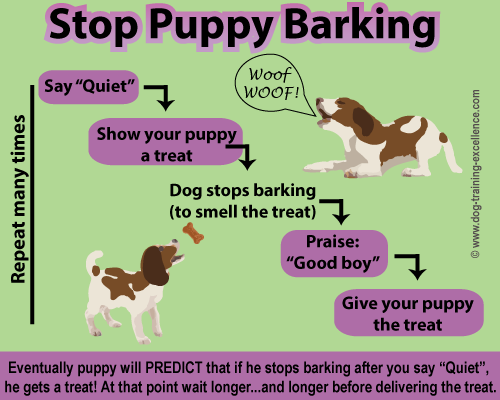
First, choose a calm word such as “quiet.” When your dog pauses after barking, wait one second, say the cue, and reward the silence.
Increase the quiet period slowly. Start with one or two seconds, then build to five, ten, and more. Use a small treat, gentle praise, or another reward your dog values.
Avoid repeating “quiet” while your dog is barking nonstop. The lesson should connect the word with calm behavior, not with a loud argument.
Meet exercise and enrichment needs
A tired dog is not always a calm dog, but a dog with healthy daily activity often settles more easily. Match activities to age, breed, fitness, and medical needs.
Helpful options include:
• Sniff walks
• Basic obedience practice
• Treat searches around one room
• Puzzle feeders
• Safe chew items
• Short games of fetch
• Low-impact indoor exercises
Mental work can be as useful as physical exercise. Ten minutes of scent training may leave some dogs more settled than a rushed walk around the block.
Avoid common mistakes
Many well-meaning owners accidentally make night barking stronger. Avoid:
• Punishing or hitting your dog
• Shouting from another room
• Using shock or spray collars without expert guidance
• Giving food every time barking starts
• Making exciting midnight play sessions
• Ignoring a sudden change in behavior
Ignoring barking may help with attention-seeking behavior, but it is not suitable for pain, panic, illness, or a genuine safety alert. First identify the likely cause.

When to Call a Veterinarian or Dog Behavior Professional
Contact your veterinarian when barking is sudden, intense, or linked to signs of illness. A medical exam can check for pain, urinary disease, digestive problems, sensory loss, and other conditions.
Seek urgent care if barking occurs with:
• Trouble breathing
• Collapse or weakness
• Repeated vomiting
• A swollen abdomen
• Seizures
• Severe pain
• Possible poisoning
• An inability to urinate
For ongoing anxiety or aggression, ask your veterinarian for a referral to a qualified veterinary behaviorist or experienced reward-based trainer. Professional help is especially important when your dog may bite, injure itself, or panic when alone.
A behavior plan has limits. There is no single cure for every case, and progress may take days or weeks. Medication can help some dogs, but it should support a complete treatment plan and never replace proper diagnosis.

A Practical Seven-Night Plan
If your dog is healthy and the barking is mild, try a structured plan for one week.
-
Keep a barking log each night.
-
Add age-appropriate exercise and mental work during the day.
-
Give your dog a final bathroom break before bed.
-
Remove likely window, door, and wildlife triggers.
-
Use steady background noise if outside sounds are a problem.
-
Reward calm behavior before barking begins.
-
Review the pattern after seven nights.
One common lesson from dog training cases is that consistency matters more than intensity. A calm response repeated every night usually works better than a strict response used only after everyone is exhausted.
If the barking worsens, causes distress, or does not improve, stop experimenting and seek veterinary or behavior support.
Frequently Asked Questions About Why Does My Dog Keep Barking at Night
Why does my dog bark at night for no reason?
Your dog may be reacting to sounds, smells, movement, fear, boredom, or discomfort that you cannot detect. Night barking that seems random often becomes clearer when you track the time, location, and body language.
Should I ignore my dog barking at night?
Ignore barking only when you have ruled out urgent needs, fear, pain, and illness. If the barking seeks attention, calmly rewarding quiet behavior is usually more helpful than yelling or repeatedly responding.
Why has my older dog started barking at night?
Older dogs may bark at night because of pain, sensory loss, urinary problems, or canine cognitive dysfunction. A sudden change in a senior dog deserves a veterinary exam rather than a behavior correction alone.
How can I stop my dog from barking at noises outside?
Reduce access to windows, close curtains, use white noise, and reward your dog for turning away from the sound. Avoid shouting, since your dog may think you are joining the alarm.
Can separation anxiety cause nighttime barking?
Yes. A dog may bark when separated from family members, even if everyone is still inside the home. Pacing, panting, scratching, chewing, and panic when alone also support this possibility.
Is night barking a sign that my dog is in pain?
It can be, especially when the behavior starts suddenly or occurs with restlessness, stiffness, panting, appetite changes, or trouble lying down. Contact your veterinarian if pain may be involved.
Conclusion
When asking, “why does my dog keep barking at night,” start with the cause rather than the noise. Outside triggers, excess energy, anxiety, attention-seeking, bathroom needs, fear, pain, and age-related confusion can all play a role.
Keep a simple log, build a steady bedtime routine, reduce triggers, and reward quiet behavior. Never ignore sudden changes or signs of illness. With patience and the right support, many dogs can learn to rest more peacefully at night. If your dog continues to struggle, contact your veterinarian or a qualified behavior professional, and share your experience or questions in the comments.