What Are The Different Types Of Dog Barks: Meanings
Learn what are the different types of dog barks, what they mean, and how to respond to each sound with confidence.
Dogs bark to alert, greet, play, seek help, express fear, or protect space.
Understanding what are the different types of dog barks can help you respond with care instead of frustration. Each bark has clues in its pitch, pace, volume, and the dog’s body language. After years of watching dogs in homes, parks, and training settings, I have learned that a bark is less like random noise and more like a message. This guide explains what those messages may mean and how to respond safely.

Why dogs bark
Barking is a normal form of canine communication. Dogs use it to speak to people, other dogs, and their surroundings. Some breeds bark more than others, but every dog has a personal voice.
A bark may signal excitement, fear, stress, pain, boredom, or a simple request. The same dog may use different sounds for different needs. For example, a short bark at the door may mean “Someone is here,” while a soft whine near the food bowl may mean “I want dinner.”
To understand what are the different types of dog barks, look at three parts of the message:
• Sound: Listen to the pitch, length, and rhythm.
• Body language: Check the ears, tail, eyes, mouth, and posture.
• Context: Notice what happened just before the bark.
A bark alone does not tell the whole story. A high-pitched bark with a loose, wiggly body often shows excitement. The same high pitch paired with a tucked tail may show fear.

The main types of dog barks
There is no single system that labels every dog bark perfectly. Dogs are individuals, and their sounds can overlap. Still, the following categories cover the most common types of dog barks heard in daily life.
1. Alert or alarm barking
Alert barking happens when a dog notices something unusual. The trigger may be a knock, a delivery person, a strange sound, or an animal near the yard.
This bark is often sharp and repeated. Your dog may stand tall, face the trigger, raise the ears, and move toward a window or door.
A calm response works best. Thank your dog for alerting you, then guide the dog away from the door or window. Teaching a cue such as “quiet” or “thank you” can help your dog understand when the alert is complete.
2. Territorial barking
Territorial barking is meant to make a person, dog, or animal leave an area. The area may be a home, yard, car, crate, or favorite resting place.
This type of bark often sounds deep, strong, and intense. The dog may lean forward, stiffen the body, raise the tail, or place itself between you and the perceived threat.
Territorial barking can become worse when a dog practices it every day. Blocking the view through a window, using a secure fence, and rewarding calm behavior can reduce the habit. Never encourage a dog to rush the fence or threaten passersby.
3. Fear or anxiety barking
Fear barking is one of the most important types of dog barks to recognize. It may happen during storms, fireworks, visits to the veterinarian, car rides, or contact with unfamiliar people.
The bark may be high, fast, or mixed with whining. The dog may crouch, hide, lick the lips, yawn, tremble, tuck the tail, or turn away.
Fear is not stubbornness. Punishment may increase the fear and make the barking stronger. Give the dog distance from the trigger, provide a safe space, and speak with a qualified trainer or veterinarian if the fear is severe.
4. Excitement or greeting barking
Many dogs bark when they see a favorite person, meet a friend, or prepare for a walk. This bark often sounds bright, rapid, and energetic.
The body usually looks loose. The tail may wag, the mouth may stay open, and the dog may bounce or bring a toy. Some dogs also bark when they hear a familiar car pull into the driveway.
Greeting barking can still become a problem if the dog jumps or crowds people. Ask visitors to wait for four paws on the floor before giving attention. Reward calm greetings with praise, a treat, or access to the person.
5. Play barking
Play barking is common during fetch, tug, wrestling, and chase. It may sound loud, but the dog’s body often shows relaxed movement and playful signals.
Look for a play bow, which is when the dog lowers the front legs while keeping the rear end raised. Loose movements, quick turns, and an open mouth are also useful clues.
Watch for changes in tone or posture. Play should stop if one dog becomes stiff, tries to escape, hides, or gives repeated warning signals. Good play includes pauses and a willingness to rejoin.
6. Demand or attention barking
Demand barking means the dog wants something now. The request may involve food, a toy, a door opening, a walk, or human attention.
This bark is often steady and directed at a person. The dog may stare, paw, nudge, or stand near the wanted item.
A common mistake is rewarding demand barking by giving the dog what it wants. That can teach the dog that barking works. Instead, wait for a short quiet moment, ask for a simple behavior such as “sit,” and then provide the reward.
7. Frustration barking
Frustration barking appears when a dog cannot reach a goal. A barrier, leash, closed door, or slow human may cause this response.
The sound can be repetitive and urgent. The dog may pace, pull, jump, spin, or stare at the object of interest. A dog that wants to greet another dog may bark and lunge behind a fence or leash.
Frustration often improves when the dog learns an alternate behavior. Practice looking at you, walking away, touching your hand, or waiting calmly. Start far from the trigger and move closer only when the dog can stay relaxed.
8. Separation-related barking
Some dogs bark when left alone or when they expect a person to leave. This may be part of separation anxiety, especially when it appears with destructive behavior, escape attempts, drooling, pacing, or house soiling.
The barking may begin soon after departure and continue for a long time. A camera can help you learn what happens when you are away, but do not use it to frighten or correct the dog.
Separation problems need careful treatment. A veterinarian can rule out medical issues and may recommend a gradual alone-time plan, behavior support, or medication. Do not simply leave an anxious dog alone for longer periods in hopes that it will “get used to it.”
9. Pain or illness barking
A dog may bark, whine, or cry because of pain. This sound can occur when the dog moves, lies down, rises, eats, or receives touch.
Watch for other signs, including limping, restlessness, panting, hiding, reduced appetite, vomiting, or a sudden change in behavior. A normally quiet dog that begins barking often needs special attention.
Sudden or unusual barking deserves a veterinary check. Seek urgent care if the dog has trouble breathing, collapses, suffers a serious injury, or shows severe pain.
10. Boredom barking
Boredom barking often continues when nothing clear is happening. The dog may bark at a fence, ceiling fan, passing cars, or an empty room.
This pattern can result from too little exercise, mental work, social contact, or rest. Some dogs need more sniffing and problem-solving rather than only longer walks.
Offer safe enrichment such as food puzzles, scent games, short training sessions, chew items, and supervised play. Change activities often so the dog has a reason to explore rather than bark.
11. Social or response barking
Some dogs bark because another dog is barking nearby. This is called social facilitation. One dog begins, and others join in, much like a neighborhood conversation.
The barking may happen outdoors, in a car, or near an open window. The dog may appear alert but not truly fearful or aggressive.
Reducing sound and visual access can help. Call the dog indoors, close the blinds, or guide the dog to a quiet room. Reward the dog for turning away from the barking chain.
12. Warning or defensive barking
Warning barking communicates discomfort and asks for more space. A dog may use it when someone reaches toward a food bowl, enters a resting area, or approaches too quickly.
The dog may growl, show teeth, freeze, lean away, or stare. A warning should be taken seriously. It is useful information, not bad behavior that should be punished.
Stop the interaction and create space. If warning behavior is repeated, work with a reward-based behavior professional. Do not force contact or test how close you can get.

How to tell what a dog bark means
Learning what are the different types of dog barks becomes easier when you read the entire dog, not only the sound. Think of the bark as one word in a longer sentence.
Pitch
A low bark may appear during territorial behavior, warning behavior, or serious discomfort. A high bark may occur during fear, excitement, frustration, or play. Pitch alone cannot identify the emotion.
Speed and rhythm
Fast, repeated barks often show high arousal. Slow, spaced barks may signal alertness or uncertainty. A single bark may be a brief request or a reaction to a sudden event.
Body posture
A loose body suggests the dog feels fairly safe. A stiff body suggests tension. A crouched body, tucked tail, pinned ears, or repeated lip licking may signal fear or stress.
Distance from the trigger
A dog that moves toward a person while barking may feel confident or protective. A dog that barks while moving backward may feel afraid and want space.
What happens next
Notice what stops the barking. If the dog relaxes when a person leaves, the bark may be territorial or fearful. If it stops after receiving a toy, it may have been a demand bark. This is not a perfect test, but it adds useful context.
In my experience, people often make one mistake: they focus on volume instead of emotion. A loud play bark may be harmless, while a quiet, stiff warning may need urgent attention. Calm observation prevents many poor responses.
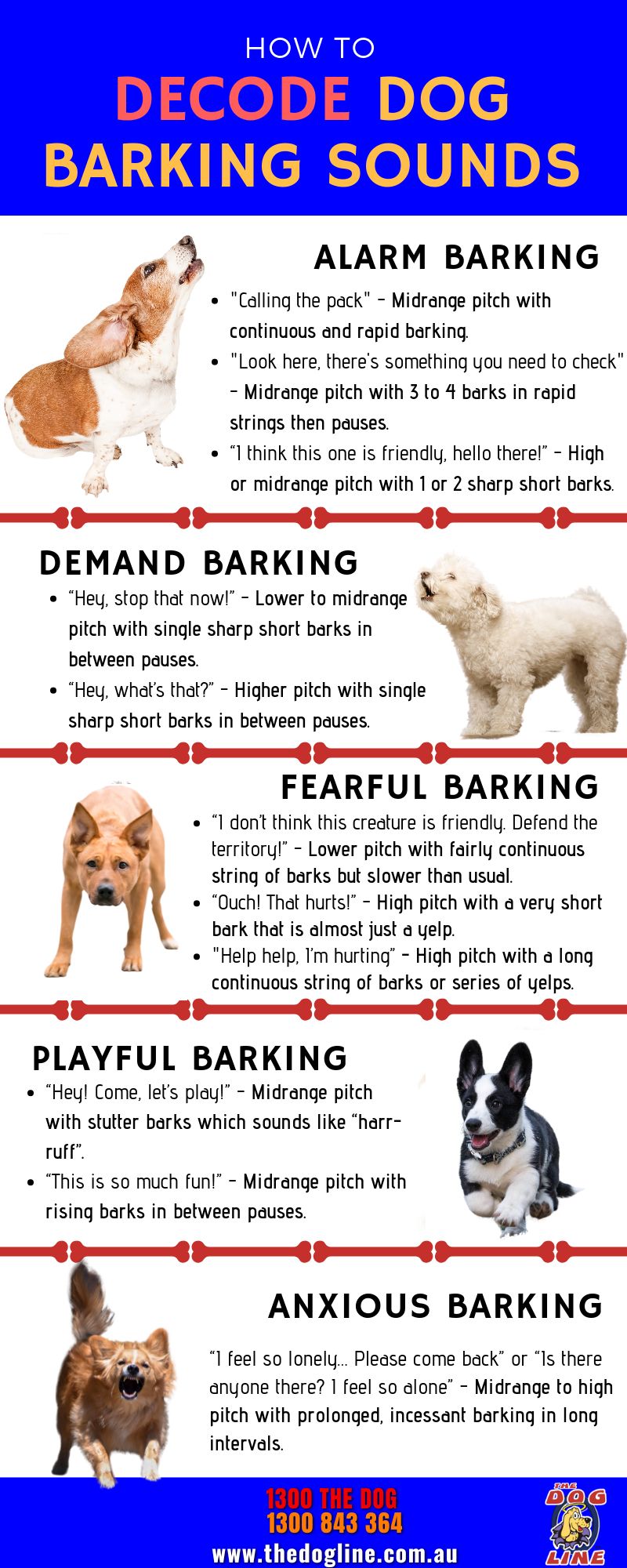
Dog bark sounds and what they may signal
Dog bark sounds can vary from short “woofs” to long, sharp bursts. These patterns are clues, not fixed translations.
• One or two short barks: The dog may be alerting you or asking for attention.
• Rapid, repeated barks: The dog may feel excited, frustrated, threatened, or highly aroused.