Why Does My Dog Bark At His Food: Reasons And Solutions
Why does my dog bark at his food? Learn the common reasons behind this behavior and simple ways to help your dog eat calmly and confidently.
Dogs may bark at food from excitement, stress, guarding, discomfort, or confusion about the bowl.
If you are wondering, “why does my dog bark at his food,” the answer depends on when the barking starts and what your dog’s body language says. A happy, bouncy dog may be expressing excitement, while a stiff dog that guards the bowl may be warning others to stay away. Pain, nausea, fear, and learned habits can also play a role.
This guide explains the most common reasons dogs bark at food, how to read the signs, and what you can do safely at home. It also covers when barking may point to a health problem that needs veterinary care.
Why does my dog bark at his food?
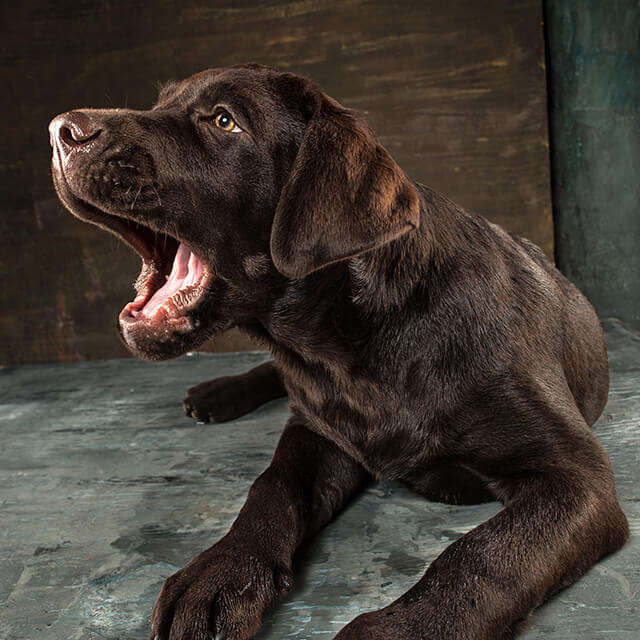
Dogs use barking as a form of communication. Food can trigger strong emotions, so barking may be your dog’s way of saying, “I want this,” “Stay back,” or “Something feels wrong.”
The first step is to watch the full behavior, not the bark alone. Look at your dog’s tail, ears, eyes, posture, and eating habits.
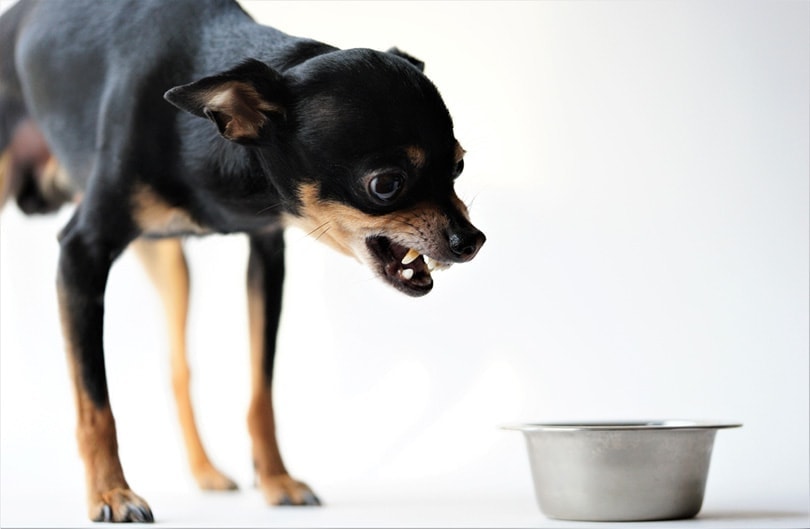
A dog that spins, wags, whines, and quickly eats may be excited. A dog that stands stiffly, shows the whites of the eyes, growls, snaps, or eats while watching people may be guarding food.
Common reasons include:
• Excitement or impatience before meals
• Food guarding or fear that someone will take the meal
• A learned habit that earns attention
• Frustration caused by a bowl, feeder, or feeding routine
• Pain in the mouth, teeth, neck, or stomach
• Fear of the food bowl, its sound, or its reflection
• Hunger, stress, or a major change in the home
• Confusion caused by feeding in a busy or crowded place
So, why does my dog bark at his food if he still eats it? Some dogs bark because the food creates excitement, even when there is no serious problem. Others eat despite discomfort, so eating alone does not prove that your dog feels well.
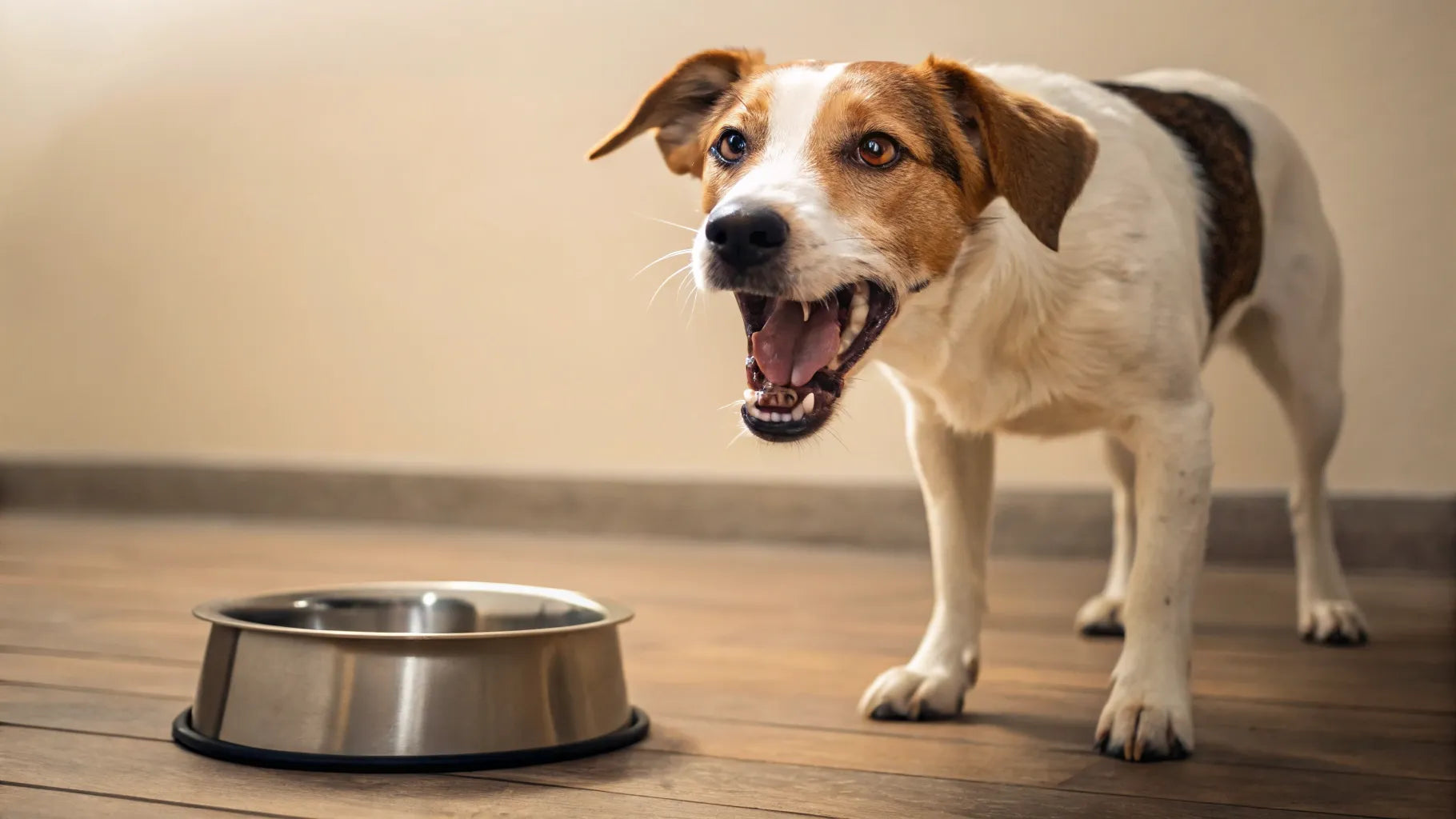
Excitement and food frustration
Many dogs bark at food because meals are highly rewarding. The smell, the sound of the bag, and your usual feeding routine can create a burst of energy. Barking may begin when you reach for the food container and stop after the bowl is placed down.
This is much like a child cheering when dessert arrives. The behavior can be annoying, but it does not always signal fear or aggression.
Your dog may be excited if he:
• Wags his tail loosely
• Has a relaxed face
• Bounces, spins, or brings you a toy
• Responds to simple cues
• Eats with a normal appetite
• Relaxes soon after eating
Dogs can also bark because barking has worked before. If barking makes you move faster, talk to your dog, or give the bowl right away, your dog may learn that barking speeds up dinner.
How to reduce excitement barking
Keep the feeding routine calm and predictable. Prepare the meal without teasing, waving the bowl, or repeating commands.
Try this simple process:
-
Prepare the food while your dog is behind a gate or several feet away.
-
Wait for one or two seconds of quiet.
-
Place the bowl down only when your dog is calm enough to think.
-
If barking starts again, pause and wait.
-
Reward quiet behavior with access to the meal.
Do not demand perfect silence at first. A short pause is a realistic starting point. Over time, increase the quiet period by a few seconds.
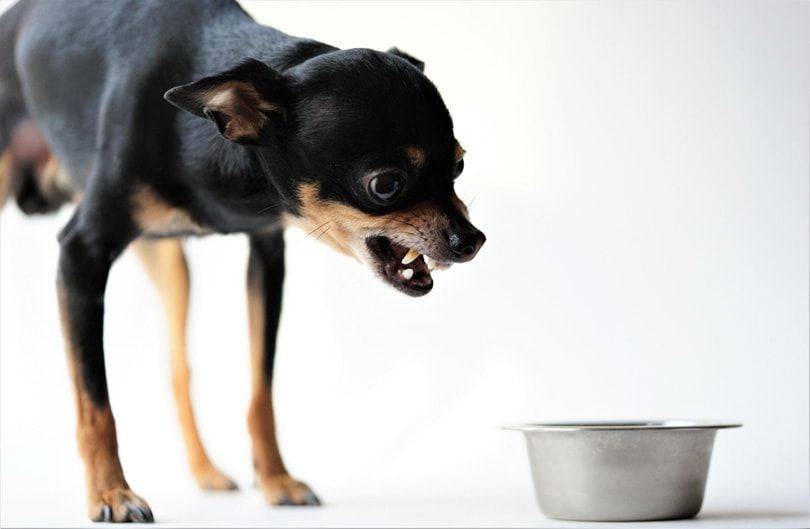
Food guarding and protective barking
Food guarding happens when a dog feels that people, animals, or other threats may take his food. Barking is one possible warning sign. Other signs include freezing, lowering the head over the bowl, eating faster, growling, showing teeth, or lunging.
Food guarding does not mean your dog is bad. It often reflects fear, stress, past competition, or a strong desire to keep a valuable resource. Rescue dogs and dogs that lived with many animals may be more likely to guard, but any dog can develop this behavior.
If you are asking, “why does my dog bark at his food when I walk past,” guarding should be high on your list of possible causes. The behavior may worsen if people repeatedly reach for the bowl, take food away, or punish the dog for warning.
What to do when your dog guards food
Safety comes first. Give your dog space while he eats, and keep children away from the feeding area.
Use these steps:
• Feed your dog in a quiet room or behind a secure gate.
• Keep other pets away during meals.
• Do not touch the bowl while your dog is eating.
• Do not test your dog by taking the food away.
• Tell children never to approach a dog with food.
• Contact a qualified veterinary behaviorist or reward-based trainer for a behavior plan.
A professional may use gradual counterconditioning. This means teaching the dog that a person approaching at a safe distance predicts something better, such as a high-value treat. The distance and pace must match the dog’s comfort level.

The food bowl may be the problem
Sometimes the food is not the issue. The bowl itself may frighten or bother your dog.
Metal bowls can make sharp sounds on tile. They may also reflect light onto the wall or floor. A tag on your dog’s collar can hit the bowl and startle him. Some dogs dislike deep bowls because their whiskers touch the sides.
Other dogs bark when an automatic feeder moves, clicks, or releases food. A new bowl, new feeding area, or new food can create uncertainty.
Watch for clues such as:
• Barking at the bowl before eating
• Pawing at the bowl
• Backing away after the bowl moves
• Eating from the floor but not the bowl
• Tilting the head at reflections or sounds
• Eating only when food is placed in another dish