Why Does My Dog Bark At His Food: Reasons And Solutions
Why does my dog bark at his food? Learn the common reasons behind this behavior and simple ways to help your dog eat calmly and confidently.
Dogs may bark at food from excitement, stress, guarding, discomfort, or confusion about the bowl.
If you are wondering, “why does my dog bark at his food,” the answer depends on when the barking starts and what your dog’s body language says. A happy, bouncy dog may be expressing excitement, while a stiff dog that guards the bowl may be warning others to stay away. Pain, nausea, fear, and learned habits can also play a role.
This guide explains the most common reasons dogs bark at food, how to read the signs, and what you can do safely at home. It also covers when barking may point to a health problem that needs veterinary care.
Why does my dog bark at his food?
Dogs use barking as a form of communication. Food can trigger strong emotions, so barking may be your dog’s way of saying, “I want this,” “Stay back,” or “Something feels wrong.”
The first step is to watch the full behavior, not the bark alone. Look at your dog’s tail, ears, eyes, posture, and eating habits.
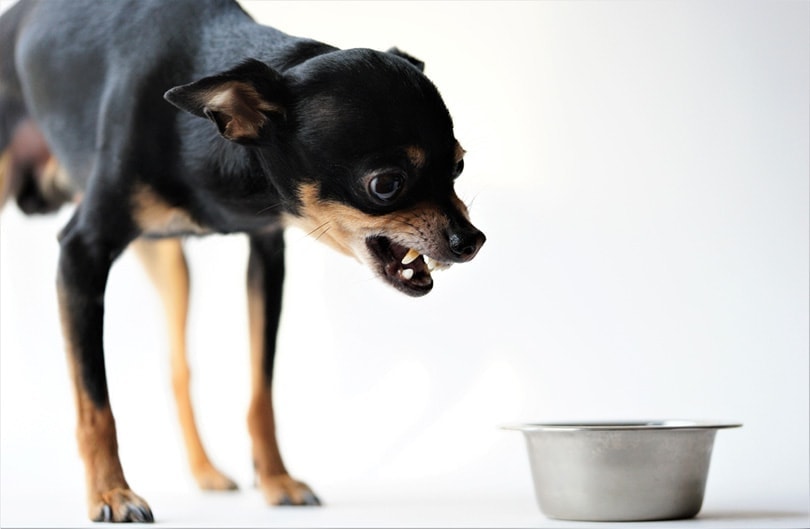
A dog that spins, wags, whines, and quickly eats may be excited. A dog that stands stiffly, shows the whites of the eyes, growls, snaps, or eats while watching people may be guarding food.
Common reasons include:
• Excitement or impatience before meals
• Food guarding or fear that someone will take the meal
• A learned habit that earns attention
• Frustration caused by a bowl, feeder, or feeding routine
• Pain in the mouth, teeth, neck, or stomach
• Fear of the food bowl, its sound, or its reflection
• Hunger, stress, or a major change in the home
• Confusion caused by feeding in a busy or crowded place
So, why does my dog bark at his food if he still eats it? Some dogs bark because the food creates excitement, even when there is no serious problem. Others eat despite discomfort, so eating alone does not prove that your dog feels well.
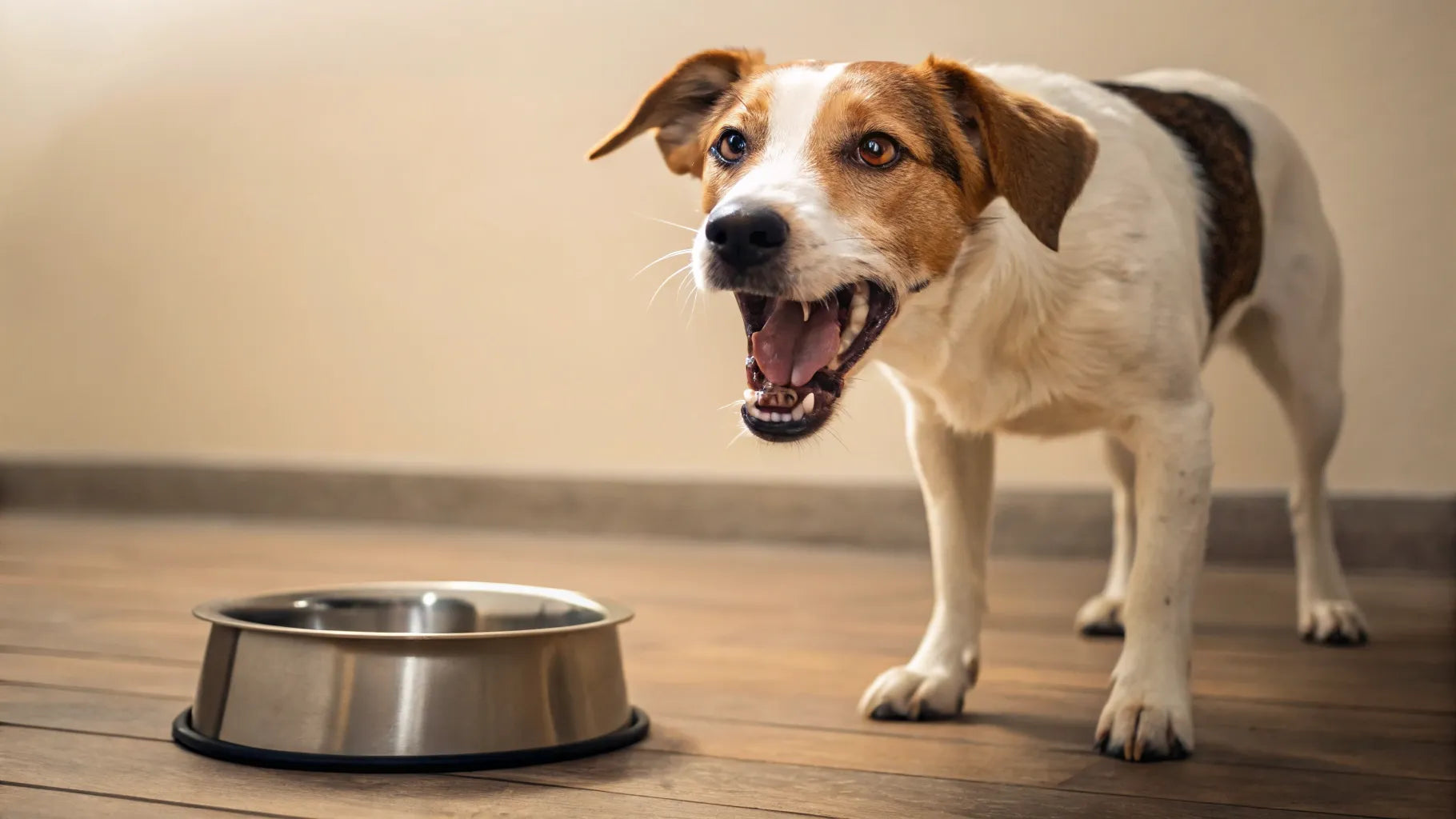
Excitement and food frustration
Many dogs bark at food because meals are highly rewarding. The smell, the sound of the bag, and your usual feeding routine can create a burst of energy. Barking may begin when you reach for the food container and stop after the bowl is placed down.
This is much like a child cheering when dessert arrives. The behavior can be annoying, but it does not always signal fear or aggression.
Your dog may be excited if he:
• Wags his tail loosely
• Has a relaxed face
• Bounces, spins, or brings you a toy
• Responds to simple cues
• Eats with a normal appetite
• Relaxes soon after eating
Dogs can also bark because barking has worked before. If barking makes you move faster, talk to your dog, or give the bowl right away, your dog may learn that barking speeds up dinner.
How to reduce excitement barking
Keep the feeding routine calm and predictable. Prepare the meal without teasing, waving the bowl, or repeating commands.
Try this simple process:
-
Prepare the food while your dog is behind a gate or several feet away.
-
Wait for one or two seconds of quiet.
-
Place the bowl down only when your dog is calm enough to think.
-
If barking starts again, pause and wait.
-
Reward quiet behavior with access to the meal.
Do not demand perfect silence at first. A short pause is a realistic starting point. Over time, increase the quiet period by a few seconds.
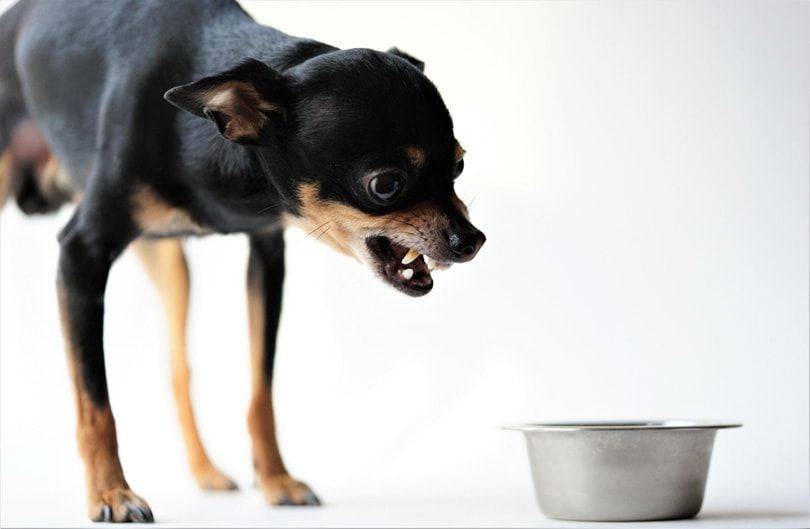
Food guarding and protective barking
Food guarding happens when a dog feels that people, animals, or other threats may take his food. Barking is one possible warning sign. Other signs include freezing, lowering the head over the bowl, eating faster, growling, showing teeth, or lunging.
Food guarding does not mean your dog is bad. It often reflects fear, stress, past competition, or a strong desire to keep a valuable resource. Rescue dogs and dogs that lived with many animals may be more likely to guard, but any dog can develop this behavior.
If you are asking, “why does my dog bark at his food when I walk past,” guarding should be high on your list of possible causes. The behavior may worsen if people repeatedly reach for the bowl, take food away, or punish the dog for warning.
What to do when your dog guards food
Safety comes first. Give your dog space while he eats, and keep children away from the feeding area.
Use these steps:
• Feed your dog in a quiet room or behind a secure gate.
• Keep other pets away during meals.
• Do not touch the bowl while your dog is eating.
• Do not test your dog by taking the food away.
• Tell children never to approach a dog with food.
• Contact a qualified veterinary behaviorist or reward-based trainer for a behavior plan.
A professional may use gradual counterconditioning. This means teaching the dog that a person approaching at a safe distance predicts something better, such as a high-value treat. The distance and pace must match the dog’s comfort level.

The food bowl may be the problem
Sometimes the food is not the issue. The bowl itself may frighten or bother your dog.
Metal bowls can make sharp sounds on tile. They may also reflect light onto the wall or floor. A tag on your dog’s collar can hit the bowl and startle him. Some dogs dislike deep bowls because their whiskers touch the sides.
Other dogs bark when an automatic feeder moves, clicks, or releases food. A new bowl, new feeding area, or new food can create uncertainty.
Watch for clues such as:
• Barking at the bowl before eating
• Pawing at the bowl
• Backing away after the bowl moves
• Eating from the floor but not the bowl
• Tilting the head at reflections or sounds
• Eating only when food is placed in another dish
You can test the setup without forcing your dog. Try a quiet ceramic or stable rubber bowl in a calm place. Remove dangling tags during meals if safe, and use a flat plate for a short trial.
Change only one thing at a time. This helps you learn what caused the trouble.

Pain, nausea, and other health problems
A sudden change in food behavior deserves attention. A dog may bark at food because he wants to eat but feels pain when he tries. Dental disease, a cracked tooth, mouth sores, throat problems, neck pain, and stomach upset can all affect eating.
Some dogs bark, whine, or pace near food when they feel nauseated. Others approach the bowl, sniff it, and walk away. Older dogs may also develop sensory or cognitive changes that make familiar routines confusing.
Ask yourself:
• Did the barking start suddenly?
• Does your dog chew on one side?
• Does he drop food from his mouth?
• Is he drooling more than usual?
• Has his appetite changed?
• Does he vomit or have diarrhea?
• Is he losing weight?
• Does he seem tired or painful?
Contact a veterinarian promptly if barking comes with refusal to eat, repeated vomiting, severe diarrhea, swelling, trouble breathing, collapse, a painful belly, or sudden weakness. A dog that cannot keep water down or has eaten a toxic substance needs urgent care.
Veterinary guidance commonly recommends an examination when a behavior change is sudden, intense, or linked with physical signs. Home training cannot fix tooth pain or stomach disease.

How to find the real cause
To understand why does my dog bark at his food, study the pattern for several meals. Write down what happens before, during, and after the barking.
Record:
• The time of day
• The food type and amount
• The bowl and feeding location
• Who is nearby
• Your dog’s body language
• Whether he eats normally
• Any signs of pain or illness
• What makes the barking stop
This simple record can reveal a pattern. For example, your dog may bark only when another dog is nearby. That points more toward competition or guarding than simple excitement.
You can also use a short video for your veterinarian or behavior professional. Record from a safe distance, and never place yourself in danger to capture the behavior.
Avoid changing the food, bowl, room, and schedule all at once. Too many changes make it hard to identify the cause and may add stress.
A safe training plan for food barking
Training works best when it matches the reason for the barking. A dog that is excited needs impulse-control practice. A dog that guards food needs careful behavior support. A dog in pain needs medical care first.
For mild excitement barking, try the following plan:
-
Prepare the meal out of sight if possible.
-
Ask for an easy behavior, such as standing or sitting.
-
Reward a brief pause with calm movement toward the bowl.
-
Stop moving if barking begins.
-
Continue when your dog pauses again.
-
Place the bowl down and give your dog space.
You can also teach a “settle” behavior away from meal times. Reward your dog for lying on a mat while you perform normal household tasks. This builds calm habits without making the food bowl the only training place.
For guarding, do not use this plan without professional advice if your dog growls, snaps, lunges, or bites. The risk is too high for trial and error.
Mistakes to avoid
Several common responses can make barking worse:
• Yelling, which may increase fear or excitement
• Taking the bowl away to “show who is boss”
• Punishing a growl, which removes an important warning
• Allowing children to practice approaching the dog
• Hand-feeding every meal without understanding the cause
• Switching foods often without checking for illness
• Waiting weeks after a sudden behavior change
The goal is not only to stop the sound. The goal is to help your dog feel safe and learn a better way to communicate.

Does changing the feeding routine help?
A steady routine can help many dogs. Feed at similar times, use the same calm area, and keep meals separate from loud activity. Predictability lowers stress and makes training easier.
Food puzzles and slow feeders may help dogs that gulp or become overly focused on meals. Introduce them gradually, and watch your dog use the device. Some feeders cause frustration, especially if the dog cannot understand how food comes out.
Small training meals can also teach calm behavior. Set aside part of your dog’s daily food and reward quiet actions during the day. Count those calories as part of the daily amount to avoid overfeeding.
There are limits to routine changes. A schedule will not solve severe guarding, pain, or illness. It may also fail if other pets continue to crowd the dog during meals.

When should you call a veterinarian or behavior expert?
Call your veterinarian when food barking is new, worsening, or linked with changes in appetite or health. Your veterinarian can check the teeth, mouth, stomach, joints, and overall condition.
Ask for behavior help if your dog:
• Guards food from people or animals
• Has bitten or tried to bite
• Cannot relax near the bowl
• Shows intense fear
• Becomes aggressive during feeding
• Has a history of trauma or severe anxiety
A veterinary behaviorist can assess medical and emotional factors together. A qualified, reward-based trainer can help carry out the plan. Avoid trainers who rely on pain, intimidation, shock, or punishment around food.
Professional help is not a failure. It is like calling an electrician when a wire sparks. Early support often prevents a small behavior from becoming a serious safety issue.
Frequently Asked Questions About Why Does My Dog Bark at His Food
Why does my dog bark at his food but still eat it?
Your dog may be excited, frustrated, or mildly worried about the food or bowl. Eating does not rule out discomfort, so watch for changes in chewing, appetite, posture, and energy.
Is barking at food a sign of food aggression?
It can be, especially if barking comes with stiff posture, freezing, growling, hard staring, or snapping. If your dog guards the bowl, give him space and seek help from a veterinarian or qualified behavior professional.
Should I take my dog’s food away when he barks?
Usually, no. Taking food away can increase anxiety and may worsen guarding. For mild excitement, pause the routine and wait for a brief quiet moment, but never challenge a dog that shows aggression.
Why does my dog bark at an empty food bowl?
An empty bowl may trigger frustration, a learned request, or a strong feeding routine. Check that your dog received the correct meal, then avoid adding food during barking unless a veterinarian has advised a different feeding plan.
Can a new bowl make my dog bark?
Yes. Reflections, noise, movement, deep sides, or collar tags hitting the bowl can bother some dogs. Try a stable, quiet bowl or flat plate and change one part of the setup at a time.
When is food barking a medical emergency?
Seek urgent veterinary care if barking occurs with trouble breathing, collapse, repeated vomiting, a swollen or painful abdomen, severe weakness, or suspected poisoning. Sudden refusal to eat with obvious pain also needs prompt attention.
Conclusion
Why does my dog bark at his food? The cause may be excitement, food guarding, a stressful bowl, frustration, pain, or illness. Careful observation helps you tell the difference.
Start with safety, calm routines, and plenty of space during meals. Do not punish warnings or take food away from a dog that guards it. If the behavior is sudden, severe, or linked with health changes, contact your veterinarian.
Try recording the pattern for a few days and share what you learn with a trusted professional. With patience and the right plan, most families can make mealtimes calmer and safer. Share your experience or explore more evidence-based dog behavior resources to keep learning.

Pet Care Writer & Researcher
Daniel writes practical guides on daily care, feeding, and safety, turning complex topics into simple, actionable advice.