Does Large Breed Dog Food Matter: What To Know
Does large breed dog food matter? Learn how tailored nutrition supports healthy growth, joints, weight, and lifelong wellness in larger dogs.
Introduction
Yes, large-breed dog food can matter—especially for growing puppies. The right food helps control calories and supports steady bone growth. This can lower the risk of growth-related bone and joint problems.
For adult dogs, the label matters less because of size alone. What matters most is a complete and balanced diet, the right calorie level, good body condition, and any health needs your veterinarian has identified.
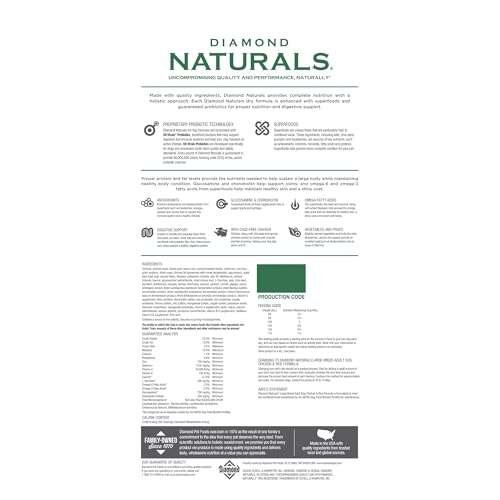
In the United States, look for a nutritional adequacy statement from the Association of American Feed Control Officials (AAFCO). AAFCO sets nutrient profiles used on U.S. pet food labels, while the U.S. Food and Drug Administration (FDA) oversees pet food safety and labeling.
What Makes Large-Breed Dog Food Different?
Large-breed formulas are made to meet the needs of bigger dogs without giving them too much energy or too many bone-building minerals.
A large dog is not simply a small dog in a bigger body. Size affects:
- Growth speed
- Adult weight
- Joint stress
- Calorie needs
- Food portion size
- Risk from excess calcium and phosphorus during puppyhood
The most important difference applies to large-breed puppies. Puppies that grow too fast may place extra stress on developing bones and joints. A food designed for large-breed growth usually has controlled calories and carefully balanced minerals.
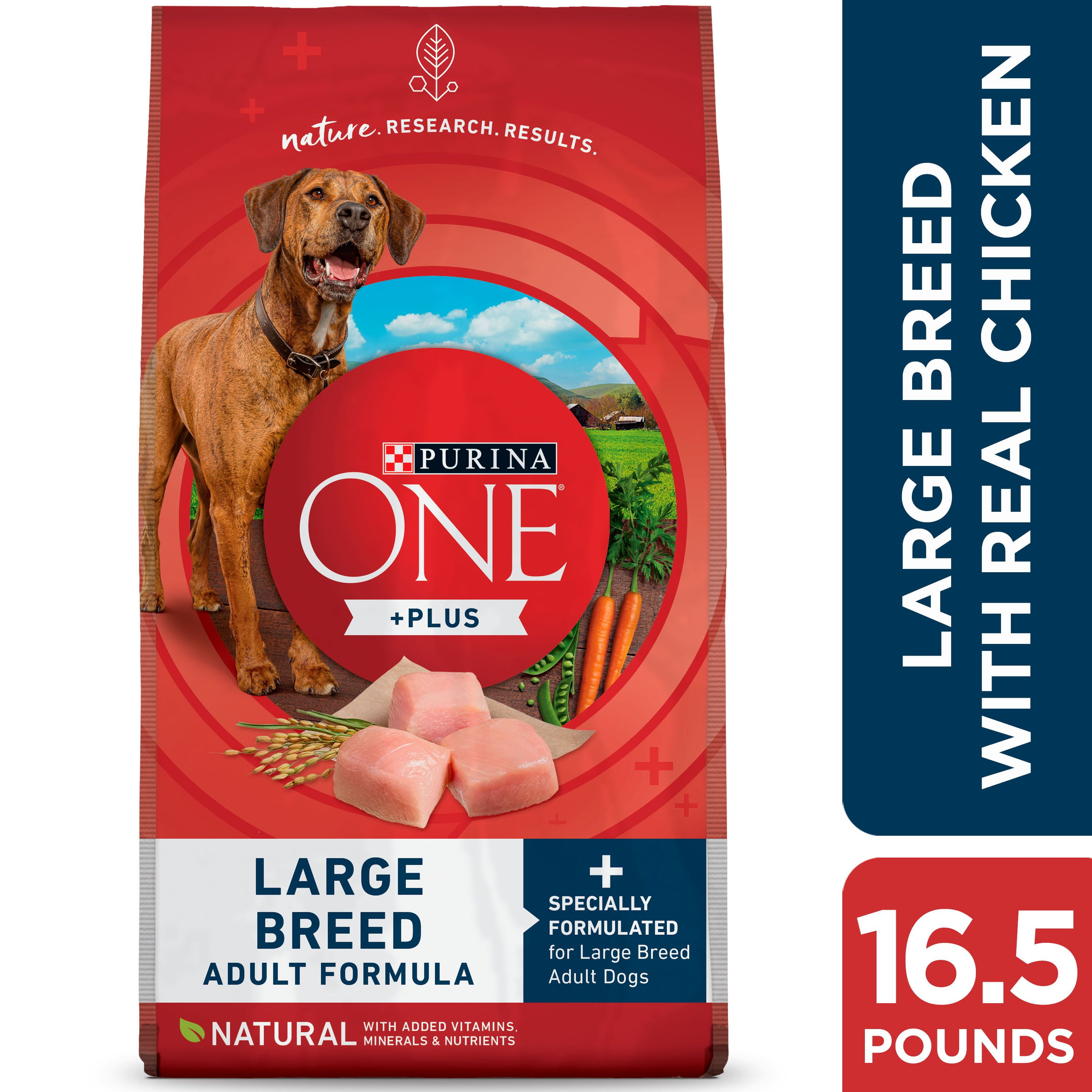
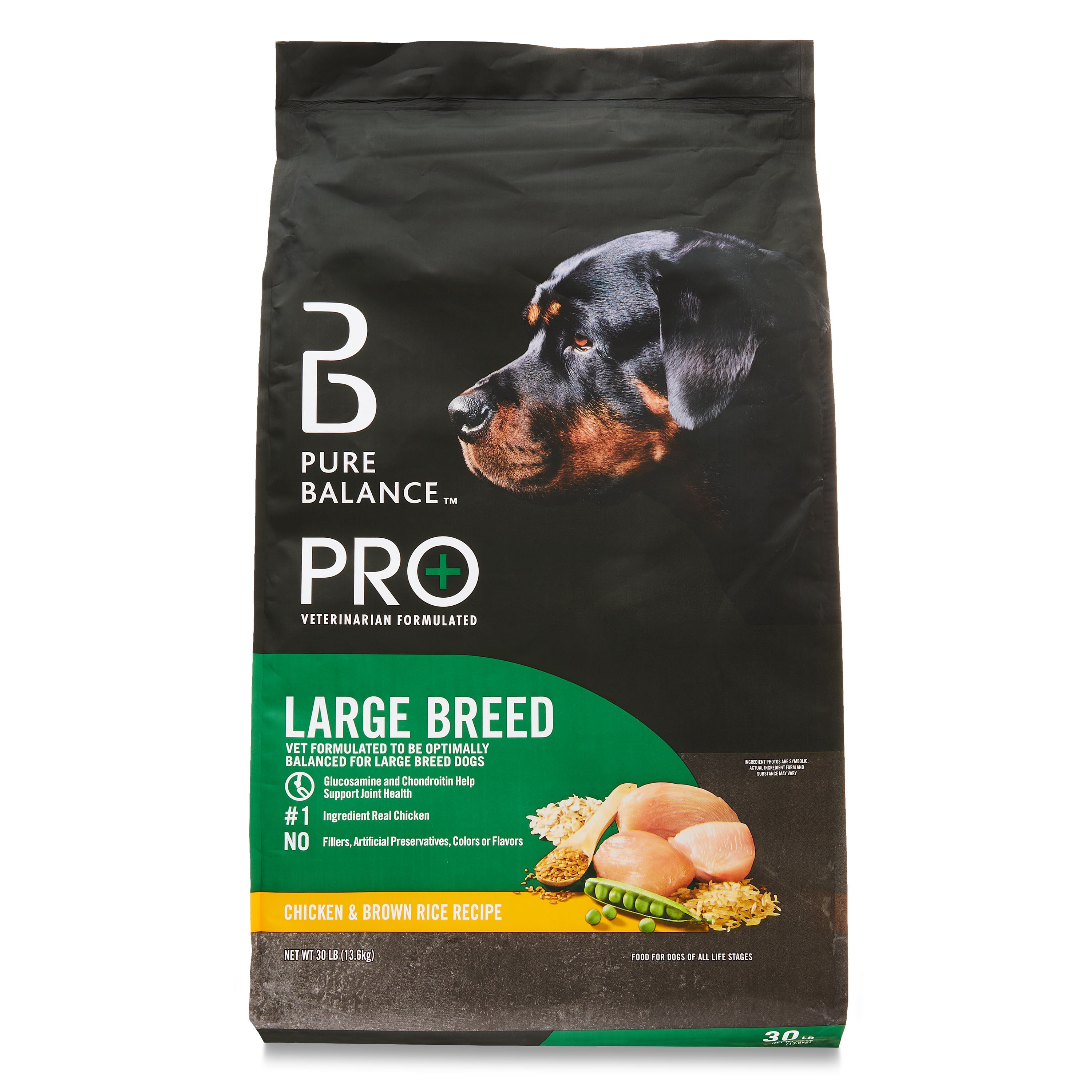
For adult dogs, “large breed” on the bag may indicate larger kibble, different calorie density, or added joint nutrients. But the label alone does not prove that the food is better.
What counts as a large-breed dog?
There is no single U.S. legal definition for “large breed.” Pet food companies may use different weight ranges.
As a general guide:
- Small breed: often under 20 pounds as an adult
- Medium breed: about 20 to 50 pounds
- Large breed: often over 50 pounds
- Giant breed: often over 90 pounds
These ranges vary. A Labrador Retriever, German Shepherd, Golden Retriever, Great Dane, and Mastiff may all need different feeding plans despite being in the broad “large dog” group.
Your dog’s expected adult weight and growth stage matter more than the marketing term on the front of the package.
Why Large-Breed Puppy Food Matters Most
Large-breed puppy food matters because rapid growth can increase the strain on immature bones and joints.
Large-breed puppies need enough nutrients to grow. They do not need unlimited calories. Overfeeding can cause fast weight gain, which may worsen orthopedic problems in dogs that are already genetically prone to them.
Large-breed puppy diets generally focus on four areas:
- Controlled calories
- Moderate, balanced calcium
- Proper calcium-to-phosphorus balance
- Adequate protein and other essential nutrients
Calcium is not a “more is better” nutrient
Calcium supports bones, teeth, muscles, and nerve function. But growing large-breed puppies may have trouble protecting themselves from excess calcium. Their bodies can absorb more calcium than they need.
Too much calcium during growth can disrupt normal bone development. This is one reason large-breed puppy food should not be replaced with a calcium supplement unless a veterinarian specifically recommends it.
Do not add:
- Bone meal
- Calcium powder
- Multivitamins with calcium
- Dairy products as a “bone booster”
- Homemade mineral mixes
A complete commercial puppy food should already contain the minerals your puppy needs. Adding more can upset the balance.
Protein is not the main enemy
older advice often warned that high protein causes bone problems in large-breed puppies. Current veterinary nutrition guidance does not support treating protein as the main concern.
Protein supports muscle, tissue repair, immune function, and normal growth. The bigger risks are usually:
- Too many calories
- Excess body weight
- Poor mineral balance
- Uncontrolled supplementation
- Feeding a diet that is not complete and balanced
A large-breed puppy needs a well-formulated diet, not a low-protein diet by default.
The food should say it supports large-breed growth
Check the AAFCO nutritional adequacy statement on the back or side of the package.
For a large-breed puppy, look for wording that indicates the food is complete and balanced for:
- Growth
- Growth of large-size dogs, when stated by the manufacturer
- All life stages, only if the formula meets the relevant growth requirements
Some labels include a statement similar to:
“Including growth of large size dogs, 70 lb or more as an adult.”
The exact wording may differ. Read the full statement rather than relying on the words “large breed” on the front.
Does Large-Breed Food Matter for Adult Dogs?
For adult dogs, large-breed food can help, but it is not always required.
A healthy adult dog may do well on any complete and balanced adult maintenance food that provides the right number of calories. The food does not need to say “large breed” if the dog maintains a healthy weight, normal stools, good skin and coat, and steady energy.
Large-breed adult food may be useful when it offers a practical advantage, such as:
- Lower calorie density for dogs that gain weight easily
- Larger kibble for dogs that swallow small pieces
- Nutrients that support joints
- Feeding guidance for a large dog’s body weight
- A texture that encourages slower eating
These benefits depend on the actual formula. A large-breed label does not guarantee better joint health or better digestion.
Joint ingredients: helpful, but not magic
Some large-breed foods include glucosamine, chondroitin, omega-3 fatty acids, or other joint-support ingredients.
These ingredients may have a role in a broader joint-care plan. However, the amount, form, absorption, and evidence behind each ingredient can vary. A food with a joint claim should not replace weight control, exercise planning, or veterinary care.
Keeping a large dog lean is one of the most useful ways to reduce stress on the joints. You should be able to feel the ribs with light pressure, while the dog still has a visible waist when viewed from above.
Kibble size is a convenience issue
Larger kibble may help some dogs chew instead of gulping. It can also make meals easier to portion for a large dog.
But larger kibble does not reliably prevent:
- Bloat
- Gastric dilatation-volvulus (GDV)
- Choking
- Fast eating in every dog
Dogs can swallow large pieces, and individual eating habits differ. If your dog eats too fast, use measured meals, a slow-feeder bowl if safe for that dog, or a food puzzle approved for the dog’s size and chewing style.
How to Choose the Right Food
Use the feeding plan and the dog’s body condition—not the package picture—as your main guide.
Step 1: Identify the dog’s life stage
Choose food for the dog’s current stage:
- Puppy
- Adult
- Senior
- Pregnant or nursing
- Therapeutic diet for a diagnosed condition
A large-breed puppy should not automatically eat adult food. Puppies need nutrients for growth, but large-breed growth requires special control of calories and minerals.
Step 2: Read the nutritional adequacy statement
Look for a statement showing that the food is complete and balanced for the correct life stage.
Avoid using a food labeled only for:
- Intermittent feeding
- Supplemental feeding
- Treats
- Snacks
- Mixing with other food
Those products may not provide all required nutrients.
Step 3: Check calories per cup or can
Two foods may have similar ingredients but very different calorie levels.
The label may list calories as:
- Kilocalories per cup
- Kilocalories per can
- Kilocalories per kilogram
A calorie number helps you compare foods and adjust portions. Feeding directions are a starting point, not a fixed prescription.
For example, a hypothetical 70-pound adult dog may need fewer calories than another 70-pound dog because of differences in age, activity, metabolism, neuter status, and health.
Step 4: Measure the food
Use a standard measuring cup for dry food. A kitchen scale is more accurate, especially for a growing puppy or an overweight dog.
Count calories from:
- Treats
- Dental chews
- Table food
- Food used for training
- Supplements with calories
Treats should remain a small part of daily calories. If your dog receives many treats, reduce the meal portion carefully rather than guessing.
Step 5: Track body condition
Weight alone does not tell the whole story. A muscular Rottweiler and an overweight Rottweiler may weigh the same.
Check for:
- Ribs that are easy to feel
- A visible waist from above
- A slight abdominal tuck from the side
- Normal muscle over the shoulders and hips
- Steady growth in puppies
For puppies, ask your veterinarian to track growth over time. A steady growth pattern is usually more useful than trying to make the puppy as large as possible as fast as possible.
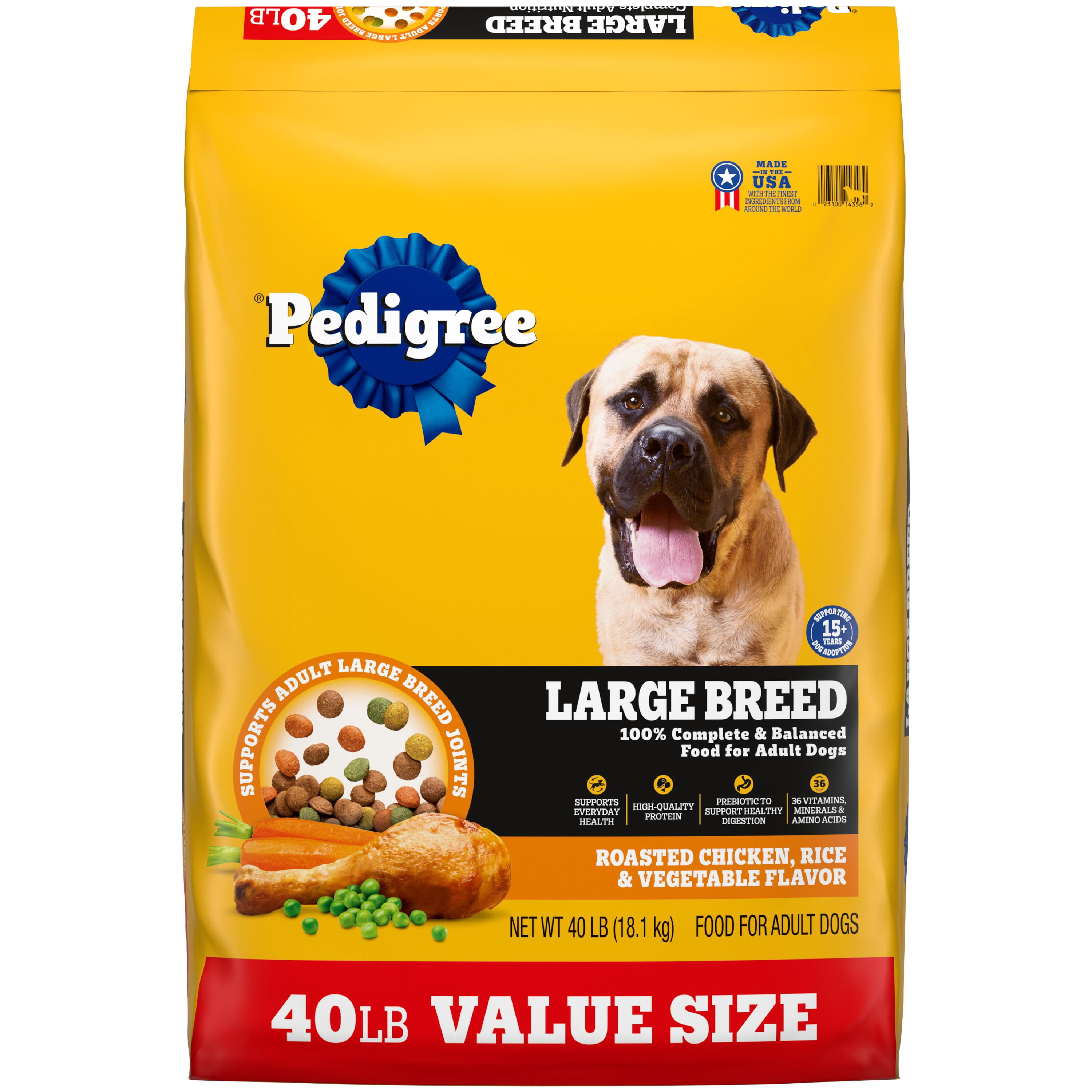
Large-Breed Food Decision Table
| Dog | Does large-breed food matter? | Main reason |
|---|---|---|
| Large-breed puppy | Yes, usually | Controls calories and mineral levels during growth |
| Healthy adult large dog | Sometimes | May offer useful calories, kibble size, or joint support |
| Overweight large dog | The calorie level matters most | Weight control reduces joint strain |
| Giant-breed puppy | Yes, strongly | Growth and mineral mistakes may have greater consequences |
| Pregnant or nursing large dog | Ask a veterinarian | Nutrient needs change and vary by stage |
| Dog with kidney, heart, allergy, or digestive disease | The medical diet matters most | A standard large-breed food may not meet the treatment goal |
| Dog eating homemade food | Professional formulation matters | Mineral errors are easy to make |
The key trade-off is simple: a “large breed” label can help you find a suitable option, but it cannot replace checking the life stage, calorie level, adequacy statement, and your dog’s body condition.
Can Large Dogs Eat Regular Dog Food?
A healthy adult large dog can often eat regular adult dog food if it is complete and balanced and the portions maintain a healthy body condition.
However, regular food may be less suitable when:
- It is very calorie-dense
- The pieces are too small for the dog’s eating habits
- The dog has a condition requiring a specific diet
- The food is intended for puppies or small dogs
- The dog gains weight despite careful portions
- The dog has poor stool quality or other signs of intolerance
For puppies, be more cautious. A large-breed puppy should eat a diet designed to support controlled growth. A general puppy food may meet basic puppy needs but may not be appropriate for a dog expected to reach a large adult size.
Ask your veterinarian before changing a puppy’s food, especially if the puppy has loose stools, poor growth, limping, pain, or unusual weakness.
What About Grain-Free Food for Large Dogs?
Grain-free food is not automatically healthier for large dogs.
Grain-free diets often replace grains with ingredients such as peas, lentils, chickpeas, or potatoes. The absence of grains does not make a food safer, more nutritious, or better for joints.
The FDA has investigated reports of canine dilated cardiomyopathy, or DCM, involving some diets with high amounts of pulses, legumes, or potatoes. The relationship is complex and has not been proven for every food or every dog.
Do not remove grains unless your veterinarian has identified a medical reason. True food allergies are less common than many owners expect, and a proper elimination diet is more reliable than changing foods at random.
Does Dog Food Prevent Bloat?
No dog food can guarantee prevention of bloat or GDV.
Large and deep-chested dogs have a higher risk of GDV, but the condition can affect other dogs too. Possible risk factors include body shape, family history, age, eating behavior, and other factors that are not fully understood.
Practical steps may include:
- Feeding two or more measured meals instead of one very large meal
- Avoiding strenuous exercise right before and after meals
- Preventing rapid gulping when possible
- Keeping the dog at a healthy weight
- Asking your veterinarian whether preventive gastropexy is appropriate for a high-risk dog
Do not use a raised bowl as a guaranteed bloat-prevention tool. In some research, raised feeding may be associated with increased risk in certain large, deep-chested dogs.
Signs of possible GDV include:
- Repeated unproductive retching
- A swollen or tight abdomen
- Restlessness
- Drooling
- Weakness or collapse
- Pale gums
These signs require emergency veterinary care. Do not wait to see whether the food settles.
Common Mistakes to Avoid
Feeding too much because the dog is large
A large dog still needs a measured calorie intake. Follow the dog’s body condition, not the size of the scoop.
Switching food too quickly
Change foods over about seven days unless your veterinarian gives different instructions. Start with a small amount of the new food and increase it while reducing the old food.
A sudden change can cause diarrhea, vomiting, or food refusal.
Adding supplements without guidance
Extra calcium is especially risky for growing large-breed puppies. Joint supplements can also interact with health conditions or medications.
Ask a veterinarian before adding any supplement.
Choosing food by ingredient order alone
The first ingredient does not tell you whether the full diet is complete and balanced. Ingredient lists also do not show the whole nutrient profile, digestibility, calorie level, or manufacturing controls.
Use the adequacy statement and calorie information along with your dog’s response.
Assuming expensive food is always better
Price does not prove that a food fits your dog. A more useful comparison includes:
- Nutritional adequacy
- Calorie density
- Life-stage fit
- Feeding response
- Stool quality
- Body condition
- Manufacturer transparency
- Veterinary recommendations for medical needs
When to Call a Veterinarian
Contact your veterinarian if your large-breed dog has:
- Limping or stiffness
- Pain when rising or walking
- Poor weight gain
- Fast or excessive weight gain
- Persistent diarrhea or vomiting
- Loss of appetite
- Excessive thirst or urination
- Repeated ear or skin problems
- Trouble chewing or swallowing
- Sudden weakness or collapse
For puppies, do not wait for a routine visit if you see lameness, severe pain, repeated vomiting, or poor growth.
A veterinarian can assess body condition, growth pattern, orthopedic health, and calorie needs. A veterinary nutritionist may be needed for homemade diets, complex allergies, or multiple medical conditions.

Key Takeaways
- Large-breed puppy food matters most because controlled calories and balanced minerals support safer growth.
- Adult large dogs do not always need a food labeled “large breed.”
- The AAFCO nutritional adequacy statement is more useful than front-of-bag marketing.
- Keep large dogs lean and measure food portions.
- Do not add calcium or other supplements without veterinary advice.
- Grain-free food is not automatically healthier.
- No food guarantees protection from bloat or GDV.
- Choose the diet based on life stage, health, calories, body condition, and how the dog responds.
FAQs
Is large-breed dog food worth the extra cost?
It can be worth it for a large-breed puppy if the formula supports controlled growth. For an adult dog, the extra cost is useful only if the food provides a benefit your dog needs, such as fewer calories per cup or a better feeding response.
Can a Great Dane eat regular puppy food?
A Great Dane puppy should usually eat a food designed for large- or giant-breed growth. Ask your veterinarian to confirm the choice, especially during the fastest growth period.
Should large-breed dogs eat food with glucosamine?
Glucosamine may be included in a joint-support plan, but it is not a guarantee against arthritis or hip disease. Healthy body weight, appropriate exercise, and veterinary care remain important.
How long should a large-breed puppy eat puppy food?
Many large-breed dogs stay on a growth diet until they are close to adult size, but timing varies by breed and individual growth. Your veterinarian can help decide when to transition.
Can large dogs eat small kibble?
Yes, if the food is complete and balanced for the dog’s life stage and the dog eats it safely. If the dog gulps food, use measured meals and discuss safer slow-feeding options with your veterinarian.
What is the best large-breed dog food?
There is no single best food for every large dog. The best choice is a complete and balanced formula for the dog’s life stage that provides suitable calories and maintains healthy weight, normal stools, good energy, and a healthy coat.
Conclusion
Large-breed dog food does matter, but the answer depends on age.
For puppies, choose a food made for controlled large-breed growth and avoid unneeded calcium supplements. For adults, focus on complete nutrition, calorie control, body condition, and any medical needs rather than the words “large breed” alone.
The next practical step is to check your dog’s food label for its AAFCO adequacy statement, calorie content, and life-stage fit. Then compare the feeding amount with your dog’s body condition and review the plan with your U.S. veterinarian at the next visit.

Pet Care Writer & Researcher
Daniel writes practical guides on daily care, feeding, and safety, turning complex topics into simple, actionable advice.