Can Dogs Live On Dry Food Only: A Vet-Backed Guide
Can dogs live on dry food only? Learn the benefits, risks, nutrition needs, and tips for choosing a complete diet your dog can thrive on.
Introduction
Yes. Most healthy dogs in the United States can live well on dry dog food alone if the food is complete and balanced for the dog’s life stage, the portions meet the dog’s calorie needs, and fresh water is always available.
Dry food is not automatically less healthy than wet food. The right choice depends on the food’s nutrition, your dog’s age and health, and how well your dog eats and digests it. Dogs with kidney disease, urinary problems, dental pain, trouble chewing, or other medical needs may require a different diet chosen with a veterinarian.

The short answer: Is dry food enough for dogs?
Dry food can provide all the nutrients a dog needs when it carries an appropriate nutritional adequacy statement. Look for wording on the package that says the food is “complete and balanced” for a specific life stage.
In the U.S., pet food labels commonly use nutritional profiles and feeding-trial standards developed by the Association of American Feed Control Officials (AAFCO). The U.S. Food and Drug Administration (FDA) oversees pet food safety and labeling under federal law.
A complete dry diet should supply:
- Protein and amino acids
- Fat and essential fatty acids
- Vitamins
- Minerals
- Energy, or calories
- Proper nutrient balance for the dog’s life stage
A dog does not need canned food, fresh food, or meat added to the bowl simply because the diet is dry. Adding foods without a plan can upset the nutrient balance or cause weight gain.
That said, “dry food only” does not mean “any dry food.” A low-quality food, the wrong life-stage formula, poor portion control, or limited access to water can create problems.

What makes dry dog food complete and balanced?
A complete and balanced food is designed to be the dog’s main diet. The label should identify the life stage or use for which the food is suitable.
Common label statements include:
- For growth: Intended for puppies.
- For maintenance: Intended for adult dogs.
- For all life stages: Formulated to meet needs across more than one life stage.
- For gestation or lactation: Intended for pregnant or nursing dogs.
- For intermittent or supplemental feeding only: Not intended to be the sole diet.
Choose food that matches your dog’s needs. A puppy should not normally eat an adult-maintenance food as its only diet. A large–breed puppy may also need a formula made for controlled growth, because excess calories and an unbalanced intake of minerals can affect developing bones.
The ingredient list can provide useful information, but it does not tell you whether the food is nutritionally complete by itself. The nutritional adequacy statement is more important for answering whether a food can serve as the main diet.
Also check the feeding guide. It is a starting point, not a perfect prescription. Dogs of the same weight can need different calorie amounts based on age, breed, activity, body size, climate, and neuter status.
Benefits of feeding dry food only
Dry food can be a practical and healthy main diet for many dogs.
It is convenient
Kibble is easy to measure, store, and serve. It does not require refrigeration after opening, although it should stay in a cool, dry place in a sealed container.
This can make feeding more consistent. Consistent meals help owners track appetite, stool quality, and changes in body weight.
It can support calorie control
Dry food labels often list calories per cup or kilogram. This makes it easier to measure a daily amount than it may be with some homemade diets or mixed foods.
Still, a measuring cup may not be precise enough for a small dog. A kitchen scale can help when a dog needs tight calorie control.
It may cost less than an all-wet diet
Dry food often provides more calories per dollar because it contains less water. Cost varies by brand, formula, and dog size, but dry food can be easier to use for households feeding larger dogs.
It is easy to use in puzzle feeders
Many dry diets work well in food puzzles, slow feeders, and training rewards. These tools can help reduce fast eating and provide mental activity.
Dry food is also easier to divide into several small meals during the day.

The main limits of an all-dry diet
Dry food can meet nutrition needs, but it has less water than canned food. This is the biggest practical difference.
Dogs still need plenty of water
Most dry dog foods contain far less moisture than canned foods. A dog eating only kibble may need to drink more to maintain normal hydration.
Keep clean water available at all times. Wash the bowl often, and place more than one bowl in the home if needed.
Signs that may suggest dehydration or illness include:
- Unusual tiredness
- Dry or sticky gums
- Vomiting or diarrhea
- Sunken-looking eyes
- Poor skin elasticity
- A sudden change in drinking
These signs can have many causes. Contact a veterinarian promptly if they occur, especially with vomiting, diarrhea, heat exposure, or weakness.
Dry food is not a substitute for dental care
Kibble may reduce some soft food residue, but ordinary dry food does not reliably clean a dog’s teeth. Many dogs swallow kibble with little chewing.
The Veterinary Oral Health Council (VOHC) evaluates certain dental products under its accepted-product program. Brushing with dog-safe toothpaste and having regular veterinary dental checks may help more than relying on standard kibble.
Never give human toothpaste to a dog. Some products contain ingredients that are unsafe for pets.
Some dogs may not eat enough
A dog may refuse dry food because of poor appetite, dental pain, nausea, stress, or another health problem. A dog that suddenly stops eating should not simply be labeled “picky.”
Puppies, senior dogs, and dogs with chronic illness may need closer monitoring. A veterinarian can help determine whether the issue is behavioral or medical.

Dry food versus wet food: Which is better?
Neither dry food nor wet food is automatically best for every dog. The better option is the one that meets nutrition needs and works for the dog’s health, appetite, hydration, and budget.
| Factor | Dry food | Wet food |
|---|---|---|
| Water content | Low | High |
| Storage before opening | Easy at room temperature | Easy, depending on package |
| Storage after opening | Simple | Usually needs refrigeration |
| Calorie density | Often higher per cup | Often lower per can because of water |
| Portion measurement | Usually simple | Can vary by can or pouch |
| Palatability | Works well for many dogs | Often attractive to picky eaters |
| Dental effect | Does not replace dental care | Does not clean teeth |
| Cost per calorie | Often lower | Often higher |
Wet food may help a dog that needs more water, has trouble chewing, or has a poor appetite. It can also make medication easier to give in some cases.
Dry food may be a better fit for owners who need easy storage, simple portioning, or lower feeding cost. Some dogs do well with a mix of both.
The key is to count calories from every source. If you add wet food, toppers, treats, or table food, reduce the dry food amount as needed.

When dry food alone may not be the best choice
A veterinarian may recommend more than standard dry food for dogs with certain needs.
Kidney disease
Dogs with chronic kidney disease may need a therapeutic diet with controlled amounts of phosphorus, protein, sodium, and other nutrients. The correct food depends on the dog’s diagnosis and disease stage.
Do not change a kidney patient’s diet without veterinary guidance. A dog that refuses a prescribed food also needs help, because poor intake can worsen weakness and weight loss.
Urinary conditions
Some urinary problems require a specific diet, increased water intake, or both. A dog with a history of bladder stones may need a formula selected for the stone type.
Adding random supplements or switching foods can undermine the treatment plan.
Dental pain or missing teeth
A dog with painful teeth may struggle to chew dry food. Signs can include dropping kibble, chewing on one side, bad breath, pawing at the mouth, or avoiding food.
Softening food with water may help for a short time, but it does not treat dental disease. Arrange a veterinary exam.
Food allergies or sensitive digestion
Dogs with suspected food allergies may need a structured elimination diet. Randomly changing between over-the-counter foods can make the cause harder to identify.
A veterinarian may suggest a diet with a new protein or hydrolyzed protein. Follow the trial exactly, including treats and flavored medicines.
Puppies, pregnant dogs, and nursing dogs
These dogs have higher or different nutrient needs. Puppies need food labeled for growth or all life stages, while pregnant and nursing dogs may need a diet formulated for reproduction or growth.
Large-breed puppies deserve special care. Avoid adding calcium or vitamin supplements unless a veterinarian prescribes them.
Senior dogs
Older dogs do not all need the same food. Some remain healthy on a regular adult-maintenance diet, while others need changes because of arthritis, obesity, kidney disease, muscle loss, or dental problems.
Age alone does not determine the best diet. Health status and body condition matter more.
How much dry food should a dog eat?
Start with the package feeding guide, then adjust based on body condition and weight trends.
A simple process is:
- Find the dog’s current weight on the label.
- Measure the recommended daily amount.
- Divide it into one or more meals.
- Count treats and toppers as part of daily calories.
- Check body shape and weight every few weeks.
- Adjust the amount with veterinary guidance if weight changes.
A hypothetical example
Suppose a food contains 400 calories per cup and the dog needs about 800 calories per day.
800 calories ÷ 400 calories per cup = 2 cups per day
If the dog receives 100 calories in treats, the dry food amount would need to provide about 700 calories:
700 ÷ 400 = 1.75 cups per day
This is only an example. The dog’s true calorie need may differ, and calorie values vary by food.
A healthy body condition usually means:
- You can feel the ribs under a thin layer of fat.
- The waist is visible from above.
- The abdomen slopes upward when viewed from the side.
- The dog is not losing or gaining weight without a reason.
Ask your veterinarian to show you the ideal body condition for your dog. Weight alone can be misleading because muscle and body shape vary.
How to switch a dog to dry food
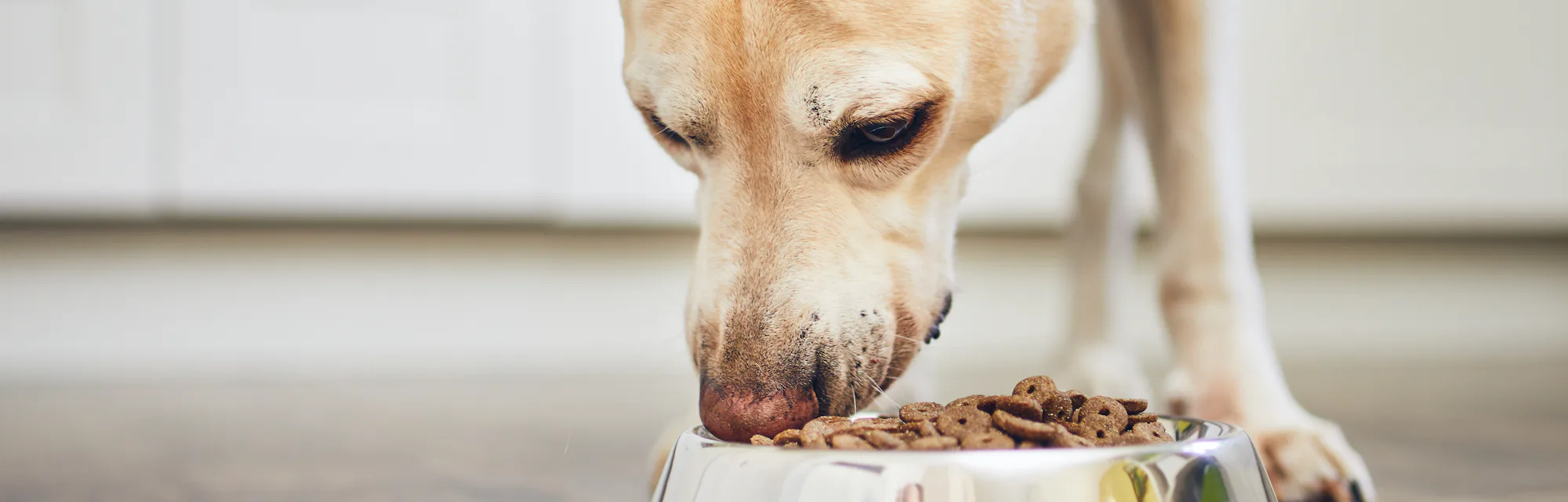
Switch foods over about seven days when possible. A slow change can reduce digestive upset.
| Days | Old food | New food |
|---|---|---|
| 1–2 | 75% | 25% |
| 3–4 | 50% | 50% |
| 5–6 | 25% | 75% |
| 7 | 0% | 100% |
For dogs with sensitive digestion, take longer. If vomiting, repeated diarrhea, marked gas, or refusal to eat occurs, pause the change and contact a veterinarian.
Do not force a sick dog to eat dry food. A sudden appetite change may signal pain or illness.
If the dog has been eating wet food, you can add a small amount of warm water to kibble. This increases moisture and may improve smell and texture. Serve softened food promptly and discard leftovers rather than leaving them out for long periods.

Common mistakes to avoid
Adding too many extras
Treats, table scraps, chews, and toppers can add many calories. They can also dilute a complete diet.
The WSAVA Global Nutrition Committee advises paying attention to calorie intake, body condition, and the food’s nutritional adequacy. A common practical rule is to keep treats to about 10% of daily calories unless your veterinarian gives different advice.
Leaving food out all day
Free-choice feeding can cause weight gain in some dogs. It also makes it harder to notice a reduced appetite.
Scheduled meals are often easier for tracking food intake. They may not suit every dog, but they provide a useful routine.
Choosing by marketing alone
Words such as “natural,” “premium,” or “holistic” do not by themselves prove that a food is better for your dog.
Look for:
- A complete-and-balanced statement
- The correct life stage
- Calorie information
- Clear feeding directions
- A company that can answer questions about formulation and quality control
Giving supplements without a reason
Extra vitamins and minerals can be harmful in large amounts. Calcium is especially risky for growing puppies when added without professional advice.
Use supplements only when a veterinarian identifies a need and provides a safe dose.
Assuming kibble prevents dental disease
Standard kibble does not replace tooth brushing, dental checks, or appropriate dental care. Watch for mouth pain even if your dog eats dry food.
How to tell whether an all-dry diet is working
A dry diet is likely meeting your dog’s needs when the dog:
- Maintains a healthy body weight
- Has stable energy
- Produces normal stools
- Keeps a healthy coat and skin
- Eats willingly
- Drinks and urinates in a usual pattern
- Shows no signs of mouth pain
- Has normal growth if still a puppy
These signs do not prove that a diet is perfect. Regular veterinary exams remain important.
Call your veterinarian if your dog has ongoing diarrhea, repeated vomiting, weight loss, weight gain, excessive thirst, increased urination, poor appetite, dullness, itching, or trouble chewing.
Seek urgent care for collapse, severe weakness, repeated vomiting, bloody diarrhea, breathing trouble, suspected poisoning, or signs of heat illness.
Key takeaways
- Yes, most healthy dogs can live on dry food only.
- Choose a food labeled complete and balanced for the dog’s life stage.
- Provide fresh water at all times.
- Measure meals and include treats in the calorie total.
- Dry food does not replace dental care.
- Puppies, pregnant dogs, nursing dogs, and dogs with medical conditions may need a specific diet.
- A sudden change in appetite, weight, thirst, stool, or chewing habits deserves attention.
Frequently asked questions
Can dogs live on kibble and water only?
Yes, if the kibble is complete and balanced for the dog’s life stage and the dog has constant access to clean water. The food must also provide enough calories without causing excess weight gain.
Do dogs need wet food every day?
No. Wet food is optional for many healthy dogs. It can be useful for increasing water intake, improving appetite, or making meals easier to chew, but it is not required when a suitable dry food meets the dog’s nutritional needs.
Is dry food bad for dogs’ kidneys?
Dry food is not automatically bad for healthy kidneys. However, dogs with kidney disease may need a veterinary therapeutic diet and closer control of water and nutrient intake. Ask your veterinarian before changing food for a dog with kidney problems.
Can puppies eat dry food only?
Yes, if the food is formulated for growth or all life stages and is appropriate for the puppy’s expected adult size. Large-breed puppies may need a large-breed growth formula. Follow feeding advice closely and avoid unapproved supplements.
Should I add water to dry dog food?
You may add water if your dog prefers softened food or needs extra moisture. Use fresh water, serve the meal soon after preparing it, and discard leftovers. Adding water does not make an unsuitable food complete and balanced.
How long can a dog go without eating dry food?
A healthy adult dog may occasionally skip one meal, but a lack of appetite can signal illness. Contact a veterinarian if the dog refuses food for about 24 hours, or sooner if the dog is a puppy, senior, diabetic, pregnant, nursing, or showing other symptoms.
Conclusion
Dogs can live on dry food only when the diet is complete and balanced, properly matched to the dog, fed in suitable portions, and supported by constant access to fresh water. Dry food is a valid main diet, not a second-rate option.
The best next step is to check your dog’s package for the nutritional adequacy statement, review the feeding amount, and watch body condition rather than relying on the label alone. If your dog has a medical condition, dental pain, poor appetite, or unusual thirst, ask a veterinarian before making a major diet change.

Pet Care Writer & Researcher
Daniel writes practical guides on daily care, feeding, and safety, turning complex topics into simple, actionable advice.