Can Dog Food Cause Dry Skin: Causes And Solutions
Can dog food cause dry skin? Learn which ingredients may trigger irritation and what diet changes can help your dog’s coat and skin.
Introduction
Yes, dog food can play a role in dry skin, but it is not the most common cause. A diet that lacks key nutrients, has poor fat quality, or does not suit a dog’s needs may lead to dry, flaky, itchy skin. Food allergies can also cause itching and skin inflammation.
Still, dry skin often comes from other causes, such as low indoor humidity, frequent bathing, fleas, environmental allergies, skin infection, or medical disease. The safest approach is to look at your dog’s full diet and health history instead of changing food at random.
How Dog Food May Affect Your Dog’s Skin
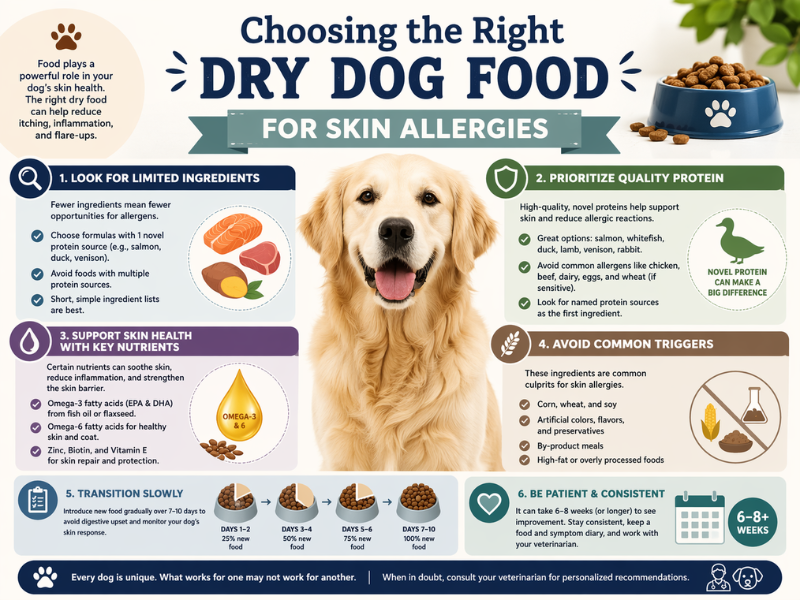
Dog food affects skin health through protein, fat, vitamins, minerals, and water. Skin cells need these nutrients to grow, repair, and maintain a healthy protective barrier.
A poor diet may not cause dry skin overnight. Skin changes often appear after weeks or months of an ongoing problem. A dog may develop dull fur, flakes, redness, itching, or more shedding.
Nutrient deficiency
A lack of certain nutrients can affect the skin and coat. Important examples include:
- Essential fatty acids, especially omega-3 and omega-6 fats
- High-quality protein
- Zinc
- Copper
- Vitamins A and E
- Some B vitamins
- Adequate calories and water
Most complete commercial dog foods sold in the United States are made to meet nutrient profiles set by the Association of American Feed Control Officials, or AAFCO. This makes severe nutrient deficiency less likely when a dog eats the food as directed.
Deficiency is more likely when a dog eats:
- An unbalanced homemade diet
- A diet made mostly of meat
- Table scraps as a large part of daily calories
- Food meant for another species
- An old, damaged, or poorly stored food
- A restricted diet without veterinary guidance
Do not add zinc, vitamin A, or other nutrients on your own. Too much of some nutrients can also harm a dog.
Poor fat quality or rancid food
Dietary fat helps support the skin barrier. If food contains too little fat, or if its fats have degraded during poor storage, the coat may look dull and the skin may become flaky.
Heat, air, moisture, and time can damage fats. Keep dry food in its original bag, place the bag inside an airtight container if desired, and store it in a cool, dry place. Wash the container between bags. Do not mix a new bag of food with old food at the bottom.
Check the best-by date and smell the food before serving it. A strong, sour, paint-like, or unusual odor may be a reason to stop using it and contact the manufacturer.
Food allergies
A food allergy is an immune reaction to an ingredient. Dogs most often react to proteins, such as beef, chicken, dairy, egg, or soy, although any ingredient can be involved.
Food allergies usually cause itching and inflammation, not simple dryness alone. Common signs include:
- repeated ear infections
- Licking or chewing the paws
- Itching around the face, belly, or rear end
- Red skin
- Recurrent hot spots
- Vomiting or diarrhea in some dogs
A food allergy can make the skin dry or scaly after repeated scratching and inflammation. However, a dog with dry flakes but no itching may have a different problem.
A food that does not meet your dog’s needs
A food can be labeled complete and balanced yet still fail to suit one individual dog. Dogs differ in age, activity, health, digestion, and calorie needs.
For example, a growing puppy needs food made for growth. An adult dog may need a maintenance diet. A dog with kidney disease, pancreatitis, or another condition may need a veterinary therapeutic diet.
Read the nutritional adequacy statement on the package. In the United States, it should state whether the food is complete and balanced for growth, maintenance, all life stages, or another use.
Dry Skin Is Often Caused by More Than Food
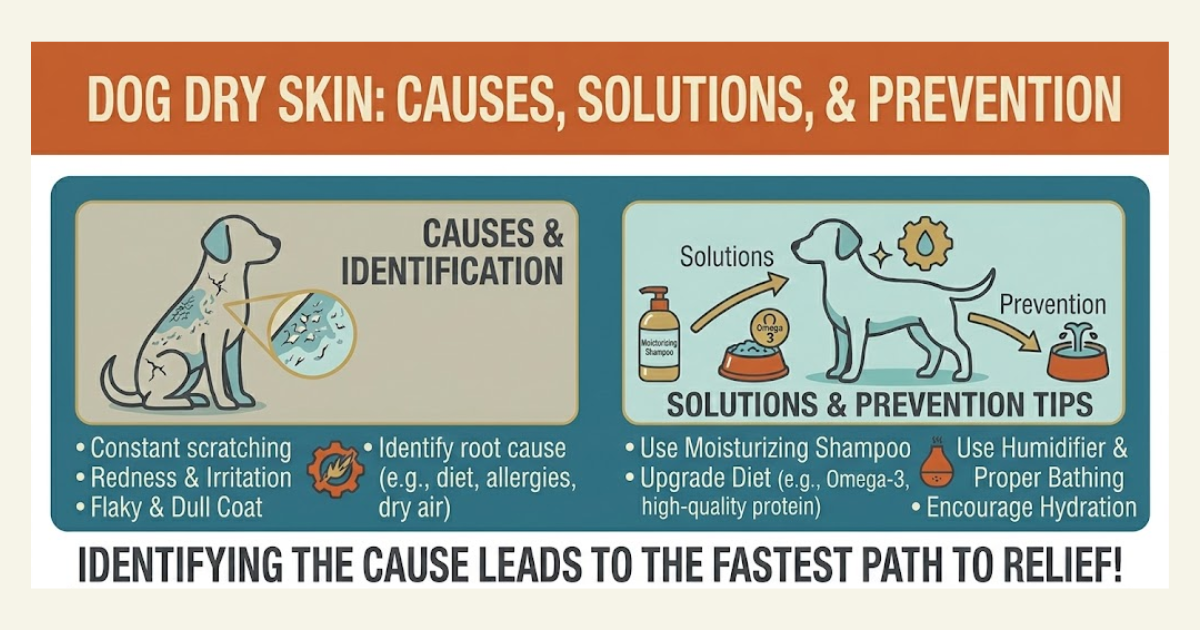
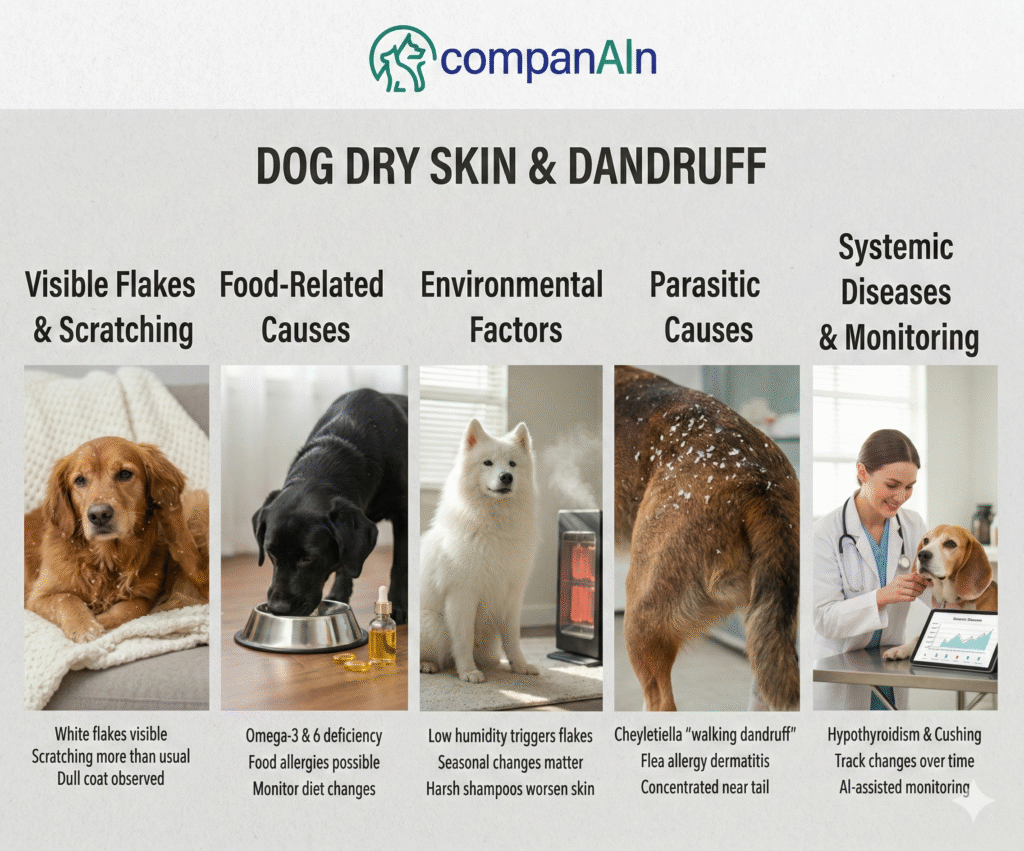
Food is only one possible cause. Dry skin can be a surface problem, an allergy problem, a parasite problem, or a sign of illness.
Common non-food causes include:
- Dry winter air or indoor heating
- Frequent bathing
- Harsh shampoos
- Fleas or mites
- Environmental allergies
- Bacterial or yeast infections
- Poor grooming
- Dehydration
- Excessive licking or scratching
- Hormonal disease
- Liver, kidney, or other systemic disease
Dry air and bathing
Cold weather and indoor heat can reduce humidity. This may dry the skin in much the same way it dries human hands.
Bathing too often can remove natural oils. Human shampoo may also be too harsh for canine skin because dogs have a different skin pH and barrier.
Use a dog shampoo recommended by your veterinarian or groomer. Rinse well. Avoid bathing on a fixed schedule if your dog is clean and healthy unless a veterinarian has prescribed regular baths.
Parasites
Fleas can cause severe itching, even when you do not see live fleas. Some dogs are highly sensitive to flea saliva. Mites can also cause intense itching, hair loss, crusts, and scaling.
Do not assume that flakes mean poor nutrition. A veterinary exam and an effective parasite prevention plan can help separate these causes.
Allergies and skin infection
Dogs can react to pollen, dust mites, mold, flea saliva, or food. Allergies can weaken the skin barrier and allow yeast or bacteria to grow.
An infection may cause odor, greasy skin, redness, sores, crusts, or darkened skin. These signs need veterinary care. Changing food alone will not treat an infection.
Medical disease
Some internal diseases can change the skin and coat. Examples include hypothyroidism and Cushing’s disease. These problems may also cause changes in weight, thirst, urination, energy, or hair growth.
A dry coat by itself does not diagnose a hormone disorder. Your veterinarian may recommend an exam, skin tests, blood work, or other tests based on your dog’s signs.
How to Tell Whether Dog Food Is the Likely Cause
Look for patterns instead of relying on one symptom. A food-related problem becomes more likely when skin signs began after a diet change, continue despite good flea control, and improve during a properly managed diet trial.
Use this basic comparison:
| Pattern | More likely explanation |
|---|---|
| Mild flakes with no itch during winter | Dry air or bathing |
| Itchy ears and paws with stomach upset | Possible food allergy |
| Sudden intense itching | Fleas, mites, allergy, or infection |
| Dull coat and weight loss | Poor intake, illness, or digestive disease |
| Greasy coat with odor | Yeast or bacterial skin disease |
| Hair loss, thirst, or low energy | Possible medical condition |
| Signs after a new food, then improvement after removal | Possible food reaction |
This table is a guide, not a diagnosis. Several causes can happen at the same time. For example, a dog may have an allergy, scratch the skin, and then develop a secondary infection.
Check the food label
Review these details:
- Life stage: Is the food for puppies, adults, or all life stages?
- Nutritional adequacy: Does it say complete and balanced?
- Storage: Was the food kept cool, dry, and sealed?
- Freshness: Is it within the best-by date?
- Recent changes: Did you change food, treats, chews, supplements, or flavored medicine?
- Extra foods: Are treats or table scraps a large part of the diet?
- Feeding amount: Is your dog eating enough calories for its size and condition?
The ingredient list can help identify possible allergens, but it does not prove that an ingredient is harmful. “Natural” and “grain-free” do not automatically mean better for skin health.
What to Do if You Suspect Dog Food Is Causing Dry Skin
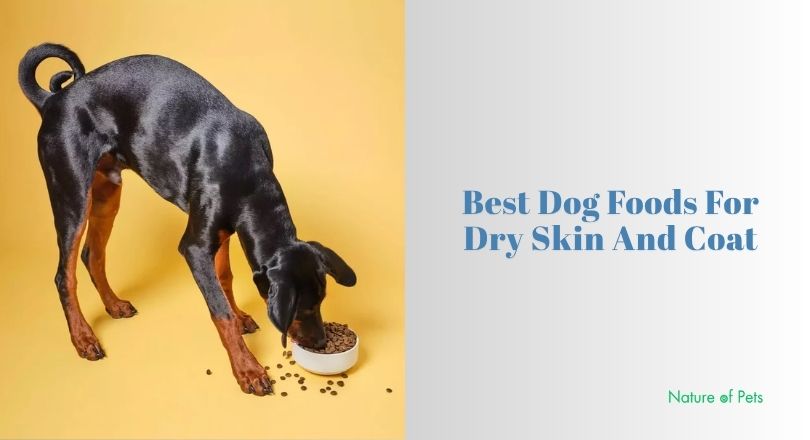
Start with a veterinary assessment if the skin is very itchy, painful, infected, or getting worse. If the signs are mild, you can still review the diet and home care while arranging advice.
1. Keep a simple symptom record
Write down:
- When the problem began
- What the skin looks like
- Where your dog itches
- Food, treats, and chews
- Bathing products
- Flea and tick prevention
- Stool or vomiting changes
- Weight and energy changes
Photos taken in the same light can help show whether the skin is improving.
2. Confirm that the main food is complete and balanced
Choose a food labeled for your dog’s correct life stage and use it as the main source of calories. A sudden switch can cause stomach upset, so ask your veterinarian how to change diets safely.
If your dog eats a homemade diet, ask a board-certified veterinary nutritionist to assess the recipe. Small changes can create large nutrient gaps.
3. Do not treat a suspected allergy with random food changes
A proper food trial is the reliable way to test for a food allergy. Your veterinarian may recommend a prescription hydrolyzed-protein diet or a carefully selected novel-protein diet.
During the trial, your dog must eat only the trial food. Treats, table food, flavored medications, dental chews, and supplements may interfere with the result.
Food trials often last several weeks. Many veterinary protocols use about eight weeks, and some dogs need longer. Follow your veterinarian’s plan. If signs improve, the veterinarian may reintroduce the old food to confirm the trigger.
4. Ask before adding fish oil or supplements
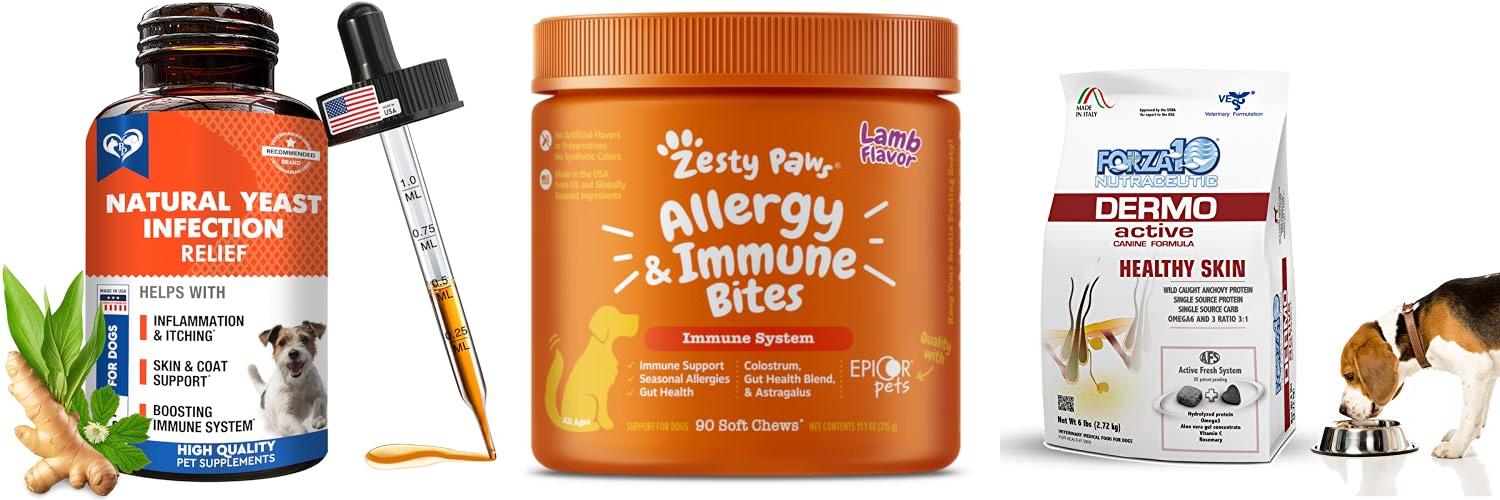
Omega-3 fatty acids may support skin health in some dogs, especially those with inflammatory skin disease. But the right product and dose depend on the dog’s weight, diet, health, and medications.
Fish oil can cause stomach upset. It may also be unsuitable for some dogs, including dogs with certain bleeding risks or pancreatitis concerns. Ask your veterinarian before using it.
Avoid human skin supplements, essential oils, and high-dose vitamins. “More” is not safer.
5. Improve basic skin care
Use gentle dog-safe grooming products. Brush the coat as appropriate for its type. Keep bedding clean. Maintain veterinarian-recommended flea control.
Make sure fresh water is available. Wet food can add water to the diet, but changing to wet food is not a cure for most skin problems.
When to See a Veterinarian
Make a veterinary appointment if dry skin lasts more than a short period, returns often, or comes with itching or hair loss. A vet visit is especially important when the dog has:
- Open sores or bleeding
- Pus, crusts, or a strong odor
- Severe itching
- Swollen skin
- Repeated ear infections
- Vomiting or diarrhea
- Weight loss
- Low energy
- Increased thirst or urination
- Facial swelling or trouble breathing
Facial swelling, breathing problems, collapse, or sudden widespread hives may indicate a serious allergic reaction. Seek emergency veterinary care.
A veterinarian may examine the skin, check for parasites, perform cytology for yeast or bacteria, and discuss an elimination diet. Testing helps prevent a common mistake: treating a nutritional problem when the dog has an infection, or treating an allergy when the real issue is parasites.

Common Mistakes to Avoid
Changing several things at once
If you change food, treats, shampoo, supplements, and flea control on the same day, you may not know what helped. Make changes with a clear plan whenever possible.
Assuming grain-free food will fix dry skin
Most food allergies involve proteins, not grains. Grain-free food is not automatically useful for itchy or dry skin. The diet should match a confirmed need, not a marketing claim.
Judging a food by the ingredient list alone
Ingredient lists do not show the full nutrient profile, digestibility, quality controls, or feeding results for your individual dog. A complete and balanced statement is a key starting point, but it does not replace medical evaluation.
Using supplements as a diagnosis
A dog may seem better after a supplement because the skin problem changed naturally, grooming improved, or another treatment worked. Improvement does not prove that the dog had a deficiency.
Stopping prescribed treatment early
If your veterinarian treats an infection or allergy, follow the full plan unless the dog has a possible reaction. Stopping early can allow the problem to return.
Frequently Asked Questions
Can switching dog food help dry skin?
It can help when the current diet is unbalanced, poorly stored, unsuitable for the dog’s life stage, or contains a trigger for a food allergy. It will not help every cause of dry skin. Change food with veterinary guidance, especially for puppies, older dogs, or dogs with medical conditions.
Does chicken cause dry skin in dogs?
Chicken does not cause dry skin in every dog. Some dogs can develop a chicken allergy, but the usual signs are itching, ear problems, paw licking, or digestive upset. A controlled diet trial is needed to test the link.
Is grain-free dog food better for a dog’s coat?
Not by default. Grain-free food has no proven general benefit for dry skin. Removing grains may also fail to remove the actual trigger if the problem is a meat protein or a non-food cause.
Can too much protein cause dry skin?
A normal, balanced amount of protein does not usually cause dry skin. A diet with poor overall balance, inadequate calories, or an unsuitable formulation may affect the coat. Dogs with kidney or liver disease may need a specific diet, so ask a veterinarian before changing protein levels.
How long does it take for a diet change to improve skin?
The answer depends on the cause. A food allergy trial may require several weeks, often around eight or more. Hair and coat quality can take longer to look normal because hair grows slowly. If itching worsens or the skin becomes infected, do not wait for the diet trial to work.
Conclusion
Dog food can cause or contribute to dry skin, but the link is not automatic. Nutrient gaps, damaged fats, an unsuitable diet, and food allergies are possible. Dry air, bathing, parasites, infections, environmental allergies, and medical disease are also common explanations.
Start by checking the food’s life-stage statement, storage, freshness, and role in your dog’s total diet. Then look for itching, odor, sores, ear problems, stomach signs, or other clues. If the problem persists or is severe, a veterinarian can identify the cause and guide a safe diet trial or treatment plan.
Sources and Further Reading
- FDA: Pet Food
- AAFCO: Official Publication and Nutritional Adequacy Information
- Merck Veterinary Manual: Nutritional Requirements of Dogs
- Merck Veterinary Manual: Allergic Skin Diseases in Dogs
- American College of Veterinary Dermatology: Pet Skin and Allergy Information

Pet Care Writer & Researcher
Daniel writes practical guides on daily care, feeding, and safety, turning complex topics into simple, actionable advice.