Best Bark Control Solution For Outdoor Barking: Top Pick
Find the best bark control solution for outdoor barking with humane, effective options that help reduce noise and restore peace at home.
The best bark control solution for outdoor barking combines humane sound control, smart placement, and calm dog training.
A dog barking at every squirrel, car, or passerby can turn a quiet yard into a daily alarm. I understand the stress, especially when neighbors start to complain. Outdoor bark control devices can help by interrupting repeated barking without shock or pain. Still, no device replaces exercise, shelter, supervision, and training. After comparing range, weather use, controls, and daily value, I found several useful options for different yards and dog habits.
PetSafe Outdoor Bark Control

The PetSafe Outdoor Bark Control uses a birdhouse-style design that fits into many yards with less visual clutter. It detects a dog’s bark and sends a high-pitched sound meant to interrupt the pattern. I like this approach for owners who want a simple device without a collar or remote. Its rated coverage of up to one-quarter acre suits many small and medium residential yards.
The hanging shape also gives you flexible placement near a fence, porch, or garden area. Like most ultrasonic bark products, results can vary with the dog, wind, distance, and nearby barriers. I would place it where the microphone faces the main barking zone and keep clear line of sight when possible. Pairing it with a quiet cue and a reward makes this outdoor bark control more useful.
Pros:
- Weather-ready birdhouse design for outdoor use
- Up to one-quarter-acre coverage
- No shock collar or contact with the dog
- Simple automatic bark detection
- Blends into a yard better than many plastic devices
- Useful for fence-line and porch barking
Cons:
- Ultrasonic response differs from dog to dog
- Walls, fences, and dense plants can reduce performance
- May need careful placement for reliable detection
My Recommendation
I recommend this PetSafe model for homeowners who want a familiar, low-effort device for a small or medium outdoor area. It works best when a dog barks from a repeatable spot, such as a fence or gate. The birdhouse form helps it look less like a training gadget. For many owners, it is a strong candidate for the best bark control solution for outdoor barking because it offers simple automatic use, useful coverage, and a gentle design.
Tetra Ultrasonic Bark Deterrent

This Tetra device offers both automatic bark sensing and remote control operation. The listed sensor range reaches about 33 feet, while the remote is listed for up to 60 feet. That combination gives you more control than a fixed automatic unit alone. I find that useful when a dog barks only at certain events, such as a delivery truck or a neighbor’s dog.
The rechargeable design reduces the need to buy batteries often. Multiple settings also let you adjust the response instead of using one fixed level. Although the listing highlights indoor use, I would use it outdoors only in a protected location unless the instructions clearly approve direct weather exposure. It may suit an owner who wants portable control for a patio, porch, or supervised yard session.
Pros:
- Automatic bark sensor for hands-off interruption
- Remote control adds direct user control
- Rechargeable design helps reduce battery waste
- Adjustable settings support gradual training
- Portable for use near patios, doors, and yards
- Useful for targeted barking events
Cons:
- Not the best choice for a large open yard
- Outdoor exposure may require extra protection
- Some dogs may ignore ultrasonic sound
My Recommendation
This device is best for owners who want a remote and automatic bark control tool in one unit. It fits a smaller outdoor zone where you can watch the dog and move the device as needed. I would not choose it as my first pick for an uncovered yard with heavy rain. For patio use and supervised training, it can be a practical part of the best bark control solution for outdoor barking.
Rechargeable Ultrasonic Dog Bark Deterrent

This rechargeable bark deterrent stands out with six modes, dual emitters, and a claimed remote range of up to 300 feet. The emitters are listed for a range of up to 75 feet, which may help when a dog moves around a larger yard. I like the flexible design for owners who need to switch between automatic use and direct remote control. The black body also looks fairly discreet beside a porch or fence.
An IP65 rating suggests protection from dust and water spray, but it does not mean the unit should sit in deep water or face constant heavy rain. I would still mount it under an eave or use a sheltered post. The multiple modes can help you start low and observe the dog’s response. As with any ultrasonic device, use short sessions and reward quiet behavior instead of pressing the control again and again.
Pros:
- Six modes provide more adjustment options
- Dual emitters may support wider direction coverage
- Long claimed remote range for larger properties
- Rechargeable battery avoids frequent battery purchases
- IP65 protection supports sheltered outdoor use
- Works for indoor and outdoor training areas
Cons:
- Large range claims depend on open space and conditions
- Needs shelter during severe weather
- More settings may take time to learn
My Recommendation
I would choose this model for a dog that roams across a broad yard and needs occasional remote interruption. It is also a good match for an owner who wants several modes rather than one fixed response. The IP65 rating adds confidence for normal outdoor use when placed with care. If you need a flexible, rechargeable option, this could be the best bark control solution for outdoor barking in a larger supervised space.
Rechargeable Anti Barking Device

This rechargeable anti-barking device is aimed at owners who want a compact tool without a collar. Its handheld format makes it easy to use during a walk, yard session, or supervised training period. I see value in that portability because barking often happens in more than one place. You can carry it near the gate, patio, or driveway instead of installing several fixed units.
The device is most useful when you act at the first sign of repeated barking and then guide the dog toward a calmer choice. It should not become a way to chase or scare a nervous dog. Keep the sound brief, give the dog space, and reward a pause. Battery care also matters, so I would charge it before planned training sessions and store it in a dry place.
Pros:
- Portable design for use in several locations
- Rechargeable power reduces disposable battery use
- No collar or physical contact required
- Useful for supervised yard training
- Easy to keep near a door or patio
- Can support quiet-cue training
Cons:
- Requires the owner to stay nearby
- Not ideal for unattended barking across a large yard
- Results may vary with hearing and motivation
My Recommendation
This product suits hands-on owners who spend time outdoors with their dog. It is a good fit for walks, short training sessions, and barking near a door or driveway. I would not use it as the only answer for a dog left alone all day. Used with treats, exercise, and a clear quiet cue, it can become a useful part of the best bark control solution for outdoor barking.
Coprisin Automatic Bark Control Device

The Coprisin automatic bark control device offers three modes for owners who want a basic set-and-monitor system. Automatic activation can help when barking starts in a known area, such as along a fence. The lack of a collar keeps the approach contact-free. I like this style for people who need a device to respond while they handle other tasks nearby.
Three modes may give you a way to test a lower response before moving higher. That matters because a mild interruption is often enough for a dog that has learned a habit but is not highly distressed. Place the unit toward the barking source and check it often at first. A device cannot tell the difference between boredom, fear, pain, and territorial alarm, so you should still look for the cause.
Pros:
- Automatic operation helps reduce constant supervision
- Three modes offer simple adjustment
- Contact-free approach avoids shock collars
- Useful near common barking points
- Simple design may suit first-time buyers
- Can support a consistent training routine
Cons:
- May not cover a wide or irregular yard
- Automatic devices can react to unwanted sounds
- Some dogs may become used to the sound
My Recommendation
The Coprisin device is best for a small yard with one clear barking zone. It suits owners who prefer simple controls and automatic operation. I would monitor the first few days to confirm that it activates only when needed. For a modest budget and a focused problem area, it may be a sensible part of the best bark control solution for outdoor barking.
Solar Ultrasonic Dog Bark Deterrent

A solar-powered bark deterrent can reduce the chore of changing batteries. This model targets outdoor use and includes waterproof construction, which makes it attractive for gardens, yards, and fence lines. Solar power works best when the panel receives steady direct light. I would avoid placing it beneath a thick tree or under a covered porch where the panel may not charge well.
The app feature may appeal to owners who like to check or adjust a device from a phone. Still, app features can depend on the model, phone settings, and connection conditions. I would test the controls close to home before mounting the unit far away. Solar devices offer convenience, but cloudy weather and winter shade can reduce available power, so keep any backup plan in mind.
Pros:
- Solar charging can reduce routine battery changes
- Designed for outdoor placement
- Waterproof construction adds weather confidence
- App control may make adjustments convenient
- Good match for fence and garden areas
- Can support long-term outdoor use
Cons:
- Needs enough sunlight for reliable charging
- App functions may depend on connection and phone setup
- Shadows and cloudy days can affect power
My Recommendation
I recommend this solar model for sunny yards where an owner wants low-maintenance power. It is especially useful when the barking zone sits far from an outlet. Choose a clear mounting spot and check the charge after cloudy periods. For a property with good sun, it can be the best bark control solution for outdoor barking when convenience matters as much as sound control.
DOGTEK Sonic Birdhouse Bark Control

The DOGTEK Sonic Birdhouse offers a discreet way to place bark control outside or inside. Its birdhouse shape can make it easier to accept in a visible garden or yard. The sonic approach aims to interrupt unwanted barking without a collar. I consider that a useful choice for owners who want the device to look like part of the yard.
It may work well near a fence, kennel, or outdoor seating area where a dog barks on repeat. Distance and obstacles still matter, so I would not hide it behind a shed or thick hedge. Start with a short trial and watch for a quiet pause rather than expecting an instant cure. The best results usually come when the owner rewards calm behavior right after the bark stops.
Pros:
- Birdhouse styling is less distracting in a yard
- Suitable for indoor and outdoor placement
- No collar or shock feature is needed
- Useful for repeat barking in one area
- Easy to position near a fence or kennel
- Supports a calm, contact-free training plan
Cons:
- Visual design does not guarantee broad coverage
- Barriers may block or weaken the sound
- Dogs respond differently to sonic deterrents
My Recommendation
This DOGTEK unit is best for owners who care about appearance as well as function. It fits a garden, porch, or kennel area without looking like a harsh training tool. I would choose it for one or two known barking spots, not a large property with several levels. Its discreet design makes it a strong candidate for the best bark control solution for outdoor barking in a tidy residential yard.
PetSafe Elite Outdoor Bark Control

The PetSafe Elite Outdoor Bark Control is another birdhouse-style option with coverage listed up to one-quarter acre. It is made for outdoor bark interruption and can monitor a yard without putting anything on the dog. I like this format for families who want a stable device near a fence or play area. The design feels more like a yard fixture than a training accessory.
Its automatic response can help break a cycle before barking grows louder. However, I would still inspect the yard for triggers such as passing animals, poor fencing, heat, or boredom. A bark device should reduce noise, not hide a medical or emotional problem. Place it high enough to protect it from curious dogs, but keep the microphone open and aimed toward the main activity.
Pros:
- Outdoor-focused design for yard use
- Up to one-quarter-acre listed coverage
- Familiar birdhouse appearance
- Automatic bark response
- No collar, shock, or physical restraint
- Good fit for a repeat fence-line problem
Cons:
- May need a clear view of the dog
- Performance can vary by dog and distance
- Not a substitute for exercise or behavior work
My Recommendation
I would suggest the Elite model to homeowners who want a dedicated outdoor unit from an established pet product line. It is best for a small to medium yard with a clear barking pattern. The quarter-acre rating is useful, but real coverage depends on layout and obstacles. For a straightforward, contact-free setup, it remains a dependable option for the best bark control solution for outdoor barking.
Two-Pack Automatic Bark Deterrent Devices

This two-pack gives owners a simple way to cover two barking points. One unit can face the front fence while the other watches a side yard, back door, or kennel. That setup may work better than placing one device at the center and hoping the sound reaches every corner. I like the practical value for homes with more than one dog activity zone.
Automatic operation reduces the need to hold a remote each time barking starts. Even so, two units need thoughtful placement so they do not trigger in confusing ways. Test one device at a time and note where each one activates. The pair can help with coverage, but it cannot solve barking caused by fear, pain, isolation, or a dog that needs more daily activity.
Pros:
- Two devices can cover separate barking zones
- Automatic activation supports hands-off use
- Useful for homes with front and back yards
- Contact-free design avoids collar use
- May offer better coverage than one central unit
- Helpful for multi-dog households
Cons:
- Two units require more setup and testing
- May not suit a small yard with one barking spot
- Sound response can differ between dogs
My Recommendation
This two-pack is best for a home with two separate barking areas. It can also help when one dog spends time near the driveway and another stays near the backyard. I would not buy two units simply because more devices seem better; correct placement matters more than quantity. When coverage is the main issue, this may be the best bark control solution for outdoor barking at a useful value.
Queenmew Solar Bark Deterrent
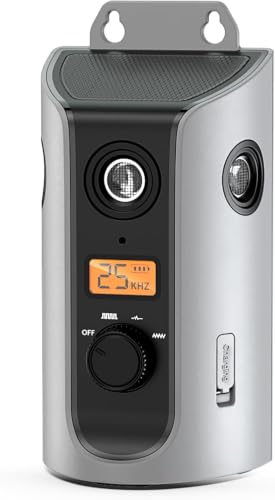
The Queenmew bark deterrent combines solar charging with a tri-directional ultrasonic design. A 50-foot listed range may suit a focused yard, patio, or fence area. The three-way output could help spread sound across more than one direction, especially when the unit sits near the center of a small open space. I find that appealing for owners who want outdoor coverage without running a power cord.
Solar charging works best with a clear view of the sky. Mount the unit where it receives strong daylight, then check its performance after several cloudy days. The device is listed for indoor and outdoor use, but I still prefer a sheltered outdoor location for long service life. Start with a mild setting and watch the dog’s body language, since humane control also means avoiding fear or distress.
Pros:
- Solar charging supports low-maintenance outdoor use
- Tri-directional output may improve area coverage
- Listed 50-foot range suits smaller yards
- Works indoors and outdoors
- No cord is needed at the installation point
- Useful near central yard locations
Cons:
- Clouds and shade can limit charging
- Fifty feet may not cover a large property
- Ultrasonic results vary by dog
My Recommendation
Queenmew is a good choice for a sunny yard with barking spread across a small open area. Its tri-directional design may reduce the need to aim one narrow beam at a fence. I would choose it for owners who value solar power and do not need remote control. In the right yard, it offers a convenient version of the best bark control solution for outdoor barking.
Best Features Comparison
| Best for | Why |
|---|---|
| Small yards with one main barking zone | Birdhouse-style PetSafe and DOGTEK units offer simple automatic use and discreet placement. |
| Large or changing outdoor areas | The rechargeable six-mode device adds remote control, flexible settings, and a longer claimed reach. |
| Low-maintenance outdoor coverage | Solar models from Queenmew and the solar ultrasonic option reduce routine battery changes. |
How I Evaluated Outdoor Bark Control Devices
I look at more than a product title or a claimed range. An outdoor bark control device must fit the yard, the dog, and the reason for the barking. I compare power, weather protection, controls, coverage, mounting style, and daily ease of use. I also ask whether the product supports humane training rather than simply masking a problem.
Range claims need careful reading. A clear open yard may allow sound to travel better than a yard filled with fences, sheds, shrubs, and walls. Wind, rain, traffic, and other dogs can also affect results. I treat every listed range as a guide, not a promise.
I also give extra credit to rechargeable and solar models when their power systems suit the setting. A device that runs out of power is not useful, no matter how strong its feature list looks. At the same time, solar products need sun, and rechargeable products need a charging routine. The best bark control solution for outdoor barking is the one an owner can place correctly and maintain.
Ultrasonic Bark Control: What Owners Should Know
Ultrasonic devices produce a high-frequency sound that many people hear only faintly or not at all. Some dogs notice the sound and pause. Other dogs show little response. A dog’s hearing, age, mood, distance, and training history can all affect the result.
These products do not diagnose barking. A dog may bark because it sees a stranger, guards a gate, feels lonely, wants play, or feels pain. The American Veterinary Medical Association and other animal welfare groups support finding the cause of unwanted behavior and using reward-based training. I agree with that approach.
Use a bark device as an interruption, not as punishment. When the dog stops, mark the quiet moment with praise, a treat, play, or a calm cue. This teaches the dog what to do next. Without that lesson, the sound may only create confusion or work for a short time.
How to Set Up the Best Bark Control Solution for Outdoor Barking
Start by watching the dog for one full day. Note the time, location, trigger, and length of each barking episode. This simple log often reveals a pattern. You may find that the dog barks only when a school bus passes or only when left alone near the gate.
Place the device close to the barking zone, but not where the dog can chew it. Aim the microphone and sound outlet toward the dog’s usual position. Avoid hiding the unit behind plants or solid objects. For solar models, choose a spot with good daylight and check the charge after installation.
Test the device while you remain nearby. Look for signs of stress, such as tucked ears, hiding, trembling, frantic movement, or attempts to escape. Stop if the dog seems distressed. A humane bark control plan should create a pause, not panic.
Reward the pause at once. A small treat can work better than a long speech. Over time, add a quiet cue and reward the dog for responding to your voice. You want the device to become less important as the dog learns a better habit.
Other Ways to Reduce Outdoor Barking
Exercise is one of the simplest tools. A bored dog may treat every sound as an event. A brisk walk, scent game, or short training session can lower excess energy. Mental work often tires a dog in a way that a quick run does not.
Reduce visual triggers when possible. Privacy mesh, a solid fence panel, or moving a dog bed away from the front window may help. Do not block airflow or create a heat trap. Give the dog shade, clean water, and a safe place to rest.
Do not leave a barking dog alone outside for long periods. Repeated practice can make the habit stronger. If barking comes from fear, separation distress, aggression, or pain, speak with a veterinarian or qualified reward-based behavior professional. No outdoor device should delay needed care.
Safety and Humane Use Tips
Never point any sound device at a dog’s face from close range. Keep sessions short and give the dog a way to move away. Do not combine several devices at once before testing one. Too much sound can make it harder to understand what helps.
Check local rules and neighbor concerns. A product may be marketed as humane, but every dog reacts in its own way. Watch the dog, not just the product lights. If the device increases fear or agitation, remove it and choose another plan.
Inspect outdoor units often. Look for water damage, cracked cases, loose mounts, chewed wires, and blocked microphones. Clean solar panels when dust builds up. Proper care improves reliability and protects both the dog and the device.
FAQs Of best bark control solution for outdoor barking
What is the best bark control solution for outdoor barking?
For many homes, a weather-ready automatic ultrasonic unit works well near a clear barking zone. PetSafe and DOGTEK birdhouse models suit small to medium yards. The best choice depends on the dog, yard size, triggers, and placement.
Do ultrasonic bark control devices hurt dogs?
They are designed to interrupt barking with high-frequency sound rather than shock. Still, some dogs may find the sound stressful. Stop use if your dog shows fear, panic, or strong discomfort, and use reward-based training.
Will an outdoor bark device work through a fence?
It may work through some open or light barriers, but solid fences, walls, sheds, and dense plants can reduce performance. Place the unit with a clear path toward the dog whenever possible.
Are solar bark control devices reliable?
They can be reliable in a sunny location. Shade, winter weather, dirt, and long cloudy periods can reduce charging. Check the panel and battery status often, especially after several dark days.
Can a bark control device replace dog training?
No. It can interrupt a barking habit, but training teaches the dog what to do instead. Add exercise, trigger control, supervision, and rewards for calm behavior for better long-term results.
Final Verdict: Which Should You Buy?
For most small and medium yards, I would start with the PetSafe Outdoor Bark Control because it offers a simple, weather-ready format and useful coverage. Larger yards may benefit from the rechargeable six-mode model or a two-pack.
The best bark control solution for outdoor barking combines humane interruption with training and smart yard setup. Choose the device that matches your space, then reward every quiet moment.

Pet Care Writer & Researcher
Daniel writes practical guides on daily care, feeding, and safety, turning complex topics into simple, actionable advice.