How To Reward Dog Correctly During Training: Quick Pro Tips
Master how to reward dog correctly during training with timing, treats, and praise that boost learning fast. Get step-by-step tips for happier, focused pups.
Mark the behavior, reward within one second, and match payoff to effort.
If you want training that sticks, you need clean timing, the right rewards, and a simple plan. In this guide, I’ll show you how to reward dog correctly during training with field-tested steps, pro tips, and easy science. I’ve coached hundreds of teams, and I know what works in busy homes and loud parks. Stick with me, and you’ll turn good moments into great habits fast.

Why rewards work: the science behind great timing
Dogs repeat what earns them something they value. That is the core of operant conditioning. When your dog sits and a reward follows, the brain links sit to payoff. That link gets stronger each clean rep.
Timing matters. A short delay blurs the link. A fast reward drops dopamine at the right moment, which speeds learning. This is the bedrock of how to reward dog correctly during training, and it is why tiny changes in timing create big gains.

Pick the right reward for your dog
Not all rewards are equal. What thrills one dog may bore another. Use a reward that your dog wants right now, in that place, for that task.
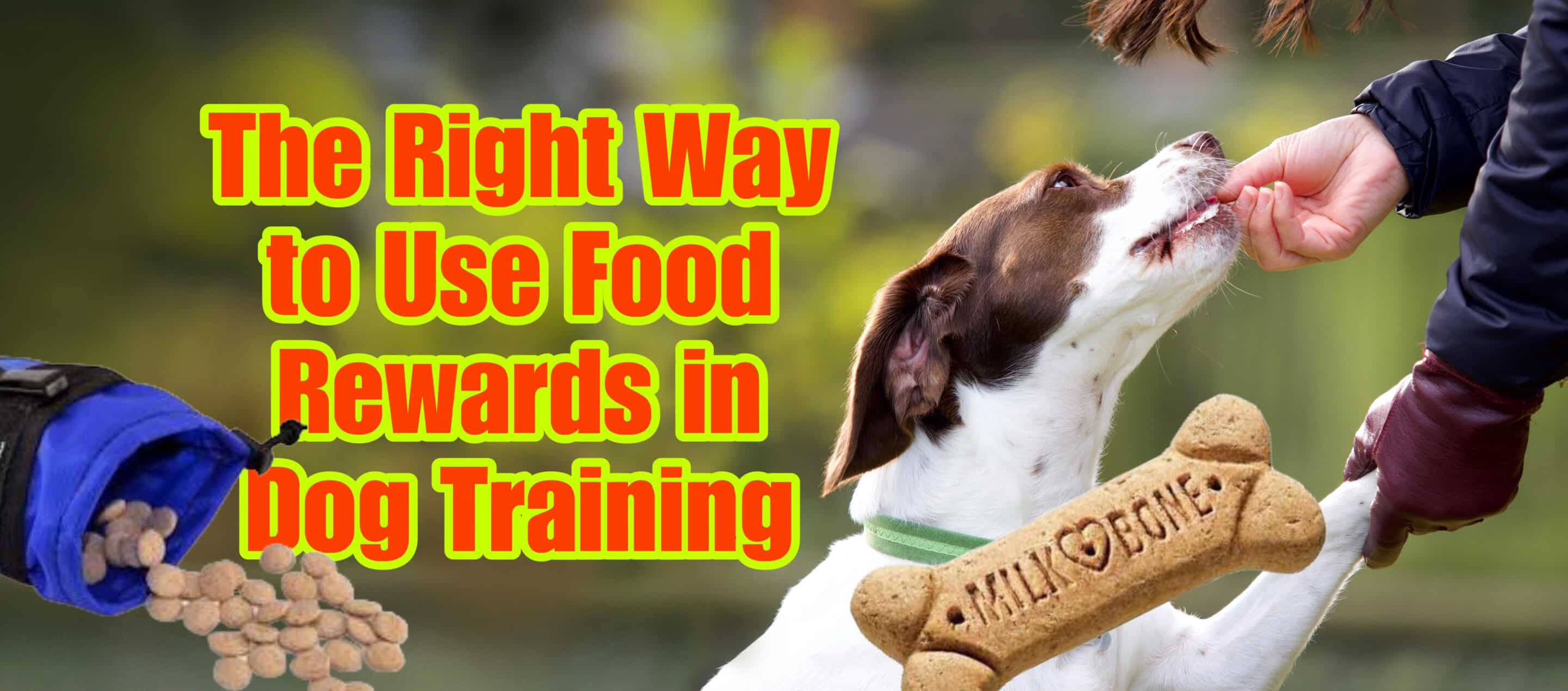
- Food rewards Small, soft treats are best. They should be quick to eat and safe.
- Play rewards Short tug, ball toss, or chase of a toy. Keep it brief to protect focus.
- Praise and touch Calm words or a short chest rub. Use only if your dog truly values it.
- Life rewards Real freedoms, like going out the door, sniffing a bush, or jumping in the car.
In the early stages, food often wins. It is fast, clear, and easy to deliver. As your dog learns, mix in play and life rewards. That balance is key in how to reward dog correctly during training.

Nail the timing: the one-second rule and marker words
A marker is a signal that says, “Yes, that! Reward is coming.” You can use a clicker or a crisp yes. The marker must be the same every time.
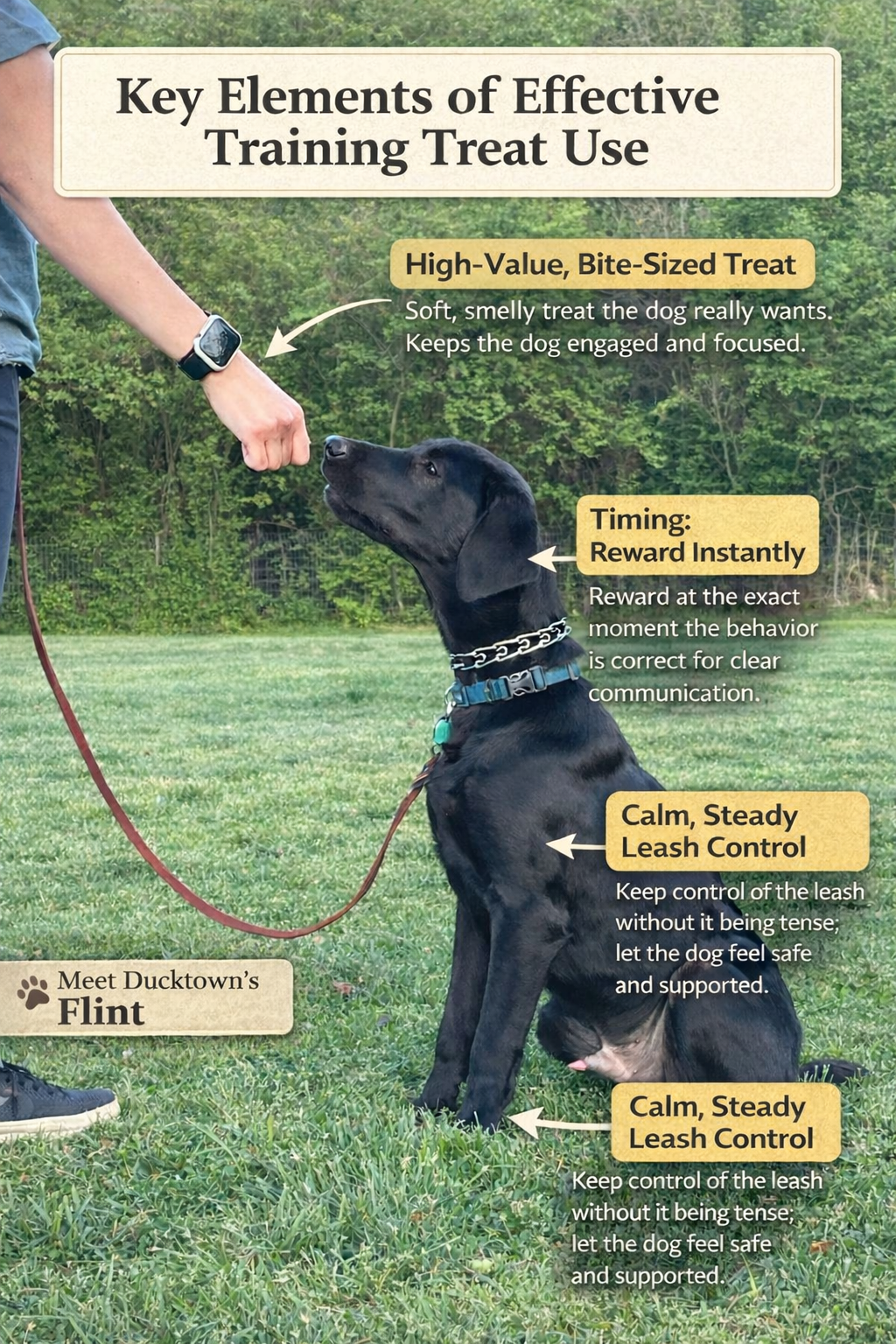
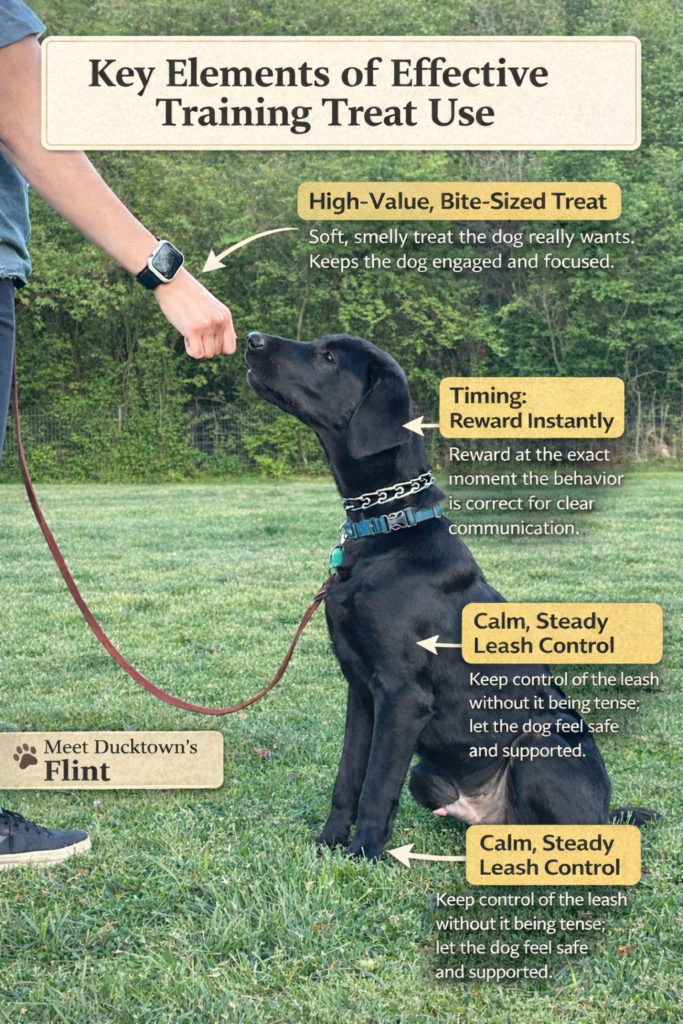
Mark the instant your dog does the behavior. Then deliver the reward within one second. Think click-then-treat. This one-two rhythm helps your dog spot the moment that paid. Clean markers are a huge part of how to reward dog correctly during training.
Pay scale, rate, and schedules of reinforcement
In the start phase, pay every correct rep. Keep the rate high. Aim for a reward every few seconds during shaping. Short sets prevent boredom.
Use a pay scale. Harder tasks earn better pay. Faster sits, longer stays, or recall past a squirrel should win a higher value treat or a short game. As your dog gets fluent, shift to a variable schedule. Pay some reps, then surprise with a jackpot on a great one. This shift is central to how to reward dog correctly during training.
 placement and movement: where you pay shapes what you get”
style=”max-width: 100%; height: auto; border: 2px solid black; border-radius: 10px; display: block; margin: 0 auto;”
loading=”lazy”
/>
Reward placement and movement: where you pay shapes what you get
Where you give the reward guides the next rep. Reward at your left seam to build heel. Treat on the mat to build a calm down. Toss the treat away to reset for the next recall.
Use placement to fix form. If your dog forges in heel, deliver the treat a step behind your knee. If your dog pops up from a sit, feed low and slow at the chest. Thoughtful placement is a quiet superpower in how to reward dog correctly during training.
Avoid bribery: lure to teach, then fade fast
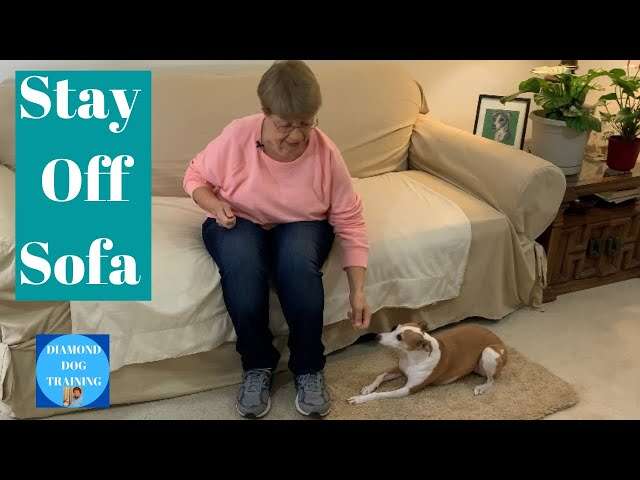
A lure shows the dog what to do. It is not the reward. Use a lure for one to three reps to get the motion. Then move the food to your other hand or pocket. Add the cue. Reward after the behavior.
If the dog will not work without seeing food, you have a bribe. Break the task into smaller steps. Mark more. Pay well for effort. This keeps the process clean and is core to how to reward dog correctly during training.

Proofing with the three Ds: distance, duration, distractions
Raise one D at a time. Add distance while keeping duration short and the space quiet. Then add duration. Save distractions for last. Pay more as you add stress.
Jackpot big wins. If your dog holds a stay while a toy rolls by, that is a huge deal. Pay like it. Careful proofing shows you understand how to reward dog correctly during training under real-life pressure.

Tailor rewards to breed, age, mood, and health
High-drive dogs may prefer a quick game over food. Seniors might want soft treats and short sets. Puppies need tiny bites and many easy wins. Nervous dogs do better with calm, slow feeding.
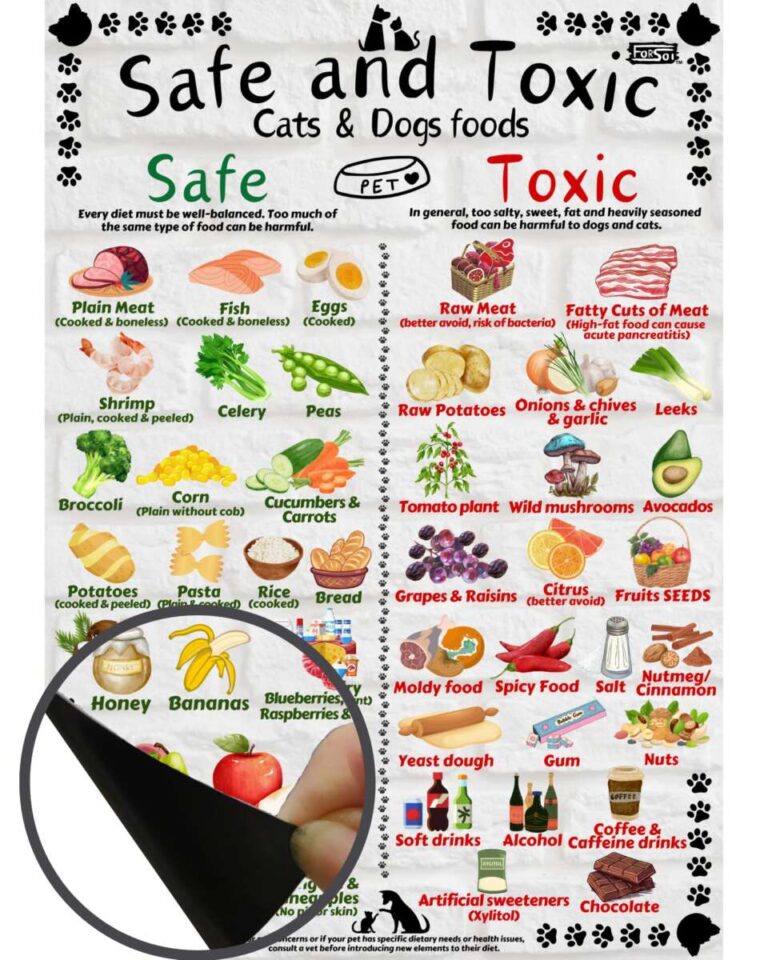
Check weight and stomach needs. Use low-fat, single-ingredient treats if your dog is sensitive. Ask your vet if you are not sure. Custom fits like this signal you know how to reward dog correctly during training for your unique dog.
Step-by-step examples you can use today
Here are four quick plans I use with clients. Keep sets short. End on a win.
-
Sit on cue
- Hold a treat at the nose, move it up. Mark when the butt hits. Reward low.
- Repeat three times. Then say sit first. Mark and reward.
- Add tiny distractions. Pay more for faster sits.
-
Recall that sticks
- In a hallway, say your dog’s name once. When they turn, mark. Toss the treat past you so they run through.
- Add the word come. Gradually add distance.
- In the yard, use a leash or long line. Pay huge for fast turn-and-run to you.
-
Loose-leash walking
- Start in a quiet room. Each time the leash goes slack, mark and feed at your left seam.
- Take one step. If the leash stays loose, mark and feed.
- Do short walks. Pay for focus past smells.
-
Settle on a mat
- Drop a treat on the mat. When paws touch, mark and reward on the mat.
- Wait for a sit or down. Mark and feed low and slow.
- Add tiny durations. Use a chew as a long reward.
These plans show how to reward dog correctly during training in daily life. Use clear markers, fast pay, and a smart pay scale. Repeat, and your dog will learn fast.
Track progress and fade food with confidence
Keep a tiny log. Note how many reps, how fast, and what reward you used. If progress stalls, split the step smaller or raise your pay. Small tweaks beat big resets.
When your dog is fluent, start to mix in life rewards. Door opens for a sit. Sniff time for a heel. Use a variable schedule for known cues. That shift is the gentle art in how to reward dog correctly during training without getting stuck on treats.
Frequently Asked Questions of how to reward dog correctly during training
How often should I reward my dog during early training?
Pay every correct rep in the start. High rate builds strong links and fast learning.
Do I need a clicker, or is a marker word enough?
A clicker is crisp and clear. A sharp yes works if it sounds the same every time.
What if my dog ignores treats outside?
Lower the bar and boost pay. Use higher-value food or short play, and train farther from distractions.
When do I switch from treats to praise?
Switch only after the behavior is fluent in many places. Then blend in life rewards and praise while keeping surprise treats.
How do I stop my dog from only working when they see food?
Hide the food, use a marker, and pay after the behavior. Fade the lure fast and use a variable schedule.
Conclusion
Great training is simple math. Mark the right moment, pay fast, and match the reward to the job. Keep sets short, raise the bar slowly, and place the payoff where it shapes the next rep. Do this, and your dog will learn with joy and trust.
Start today. Pick one behavior and run ten clean reps with a marker and smart pay. Then share your wins, subscribe for more step-by-steps, and keep building the bond you want.

Pet Care Writer & Researcher
Daniel writes practical guides on daily care, feeding, and safety, turning complex topics into simple, actionable advice.