
How Do Dogs Bark: The Science Behind Dog Sounds
Learn how do dogs bark, what different sounds mean, and how to understand your dog’s communication with helpful expert insights.
Dogs bark by pushing air through the voice box, while the brain shapes each sound to express a need or feeling.
Understanding how do dogs bark reveals much more than the mechanics of sound. A bark can signal joy, fear, warning, boredom, pain, or a simple request for attention. This guide explains the body parts involved, the meaning behind different barks, and safe ways to respond.
How Do Dogs Bark? The Basic Process
A dog bark begins with air from the lungs. The diaphragm and chest muscles push that air upward through the windpipe.
At the top of the windpipe sits the larynx, or voice box. Inside it are small folds of tissue called vocal cords. When air passes through these cords, they vibrate and create sound.
The dog then changes that sound with the mouth, tongue, throat, and lips. Think of the vocal cords as a guitar string. Air makes the string vibrate, while the mouth helps shape the final note.
How do dogs bark in different tones? The answer lies in muscle control, air pressure, and the shape of the vocal tract. A tight throat may create a sharp, high sound. A relaxed throat may produce a deeper and softer bark.
A bark also carries information through:
• Pitch, which may rise when a dog feels excited or afraid
• Volume, which often increases during alarm
• Length, which can show urgency or frustration
• Rhythm, which helps signal whether the dog is warning, greeting, or demanding
• Spacing, such as one short bark or many rapid barks
The Anatomy Behind a Dog’s Bark
Several parts of a dog’s body work together to produce a bark. Each part has a specific role.
The lungs and diaphragm
The lungs store air, while the diaphragm helps push air out. Stronger air pressure can make a bark louder. A small dog may bark with surprising force because it can release air quickly.
The larynx and vocal cords
The larynx protects the airway and holds the vocal cords. When the cords vibrate, they turn moving air into sound.
Dogs have different larynx shapes and vocal tract sizes. This is one reason a Chihuahua sounds different from a Great Dane. Breed does not determine every bark, but body size often affects pitch and depth.
The mouth and tongue
After sound forms in the larynx, the mouth helps shape it. A dog’s tongue, teeth, lips, and throat act much like the parts of a wind instrument.
This process does not create human speech. Dogs cannot form words in the same way people do. Still, they can vary their sounds and use them with posture, scent, facial movement, and eye contact.
The brain and nervous system
The brain controls when and why a dog vocalizes. A bark is not only a physical reflex. It is also part of a communication system.
For example, a dog may bark at a visitor, then turn toward its owner. That pattern may mean, “Something is here, and I want you to notice it.”
Why Do Dogs Bark?
Dogs bark for many reasons. The same dog may use one sound in different situations, so context matters more than sound alone.
Common causes include:
• Alerting: The dog hears a noise, sees a person, or notices movement.
• Greeting: The dog barks during an excited welcome.
• Play: The bark may sound bright, quick, and energetic.
• Fear: The dog may bark while stepping back, hiding, or lowering its body.
• Frustration: A dog may bark when it cannot reach a toy, person, or outdoor area.
• Attention seeking: The dog may bark because barking has worked before.
• Territorial behavior: The dog may warn others away from a home, yard, car, or owner.
• Separation distress: Some dogs bark when left alone or when they expect a person to leave.
• Pain or illness: A sudden change in vocal behavior can signal a health problem.
• Boredom: Too little activity may lead to repeated barking.
How do dogs bark when they feel happy? Their bark may be short, high, and mixed with a loose body, wagging tail, play bow, or relaxed face.
How do dogs bark when they feel afraid? The sound may be sharp or repetitive, but the body often tells the clearer story. Look for tucked ears, a low tail, lip licking, shaking, or attempts to escape.
Never judge emotion from sound alone. A wagging tail does not always mean happiness, and a loud bark does not always mean aggression.

Different Types of Dog Barks
Researchers and trainers often describe barks by their sound and situation. These labels are useful, but they are not perfect translations.
The alarm bark
An alarm bark is often sudden and sharp. It may happen after a doorbell rings or a dog spots something unusual.
The dog may stand tall, face the trigger, and pause between barks. After checking the situation, calmly guide the dog away from the window or door.
The warning bark
A warning bark often comes with stiff posture, a hard stare, raised fur, or a closed mouth between sounds. The dog may be telling another animal or person to create distance.
Do not punish a warning signal. If you silence the warning without addressing fear or stress, you may lose an important early sign.
The play bark
A play bark often occurs with a loose body and bouncy movement. The dog may bow with its front legs down and its rear end raised.
Play barking can become too loud or rough. Give the dog short breaks and reward calm play.
The demand bark
A demand bark asks for something. The dog may want food, a toy, access to a room, or attention.
If barking always earns the requested reward, it becomes stronger. Wait for a quiet moment, then provide attention or a reward. This teaches the dog that calm behavior works better.
The distress bark
Distress barking may sound repetitive, frantic, or unusually intense. It can appear with pacing, panting, scratching, destruction, or attempts to escape.
Separation anxiety and panic require more than basic obedience. A veterinarian or qualified behavior professional can help create a safe treatment plan.

How to Read a Bark With Body Language
A dog’s bark is only one part of a larger message. To understand how do dogs bark in real life, read the whole body.
Watch the:
• Tail: A loose wag differs from a stiff, high tail or a tightly tucked tail.
• Ears: Forward ears may show attention, while pinned ears may show fear or stress.
• Eyes: A soft gaze differs from a fixed stare or wide, showing eyes.
• Mouth: Relaxed lips differ from pulled-back lips or a tense, closed mouth.
• Body: A loose body often suggests comfort. A frozen body may signal tension.
• Movement: Moving away suggests discomfort, even if the dog continues to bark.
• Context: A bark at a squirrel differs from a bark when the dog is home alone.
A simple example is a dog barking at a delivery worker. If the dog leans forward and rushes the window, it may be alert or territorial. If the dog hides behind a chair while barking, fear is more likely.
A common mistake is to focus only on volume. Loud does not always mean aggressive. Some dogs are naturally vocal, while others make soft sounds even when deeply worried.

Why Some Dogs Bark More Than Others
Breed can influence barking, but it is not the only factor. Individual history, health, training, age, and environment also matter.
Some dogs were bred to alert people or control movement. Herding breeds may react to motion. Scent hounds may vocalize during tracking. Small companion breeds may bark often because they notice changes quickly or feel unsafe around larger events.
Environment also plays a major role. A dog living beside a busy sidewalk may hear and see more triggers than a dog in a quiet rural home.
Other factors include:
• Age and learning history
• Daily exercise and mental activity
• Noise from traffic, neighbors, or construction
• Access to windows and fences
• Social experiences with people and animals
• Sleep quality and stress levels
• Pain, hearing loss, or other medical problems
How do dogs bark more when bored? They may repeat the same sound because barking provides stimulation. The behavior can become a habit, much like tapping a foot while waiting.
A useful lesson from everyday training is to solve the cause, not just the noise. More exercise may help a bored dog, but it will not fully solve fear-based barking.

How to Reduce Excessive Barking
Barking is normal. The goal is not to stop every bark. The goal is to reduce barking that is unsafe, constant, or disruptive.
Start with careful observation:
- Record when the barking starts.
- Note what happens just before it.
- Watch the dog’s body language.
- Identify what the dog gets after barking.
- Look for patterns across time and place.
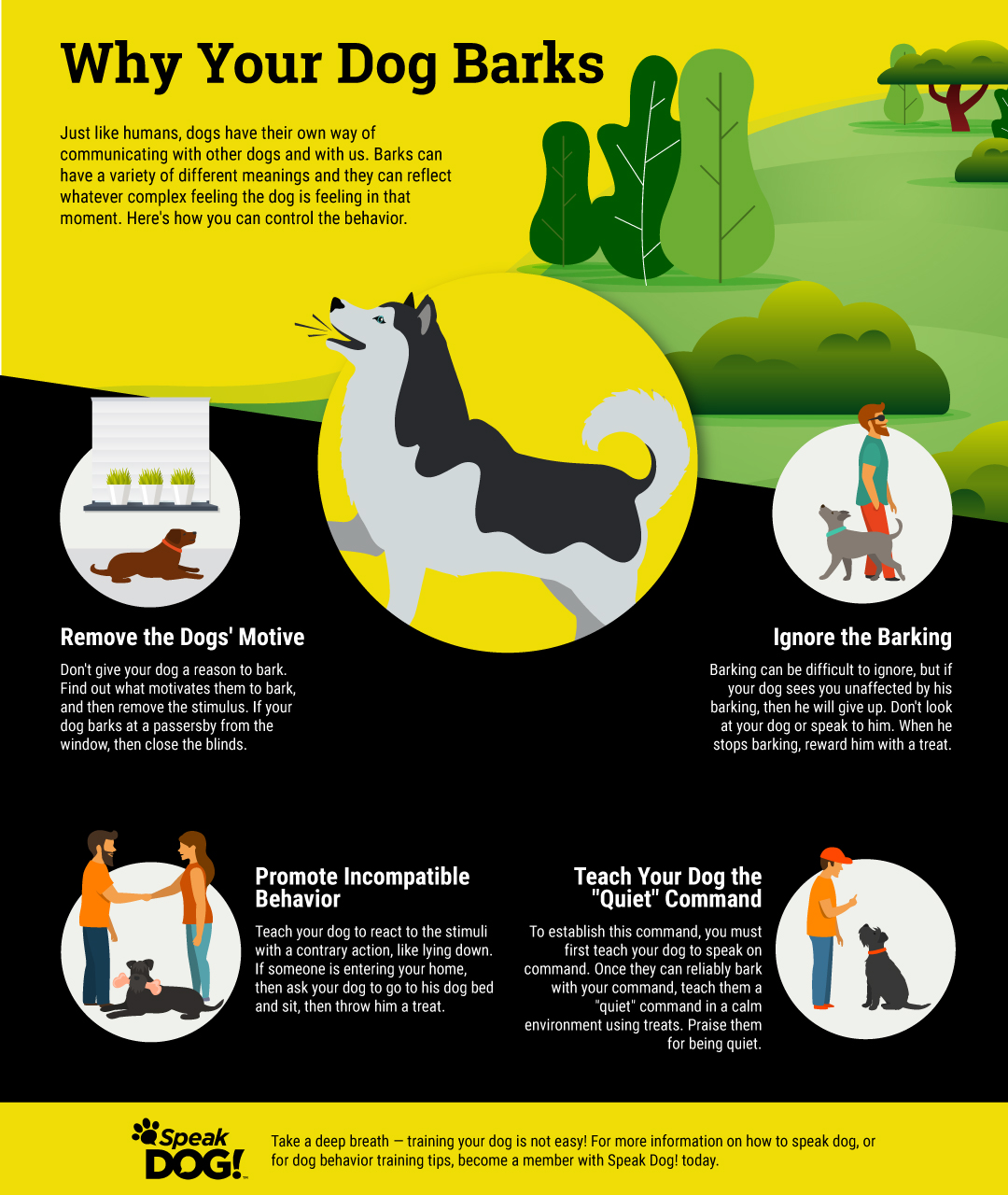
Then reduce exposure to triggers when possible. Close blinds, use a quiet room, add background sound, or move the dog away from a busy fence line.
Teach an alternative behavior. Ask the dog to look at you, move to a mat, or sit. Reward the calm response at once.
Use rewards, not fear. Yelling can add excitement or anxiety. Shock collars and harsh corrections may suppress a sound while increasing stress. Veterinary behavior groups generally favor reward-based training and management.
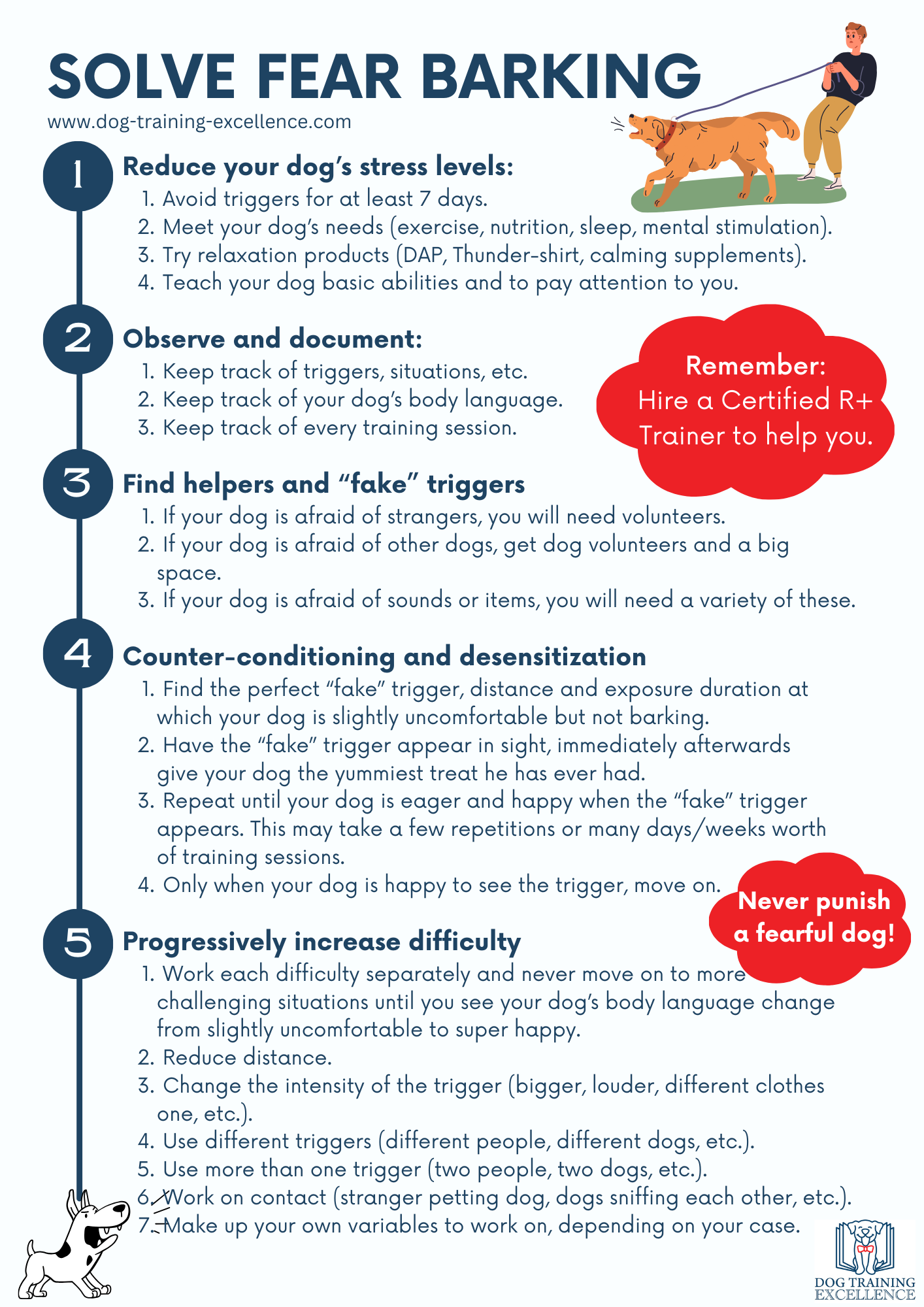
A practical training plan looks like this:
• Wait for a low-level trigger.
• Let the dog notice it from a safe distance.
• Say a calm cue such as “thank you.”
• Reward the dog for looking back at you.
• Slowly increase the challenge over many short sessions.
Do not reward barking by opening the door, handing over food, or starting a game. First wait for a brief pause, then reward quiet behavior.
If barking involves panic, aggression, self-injury, or major sleep loss, seek professional help. A veterinarian can check for medical causes and refer you to a certified behavior expert.
When Barking May Signal a Health Problem
A sudden change in barking deserves attention. A dog that becomes unusually quiet may have throat pain, laryngeal problems, weakness, or another illness.
A dog that suddenly barks much more may be dealing with pain, confusion, hearing changes, anxiety, or a new environmental trigger.
Contact a veterinarian if barking occurs with:
• Coughing or gagging
• Trouble breathing
• Difficulty swallowing
• A hoarse or weak voice
• Collapse or severe weakness
• Loss of appetite
• Vomiting or marked distress
• Confusion or unusual nighttime activity
Some older dogs develop changes linked to cognitive decline. They may bark at night, stare at walls, or seem lost in familiar rooms. These signs need a veterinary assessment.
Avoid trying to diagnose the cause at home. Sound alone cannot show whether a problem is behavioral or medical.
How Do Dogs Bark at Night?
Night barking may occur because a dog hears distant sounds, sees wildlife, feels alone, or has learned that nighttime barking brings attention.
Check the sleeping area first. Make sure the dog has water, a comfortable bed, and a safe temperature. Also check for pain, stomach upset, or a need to go outside.
Keep a steady routine. A calm walk, a bathroom break, and quiet rest before bed may help. For an older dog or a dog with sudden nighttime vocalization, schedule a veterinary visit.
Do not rush in during every bark if the dog is safe. Wait for a short quiet pause before giving attention. This avoids teaching the dog that repeated barking calls people into the room.
Frequently Asked Questions About How Do Dogs Bark
How do dogs bark so loudly?
Dogs use air pressure from the lungs and vibration in the vocal cords to create sound. Their throat and mouth then amplify and shape that sound, much like a musical instrument.
Why do dogs bark at nothing?
Dogs may hear sounds that people cannot detect, such as distant animals or high-frequency noises. They may also react to smells, shadows, reflections, memory, fear, or learned habits.
Can dogs control their barking?
Dogs can learn when and where barking is appropriate. Training works best when owners identify the cause, reduce triggers, and reward calm behavior instead of using punishment.
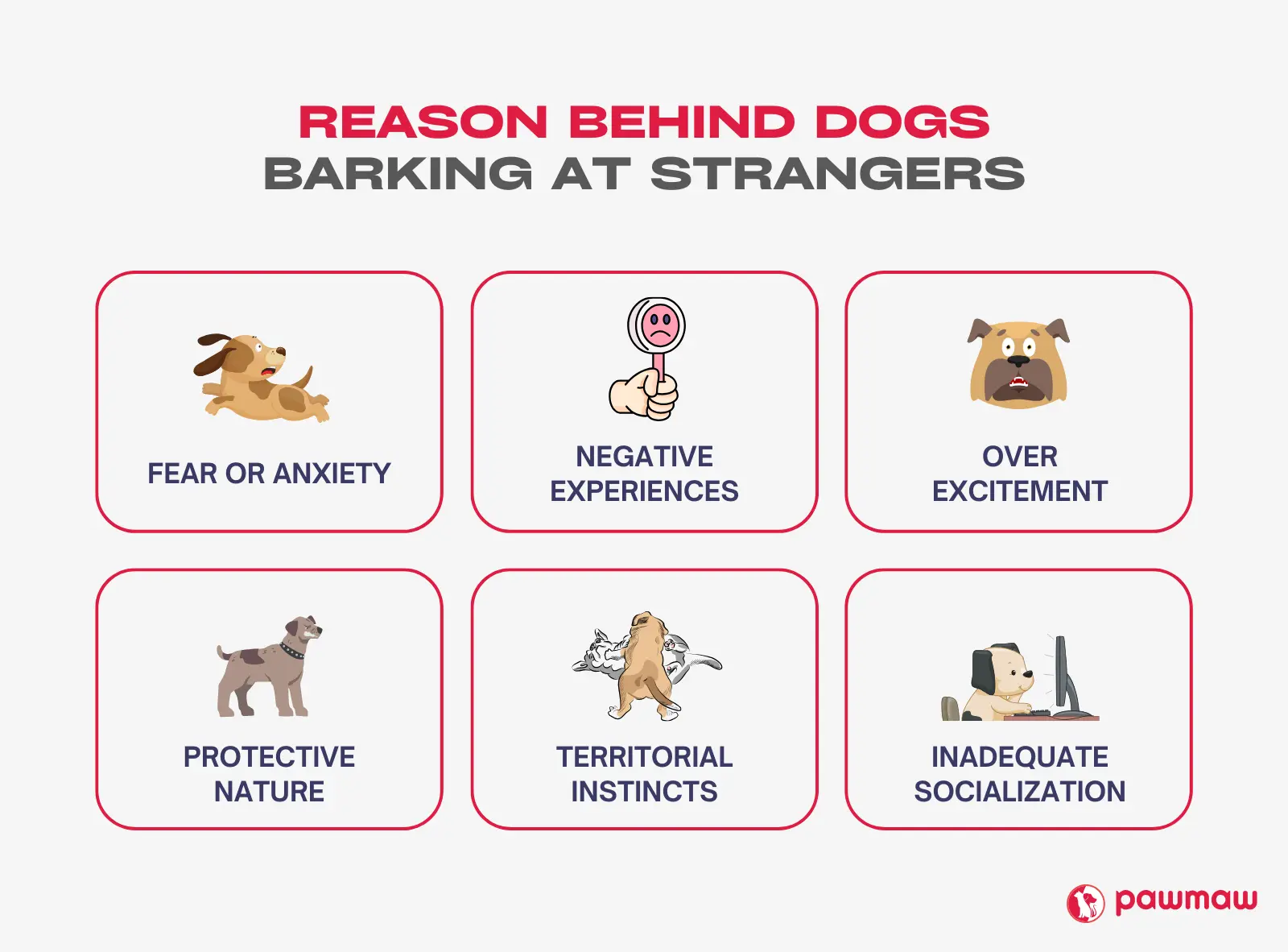
Why does my dog bark at strangers?
A dog may bark at strangers because of alertness, territorial behavior, fear, excitement, or a lack of social comfort. Body language helps show whether the dog wants distance or wants to greet.
Do dogs bark when they are in pain?
They can. Pain may cause barking, whining, groaning, restlessness, or a sudden change in normal vocal habits, so unusual sounds should be discussed with a veterinarian.
Why do small dogs often bark so much?
Small dogs do not always bark more, but many are alert, reactive, or easily overwhelmed by large people, animals, and sounds. Training, social learning, and the home setting often matter more than size alone.
Is it bad to stop a dog from barking?
Stopping all barking is not a realistic or healthy goal because barking is normal communication. It is better to reduce excessive barking while preserving useful signals, especially warnings linked to fear or discomfort.
Conclusion
How do dogs bark? They push air from the lungs through vibrating vocal cords, then shape the sound with the throat, mouth, and tongue. The meaning depends on pitch, rhythm, body language, health, history, and the surrounding situation.
Listen to the bark, but also watch the dog. Find the cause, reward calm behavior, manage triggers, and seek veterinary help when vocal changes appear suddenly. With patience and careful observation, you can understand your dog better and build a calmer home. Share your dog’s most puzzling bark in the comments, or explore more reward-based training resources to keep learning.

Pet Care Writer & Researcher
Daniel writes practical guides on daily care, feeding, and safety, turning complex topics into simple, actionable advice.