Why Is My Dog Barking In Her Sleep: Causes & Tips
Why is my dog barking in her sleep? Learn common causes, when to worry, and gentle tips to help your dog rest peacefully.
Most dogs bark in sleep because they are dreaming, processing memories, or reacting to sounds around them.
Wondering why is my dog barking in her sleep can feel worrying, especially when the bark sounds sharp or urgent. In most cases, this behavior is a normal part of dreaming, but the pattern, timing, and other signs can reveal when it may need veterinary attention. This guide explains the science behind canine sleep, common triggers, warning signs, and safe ways to help your dog rest.

Why Is My Dog Barking in Her Sleep?
Dogs bark in their sleep for many of the same reasons people talk, twitch, or move during dreams. During rapid eye movement, or REM, sleep, the brain is active while the body remains mostly relaxed. A dog may bark, whine, growl, paddle her paws, or move her eyes beneath her eyelids.
When people ask why is my dog barking in her sleep, dreaming is usually the best answer. Your dog may be replaying a walk, chasing a squirrel, greeting another dog, or reacting to a memory from the day.
Sleep barking is often brief. It may last a few seconds or occur in short bursts. If your dog wakes up calm and acts normally afterward, the sound is usually harmless.
How Dog Sleep and Dreams Work
Dogs have sleep cycles that include light sleep, deep sleep, and REM sleep. REM sleep is the stage most linked with dreams and small body movements. You may notice your dog’s whiskers twitch, paws move, lips quiver, or breathing change.
Puppies and young dogs often show more sleep movement than adult dogs. Their brains are learning from a busy day filled with new smells, sounds, people, and places. Older dogs may also dream more visibly, although sleep patterns vary from one dog to another.
A sleeping dog’s brain is not completely “turned off.” It sorts and stores information, much like a filing cabinet organizing papers. Barking may be one small result of that activity.
Signs your dog may be dreaming
Common dream behaviors include:
• Soft barks or muffled woofs
• Quiet whines
• Gentle growls
• Paw movements that look like running
• Twitching ears, lips, or whiskers
• Small changes in breathing
• Brief eye movement beneath closed eyelids
These signs are usually normal when they are short, mild, and followed by peaceful sleep.
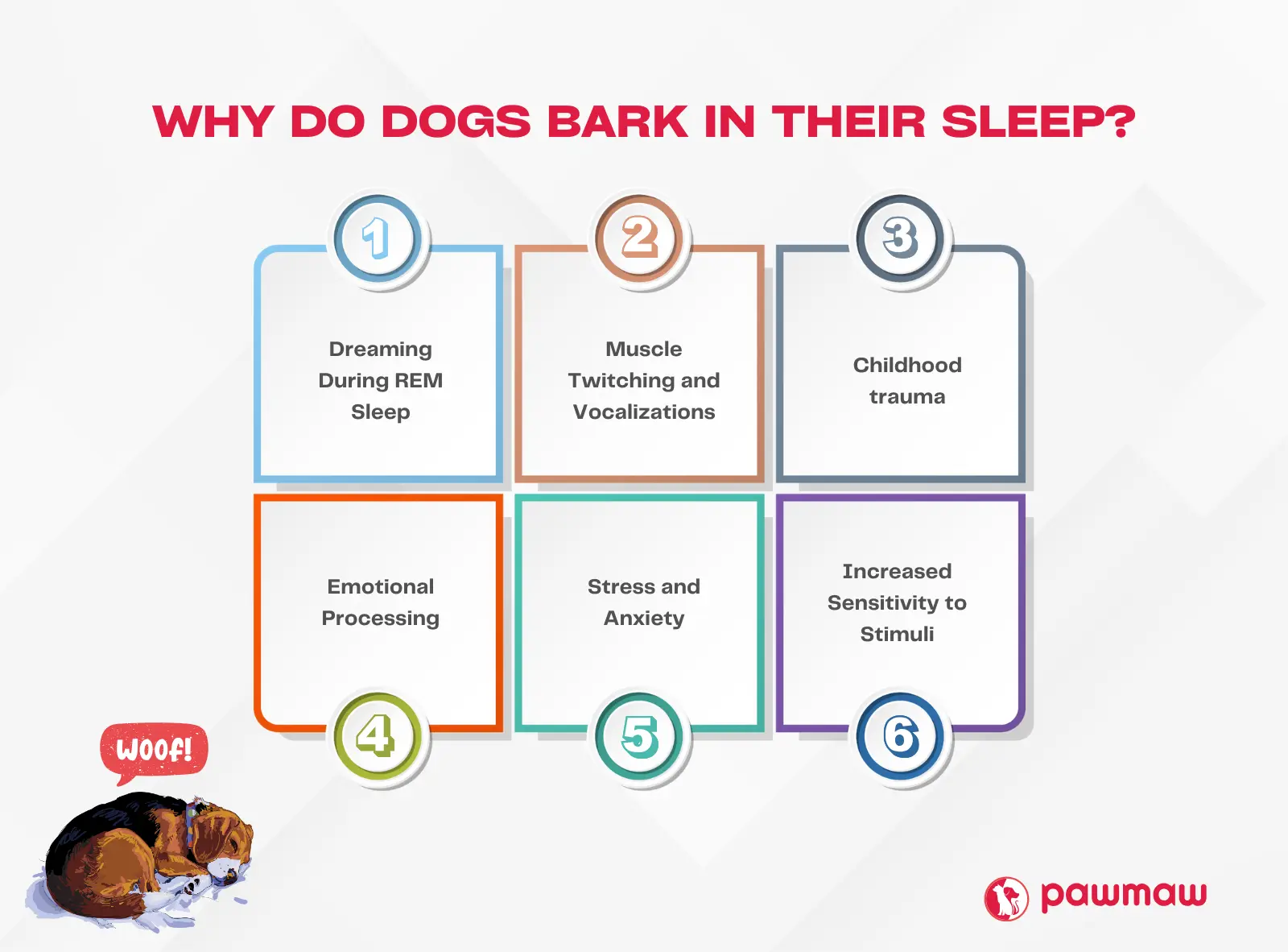
Common Reasons a Dog Barks While Sleeping
There is no single explanation for every sleeping dog. The meaning depends on your dog’s age, health, daily routine, and the type of bark.
She is dreaming
The most common reason is a dream. Dogs can dream about familiar events, just as people may dream about work, travel, or daily tasks. A dog that spent the afternoon at the park may bark in her sleep as if she is still playing.
If you are asking why is my dog barking in her sleep and the barking happens during twitching or paw movement, dreaming is highly likely.
She heard a sound
Dogs have excellent hearing. A faint car door, bird, furnace click, phone alert, or neighbor’s movement may reach your dog even while she sleeps. She may bark without fully waking.
This is more common in alert breeds, working dogs, and dogs that naturally guard the home. The bark may stop once the sound disappears.
She is reacting to an emotional memory
Dogs remember emotional experiences. A stressful visit, exciting game, loud storm, or busy day may influence their dreams. This does not mean your dog is having a nightmare every time she makes noise.
Still, a dog that repeatedly whimpers, wakes in fear, or avoids sleep may be experiencing stress. Look at her behavior during the day as well.
She is uncomfortable
Pain, itching, stomach trouble, or an awkward sleeping position can disturb sleep. A dog may vocalize when she shifts or tries to settle.
Look for other clues, such as frequent repositioning, licking one body part, panting, stiffness, or reluctance to climb stairs. These signs matter more than one isolated bark.
She is aging
Older dogs can develop changes in sleep and wake patterns. Canine cognitive dysfunction may cause nighttime restlessness, confusion, pacing, or vocalization. Sleep barking alone does not diagnose this condition, but a clear change in an older dog deserves attention.
She has a sleep-related disorder
Rarely, a dog may have a condition that causes unusually strong movements or vocal sounds during sleep. In these cases, the body may jerk forcefully, become rigid, or act as if it is physically responding to a dream.
That pattern is different from normal twitching. A veterinarian can help distinguish harmless dream behavior from a medical problem.

Is Sleep Barking Normal or a Sign of a Problem?
The answer depends on frequency, intensity, and what happens before and after the barking. Occasional soft barking during sleep is usually normal. Frequent or severe episodes may point to stress, pain, illness, or a neurological concern.
When considering why is my dog barking in her sleep, ask these questions:
• Does she wake easily and act normal?
• Is her body relaxed or rigid?
• Does the barking last a few seconds or several minutes?
• Does she seem confused after waking?
• Has the behavior started suddenly?
• Are there changes in appetite, walking, bathroom habits, or mood?
Normal sleep sounds tend to be brief and mild. Concerning episodes may include violent movement, stiff limbs, loss of bladder control, drooling, repeated episodes while awake, or trouble standing afterward.
Never diagnose a seizure from a video alone. However, recording an episode can help your veterinarian understand what is happening.

Should You Wake a Dog That Is Barking in Her Sleep?
Usually, you should let a sleeping dog rest. Waking a dog suddenly can startle her, especially if she is dreaming about a stressful event. A startled dog may snap or bite without meaning to.
If the barking is mild, watch quietly from a safe distance. You can gently call her name if you need to wake her, but avoid shaking her, touching her face, or placing your hand near her mouth.
If she appears distressed, move children and other pets away. Keep the room calm and observe her breathing and movement. Contact a veterinarian if the episode is intense, prolonged, or followed by unusual behavior.
What to Do When Your Dog Barks in Her Sleep
A calm sleep routine can help your dog rest more comfortably. You do not need to stop every bark. Instead, focus on comfort, safety, and patterns.
Try these practical steps:
-
Give her a quiet sleeping area away from heavy foot traffic and sudden noise.
-
Use a comfortable bed that supports her joints.
-
Keep a steady daily routine for meals, walks, play, and bedtime.
-
Provide enough daytime exercise without overstimulating her late at night.
-
Offer calm enrichment, such as gentle sniffing games or a food puzzle.
-
Keep the room at a comfortable temperature.
-
Record unusual episodes with your phone when it is safe to do so.
-
Write down the time, length, sounds, body movements, and behavior afterward.
A sleep log is surprisingly useful. It can show whether the barking happens after busy days, during storms, or at a certain time each night.
A common mistake is waking a dog repeatedly because the sound feels alarming. This can interrupt needed rest and may make the dog more anxious around bedtime. Observe first, then act when there is a clear reason.
How to Tell the Difference Between Dreaming and a Seizure
Normal dreams and seizures can look similar at first. This is why video evidence and professional assessment are valuable.
During ordinary dreaming, a dog often has:
• Loose, gentle movements
• Short vocal sounds
• A relaxed body
• Normal breathing after the episode
• Quick recovery when awake
During a possible seizure, a dog may have:
• Rigid or violent muscle movements
• Unresponsive staring
• Repeated jaw movements
• Heavy drooling
• Loss of bladder or bowel control
• A confused recovery period
• Difficulty walking after the event
A seizure can happen during sleep, so do not assume every nighttime episode is a dream. If your dog has a first-time seizure, repeated episodes, trouble breathing, injury, or prolonged unresponsiveness, seek urgent veterinary care.
Do not put your fingers or any object in your dog’s mouth. Clear nearby furniture and keep her away from stairs while waiting for help.

When to Call the Veterinarian
Many people search why is my dog barking in her sleep because the behavior suddenly changed. A new pattern does not always mean danger, but it is worth tracking.
Schedule a veterinary visit if your dog:
• Barks or cries during sleep every night
• Wakes frightened or confused
• Shows pain when lying down or getting up
• Pants heavily without heat or exercise
• Has trouble walking or balancing
• Develops daytime confusion or nighttime pacing
• Has changes in appetite, thirst, or bathroom habits
• Shows violent movements during sleep
• Has episodes that last longer or become more frequent
• Starts vocalizing after a new medication
Your veterinarian may ask about age, breed, diet, medications, stress, exercise, and past health problems. The exam may include a physical check, pain assessment, and testing based on the dog’s symptoms.
Avoid giving human sleep aids or pain medicine. Some common household drugs are dangerous for dogs, even in small amounts.
Can Stress Cause a Dog to Bark in Her Sleep?
Stress can affect a dog’s sleep, but sleep barking does not prove that a dog is anxious. A stressful day may lead to restless sleep, more vocal sounds, or frequent waking.
Possible stress triggers include:
• Moving to a new home
• A new baby or pet
• Separation from a family member
• Construction noise
• Thunderstorms or fireworks
• A visit to the groomer or veterinarian
• Changes in work schedules
Help by keeping bedtime predictable. Gentle exercise, quiet interaction, and a safe resting place can reduce stress. If your dog also hides, trembles, destroys items, barks excessively while awake, or cannot settle, ask a veterinarian about behavior support.
A qualified veterinary behavior professional can create a plan that fits your dog. Punishment usually makes fear worse and does not address the cause.
Do Certain Dogs Bark in Their Sleep More Often?
Any dog can bark during sleep. However, puppies, senior dogs, highly alert dogs, and dogs with active dream movements may do it more often.
Breed alone does not explain the behavior. A small companion dog may be just as vocal during sleep as a large working dog. Individual personality, daily activity, health, and home environment often matter more.
Puppies may sleep deeply after a day of learning. Senior dogs may have altered sleep cycles. Dogs with strong guarding instincts may respond to faint sounds even while resting.
The best approach is to learn your own dog’s normal pattern. A change from her usual behavior is often more useful than a comparison with another dog.
A Simple Nighttime Observation Checklist
If you are still wondering why is my dog barking in her sleep, use this short checklist for one to two weeks.
Record:
• The date and time
• How long the episode lasted
• The type of sound
• Whether her paws or face moved
• Whether her body stayed relaxed
• Any noise in the home
• Her activity level that day
• Her behavior after waking
• Any new food, medicine, or stressful event
This record can reveal a simple pattern. For example, your dog may bark after unusually active days or only when sleeping near a noisy window.
Do not stare at your dog all night or disturb her sleep to collect data. A brief video and simple notes are enough. Good observation should support rest, not create more stress.
Frequently Asked Questions About Why Is My Dog Barking in Her Sleep
Is it normal for my dog to bark while sleeping?
Yes, occasional soft barking is usually normal and often linked to dreaming. It is more reassuring when your dog remains relaxed and behaves normally after waking.
Should I wake my dog when she barks in her sleep?
Usually, no. Let her sleep unless the episode seems severe or unsafe, and never shake or touch her face suddenly because she may startle.
Can dogs have nightmares?
Dogs may have unpleasant dreams, but we cannot know exactly what they experience. Whining, restless movement, or fearful waking may suggest distress, so provide a calm space and discuss repeated episodes with your veterinarian.
Why is my dog barking in her sleep all of a sudden?
A sudden change may come from a new stressor, pain, illness, medication, or a change in sleep patterns. Record the behavior and contact your veterinarian if it continues or appears with other symptoms.
Can sleep barking mean my dog is having a seizure?
It can, although most sleep barking is not a seizure. Rigid movement, loss of awareness, heavy drooling, loss of bladder control, or confusion afterward requires prompt veterinary advice.
Do puppies bark in their sleep more than adult dogs?
Puppies often move and vocalize more during sleep because they are processing many new experiences. Brief twitching and soft sounds are usually normal when the puppy wakes and acts well.
Should I record my dog barking in her sleep?
Yes, a short video can help your veterinarian assess the sound and movement. Record from a safe distance and do not wake or restrain your dog.
Conclusion
Most cases of why is my dog barking in her sleep have a simple explanation: your dog is dreaming, reacting to a faint sound, or processing the day. Short, gentle barks with relaxed movement are usually harmless.
Pay closer attention when the behavior is new, intense, frequent, or linked with pain, confusion, rigid movement, or daytime changes. Keep a calm sleep routine, avoid startling your dog, and record unusual episodes for your veterinarian.
With careful observation, you can learn your dog’s normal sleep pattern and spot changes early. If this guide helped, explore more trusted pet health resources and share your experience with other dog owners.

Pet Care Writer & Researcher
Daniel writes practical guides on daily care, feeding, and safety, turning complex topics into simple, actionable advice.