What Is The Best Dog Barking Deterrent Device: Guide
Find out what is the best dog barking deterrent device for quieter days. Compare humane options, key features, and buying tips.
The best dog barking deterrent device in the United States is usually a bark-activated device that supports training without shock, such as a carefully placed ultrasonic unit or a humane sound-and-reward system. However, no device fixes every barking problem. The right choice depends on why the dog barks, where the barking happens, and whether the dog is anxious, bored, territorial, or reacting to another animal.
For most American households, start with management and reward-based training. Use a device only as a backup. Avoid shock collars and products that punish a dog for fear, pain, or distress.

Quick answer: Which dog barking deterrent is best?
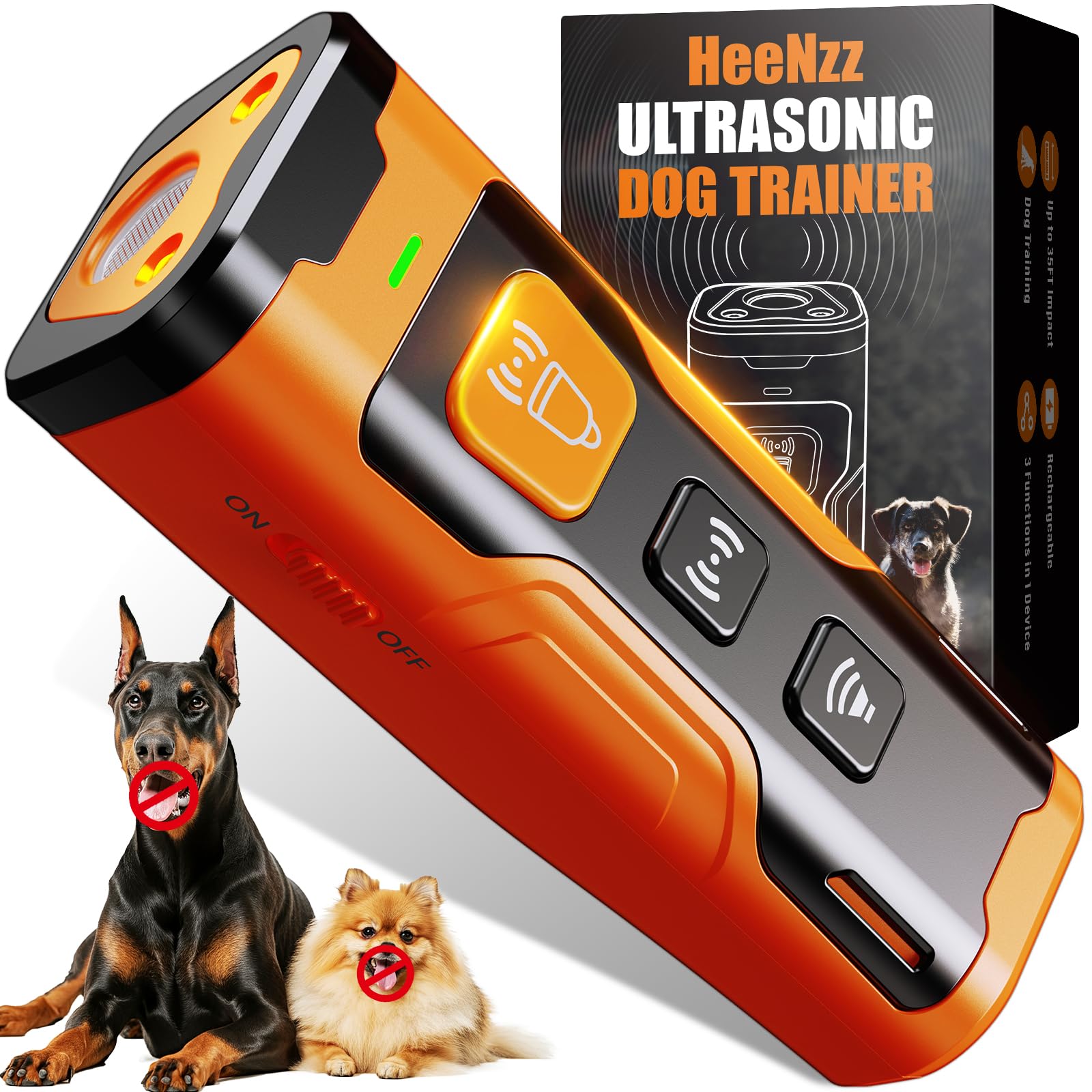
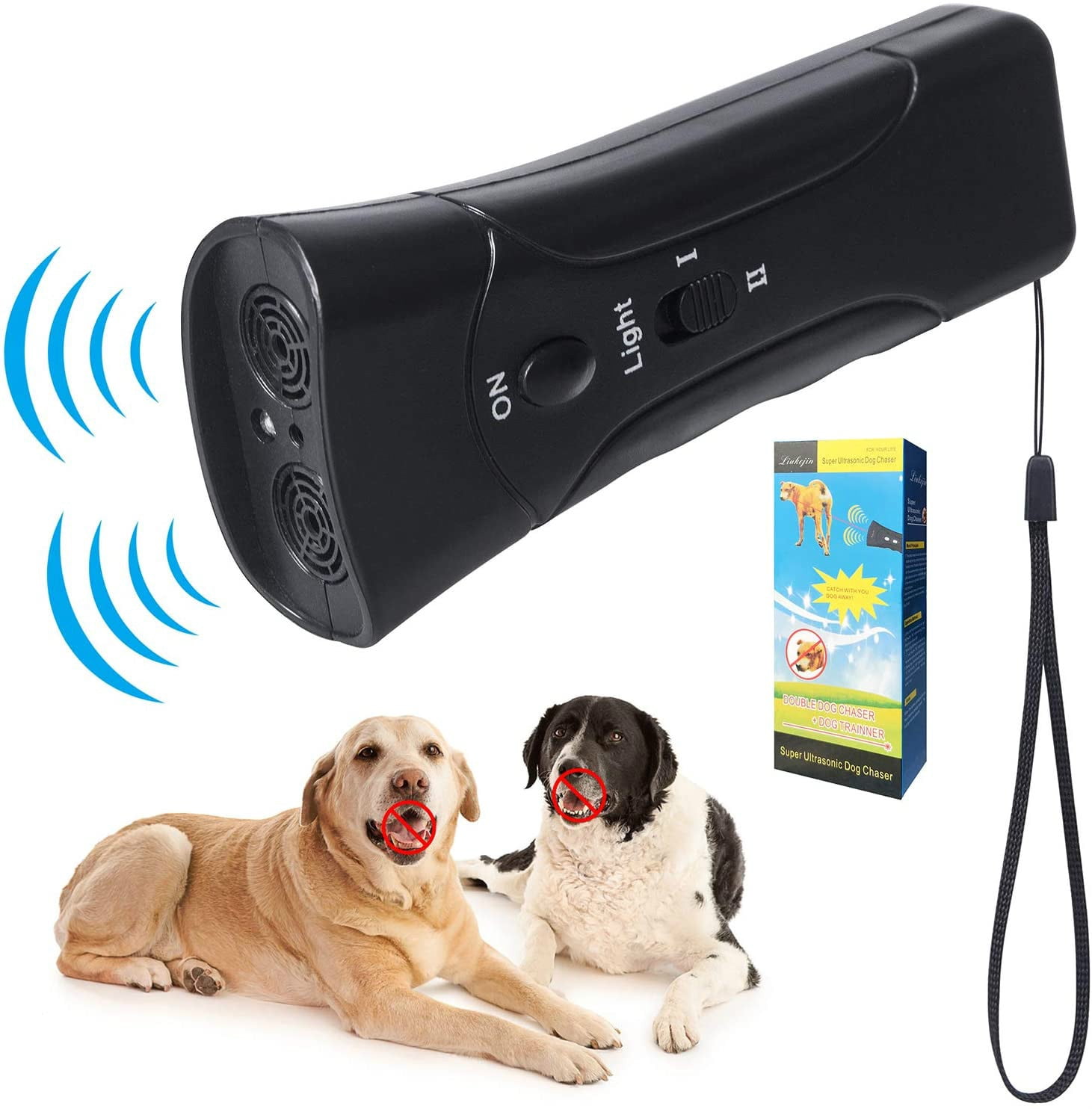
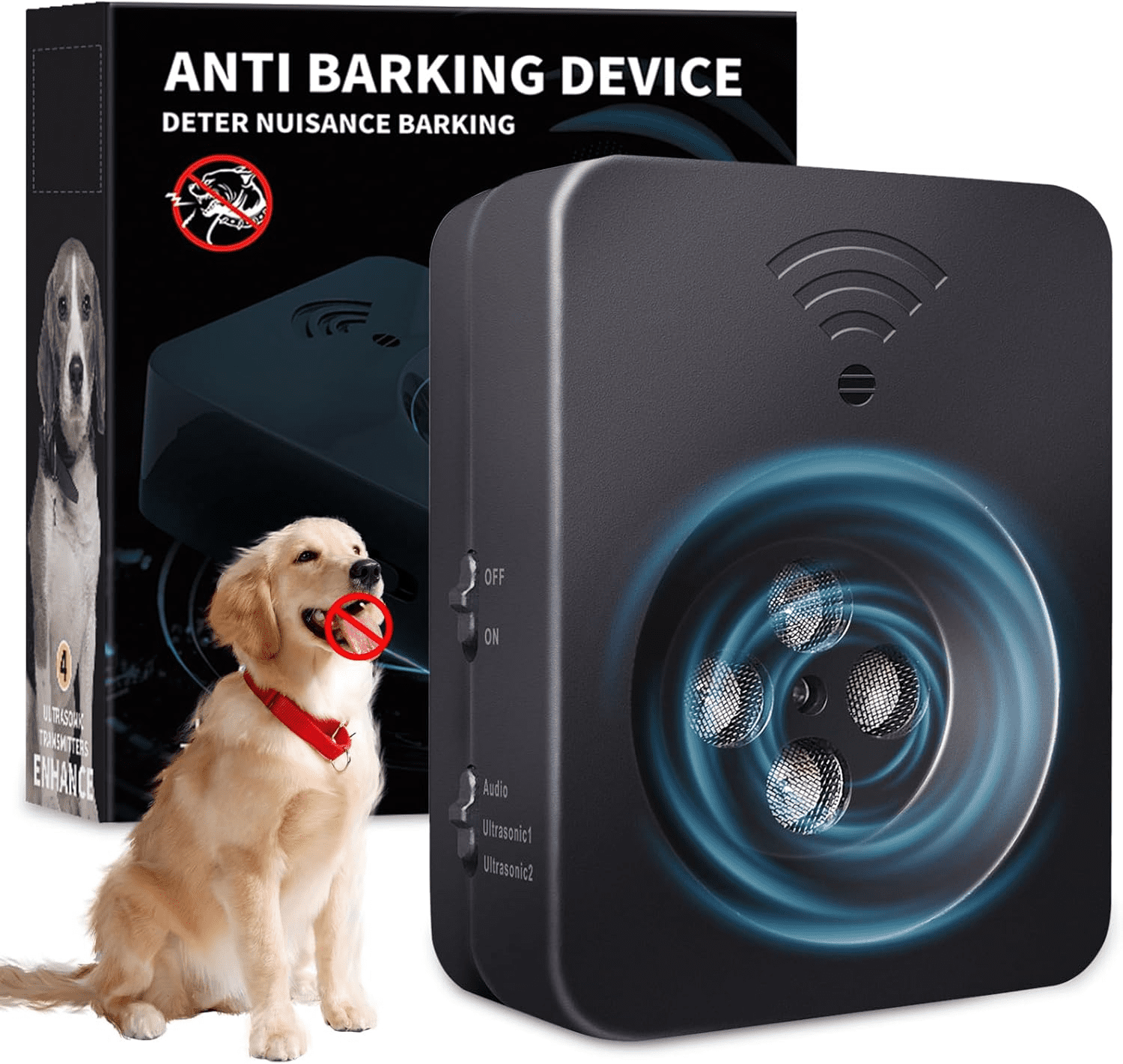
A bark-activated ultrasonic device may be the best first device for some indoor or yard barking. It detects a bark and emits a high-frequency sound that many dogs can hear but people may hear only faintly. It does not touch the dog, and you can stop using it if the dog becomes worried.
That said, ultrasonic devices have limits:
- Dogs may ignore them over time.
- Walls, fences, distance, and wind can reduce their effect.
- Some models trigger from nearby dogs or loud sounds.
- They do not teach the dog what to do instead.
- They may increase fear in sensitive dogs.
For a dog that barks at the window, door, or yard, the best plan is often:
- Block the view or remove the trigger.
- Teach a “quiet” cue.
- Reward calm behavior.
- Add a device only if the problem continues.
The American Veterinary Society of Animal Behavior recommends reward-based training and advises against aversive methods. Its position is consistent with guidance from the AVSAB and the American Animal Hospital Association.
How dog barking deterrent devices work
Dog barking devices use one or more of four methods: sound, spray, vibration, or electrical stimulation.
Ultrasonic sound
An ultrasonic device produces a high-frequency tone. Humans may hear little or nothing, while dogs may hear the sound clearly.
These products may work best when:
- The device faces the dog.
- The dog is within the stated range.
- The barking happens in a small, predictable area.
- The dog is not barking from severe fear or separation anxiety.
Ultrasonic sound is not a guaranteed solution. A dog may learn that the sound has no lasting consequence, or may become more alert when it hears the tone.
Audible sound
Some devices use a tone that people and dogs can hear. Audible devices may be easier to monitor because you can hear when they activate.
Their drawbacks include:
- The sound may annoy people in the home.
- The dog may become used to it.
- It may disturb other pets.
- It may not work well in a busy neighborhood.
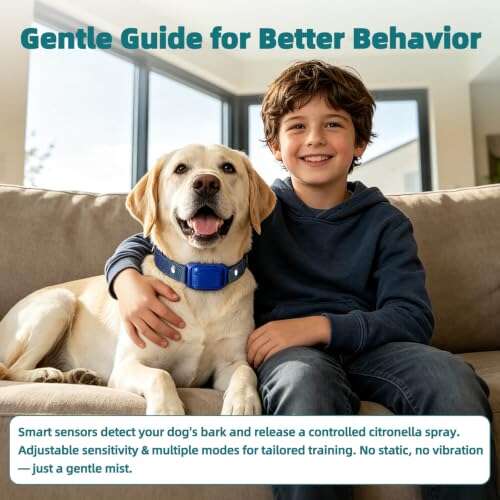
Citronella or other spray
Spray collars release a scent near the dog’s nose when the collar detects barking. Citronella collars are designed to interrupt barking without an electric shock.
They can still be stressful. A dog may associate the spray with a nearby person, child, another dog, or a normal event. The collar also needs close contact and regular maintenance.
Never spray a dog in the face by hand. Do not use a spray collar on a dog with breathing problems unless a veterinarian approves it.
Vibration
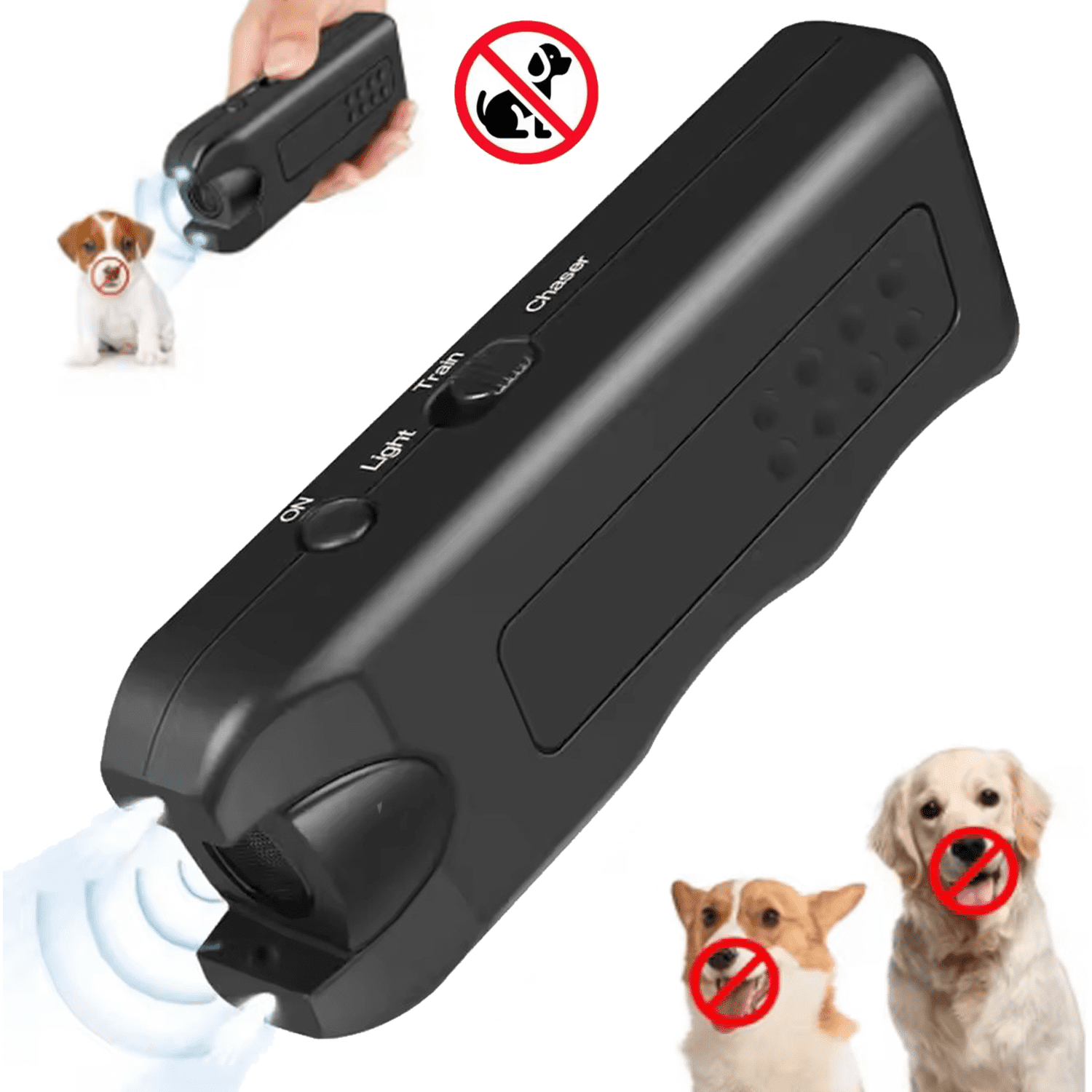
Vibration collars create a buzzing sensation. Some owners use them as an interruption or as a communication signal for deaf dogs.
Vibration is not automatically harmless. A strong or repeated vibration can frighten some dogs. Use the lowest setting, pair it with a known cue and reward, and stop if the dog shows stress.
Shock or static stimulation
Shock collars use electrical stimulation. They may suppress barking in some cases, but suppression is not the same as solving the cause.
Shock can worsen fear and anxiety. It may also make a dog associate pain with a child, visitor, passing dog, or sound. That can increase the risk of defensive behavior.
For these reasons, a shock collar should not be the default choice for barking. A qualified veterinary behaviorist can help if barking is severe or unsafe.

The best device by barking problem
The best tool changes with the cause of the barking. A device that interrupts territorial barking may do little for separation anxiety.
| Barking problem | Best first choice | Device that may help | Avoid |
|---|---|---|---|
| Barking at people through a window | Close blinds, move furniture, reward quiet | Indoor ultrasonic unit | Leaving the dog on window patrol |
| Barking at the front door | Teach “place” and use a door routine | Sound cue or remote trainer used with rewards | Punishing the dog after each bark |
| Barking at neighbors in a yard | Reduce fence access and add exercise | Outdoor bark-activated unit | Shouting from across the yard |
| Barking when alone | Gradual alone-time training | Camera for monitoring, not punishment | Any device that adds fear |
| Barking at other dogs | Increase distance and reward calm | A neutral sound cue | Shock or harsh corrections |
| Demand barking | Stop rewarding the bark and reinforce quiet | Usually no deterrent device needed | Giving food or attention after barking |
| Barking from pain or illness | Veterinary examination | None until the cause is known | Treating symptoms with punishment |
For indoor barking
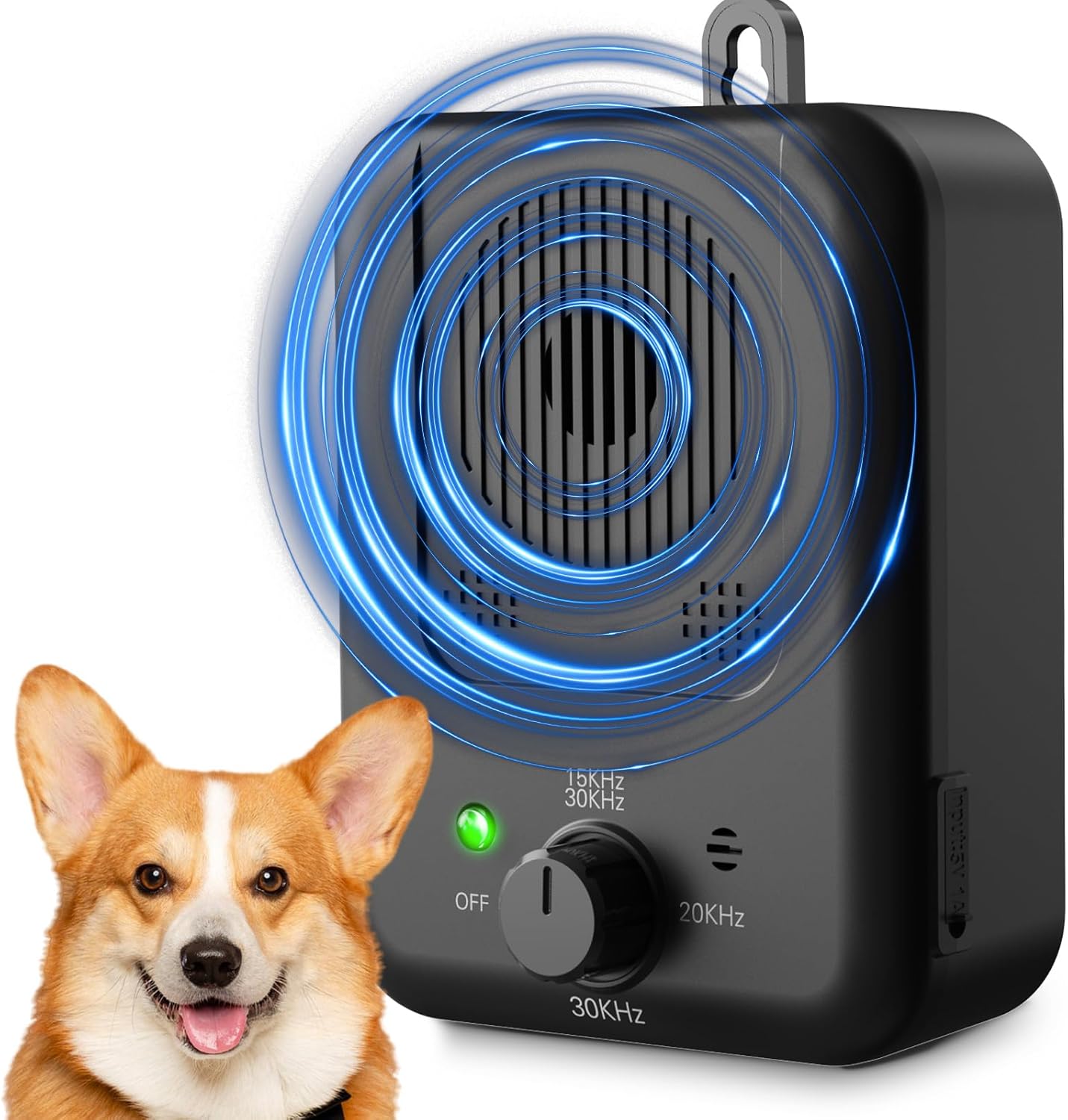
An indoor ultrasonic unit can be useful when the dog barks at a clear trigger, such as a hallway sound or a person outside the window.
Place the unit where it can detect the bark but cannot be knocked over. Test the detection range before relying on it. Watch the dog’s body language. A dog that freezes, hides, pants, trembles, or tries to escape may be distressed by the sound.
For outdoor barking
Outdoor barking often comes from visual triggers, boredom, or territorial behavior. A device alone may fail because the dog can continue to see and hear the trigger.
A better setup may include:
- A solid privacy screen on part of the fence.
- Shorter, supervised yard sessions.
- More walks and scent games.
- A quiet area away from the fence.
- A bark detector that does not activate constantly.
Outdoor devices must withstand rain and temperature changes. Check the manufacturer’s water-resistance instructions. “Weather resistant” does not always mean safe for heavy rain or full exposure.
For barking when home alone
Do not use a punishment device for separation-related barking. The barking may be a sign of distress, not disobedience.
Use a camera to learn what happens after you leave. Signs of separation anxiety can include pacing, drooling, destruction near exits, escape attempts, house-soiling, or nonstop vocalizing. Contact your veterinarian or a qualified behavior professional if you see these signs.
Treatment may involve gradual departure training, environmental changes, and sometimes medication prescribed by a veterinarian.
How to choose a safe bark deterrent device
Choose a device based on control, reliability, and the dog’s emotional state—not on the loudest setting or the longest advertised range.
1. Look for bark detection
A bark-activated device is usually better than a remote device for an ongoing barking issue. It responds only when the dog vocalizes.
Still, no sensor is perfect. Ask:
- Can the microphone detect other dogs?
- Can traffic or tools trigger it?
- Does it record or identify the sound?
- Can you adjust sensitivity?
- Does it allow a short delay before activation?
A device that activates too often can become background noise or create stress.
2. Choose adjustable settings
The device should let you change sound level, sensitivity, or correction type. Start at the lowest practical setting.
Avoid a product that gives you no way to stop or reduce the response. You should be able to turn it off quickly.
3. Consider the dog’s hearing and age
Ultrasonic devices may not work well for dogs with hearing loss. Older dogs may respond differently from young dogs. A veterinarian can check for hearing problems if the response to sound seems unusual.
Do not use a sound device close to a puppy, newborn pet, or small child without checking the manufacturer’s safety instructions.
4. Check the power and placement needs
Battery-powered devices may need frequent battery changes. Rechargeable products need a charging routine. Outdoor models need suitable weather protection.
Place the unit:
- Away from direct rain and sprinklers.
- Where the dog cannot chew it.
- At a useful height and angle.
- Away from competing noise.
- Where you can reach the power switch.
5. Read the return policy
A device that works for one dog may fail with another. A clear return policy matters because real-world performance is difficult to predict from a product page.
Do not treat a long range, high rating, or strong marketing claim as proof that the device is the best option. Manufacturer specifications describe the product. They do not prove that it will solve your dog’s barking.
How to use a barking deterrent device correctly
A deterrent device works best when it is part of a simple training plan.
Step 1: Find the trigger
Write down when the barking starts. Note:
- Time of day.
- Location.
- What the dog can see or hear.
- How long the barking lasts.
- What stops it.
- Whether the dog looks afraid, excited, or frustrated.
This record can reveal the cause. For example, barking only at delivery workers suggests a different plan from barking only when left alone.
Step 2: Reduce the trigger
Block the window. Move the dog away from the fence. Close the curtains before a delivery. Use white noise if outside sounds trigger barking.
This is not giving in to the dog. It prevents repeated practice of the behavior while training begins.
Step 3: Teach a replacement behavior
Choose a behavior that cannot happen easily at the same time as barking. “Place,” “look at me,” or coming to your side can work.
When the dog notices the trigger but stays quiet, give a small treat. Keep the reward close at first. Timing matters: reward the quiet pause, not the next bark.
Step 4: Add the device at a low setting
Use the device only when the dog barks at the target trigger. Do not use it all day.
If the device activates, calmly guide the dog toward the replacement behavior. Reward the dog as soon as it becomes quiet and follows your cue.
Step 5: Measure progress
Look for:
- Fewer barking episodes.
- Shorter episodes.
- Faster recovery after a trigger.
- More frequent responses to your quiet cue.
- Relaxed body language.
If the dog stops barking but begins hiding, trembling, pacing, or avoiding the area, the method is not working safely. Turn off the device and change the plan.
Step 6: Reduce dependence on the device
Once the dog responds to the cue, use the device less often. The long-term goal is for the dog to learn a calm response, not to wait for a sound or spray.
Common mistakes that make barking worse
Shouting “quiet”
Many dogs hear shouting as participation. The noise may increase excitement or make the dog think you are barking too.
Use a calm voice. Wait for a brief pause, say “quiet,” and reward the pause.
Using the device for every sound
A dog may bark for many reasons. Constant correction can create confusion and stress. Match the device to a specific, manageable trigger.
Leaving the dog outside for long periods
A yard is not a behavior plan. Dogs left outside may rehearse fence running, alarm barking, and chasing. More practice usually makes the habit stronger.
Correcting fear-based barking
A fearful dog needs distance and safety. Punishment can confirm that the trigger is dangerous. Use gradual exposure and rewards instead.
Ignoring pain or illness
Sudden barking, night barking, confusion, or a major change in vocal behavior can signal a health problem. Schedule a veterinary exam before using a deterrent.
Buying by range alone
A longer range does not mean better control. A device that reaches 1,000 feet may affect dogs you did not intend to target. Choose the smallest effective area.
Are ultrasonic dog barking devices safe?
Ultrasonic devices are generally less physically intrusive than shock collars, but “non-contact” does not mean risk-free.
A dog may find the sound unpleasant or frightening. Watch for:
- Ears pinned back.
- Lip licking or yawning.
- Hiding.
- Trembling.
- Pacing.
- Avoiding the yard or room.
- Sudden aggression.
- Loss of interest in food or play.
Stop using the device if these signs appear. The ASPCA notes that barking solutions should address the reason for barking rather than rely only on punishment.
Also consider other animals. Cats, birds, and some small pets may hear high-frequency sounds. Keep the device away from animals that show distress.

When a device is not enough
A barking device is not the right primary tool when the dog:
- Barks from separation anxiety.
- Shows aggression or attempts to bite.
- Has panic symptoms.
- Barks because of pain.
- Guards food, toys, or people.
- Has a sudden change in behavior.
- Cannot settle even after the trigger is gone.
Start with your veterinarian. For complex behavior, ask about a board-certified veterinary behaviorist through the American College of Veterinary Behaviorists.
A reward-based trainer can help with basic barking plans. Look for clear credentials, humane methods, and a willingness to explain the plan. Be cautious of anyone who promises a guaranteed cure or recommends pain as the main teaching tool.
Best overall buying decision
For many households, the most reasonable choice is:
- Training and trigger control first.
- A bark-activated ultrasonic device for limited, predictable barking.
- A camera for barking that happens when you are away.
- Professional help for anxiety, fear, aggression, or sudden behavior change.
A vibration device may suit some dogs when used as a gentle cue, but it is not automatically better than ultrasonic sound. Spray collars may interrupt barking, but they can also create stress and require close contact. Shock collars carry the greatest welfare concerns and should not be the routine recommendation.
The best device is therefore not the strongest one. It is the least intrusive tool that helps you interrupt a specific barking pattern while teaching the dog a calm replacement behavior.

FAQs
Do ultrasonic anti-bark devices work on every dog?
No. Results vary by dog, trigger, distance, hearing, and device quality. Some dogs respond quickly, while others ignore the sound or become stressed.
Can a dog get used to an ultrasonic bark device?
Yes. A dog may habituate to repeated sounds. Using the device constantly can reduce its effect. Training and rewards should remain the main part of the plan.
Will an anti-bark device stop separation anxiety?
Usually not. Separation anxiety is an emotional problem. Punishment may increase distress. Use gradual alone-time training and seek veterinary guidance when symptoms are serious.
Are bark collars legal in the United States?
Rules can vary by state, city, housing provider, and local animal-control policy. Check your local requirements and lease rules. Even where a device is legal, legal does not always mean suitable or humane.
What should I do if the device makes my dog afraid?
Turn it off. Remove the dog from the area, allow time to settle, and switch to trigger control and reward-based training. If fear continues or aggression appears, contact a veterinarian or qualified behavior professional.
Is a camera better than a bark deterrent?
A camera does not stop barking, but it can show why the dog barks and whether the behavior occurs when you are away. It is especially useful before choosing a device.
Final recommendation
For most dog owners in the United States, begin with management, reward-based training, and a bark-activated ultrasonic device only when the barking has a clear and limited trigger. Avoid shock-based products and do not use any device that causes fear, pain, or confusion.
Track the barking for several days, reduce the trigger, reward quiet behavior, and reassess. If the barking involves panic, aggression, pain, or sudden change, skip the deterrent device and contact a veterinarian first.

Pet Care Writer & Researcher
Daniel writes practical guides on daily care, feeding, and safety, turning complex topics into simple, actionable advice.