What Is The Best Dog Food For Dry Skin: Vet-Backed Guide
Find what is the best dog food for dry skin, plus key nutrients, ingredient tips, and vet-friendly choices to soothe itching and support a healthier coat.
For most dogs in the United States, the best food for dry skin is a complete and balanced diet with enough animal-based protein and marine omega-3 fats, especially EPA and DHA. However, food is only part of the answer. Fleas, allergies, yeast, infection, low humidity, frequent bathing, and health problems can all make a dog’s skin dry or itchy.
Choose a food that meets AAFCO nutrient profiles for your dog’s life stage. If your dog also has chronic itching, ear infections, paw licking, hair loss, or red skin, ask a veterinarian to check the cause before changing foods.
What makes a dog food good for dry skin?
A good diet for dry skin supports the skin barrier, supplies key nutrients, and avoids ingredients that cause a reaction in that particular dog.
Look for these features:
- Complete and balanced nutrition for the dog’s age and size
- Adequate protein from clearly named sources
- Omega-3 fatty acids, with known levels of EPA and DHA when possible
- Omega-6 fatty acids, which also support normal skin function
- Key nutrients such as zinc, copper, vitamin A, and vitamin E
- A calorie level that helps the dog maintain a healthy body weight
- A food made by a company with strong quality-control and nutrition practices
“Complete and balanced” means the food is designed to provide all essential nutrients when fed as directed. It does not mean that the food will treat every skin problem.
EPA and DHA matter most
EPA and DHA are long-chain omega-3 fats found mainly in fish oil and some marine ingredients. They may help support a normal inflammatory response and the skin barrier.
Plant oils, such as flaxseed oil, provide alpha-linolenic acid, or ALA. Dogs can convert some ALA into other fats, but the conversion is limited. For this reason, a food with documented EPA and DHA may be more useful for an itchy or dry-skinned dog than one that only lists flaxseed.
Do not judge a food by the words “contains omega-3” alone. Check whether the label states the amount of EPA and DHA. If it does not, the actual dose may be unclear.
Omega-6 fats are not automatically bad
Some online advice says that omega-6 fatty acids cause inflammation. That is too simple. Dogs need omega-6 fats, including linoleic acid, for normal skin and coat health.
The goal is not to remove omega-6 fats. The goal is to feed a balanced diet that includes essential fatty acids without adding large amounts of extra oil or supplements without veterinary advice.
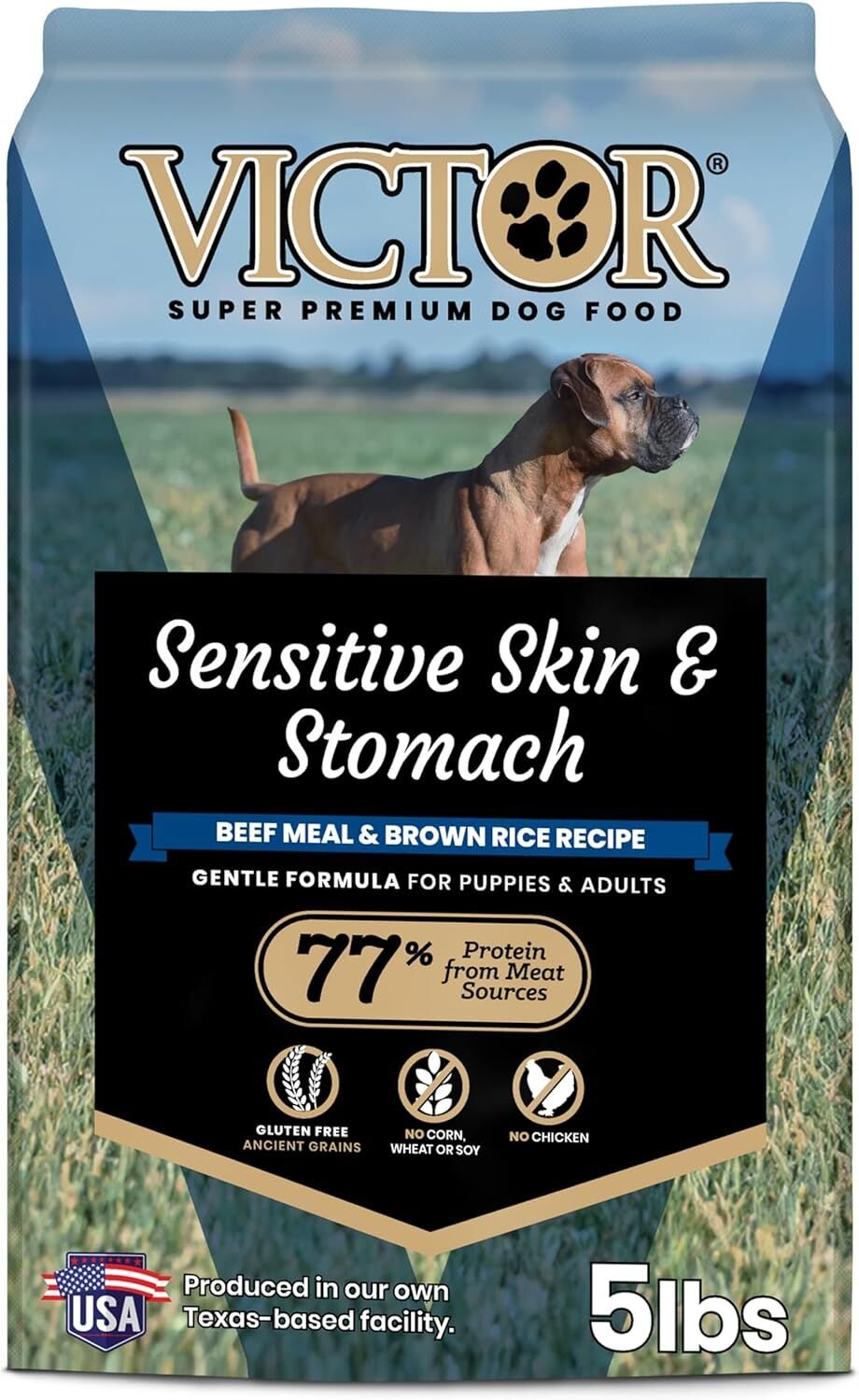
The best dog food depends on the cause of dry skin
Dry skin is a symptom, not a diagnosis. The right food depends on whether the problem comes from nutrition, an allergy, parasites, infection, or another condition.
| Possible cause | Signs that may occur | How food fits |
|---|---|---|
| Low-quality or unbalanced diet | Dull coat, flaky skin, poor overall condition | Move to a complete and balanced diet |
| Environmental allergy | Seasonal itching, red paws, face rubbing | Food may help only if food is also a trigger |
| Food allergy | Year-round itching, ear problems, paw licking, digestive signs | A supervised elimination diet may help confirm it |
| Fleas or mites | Intense itching, scabs, hair loss, flea dirt | Requires parasite control, not just a food change |
| Yeast or bacterial infection | Odor, greasy skin, redness, sores, ear infections | Requires veterinary diagnosis and treatment |
| Dry air or overbathing | Fine flakes, mild dryness, little redness | Improve grooming and home conditions |
| Hormonal or systemic disease | Weight change, lethargy, repeated skin issues | Needs a veterinary workup |
Food allergy is less common than many owners think
Food allergies can cause skin and ear problems, but they are not the most common reason for itching. Flea allergy and environmental allergy are frequent causes.
A dog can also react to an ingredient that is nutritious for other dogs. Common food allergens in dogs include beef, dairy, chicken, wheat, and other proteins, but almost any protein can cause a reaction.
Grain-free food is not a standard treatment for dry or itchy skin. Removing grains does not prove that a dog has a food allergy. In some cases, grain-free diets may replace grains with other carbohydrate sources without solving the problem.
Skin signs that need prompt veterinary care
Arrange a veterinary visit if your dog has:
- Open sores, bleeding, or thick crusts
- A strong skin or ear odor
- Pus, moist lesions, or spreading redness
- Severe or constant itching
- Bald patches
- Repeated ear infections
- Vomiting, diarrhea, weight loss, or poor appetite
- Skin problems that do not improve after basic care
A veterinarian may check for fleas, mites, yeast, bacteria, allergies, and medical conditions before recommending a diet.
How to choose the best dog food for dry skin
Use this process rather than choosing food based on a front-label claim.
1. Confirm the food is complete and balanced
Look for the nutritional adequacy statement on the package. It should say that the food is complete and balanced for the correct life stage, such as adult maintenance, growth, or all life stages.
Puppies, pregnant dogs, and nursing dogs have different nutrient needs. A food for adult maintenance may not be suitable for a growing puppy.
2. Check the protein source
A named protein, such as salmon, turkey, lamb, or chicken, is easier to understand than a vague description. The “best” protein is not the same for every dog.
If your dog has never shown signs of a food allergy, there is no need to avoid common proteins automatically. If your veterinarian suspects an allergy, the protein choice should support a proper elimination trial.
3. Look for marine omega-3 fats
Foods that contain fish, fish oil, or another marine omega-3 source may provide EPA and DHA. The label may list these fats in the guaranteed analysis or in a separate nutrient statement.
If the food does not list EPA and DHA, contact the manufacturer. Ask for the amount per cup or per 1,000 calories. Comparing foods by “percent omega-3” alone can be misleading because the amount fed varies.
4. Consider the dog’s other needs
Choose a food that also suits your dog’s:
- Age and life stage
- Breed size
- Activity level
- Body condition
- Digestive tolerance
- Kidney, liver, heart, or other health needs
For example, a high-calorie food may worsen weight gain in a less active dog. Excess weight can also make skin and mobility problems harder to manage.
5. Prefer transparent quality information
The ingredient list is useful, but it does not tell you everything about food quality. A reliable manufacturer should be able to explain:
- Who formulates the food
- Where the food is made
- How ingredients are tested
- Whether finished products are tested
- How the company handles recalls
- Whether feeding trials or other research support the food
The WSAVA Global Nutrition Guidelines offer useful questions for evaluating pet food companies. They do not approve or endorse specific brands.

Which types of dog food may help dry skin?
No single product is best for every dog. These food types serve different situations.
Standard adult food with omega-3s
This is often a reasonable first choice for a healthy adult dog with mild flaking and no major itching.
Choose a complete and balanced food with a clear quality statement and a marine omega-3 source. Improvement may take several weeks because the coat and skin need time to grow and renew.
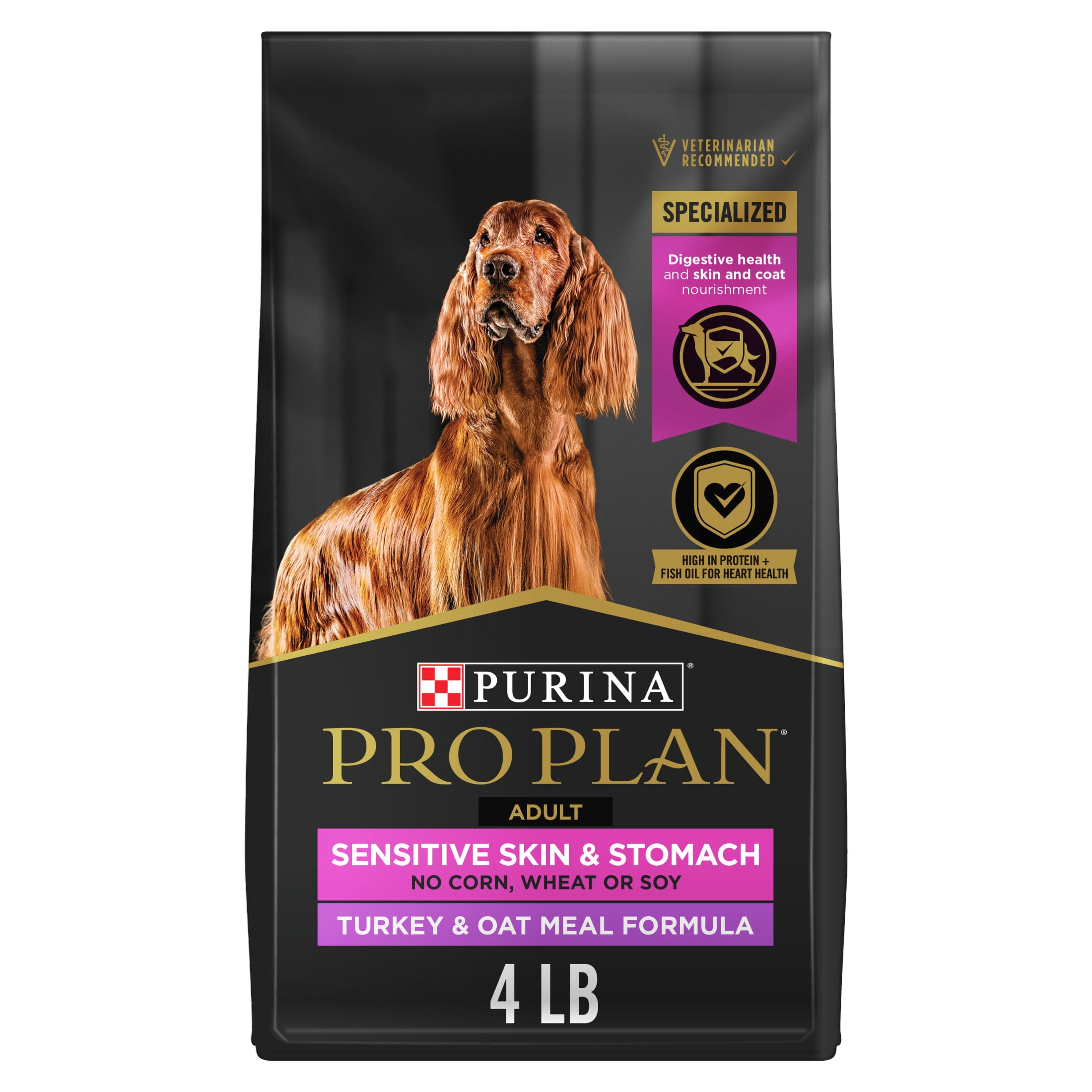
Sensitive-skin or skin-support formulas
These diets may contain more fish oil, selected proteins, or added nutrients for skin and coat support. They can be useful when the dog has mild skin concerns, but “sensitive skin” on the label is not proof that the food will treat an allergy.
Compare the nutrient information and feeding directions instead of relying only on marketing language.
Veterinary therapeutic diets
A veterinary diet may be appropriate when a dog has suspected food allergy, chronic dermatitis, or another diagnosed condition. These foods may use:
- Hydrolyzed protein, which is broken into smaller parts
- A novel protein that the dog has not eaten before
- Controlled ingredients to reduce exposure to possible allergens
Examples in the United States include veterinary lines such as Hill’s Prescription Diet z/d, Purina Pro Plan Veterinary Diets HA, and Royal Canin Veterinary Diet Hydrolyzed Protein. These are not interchangeable, and availability can vary. A veterinarian should select the diet based on the dog’s history and health.
Homemade diets
A homemade diet can look appealing because the ingredients are visible. But a diet made from meat, rice, and vegetables is often missing calcium, essential fats, vitamins, or trace minerals.
If you want to feed homemade food long term, ask a board-certified veterinary nutritionist to create the recipe. Do not add random supplements to “balance” it.

How to use an elimination diet for suspected food allergy
A food trial is the most useful way to test whether diet contributes to chronic itching. It should be planned with a veterinarian.
The basic process
- Choose the trial diet. A veterinary hydrolyzed or novel-protein diet is often used.
- Feed only that diet. Treats, table scraps, flavored medicines, chews, and other pet foods can interfere with the trial.
- Follow the trial period. Many trials last about 8 weeks, though a veterinarian may choose a different period.
- Record symptoms. Track itching, ear problems, paw licking, stool changes, and skin lesions.
- Reintroduce the old food if advised. A return of signs can support the diagnosis.
- Identify a long-term diet. The dog may need to avoid the confirmed trigger.
A food trial fails if the dog receives even small amounts of other foods. Shared bowls, dropped food, flavored heartworm products, and treats from family members can all matter.
Blood and saliva tests sold for food allergy diagnosis are not considered a substitute for a properly controlled elimination and reintroduction trial.

Should you add fish oil to dog food?
Fish oil may help some dogs, but the dose and product quality matter. Do not pour a human supplement into your dog’s bowl without checking the label and asking your veterinarian.
Before using fish oil, consider:
- The total amount of EPA and DHA
- The dog’s weight and health
- The oil’s freshness and storage needs
- Extra calories
- Possible stomach upset
- Whether the dog takes medicines that affect bleeding
- Conditions such as pancreatitis or disorders involving fat digestion
Cod liver oil is not the same as ordinary fish oil. It can provide vitamins A and D, and too much may be harmful.
A veterinary professional can help calculate the total EPA and DHA from both food and supplements. Stop the supplement and call the veterinarian if vomiting, diarrhea, unusual bruising, or other concerning signs occur.
Common mistakes when choosing food for dry skin
Changing food too often
Frequent changes make it hard to know what helped. They can also cause digestive upset. Change foods gradually over about 7 days unless a veterinarian gives different instructions.
Trusting “premium” or “natural” alone
These terms do not tell you whether a food has enough EPA and DHA or whether it fits your dog’s medical needs. Read the adequacy statement and ask the manufacturer specific questions.
Treating itching as a nutrition problem only
A dog with fleas, yeast, mites, or an ear infection will not be cured by switching kibble. Look at the whole dog, not just the food bowl.
Adding too many supplements
Extra oils, vitamins, and coat products can add calories or create nutrient excess. More is not always better.
Ignoring bathing and home conditions
Bathing too often, using human shampoo, or rinsing poorly can dry and irritate skin. Use a dog shampoo recommended for your dog’s coat and condition. Dry indoor air may also worsen mild flaking during cold U.S. winters.
How long does dog food take to improve dry skin?
Mild dryness may improve over several weeks after a suitable diet change. Skin allergies and chronic disease may take longer and often need medication or other treatment.
Look for:
- Less scratching
- Fewer flakes
- Less paw licking
- A softer, shinier coat
- Fewer ear problems
- Normal appetite and stool
Take a photo at the start and once a week under similar light. If the skin worsens, becomes painful, or shows infection, do not wait for the food to work. Contact a veterinarian.
Quick decision guide
- Mild flakes, healthy dog, no severe itching: Choose a complete and balanced diet with a marine omega-3 source and review grooming habits.
- Constant itching or repeated ear infections: Schedule a veterinary exam before changing foods.
- Suspected food allergy: Use a veterinarian-guided elimination diet, not a series of random “limited ingredient” foods.
- Puppy, senior dog, or dog with another disease: Choose food with veterinary guidance.
- Considering fish oil: Ask for an EPA-and-DHA dose based on body weight and total diet.
FAQs
Is salmon dog food best for dry skin?
Salmon food may help because salmon and fish oil can provide EPA and DHA. It is not automatically best, though. Check that the food is complete and balanced and that salmon does not cause problems for your dog.
Is grain-free dog food better for dry skin?
Usually, no. Grain-free food is not a general treatment for dry skin or itching. It may be appropriate in a specific medical plan, but removing grains alone does not diagnose or treat a food allergy.
Can chicken cause dry skin in dogs?
Chicken can trigger an allergy in some dogs, but it does not cause dry skin in every dog. If chicken is suspected, a controlled elimination diet is more reliable than switching between foods at random.
Are eggs good for a dog’s dry skin?
Eggs provide protein and some nutrients, but they are not a proven cure for dry skin. Too many extras can unbalance the diet or add excess calories. Ask your veterinarian before adding eggs regularly.
Can I use human moisturizer on my dog?
Do not use human skin products unless a veterinarian says the product is safe. Dogs may lick creams, and some human ingredients can irritate or harm them. Use a veterinary-approved product instead.
Conclusion
The best dog food for dry skin is usually a complete and balanced food that supplies adequate protein and marine omega-3 fats, especially EPA and DHA. The right choice also depends on your dog’s age, health, symptoms, and possible allergies.
Start by checking the food’s nutritional adequacy statement and asking the manufacturer about EPA and DHA. If your dog has severe itching, odor, sores, hair loss, or recurring ear problems, arrange a veterinary exam. Finding the cause is more important than choosing a food with the most appealing skin-and-coat claim.

Pet Care Writer & Researcher
Daniel writes practical guides on daily care, feeding, and safety, turning complex topics into simple, actionable advice.