How Do Cooling Beds For Dogs Work: Cooling Explained
Learn how do cooling beds for dogs work, which cooling methods they use, and how to choose a safe, comfortable bed for your pet.
A cooling bed for dogs helps move heat away from your dog’s body. It may use airflow, a heat-absorbing gel, water, or a breathable fabric. Most cooling beds do not make cold air. Instead, they slow heat buildup while your dog rests.
For dogs in the United States, a cooling bed can help during hot summers, warm nights, travel, or time spent in a stuffy room. It is not a treatment for heatstroke. A dog that is panting hard, weak, confused, vomiting, or collapsing needs urgent veterinary care.

What Is a Cooling Bed for Dogs?
A cooling bed is a dog bed designed to reduce contact heat. It helps your dog release heat through the parts of the body that touch the bed, such as the chest, belly, hips, and legs.
Most cooling beds use one of four designs:
- Gel cooling mats: A gel inside the mat absorbs heat from your dog.
- Water beds: Water carries heat away from the body.
- elevated mesh beds: Air moves under and around the dog.
- Breathable fabric beds: Open fabric reduces heat trapped under the coat.
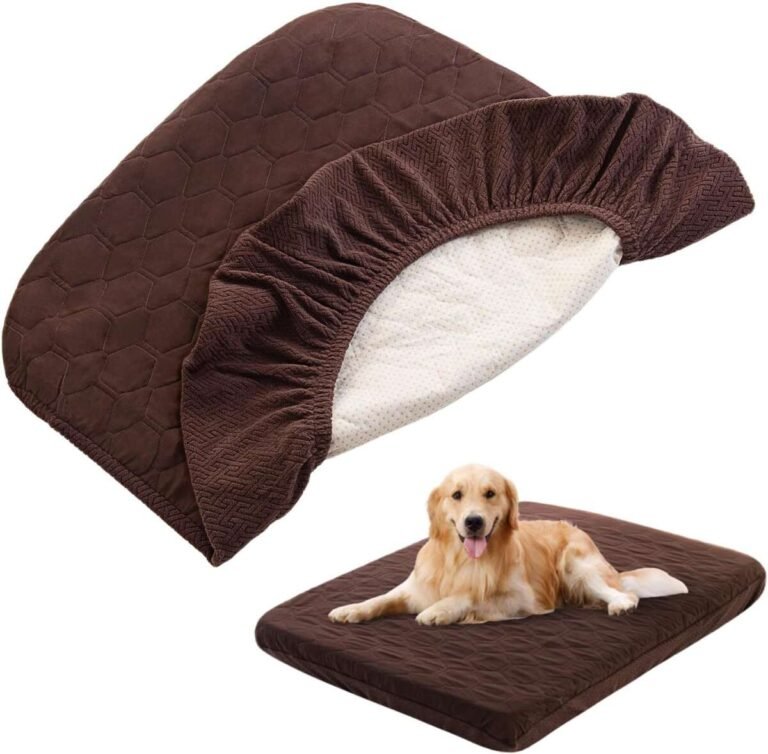
Some beds combine two or more features. For example, an elevated bed may use mesh fabric that allows air to pass below the dog. A gel mat may sit inside a padded cover.
The key point is simple: a cooling bed transfers heat away from the dog or helps prevent heat from becoming trapped.

How Do Cooling Beds for Dogs Work?
Cooling beds work through heat transfer. Your dog’s body is warmer than the bed surface, so heat moves from the body into the cooler material.
The bed then handles that heat in one of several ways.
Gel cooling beds absorb heat
Gel mats contain a flexible gel that takes in heat when your dog lies on the surface. Many products use a pressure-activated gel, so the mat does not need to be plugged in or frozen.
As the gel warms, the cooling effect becomes weaker. The mat then needs time to release that heat. Moving it to a cool room or turning it over may help, but the product instructions should come first.
A gel mat may feel cool when touched. That does not mean it will stay cool for the whole day. Its performance depends on:
- Your dog’s size and body temperature
- The room temperature
- How long the dog stays on the mat
- Whether the mat has time to recover
- The amount of insulation under the mat
Water beds move heat into water
Water has a high heat capacity. This means it can absorb a fair amount of heat before its temperature rises quickly.
A water-filled bed can feel cool and flexible. It may spread pressure more evenly than a thin mat. However, the water will warm over time. A water bed can also leak, shift, or become heavy when moved.
Never add ice-cold water unless the instructions allow it. Very cold surfaces may cause discomfort and can make some dogs avoid the bed.
Elevated beds use airflow
An elevated dog bed lifts the dog off the floor. Its mesh surface allows air to move below the body.
This design does not store heat in gel or water. Instead, it reduces the warm, still air trapped beneath the dog. It works best in a shaded area with some air movement.
An elevated bed may be useful outdoors, in a garage, or on a covered porch. It will not cool a dog well if the bed sits in direct sun or a closed, hot room.
Breathable beds reduce trapped heat
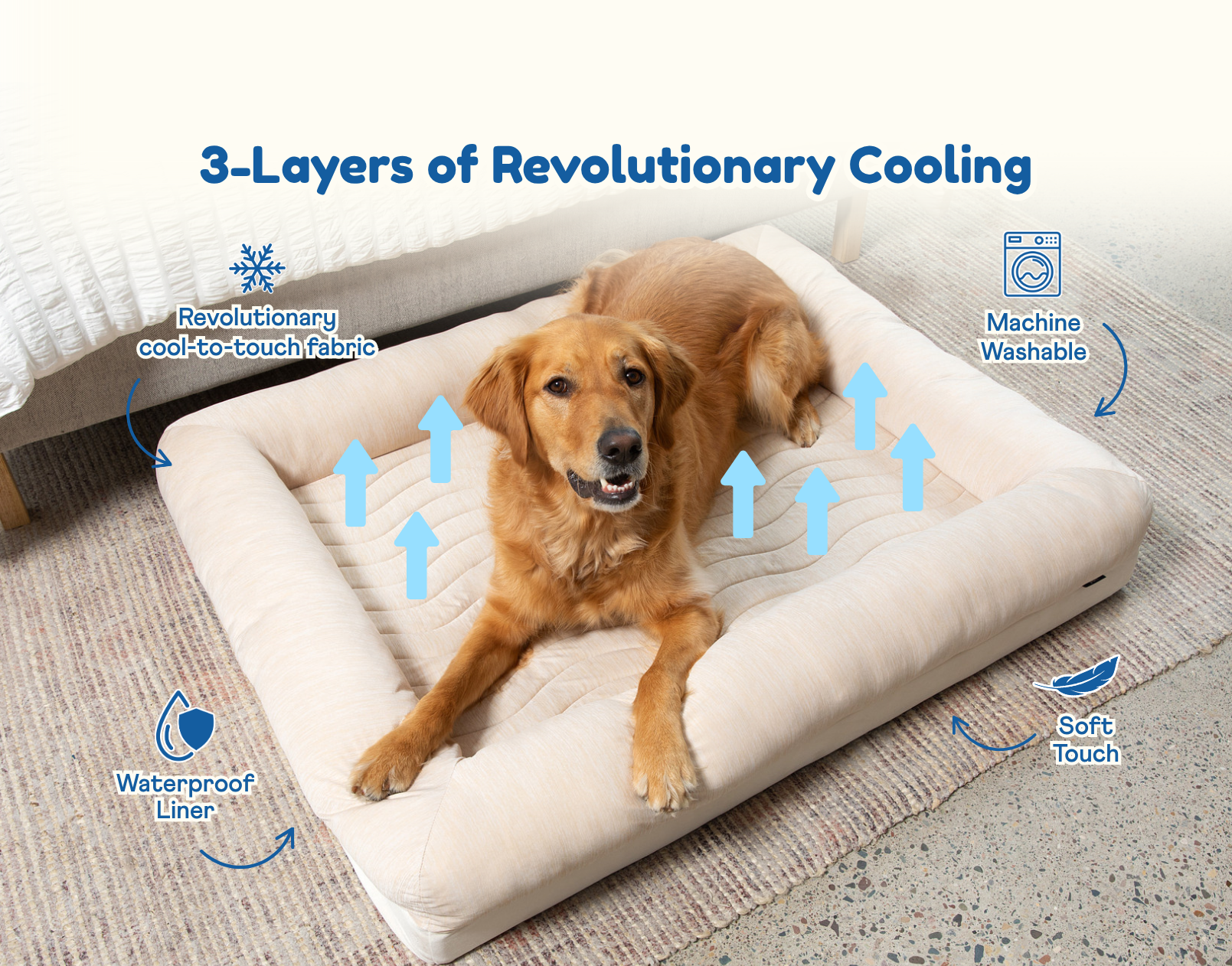
Some beds use cotton, canvas, mesh, or other open fabrics. These materials let heat and moisture escape more easily than thick foam or fleece.
Breathable fabric can improve comfort, but it may not feel cold. It mainly reduces insulation. This can be useful for dogs that dislike slick gel mats or that need a soft surface.

Do Cooling Mats Actually Cool Dogs?
Cooling mats can cool the surface touching your dog, but they do not directly control the dog’s core body temperature.
That difference matters. A dog may feel more comfortable on a cool mat, yet still become overheated in a hot room, car, yard, or tent.
A cooling mat works best as one part of a safer hot-weather setup:
- Move the dog to shade or air conditioning.
- Provide clean drinking water.
- Use a fan or cross-breeze when appropriate.
- Limit exercise during the hottest part of the day.
- Offer the cooling bed as a choice.
- Watch the dog rather than relying on the bed alone.
Dogs release heat mainly through panting. They have fewer sweat glands than people, so they can overheat quickly in hot or poorly ventilated spaces. The American Veterinary Medical Association warns that heatstroke can become life-threatening and that dogs should not be left in parked cars, even for a short time.
A cooling bed may support comfort. It cannot make a hot car safe.
How Long Does a Dog Cooling Bed Stay Cool?
There is no single cooling time for every dog bed. A mat may stay noticeably cool for a few hours, or it may warm much sooner.
The result depends on the bed type and the conditions around it:
| Bed type | How it manages heat | Main limit |
|---|---|---|
| Gel mat | Absorbs heat into gel | Warms as it fills with heat |
| Water bed | Transfers heat into water | Water eventually warms |
| Elevated mesh bed | Allows air below the dog | Needs airflow and shade |
| Breathable fabric bed | Reduces trapped heat | May not feel cold |
| Frozen insert bed | Uses stored cold | Can be too cold or create moisture |
A large dog may warm a small mat faster than a small dog. A thick coat may also slow heat transfer from the body to the surface. Direct sun can heat the bed quickly, even when the bed itself is designed for cooling.
Many products need a “reset” period. During this time, the bed releases stored heat. Follow the care guide for the exact model. Do not assume that placing a gel mat in a freezer is safe unless the manufacturer says it is.

Which Cooling Bed Is Best for Your Dog?
The best design depends on your dog’s habits, size, health, and setting. There is no universal best cooling bed.
Choose a gel mat when:
- You need a portable option.
- Your dog prefers a flat surface.
- You want a bed that does not need power.
- You can provide a shaded indoor location.
Check the mat for punctures before each use. Some dogs may chew the surface. A damaged mat should be removed at once.
Choose an elevated mesh bed when:
- Your dog likes firm support.
- You need airflow beneath the body.
- The bed will be used on a porch, patio, or indoors.
- Your dog does not chew fabric or frame parts.
Check the frame and fasteners often. A loose frame can collapse or create a sharp edge.
Choose a water bed when:
- Your dog likes a soft, flexible surface.
- You can manage the weight.
- You have a stable indoor or shaded location.
- You want a surface that spreads pressure.
Look for leaks, wet spots, and changes in water level. Keep the bed away from sharp claws, rough flooring, and chewing behavior.
Choose a breathable cushion when:
- Your dog wants a soft bed.
- Your dog refuses slick surfaces.
- You need basic heat reduction rather than a cold surface.
- Your dog has mild joint discomfort and needs padding.
Breathable fabric may offer less cooling than gel or water. Its strength is comfort and airflow, not strong heat absorption.
Match the size to the dog
Your dog should be able to lie on the bed without hanging off the edge. A small mat may cool only part of the body and may cause the dog to avoid it.
Measure your dog while fully stretched out. Then compare that measurement with the usable sleeping area, not just the outside dimensions.

Are Cooling Beds Safe for Dogs?
Cooling beds are usually safe when the dog uses an intact bed in a suitable place. Safety depends more on the dog and the product condition than on the word “cooling” on the package.
Use these precautions:
- Inspect the surface before use.
- Remove the bed if your dog chews it.
- Keep damaged gel or water mats away from pets.
- Place the bed on a stable, level surface.
- Keep it out of direct sun.
- Do not force the dog to lie on it.
- Avoid very cold surfaces unless the product instructions support them.
- Wash the bed as directed.
- Check that the dog can get on and off without slipping.
A cooling bed should be a choice, not a restraint. Some dogs dislike the feel, smell, or movement of a new mat. Place it near the dog’s normal bed and let the dog investigate it.
Dogs with reduced sensation, severe illness, or mobility problems may not respond normally to discomfort. Ask a veterinarian about the safest bed style if your dog has diabetes, nerve disease, a serious skin condition, or another condition that affects feeling or movement.

Can a Cooling Bed Prevent Heatstroke?
No. A cooling bed cannot reliably prevent heatstroke by itself.
Heatstroke happens when a dog’s body gains heat faster than it can lose it. A mat may cool one contact area, but it cannot replace shade, ventilation, water, rest, and temperature control.
Watch for warning signs such as:
- Heavy or unusual panting
- Excessive drooling
- Bright red, pale, or gray gums
- Weakness or trouble walking
- Vomiting or diarrhea
- Confusion
- Collapse
- Seizures
If heatstroke is possible, move the dog to a cooler place and contact an emergency veterinarian at once. Do not wait to see whether the cooling bed helps. Do not cover the dog with a heavy blanket or use extreme cold without veterinary guidance.
The Merck Veterinary Manual and veterinary emergency guidance treat heatstroke as an emergency. A dog that collapses or seems confused needs professional help, even if the dog later appears better.

Why Might a Dog Avoid a Cooling Bed?
A dog may avoid a cooling bed because it feels strange, moves under the body, smells new, or does not provide enough padding.
Try this gradual approach:
- Place the bed beside the dog’s usual bed.
- Let the dog sniff it without pressure.
- Put a thin, breathable cover over it if the instructions allow.
- Reward calm investigation.
- Use the bed for short periods.
- Stop if the dog shows fear, discomfort, or chewing behavior.
Do not add thick blankets if they block the cooling effect. A cover should not trap heat or create a chewing hazard.
If the dog still avoids the bed, try a different design. A dog that rejects gel may prefer mesh. A dog that dislikes an elevated frame may prefer a flat, breathable cushion.

How to Clean and Maintain a Cooling Bed
Cleaning depends on the material, but routine checks help prevent odor, mold, leaks, and damage.
For most cooling beds:
- Wipe the surface with mild soap and water.
- Remove hair and dirt from seams.
- Dry the bed fully before storage.
- Check for cuts, cracks, leaks, and loose parts.
- Store it away from heat and sharp objects.
- Follow the manufacturer’s cleaning directions.
Do not use harsh cleaners unless the product instructions permit them. Some chemicals can damage vinyl, gel covers, foam, or mesh.
For outdoor beds, inspect the frame more often. Dirt and moisture can collect under the fabric. For water beds, check the fill port and floor beneath the bed. For gel mats, look for swelling, punctures, or sticky residue.
Replace the bed when the surface breaks, the frame becomes unstable, or the dog can reach the inner material.

Common Mistakes to Avoid
The most common mistake is treating a cooling bed as climate control. It is only one tool.
Avoid these errors:
- Leaving a dog in a parked car with a cooling mat
- Placing the bed in direct afternoon sun
- Using a damaged mat
- Freezing a product without permission from the maker
- Choosing a bed that is too small
- Covering the bed with thick blankets
- Ignoring heavy panting or weakness
- Making a dog use a bed it fears
- Assuming a cool touch means the whole dog is cooling
- Using the bed instead of water, shade, or air conditioning
A cooling bed should support a cool environment, not replace one.

Frequently Asked Questions
Do cooling beds need electricity?
Most gel, water, elevated, and breathable cooling beds do not need electricity. A fan-assisted bed or active cooling system may need power. Check the product instructions before use.
Can puppies use cooling beds?
Many puppies can use them, but chewing is the main concern. Choose a durable design, supervise the first sessions, and remove the bed if the puppy bites or tears it.
Can dogs sleep on a cooling mat all night?
Some dogs can sleep on one safely if the mat is intact, comfortable, and not too cold. The dog should be able to leave the mat freely. Monitor the dog during the first few uses.
Should I put a cooling bed outside?
You can use one outside if it stays in shade, on a stable surface, and away from sharp objects. Outdoor use does not make hot weather safe. Bring the dog indoors when conditions are too warm.
Do cooling beds help dogs with thick coats?
They may help by reducing heat at the contact points. However, thick coats, high humidity, poor airflow, age, obesity, and short-nosed anatomy can all increase heat risk. A cooling bed does not remove those risks.
Conclusion
Cooling beds for dogs work by moving heat away from the body or by allowing heat and moisture to escape. Gel mats absorb heat, water beds carry heat into water, elevated beds improve airflow, and breathable beds reduce trapped warmth.
Choose the design that fits your dog’s size, habits, coat, and sleeping style. Use the bed in a cool, shaded setting with water and close supervision. If your dog shows signs of heatstroke, skip the bed and contact an emergency veterinarian immediately.
The next step is practical: inspect the area where your dog rests, measure the dog while stretched out, and choose a bed that offers both safe cooling and enough room to move away from the surface.

Pet Care Writer & Researcher
Daniel writes practical guides on daily care, feeding, and safety, turning complex topics into simple, actionable advice.