How To Build A Dog Bed Platform: Easy DIY Guide
Learn how to build a dog bed platform with simple materials and steps. Create a sturdy, comfortable DIY bed your dog will love.
Build a sturdy dog bed platform by measuring your dog, cutting safe materials, and securing every joint before adding a washable bed.
Learning how to build a dog bed platform is a practical way to give your pet a cleaner, cooler, and more supportive place to rest. With basic tools, careful measurements, and pet-safe materials, you can make a platform that suits your dog’s size, your home, and your budget. This guide explains the process from planning and cutting to finishing, testing, and long-term care.
Why Build a Dog Bed Platform?
A raised dog bed platform lifts your dog off a cold floor, damp carpet, or hot patio surface. It also allows air to move beneath the mattress, which can help keep your pet more comfortable in warm weather.


A platform can be especially useful for:
• Dogs that like to sleep off the floor
• Homes with cold tile or hardwood floors
• Outdoor kennels and covered patios
• Older dogs that need a stable, supportive bed
• Multi-pet homes where floor space is limited
• Owners who want a custom-size dog bed
A raised bed is not a cure for joint disease or arthritis. Still, a firm, level surface may be more comfortable than a sagging cushion. If your dog has pain, weakness, or trouble standing, ask a veterinarian which bed height and mattress type would be best.
When I plan how to build a dog bed platform, I focus on stability first. A beautiful bed is not useful if it rocks, slides, or has sharp corners. Dogs shift their weight as they lie down, so the frame must handle movement without tipping.

Choose the Right Design
The simplest design is a low wooden frame with four legs and a flat top. You can place a dog mattress, foam pad, or outdoor cushion on the top surface.


Common design options include:
Low wooden platform
This is the best choice for beginners. It uses a plywood top, four legs, and support rails. It works well indoors and can be painted or stained for a finished look.
PVC dog bed frame
PVC pipe makes a light and affordable platform. It is useful for travel or outdoor use, but it may need extra bracing to prevent movement.
Pallet-style platform
A small, sanded pallet can create a rustic dog bed. Avoid pallets with unknown chemical treatment, oil stains, mold, or broken boards.
Outdoor cot platform
An outdoor cot uses a wood or PVC frame with strong fabric stretched across it. This design dries fast and provides good airflow, but the fabric must be tightly secured.
For most homes, a low wooden platform offers the best mix of strength, comfort, and ease of repair. Keep the height modest. A platform that is too tall can make it harder for a small, old, or injured dog to climb on and off.

Measure Your Dog and Bed
Accurate measurements are the foundation of how to build a dog bed platform safely. Measure your dog while it is relaxed and lying in its usual sleeping position.
Measure:
• Nose to tail base
• Shoulder width
• Body height when standing
• Mattress length and width
Add at least 6 inches to the dog’s length and width. Large dogs, dogs that stretch out, and dogs that change sleep positions may need more space.
For example, if your dog’s mattress is 36 inches long by 24 inches wide, make the platform top about 37 to 38 inches long and 25 to 26 inches wide. This small overhang helps keep the mattress in place without creating a large edge.


A good starting height is:
• 3 to 6 inches for small dogs
• 4 to 8 inches for medium dogs
• 6 to 10 inches for large dogs
These are general ranges, not strict rules. A senior dog may need a platform only 2 to 4 inches high. Puppies may also do better with a low bed because they can stumble or chew exposed edges.
Do not measure only the space where the bed will sit. Check doorways, crate openings, wall clearance, and nearby furniture. A platform that fits the mattress may still be too large for the room.

Materials and Tools You Will Need
The materials depend on the design, but a basic wooden platform needs only a few items.
Materials
• ¾-inch exterior-grade plywood for the top
• Four wooden legs or sturdy furniture feet
• Two long support rails
• Two short support rails
• Wood screws rated for the material
• Wood glue made for indoor or outdoor use
• Sandpaper, such as 80-, 120-, and 220-grit


• Pet-safe paint, stain, or water-based finish
• Rubber pads or nonslip feet
• A dog mattress or washable cushion
Choose solid, dry wood with no mold, deep cracks, or strong chemical odor. Avoid treated lumber unless the product is clearly designed for indoor pet use and fully sealed. Dogs may lick, scratch, or chew the frame, so unknown coatings are not worth the risk.
Tools
• Tape measure
• Pencil and square
• Circular saw or handsaw
• Drill and drill bits
• Screwdriver or drill driver
• Clamps
• Safety glasses
• Dust mask
A pocket-hole jig is optional. It can create clean joints, but regular screws work well when the frame is built carefully.

How to Build a Dog Bed Platform Step by Step
The following method creates a strong rectangular platform for indoor use. Adjust the measurements to match your dog’s mattress.
1. Create a cutting plan
Write down the final platform length, width, and height before cutting. Mark each piece clearly so you do not mix up rails or legs.
For a platform measuring 38 by 26 inches, you might use:
• One plywood top measuring 38 by 26 inches
• Two long rails measuring about 36½ inches
• Two short rails measuring about 24½ inches
• Four legs cut to the desired height
The rail lengths depend on the wood thickness and how you assemble the frame. Measure twice before making each cut.
2. Cut the wood
Place the plywood on a stable work surface. Support both sides of the cut line so the board does not bend or pinch the saw blade.
Wear eye protection and keep your hands away from the blade path. If you use a circular saw, clamp a straight guide to help create a clean cut.
Cut the rails and legs next. Try to make all four legs exactly the same length. Uneven legs are one of the main causes of a rocking platform.
3. Sand every surface
Start with coarse sandpaper to remove splinters and rough edges. Move to medium and fine sandpaper for a smoother finish.
Round the corners of the plywood slightly. Sharp corners can hurt a dog that jumps off the bed or brushes against it.
Pay close attention to:
• Top edges
• Underside corners
• Screw holes
• Leg ends
• Areas where the cushion may rub
Run a clean cloth over the wood after sanding. If the cloth catches, keep sanding.
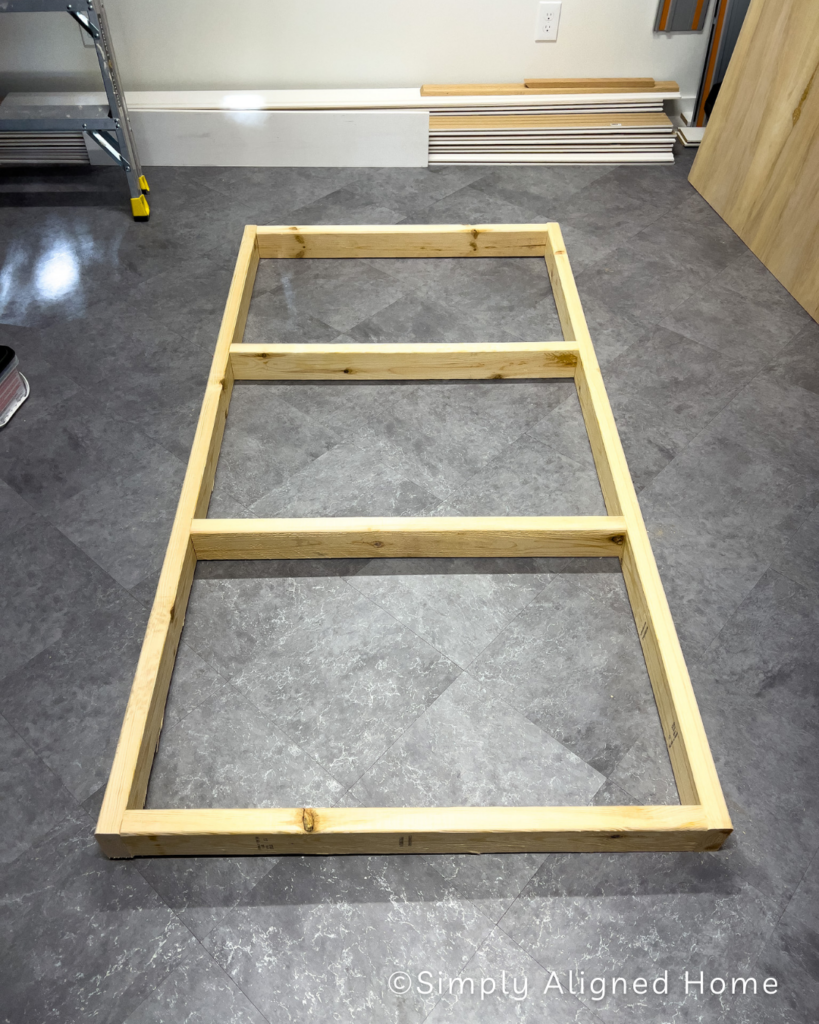
4. Build the frame
Lay the rails on a flat surface and form a rectangle. Apply a thin layer of wood glue to each joint, then clamp the pieces together.
Drill pilot holes before driving screws. Pilot holes help prevent splitting, especially near the ends of narrow rails.
Use at least two screws at each corner when possible. Keep every screw head flush with or slightly below the wood surface. A screw that sticks out can scratch your dog or damage the mattress.
5. Attach the legs
Place one leg inside or beneath each corner. Check that the legs are square with the frame before drilling.
Attach each leg with screws from two directions if the design allows. Add glue between the leg and frame for extra strength, but do not rely on glue alone.
Set the unfinished frame on a flat floor and press each corner. If it rocks, find the short leg and sand it carefully. Do not hide a wobble with a thick rubber pad until you know the frame is structurally sound.
6. Add the platform top
Place the plywood top on the frame. Center it so the edges line up evenly.
Drill pilot holes around the outer edge. Space the screws about 8 to 12 inches apart, depending on the frame size. Do not place screws so close to the edge that the plywood splits.
For a very large dog, add a center support rail beneath the plywood. This prevents the top from flexing over time.
7. Apply a safe finish
Remove all dust before painting or sealing. Use a low-odor, water-based product that is fully cured before your dog uses the bed.
Follow the product label for drying and curing time. “Dry to the touch” does not always mean the finish is ready for contact with pets.
Do not let your dog use the platform while it smells strongly of paint or stain. Place it in a well-ventilated area until the finish has cured completely.
8. Add nonslip protection
Attach rubber feet or nonslip pads to the bottom of each leg. This protects floors and helps the bed stay in place when your dog climbs on.
Test the platform on wood, tile, and carpet if you plan to move it between rooms. A pad that works on carpet may slide on tile.
Make the Platform Safe and Comfortable
Safety is the most important part of how to build a dog bed platform. Dogs can chew wood, pull at fabric, and push a bed across the floor with surprising force.
Use this safety checklist:
• Sand all exposed edges
• Cover or recess screw heads
• Remove loose splinters
• Avoid gaps that can trap toes
• Use sturdy legs with a wide base
• Check that the platform does not rock
• Keep the bed away from heaters and open flames
• Do not use toxic finishes or unknown treated wood
• Wash the mattress cover on a regular schedule
The mattress should fit the platform without sliding off. A thin nonslip liner beneath the mattress can help, but do not use loose rubber pieces that your dog could chew and swallow.
For puppies and active chewers, inspect the bed each day at first. If your dog removes chunks of wood, foam, rubber, or fabric, stop using the bed until you repair or replace the damaged parts.
If your dog has mobility problems, add a low ramp or pet step. The ramp should have a nonslip surface and a gentle slope. Never force a dog with joint pain to jump onto a raised platform.

Indoor and Outdoor Platform Tips
An indoor platform can use ordinary furniture-grade wood with a suitable water-based finish. Outdoor platforms need more protection because moisture, sunlight, and temperature changes can weaken the material.
For outdoor use:
• Choose exterior-grade plywood
• Seal every exposed edge
• Use rust-resistant screws
• Keep the platform under a roof
• Use a quick-drying mattress
• Leave airflow around the bed
• Inspect the frame after rain
Do not place the platform directly on wet ground. Use stable feet or a solid surface to reduce moisture damage.
Outdoor fabric should be strong, washable, and tightly attached. Check for loose threads because some dogs may chew or swallow them.
A covered patio is usually safer than an open yard. Even a sealed wood platform can deteriorate when exposed to constant rain and sun. Bring the bed indoors during severe weather.

Common Mistakes to Avoid
Many failed DIY dog beds are not caused by difficult woodworking. They result from small planning errors.
Making the bed too high
A high platform may look impressive, but it can be unsafe for small dogs, seniors, and pets with weak joints. Choose the lowest height that provides the desired airflow and floor clearance.
Skipping pilot holes
Driving screws directly into the end of a board can split the wood. Pilot holes make the joint cleaner and stronger.
Using a thin top
A thin board may bend under a large dog. Use ¾-inch plywood or add a center support beneath the top.
Leaving rough edges
A tiny splinter can turn into a painful paw injury. Sand all sides, not just the areas that are easy to see.
Choosing the wrong finish
Strong fumes and peeling paint are both warning signs. Use a pet-safe finish and wait until it has cured fully.
Forgetting the mattress
The platform is only the base. Your dog still needs a supportive, washable sleeping surface that matches its age, size, and sleeping style.
Ignoring movement
A bed that slides across the floor can frighten a dog and cause falls. Test the platform with your hands before allowing your pet to use it.
During my own planning process, one lesson stood out: a simple design is easier to maintain. Extra shelves, tall legs, and decorative trim can create more places for dust, moisture, and chewing damage to hide.

How to Test the Finished Dog Bed
Before your dog uses the platform, perform a careful stress test.
First, place it on a flat surface and press down on each corner. Then press the center with both hands. The platform should remain level and should not produce cracking sounds.
Next, check:
• Whether the legs stay firmly attached
• Whether screws remain flush
• Whether the top flexes
• Whether the bed slides
• Whether the mattress stays in place
• Whether any edge feels sharp
If the platform moves, tighten the joints and add nonslip feet. If the top bends, install a center support. If the mattress slides, use a fitted cover or nonslip layer.
Let your dog approach the bed at its own pace. Place a familiar blanket or toy on top. Reward calm exploration, but do not push your dog onto the platform.
Some dogs accept a raised bed right away. Others need several days, especially if the new surface moves or smells different.
Maintenance and Cleaning
A dog bed platform needs regular care, just like any other piece of pet furniture.
Once a week, check the frame for:
• Loose screws
• Cracked wood
• Chew marks
• Water damage
• Worn nonslip feet
• Mold or unusual odors
Wash the mattress cover according to its care label. Vacuum hair and dust from the platform and beneath it. For accidents, use a pet-safe cleaner and allow the wood to dry fully.
Do not soak unfinished wood. Moisture can cause swelling, warping, and hidden mold.
A well-made indoor platform may last for years, but its lifespan depends on your dog’s size, chewing habits, and the quality of the materials. Replace any part that becomes weak or sharp.
Cost and Time Considerations
The cost of how to build a dog bed platform varies by size and material. A basic small platform may cost around $30 to $60 if you already own the tools. A large platform made from quality plywood, strong hardware, finish, and a new mattress may cost $80 to $200 or more.
A beginner may need two to four hours for cutting, sanding, assembly, and finishing. Curing time for paint or sealant is separate.
You can reduce the cost by:
• Using leftover plywood in good condition
• Reusing sturdy furniture feet
• Buying a washable mattress during a sale
• Choosing a simple rectangular design
• Borrowing tools
Do not save money by using damaged wood, weak screws, or unsafe coatings. The frame carries your dog’s weight every day, so strength matters more than decoration.
Frequently Asked Questions About How to Build a Dog Bed Platform
What is the best height for a dog bed platform?
A low platform between 3 and 8 inches works well for many dogs. Small dogs, puppies, and seniors often need a lower bed, while large dogs may use a slightly higher frame if they can climb on safely.
What type of wood is safest for a DIY dog bed?
Untreated, clean wood such as pine or quality plywood is a practical choice. Sand it well and use a fully cured, water-based finish if needed.
How large should a dog bed platform be?
Make the platform slightly larger than the mattress, usually 1 to 2 inches wider on each side. The mattress itself should give your dog at least 6 inches of extra length and width beyond its relaxed body size.
Can I build a dog bed platform from a pallet?
You can, but inspect the pallet carefully for mold, oil, broken boards, nails, and chemical treatment. Sand it thoroughly, remove unsafe hardware, and use only a pallet with a known safe history.
Is a raised dog bed good for an older dog?
It can be helpful if the platform is low, stable, and paired with a supportive mattress. Avoid tall beds that require jumping, and ask a veterinarian for guidance if your dog has arthritis or mobility problems.
How do I stop a dog bed platform from sliding?
Install rubber feet, place a nonslip mat beneath it, or use a mattress liner designed for pet beds. Test the bed on the actual floor surface before your dog climbs on.
Can I use a dog bed platform outside?
Yes, if you use exterior-grade materials, rust-resistant hardware, a weather-safe finish, and a quick-drying cushion. Keep it covered and inspect it often for moisture damage.
Conclusion
Learning how to build a dog bed platform does not require advanced woodworking skills. Measure your dog and mattress, choose strong pet-safe materials, build a level frame, sand every edge, and test the platform before use.
Keep the height low enough for easy access, add nonslip protection, and inspect the bed often. A simple, stable platform can give your dog a cleaner and more comfortable place to rest for years. Start with a clear plan, work safely, and share your finished project or questions in the comments.

Pet Care Writer & Researcher
Daniel writes practical guides on daily care, feeding, and safety, turning complex topics into simple, actionable advice.