How To Create Balanced Diet For Dog: Vet Guide 2026
Learn how to create balanced diet for dog with vet tips, portion guides, and safe foods. Build a healthy plan your pup will love in 2026.
Build meals with complete nutrients, right calories, quality protein, and portion control.
If you want to learn how to create balanced diet for dog the smart way, you’re in the right place. I’ve helped many families fix nagging issues like dull coats, itchy skin, loose stools, and weight swings by dialing in nutrition. This guide breaks down how to create balanced diet for dog with clear steps, simple math, and real-life tips you can use today.

What “balanced” really means for dogs
Balanced means your dog gets the right energy, macronutrients, and all required vitamins and minerals every day. For adults, protein supports muscles and repair, fat fuels energy and skin health, and carbs add fiber and help gut balance. Micronutrients must meet standards set by recognized bodies like AAFCO or FEDIAF for your dog’s life stage.
Life stage matters. Puppies, pregnant dogs, and seniors have different needs for protein, calcium, and calories. Aim for complete and balanced diets that meet AAFCO or FEDIAF profiles and follow WSAVA nutrition guidelines when you can.
Practical macro targets for many healthy adults:
- Protein: 18–25% of calories from high-quality animal sources
- Fat: 10–20% of calories, adjusted for activity and weight
- Carbs and fiber: Useful for gut health and energy; fiber at 2–5% dry matter helps stool quality

Step-by-step: how to create balanced diet for dog
Start with your dog’s age, weight, body condition, and activity. Use a simple calorie guide: Resting Energy Requirement (RER) = 70 × (weight in kg^0.75). Then multiply by a lifestyle factor: 1.4–1.6 for most adults, 1.2 for weight loss, 1.8–2.2 for working dogs, and 3 for weaning pups.
Build the plate. A helpful home-cooked starting point for many adults is roughly 40% lean animal protein, 50% cooked carbs and dog-safe veggies, and 10% healthy fats. Add organ meat at about 5% of total food, and add a proper calcium source. Without calcium, home diets cause serious problems.
Do not guess on supplements. At minimum, add calcium (about 900–1,000 mg per 1 lb or 450 g of cooked food), omega-3s (EPA+DHA at 50–100 mg/kg body weight per day), and a dog-safe multivitamin designed for home-prepared meals. Transition over 7–10 days by mixing new food into old food to protect the gut.
Choosing commercial food with confidence
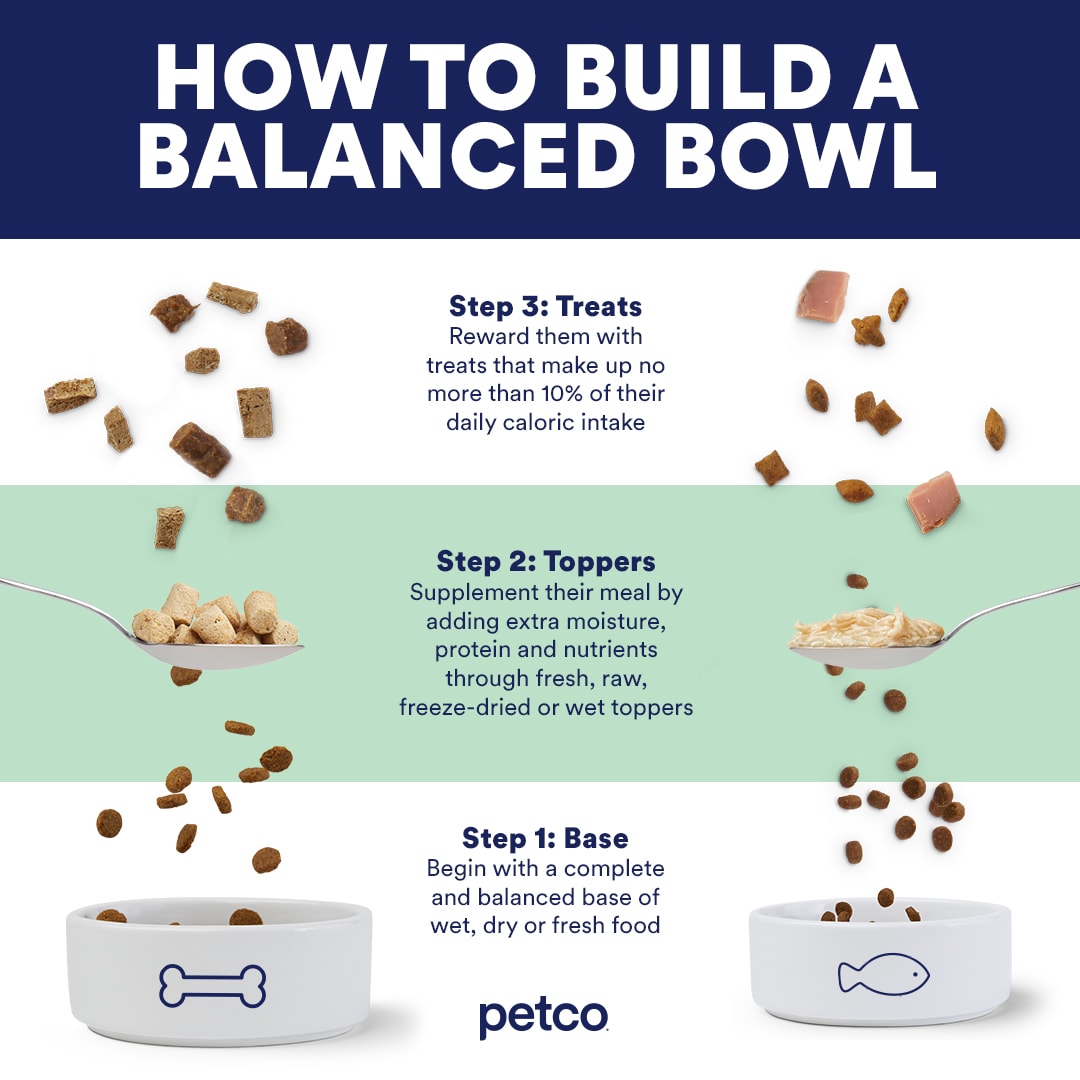
Commercial is the easiest path for how to create balanced diet for dog if you pick well. Look for a clear AAFCO statement that says complete and balanced for your dog’s life stage. Prefer brands that meet WSAVA guidelines, run feeding trials, and employ a qualified nutritionist.
Read labels with care:
- Named animal proteins at the top
- Clear nutrient analysis and feeding guide
- Lot codes and a customer support line
- Avoid vague claims and heavy use of fillers or flavor-only meats
Rotate proteins every few months if your dog’s gut tolerates it. Rotation may add variety in amino acids and micronutrients while keeping meals interesting.

Home-cooked and raw: how to create balanced diet for dog safely
Home-cooked can work, but most “online recipes” are not complete. Use a recipe formulated by a board-certified veterinary nutritionist. They will tailor protein, fat, calcium, phosphorus, and trace minerals to your dog’s needs.
Raw feeding increases pathogen risk to pets and people. If you choose raw, handle it like sushi-grade food, freeze-thaw safely, and speak with your vet about balance and safety. Whether cooked or raw, the rules stay the same: meet nutrient profiles, add calcium, and use measured supplements.
Personal note: I’ve seen dull coats brighten within four weeks after adding proper omega-3 and calcium to a well-made home diet. Balance beats trend every time.
Core ingredients that work
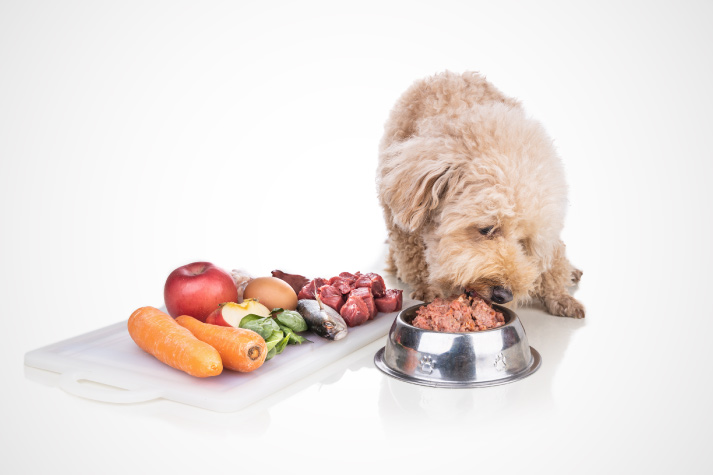
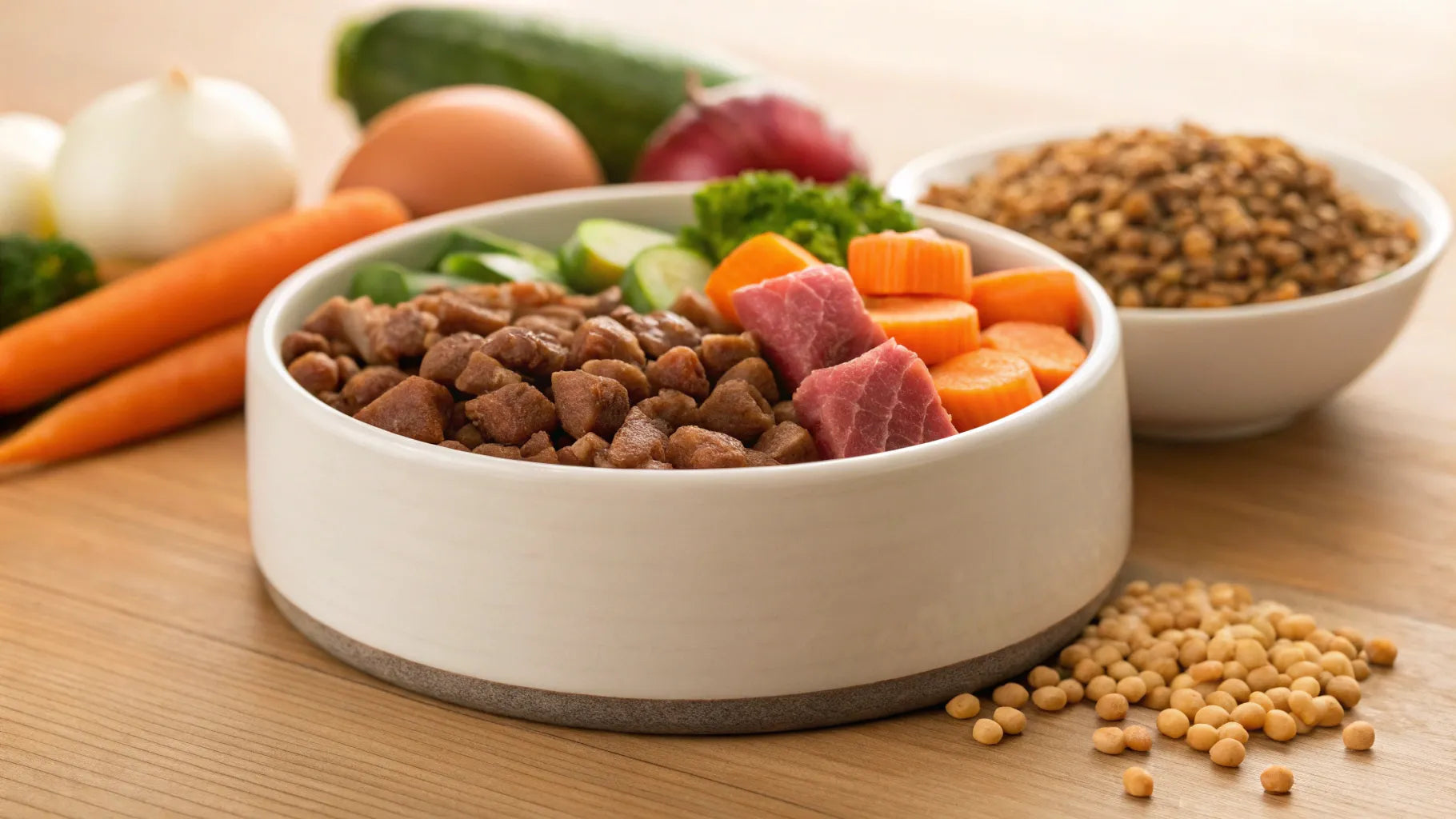
Pick a few foods your dog digests well, then build around them. Keep it simple and steady.
Smart proteins
- Turkey, chicken, lean beef, pork loin, eggs, salmon, sardines
- For sensitive dogs: turkey, white fish, or pork can be gentle
Useful carbs and fiber
- White rice, oats, quinoa, sweet potato, pumpkin
- Green beans, broccoli, zucchini, leafy greens
Healthy fats
- Salmon oil or algae oil for EPA/DHA
- Olive oil or canola oil in small amounts for energy
Calcium and extras
- Ground eggshell (about 1 tsp per 1 lb food) or calcium citrate
- Iodine from a vet-approved supplement if your base recipe lacks it
- Vitamin E when using fish oil to protect cell membranes

A simple 20 lb (9 kg) adult dog meal example
This is a sample to show structure, not a custom prescription. Always adjust for your dog’s needs and confirm with your vet.
Daily calories for many 20 lb adults: about 550–650 kcal. Split into two meals. Here’s a starting point for one meal:
- 90 g cooked lean ground turkey
- 70 g cooked white rice
- 40 g cooked sweet potato
- 20 g chopped green beans
- 1 tsp salmon oil (adjust to EPA/DHA target)
- Calcium to reach about 500 mg per meal
- Pinch of iodized salt if recipe is iodine-poor (confirm with vet)
- Dog-safe multivitamin as directed
If you’re learning how to create balanced diet for dog, measure with a kitchen scale. It keeps the plan tight and repeatable.

Portions and body condition: how to create balanced diet for dog that fits your pup
Portions change with your dog’s metabolism. Use a body condition score of 1–9. Aim for 4–5: ribs easy to feel with slight fat cover, a visible waist from above, and a tummy tuck from the side.
Adjust weekly. If weight creeps up, cut portions by 5–10%. If ribs feel sharp and energy dips, raise calories by 5–10%. Small, steady moves keep the gut happy.
I ask families to do a “Saturday check.” Weigh your dog, feel the ribs, note stool quality, and adjust. Simple habits build long-term success.

Supplements and treats that help, not hurt
Supplements should fill gaps, not replace food. For many dogs, the big three are omega-3s, calcium (home diets), and a complete canine multivitamin designed for home-cooked recipes. Joint support like glucosamine and chondroitin may help older dogs; probiotics can steady stools during changes.
Keep treats under 10% of daily calories. Choose single-ingredient snacks like carrot coins, green beans, or freeze-dried meat. Avoid xylitol, grapes, raisins, onions, garlic, excess salt, and fatty table scraps.
If you are working on how to create balanced diet for dog, track treats too. Extras add up fast.
Common mistakes and easy fixes
Skipping calcium in home diets. Fix it by adding measured calcium every time you cook.
Too much liver. Limit liver to about 5% of the diet to avoid vitamin A excess.
Guessing portions. Use a scale and adjust by 5–10% based on body condition.
Fast transitions. Shift over 7–10 days to avoid diarrhea.
Chasing trends. Keep your eye on nutrients, not buzzwords. That is the heart of how to create balanced diet for dog.
Health checkpoints and when to call the vet
Watch stool. Ideal is formed, moist, and easy to pick up. Mucus, blood, or lasting diarrhea means call your vet.
Track skin, coat, and energy. Dull coat, flaky skin, or low pep can hint at fatty acid or protein gaps. Do yearly blood work for adults and twice a year for seniors. If food allergies are suspected, ask your vet about a strict 8–12 week elimination diet.
When you practice how to create balanced diet for dog, set reminders. Health logs help you spot trends before they grow.
Budget and prep tips that actually work
Batch cook once a week. Cool fast, portion, and freeze. Label containers with dates and calories per pack.
Buy in-season veggies and lean cuts on sale. Compare unit prices and store brands for staples like rice and oats. Use a kitchen scale to reduce waste and get accuracy.
I’ve saved families 15–30% a month by planning meals and rotating budget-friendly proteins. Smart shopping supports how to create balanced diet for dog without breaking the bank.
Frequently Asked Questions of how to create balanced diet for dog
How many calories should my dog eat each day?
Use RER = 70 × (kg^0.75) and multiply by a lifestyle factor. Adjust by 5–10% based on body condition and weekly weigh-ins.
Is grain-free better for dogs?
Not by default. Most dogs digest cooked grains well, and grain-free is not a fix for all issues.
Can I feed raw and cooked together?
You can, but mix carefully and watch stools. Food safety and complete nutrition matter more than raw vs cooked.
Do I need supplements if I feed a complete commercial food?
Usually no, unless your vet says otherwise. Fish oil can still help skin, coat, and joints for some dogs.
How fast should I switch foods?
Transition over 7–10 days. Go slower for sensitive stomachs or if stools get loose.
Conclusion
A balanced diet is not a mystery. It is the steady mix of complete nutrients, right calories, safe ingredients, and small weekly tweaks. Use simple tools, measure portions, and watch your dog’s body for honest feedback.
Start today: pick one path—commercial complete or a vet-formulated home recipe—and commit for 30 days. Track weight, stools, and energy, then adjust. If this guide on how to create balanced diet for dog helped, subscribe for more real-world nutrition tips, or drop a comment with your dog’s wins and questions.

Pet Care Writer & Researcher
Daniel writes practical guides on daily care, feeding, and safety, turning complex topics into simple, actionable advice.