How To Stop A Pomeranian From Barking: Quick Guide
Learn how to stop a pomeranian from barking with gentle training methods, practical tips, and proven ways to create a calmer, quieter home.
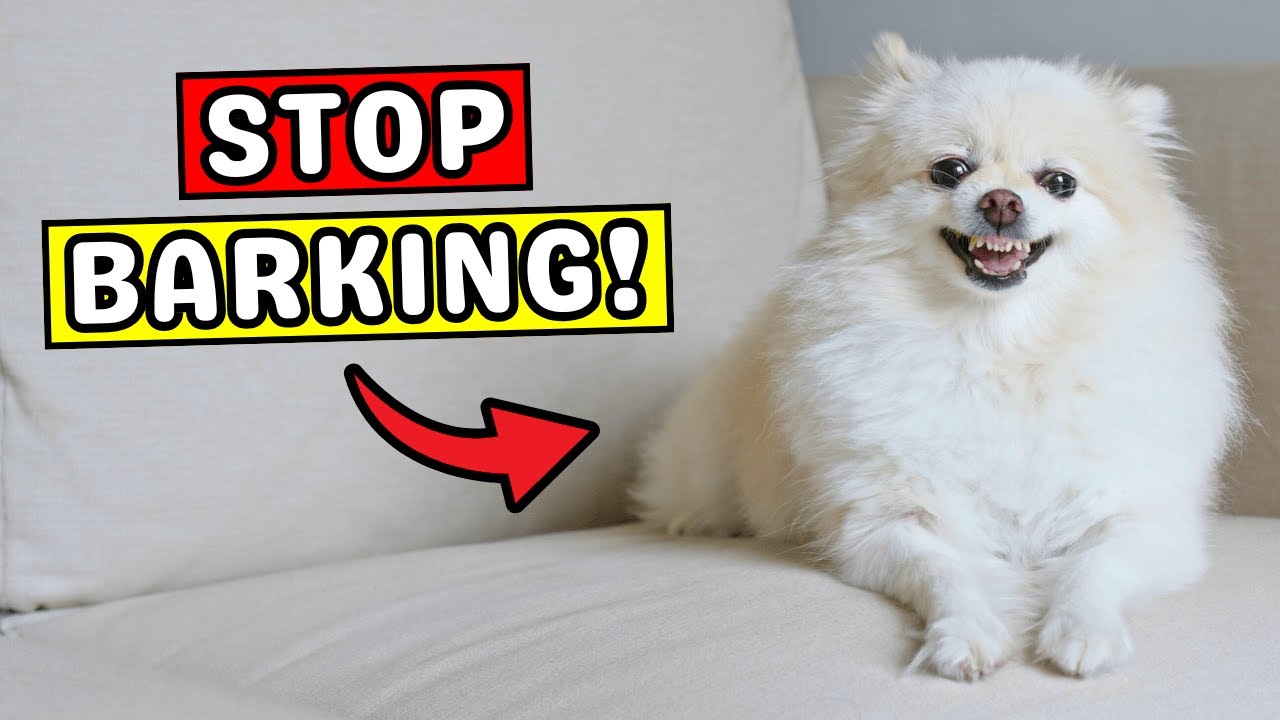
A Pomeranian usually barks for a reason. It may hear a delivery truck, see a dog through the window, feel bored, or panic when left alone. To stop a Pomeranian from barking, first find the cause, prevent practice of the behavior, and reward calm behavior. Avoid yelling or painful tools. These methods can increase fear and make barking worse.
Introduction
Pomeranians are small dogs with sharp hearing and strong opinions. In a U.S. home, they may react to doorbells, apartment hallway sounds, mail carriers, squirrels, guests, or family activity. Their size does not make the barking problem less real. It can affect sleep, neighbors, and your dog’s stress level.
The goal is not to make your Pomeranian silent all day. A better goal is a dog that can notice a trigger, recover, and settle after a short alert. The plan below uses reward-based training and fits most healthy adult Pomeranians and puppies. A veterinarian or qualified behavior professional should assess severe, sudden, or fearful barking.
Why Pomeranians Bark
The cause of barking determines the best solution. Watch what happens just before the bark, what your dog does during it, and what happens after it.
Common causes include:
- Alert barking: Your Pomeranian hears or sees something unusual.
- Demand barking: Barking brings food, play, attention, or access to a room.
- Excitement barking: Your dog barks during greetings, play, walks, or car rides.
- Fear barking: A person, dog, sound, or place feels unsafe.
- Frustration barking: Your dog can see a trigger but cannot reach it.
- Boredom barking: Your Pomeranian lacks enough activity or mental work.
- Separation-related barking: Barking starts when you leave or continues while your dog is alone.
- Pain or illness: A health problem changes your dog’s behavior.
Barking often continues because it works. If barking makes a person open the door, toss a toy, or move away from the window, the dog learns that barking has power. Even shouting can reward the behavior by providing attention.
Keep a simple log for two or three days. Record the time, trigger, distance from the trigger, length of the barking, and what stopped it. This can reveal a clear pattern.
A barking log might look like this:
| Situation | Likely reason | First change to make |
|---|---|---|
| Barks at people outside | Alert or territorial response | Block the view and reward quiet |
| Barks when you pick up keys | Separation concern | Practice very short departures |
| Barks at the food bowl | Demand or excitement | Wait for calm before serving |
| Barks at dogs on walks | Fear, frustration, or excitement | Increase distance and reward focus |
| Barks at night without a clear cause | Medical issue, anxiety, or outside sounds | Arrange a veterinary check |

Rule Out Medical and Behavior Problems
A sudden change in barking deserves a veterinary check. Pain, hearing loss, vision changes, cognitive decline, and other illnesses can affect vocal behavior. This matters even more in senior dogs.
Contact your veterinarian if barking comes with:
- Limping, stiffness, panting, shaking, or unusual restlessness
- Confusion or getting stuck in corners
– Changes in thirst, appetite, sleep, or bathroom habits - Growling or snapping that is new
- Repeated barking at empty spaces
- Distress when touched
- Vomiting, weakness, collapse, or trouble breathing
Separation-related barking also needs careful handling. Signs may include barking soon after you leave, scratching at doors, pacing, drooling, house-soiling, or trying to escape. Do not treat this as simple disobedience. A veterinarian can check for health causes and guide you toward a behavior plan.
For severe fear, aggression, or separation distress, ask your veterinarian for a referral to a board-certified veterinary behaviorist or a qualified reward-based trainer. The American Veterinary Society of Animal Behavior supports reward-based training and advises against aversive methods that cause fear or pain.

How to Stop a Pomeranian From Barking: A Step-by-Step Plan
Use the same calm plan each day. Short sessions work better than long, stressful sessions.
1. Prevent unnecessary barking
Start by reducing chances to rehearse the behavior.
Try these changes:
- Close curtains or use removable window film.
- Move furniture away from windows.
- Use a fan or quiet white noise to soften outside sounds.
- Keep your dog away from the front door during busy periods.
- Ask visitors to text instead of knocking.
- Give a food puzzle before predictable events.
- Use a leash indoors when guests arrive, but do not use it to drag your dog away.
- Choose quieter walking routes while you build skills.
Management is not a cure. It gives training a better chance to work. Every long barking episode can strengthen the habit.
2. Teach a calm replacement behavior
Your dog needs something useful to do instead of bark. “Look at me,” “go to your mat,” and “find it” are good choices.
Begin in a quiet room:
- Say your dog’s name once.
- When your Pomeranian looks at you, mark the moment with “yes.”
- Give a small treat.
- Repeat until your dog turns to you quickly.
- Add a mat or bed and reward your dog for standing, sitting, or lying there.
- Slowly increase the time your dog stays calm.
Keep treats small. A pea-sized piece is enough for a toy breed. Reduce the amount of regular food slightly if training treats add many calories.
3. Teach “quiet” without yelling
Do not repeat “quiet” over loud barking. Your dog may hear it as more noise or attention.
Instead:
- Create a mild trigger, such as a soft knock from a distance.
- Let your dog give one or two alert barks.
- Hold a treat near the nose.
- When your dog pauses to sniff, say “quiet.”
- Give the treat at once.
- Repeat, then slowly increase the pause before the reward.
At first, reward one second of quiet. Later, build to three, five, and ten seconds. If your dog starts barking harder, the trigger is too strong. Move farther away or make the sound softer.
4. Change the emotional response to triggers
For fear or excitement barking, teach your Pomeranian that the trigger predicts something good.
Suppose your dog barks at a dog across the street. Stand far enough away that your dog can still eat and respond to their name. The instant your Pomeranian notices the other dog, give a treat. Stop feeding when the dog passes or disappears.
This process is called desensitization and counterconditioning. Desensitization uses a mild version of the trigger. Counterconditioning pairs that trigger with something positive.
Do not force your dog to approach the trigger. If your Pomeranian will not take food, lunges, trembles, or barks continuously, increase distance. Training below the panic point is much more productive.
5. Reward calm behavior throughout the day
Catch quiet moments before barking starts. Give a treat when your Pomeranian rests while you work, watches the street without barking, or settles after a sound.
This teaches an important lesson: calm behavior also gets results. Rewarding quiet does not require you to ignore every bark. It means you actively notice and reinforce the behavior you want to see more often.

Handle Common Barking Situations
Different triggers call for different adjustments.
Barking at the door
Before opening the door, ask your Pomeranian to go to a mat several feet away. Practice this without visitors first. Add a soft knock, then a doorbell sound at low volume.
When a real visitor arrives, use a barrier or leash for safety. Reward your dog for staying on the mat. Release your Pomeranian only when the body is loose and calm enough to greet safely. Some dogs do better greeting after the visitor sits down.
Barking at windows
Block the view during high-traffic times. Then reward your dog for looking at a person or vehicle and turning back to you.
Do not allow repeated patrols from room to room. A baby gate, closed door, or comfortable resting area can help. Provide a chew, food toy, or scent game away from the window.
Barking on walks
Distance is your most useful tool. Cross the street, step behind a parked car, or turn around before your dog reaches the barking point.
When your Pomeranian sees the trigger, feed several small treats while the dog remains calm. Keep the walk moving. Do not punish barking with leash jerks or force your dog to sit close to something frightening.
Barking for food or attention
Make barking stop working, but do not simply ignore a dog in distress. For ordinary demand barking, stop talking, touching, or handing over the requested item. Wait for a brief pause, then ask for a simple behavior such as “sit.” Reward the sit with attention or access.
Everyone in the home must follow the same rule. If one person gives food during barking, the behavior may become stronger because the reward feels unpredictable.
Barking when left alone
First, use a camera to learn when barking begins. If it starts as soon as you leave and comes with panic signs, do not use long “cry it out” absences as your main plan.
Practice departures shorter than the point at which your dog becomes upset. Pick up keys, then sit down. Walk to the door, then return. Step outside for a few seconds, then come back before barking begins. Increase time in small steps.
If your dog cannot remain calm for even brief absences, seek professional help. Medication may be appropriate for some dogs, but only a veterinarian should prescribe it. Medication works best with a behavior plan, not as a replacement for one.

Daily Exercise and Enrichment for a Pomeranian
Exercise can reduce barking caused by boredom, but exhaustion is not the whole answer. Pomeranians need mental work, sniffing, play, and rest.
A useful daily mix may include:
- Several short walks or sniffing trips
- Brief training sessions
- Food puzzles or scatter feeding
- Safe chew items
- Gentle fetch or tug
- Hide-and-seek with treats
- Quiet nap time in a low-stimulation area
Match activity to age, health, and weather. Small dogs can overheat, tire quickly, or develop joint strain. Ask your veterinarian about exercise if your Pomeranian is overweight, elderly, or has breathing or orthopedic problems.
Avoid turning every quiet moment into active play. A dog that never learns to rest may become more excitable. Build a routine that includes both activity and calm.

Tools That Help—and Tools to Avoid
Helpful tools change the setting or make calm behavior easier. They do not replace training.
Useful options include:
- A comfortable mat or bed
- Baby gates
- Curtains or window film
- A properly fitted harness for walks
- A long-lasting food toy used safely
- A camera for observing alone-time behavior
- White noise for routine outside sounds
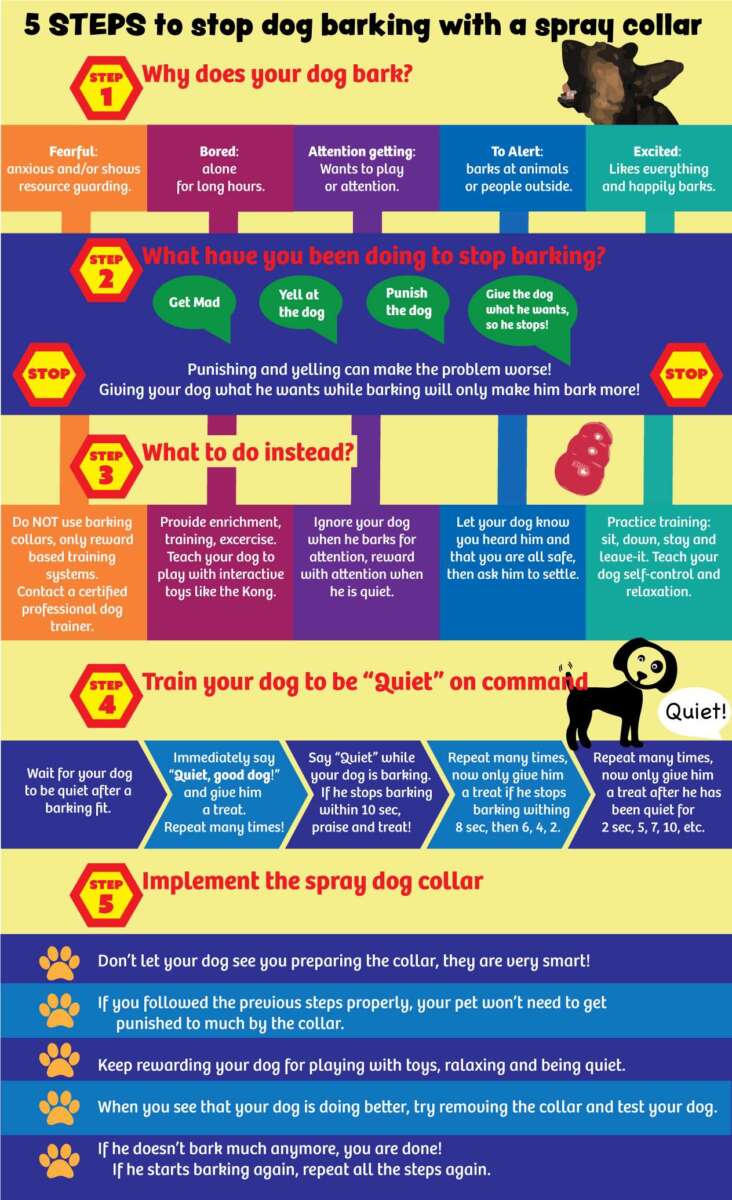
Avoid shock collars, spray collars, ultrasonic devices, and harsh leash corrections, especially for fear-based barking. These tools may suppress sound without changing the cause. A dog can become more anxious, redirect aggression, or stop warning before a bite.
Do not use a crate as a place of punishment. A crate can support rest and safe management when a dog already likes it. It should not be used for long periods to contain panic.

Common Mistakes That Keep Barking Going
The most common mistake is trying to stop the sound without identifying the reason. A Pomeranian barking from fear needs distance and confidence-building, not a harsher correction.
Other mistakes include:
- Yelling “quiet” over and over
- Rewarding barking by opening doors or giving treats
- Training only after the dog is already frantic
- Allowing different rules from different family members
- Using a bark collar as the first solution
- Expecting a quick fix after years of practice
- Exercising the dog but ignoring triggers and anxiety
- Punishing growling or warning signals
Progress is usually uneven. A dog may improve indoors but still bark outside. That does not mean the training failed. It means the setting, distance, or trigger level changed.
Signs the plan is working
Look for small changes:
- Your dog notices a trigger but recovers sooner.
- Barking stops after one cue instead of many.
- Your Pomeranian can eat and respond near mild triggers.
- Your dog chooses the mat or looks at you.
- Alone-time barking starts later or lasts for less time.
- The body looks loose instead of stiff, frantic, or crouched.
If barking becomes more intense, your dog stops taking treats, or aggression appears, stop that training setup. Increase distance and contact a professional.

A Simple Two-Week Training Schedule
Use this as a starting framework, not a rigid rule.
| Days | Main goal | Practice |
|---|---|---|
| 1–3 | Find patterns | Keep a barking log and reduce window and door triggers |
| 4–6 | Build attention | Practice name response, “look,” and mat training in a quiet room |
| 7–9 | Add mild triggers | Use soft sounds or distant sights and reward calm behavior |
| 10–12 | Practice real settings | Train at the window, door, or sidewalk while keeping distance |
| 13–14 | Test recovery | Reward your dog for noticing a trigger and settling afterward |
Train for about two to five minutes at a time. End while your dog is still successful. Several short sessions are usually easier for a Pomeranian than one long session.

Frequently Asked Questions
How long does it take to stop a Pomeranian from barking?
Many dogs show small changes within a few weeks of consistent training, but the timeline depends on the cause, age, trigger, and how long the habit has existed. Fear and separation problems often take longer than simple alert barking. Track recovery and calm behavior, not just the total number of barks.
Should I ignore my Pomeranian when it barks?
Ignore ordinary demand barking when doing so is safe, but do not ignore panic, pain, or severe distress. For demand barking, remove attention and rewards, then reinforce a quiet behavior. For fear or separation barking, change the setup and seek help if needed.
Will a bark collar stop a Pomeranian from barking?
A bark collar may reduce vocal sounds in some situations, but it does not identify or treat the cause. A painful or startling collar can worsen fear and anxiety. Reward-based training and trigger management are safer first choices.
Why does my Pomeranian bark at nothing?
Your dog may hear sounds you cannot hear, notice movement outside, or react to a smell. However, new barking at empty spaces can also signal pain, sensory change, anxiety, or cognitive problems. Arrange a veterinary examination if the behavior is sudden or unusual.
Can I teach a Pomeranian not to bark at visitors?
Yes, in many cases. Teach “go to mat” away from the door, then practice with mild knocks and controlled visitors. Keep your dog behind a gate or on a leash at first. Reward calm behavior and avoid forcing greetings.

Key Takeaways
- Find the trigger before choosing a training method.
- Prevent repeated barking at windows, doors, and outdoor triggers.
- Teach a replacement behavior such as looking at you or going to a mat.
- Reward quiet behavior early, before your Pomeranian becomes frantic.
- Use distance and treats for fear, excitement, or dog-reactive barking.
- Treat sudden barking, pain signs, and separation distress as reasons to seek professional help.
- Avoid yelling, punishment, and shock-based bark collars.
Final Recommendation
Start with a barking log, block the easiest triggers, and practice a calm replacement behavior each day. Reward your Pomeranian for noticing a sound and settling, rather than waiting for a long barking episode. If the barking is sudden, fear-driven, aggressive, or linked to being alone, involve your veterinarian and a qualified reward-based behavior professional.
Evidence and further reading
- American Veterinary Society of Animal Behavior: Humane Dog Training Position Statement
- Merck Veterinary Manual: Behavior Problems of Dogs
- ASPCA: Dog Behavior and Training
- American College of Veterinary Behaviorists

Pet Care Writer & Researcher
Daniel writes practical guides on daily care, feeding, and safety, turning complex topics into simple, actionable advice.