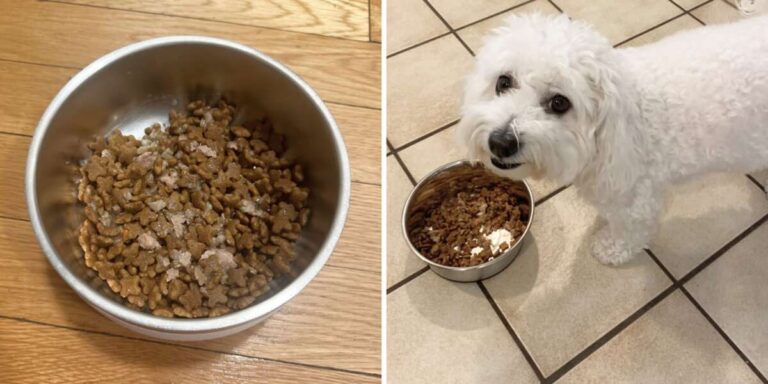
How Long Should Large Breed Dogs Eat Puppy Food: Guide
Learn how long should large breed dogs eat puppy food, when to switch diets, and how to support healthy growth with expert feeding tips.
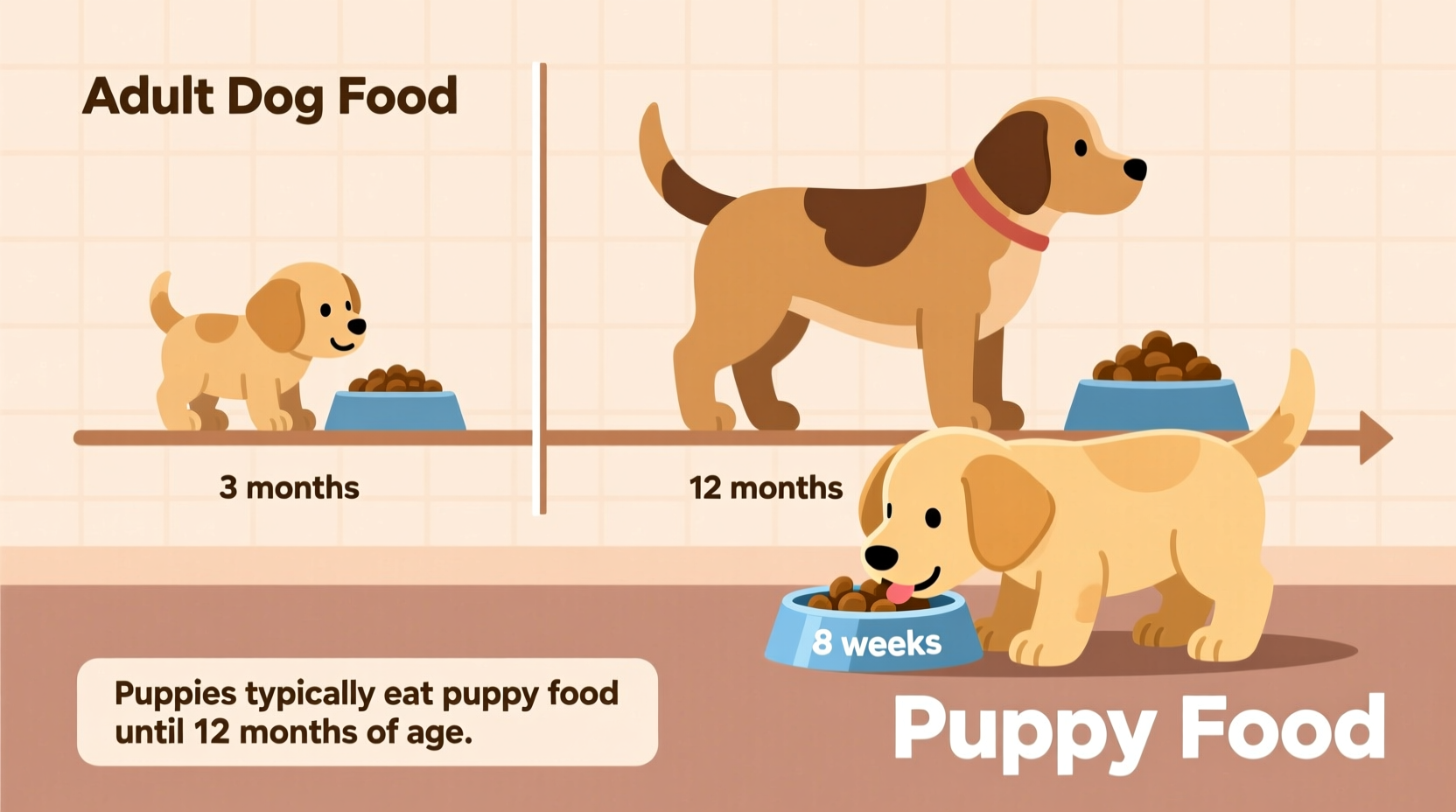
Large-breed dogs in the United States should usually eat a large-breed puppy food until they reach about 18 to 24 months of age. Many giant breeds may need a growth diet until 24 months or longer, while some large dogs can transition closer to 18 months.
The right timing depends on the dog’s breed, adult size, growth rate, body condition, and health. Ask your veterinarian before changing food, especially if your dog is expected to weigh more than 70 pounds as an adult.
Large-breed puppies need controlled growth—not the fastest growth possible. A diet with the right calorie level, calcium, phosphorus, and protein helps support developing bones and joints.
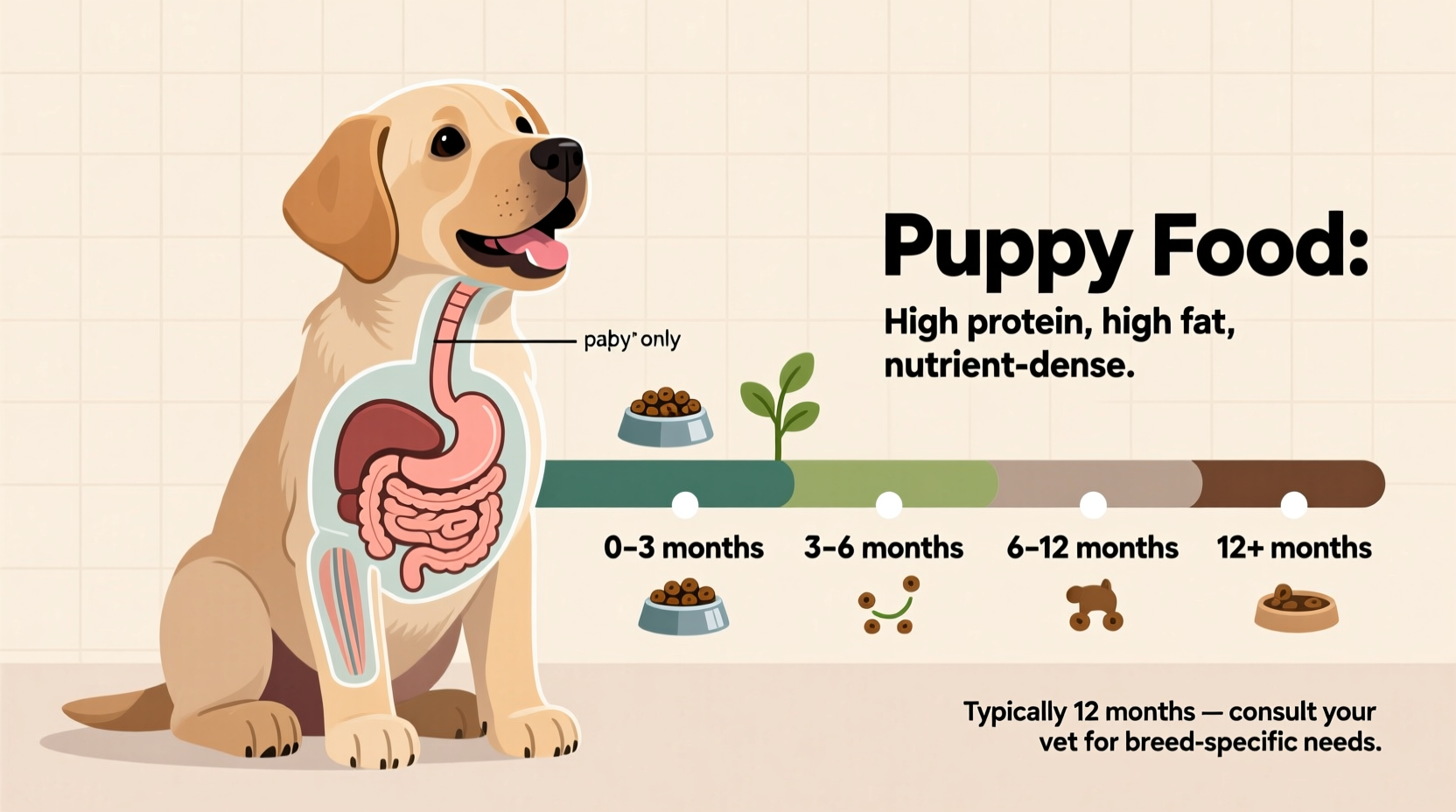
Why Large-Breed Puppies Need Special Food
Large-breed puppy food is made to support steady growth in dogs that will weigh about 70 pounds or more as adults. The goal is to provide enough nutrients without excess calories or minerals.
A puppy’s bones grow at the ends of the long bones. If a large puppy grows too quickly, extra stress may affect developing bones and joints. Excess weight can add even more strain.
Large-breed puppy formulas often have:
- Fewer calories per cup than some standard puppy foods
- Carefully controlled calcium and phosphorus
- Nutrient levels designed for the growth of large-size dogs
- Adequate protein for muscle and tissue development
- Guidance for measured feeding
The term “large-breed puppy food” is not just a marketing phrase. In the United States, look for an AAFCO nutritional adequacy statement that says the food is complete and balanced for growth, including growth of large-size dogs weighing 70 pounds or more as an adult.
That wording matters. A food may say “puppy” on the front of the bag but still lack the specific growth profile recommended for a large dog.
The Merck Veterinary Manual explains that growth diets must meet the needs of developing dogs. The Association of American Feed Control Officials (AAFCO) sets nutritional profiles used on pet food labels in the United States.
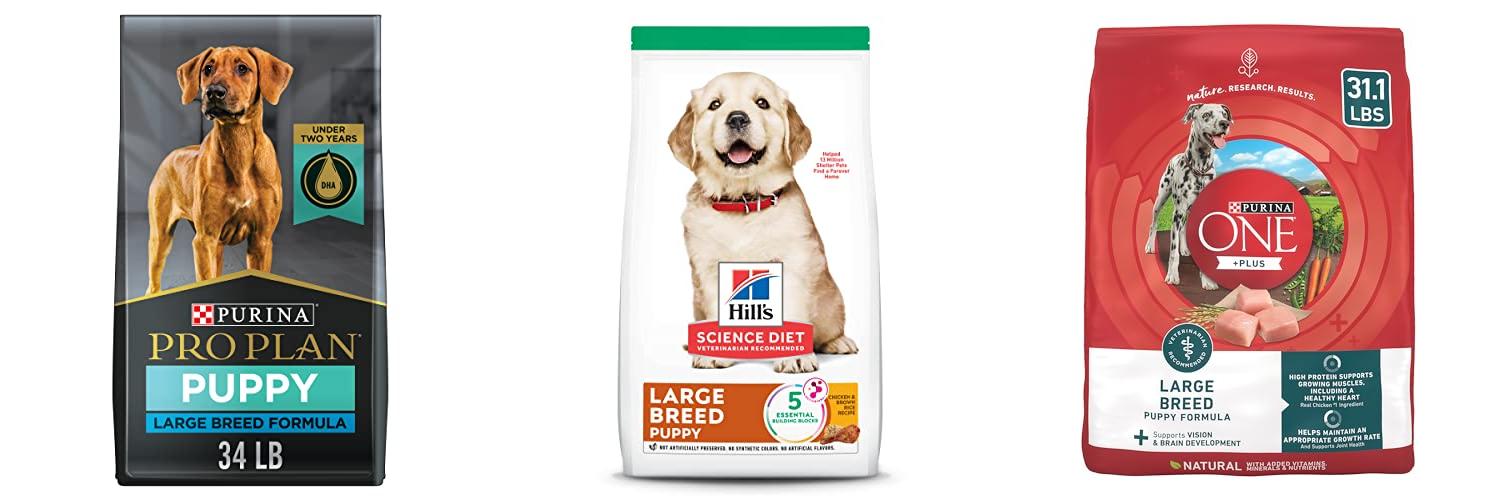
When Should a Large-Breed Dog Stop Eating Puppy Food?
Most large-breed dogs should switch to adult food when they are close to their mature size, usually between 18 and 24 months. The exact age varies by breed.
General age guide
| Expected adult weight | Common transition range |
|---|---|
| About 50–70 pounds | Around 12–18 months |
| About 70–100 pounds | Around 18–24 months |
| More than 100 pounds | Around 20–24 months or longer |
These are starting points, not strict rules. A Great Dane, Mastiff, Newfoundland, or Irish Wolfhound may mature more slowly than a large Labrador Retriever or German Shepherd.
Your veterinarian may recommend an earlier or later change based on:
- Current body condition
- Bone and joint development
- Growth rate
- Activity level
- Spay or neuter status
- Digestive health
- Breed-related health risks
- The calorie content of the current food
A puppy does not need to stay on puppy food until it stops growing completely in every case. Instead, the food should match the dog’s current stage and nutritional needs.
A large puppy that is already gaining weight too fast may need a feeding adjustment before it needs a different formula. Do not switch foods simply because the dog looks tall or reaches its adult height.
A Practical Rule for Deciding When to Switch
The safest approach is to combine age, expected adult size, body condition, and veterinary advice.
1. Estimate your dog’s adult size
Use the parents’ size, breed standards, and your veterinarian’s estimate. Mixed-breed puppies can be harder to predict, so adult size may be given as a range.
If your dog may reach 70 pounds or more, choose a food labeled for the growth of large-size dogs.
2. Check the dog’s body condition
A healthy large-breed puppy should have a visible waist when viewed from above. You should be able to feel the ribs with light pressure, but the ribs should not stick out sharply.
Signs that your puppy may be carrying too much weight include:
- Ribs are difficult to feel
- The waist is barely visible
- The abdomen does not tuck up behind the ribs
- Weight rises quickly between checkups
- The puppy seems heavy when lifted
The World Small Animal Veterinary Association provides body-condition guidance for assessing a dog’s weight. Body condition is more useful than a number on the scale alone because dogs of the same age can have very different builds.
3. Review the feeding directions
Food labels provide a starting amount. They do not know your puppy’s metabolism, activity, or body shape.
Measure each meal with a standard measuring cup or, even better, a kitchen scale. Free-feeding can make it easy for a large puppy to consume more calories than needed.
4. Ask at routine veterinary visits
Puppies often have several visits during their first year. Ask the veterinarian to check:
- Weight gain
- Muscle and fat cover
- Gait and movement
- Joint comfort
- Bone development
- Food quantity
- Timing for the adult-food transition
A vet may recommend staying on a large-breed puppy formula longer, moving to an adult formula sooner, or adjusting the daily amount.
How to Choose the Right Food
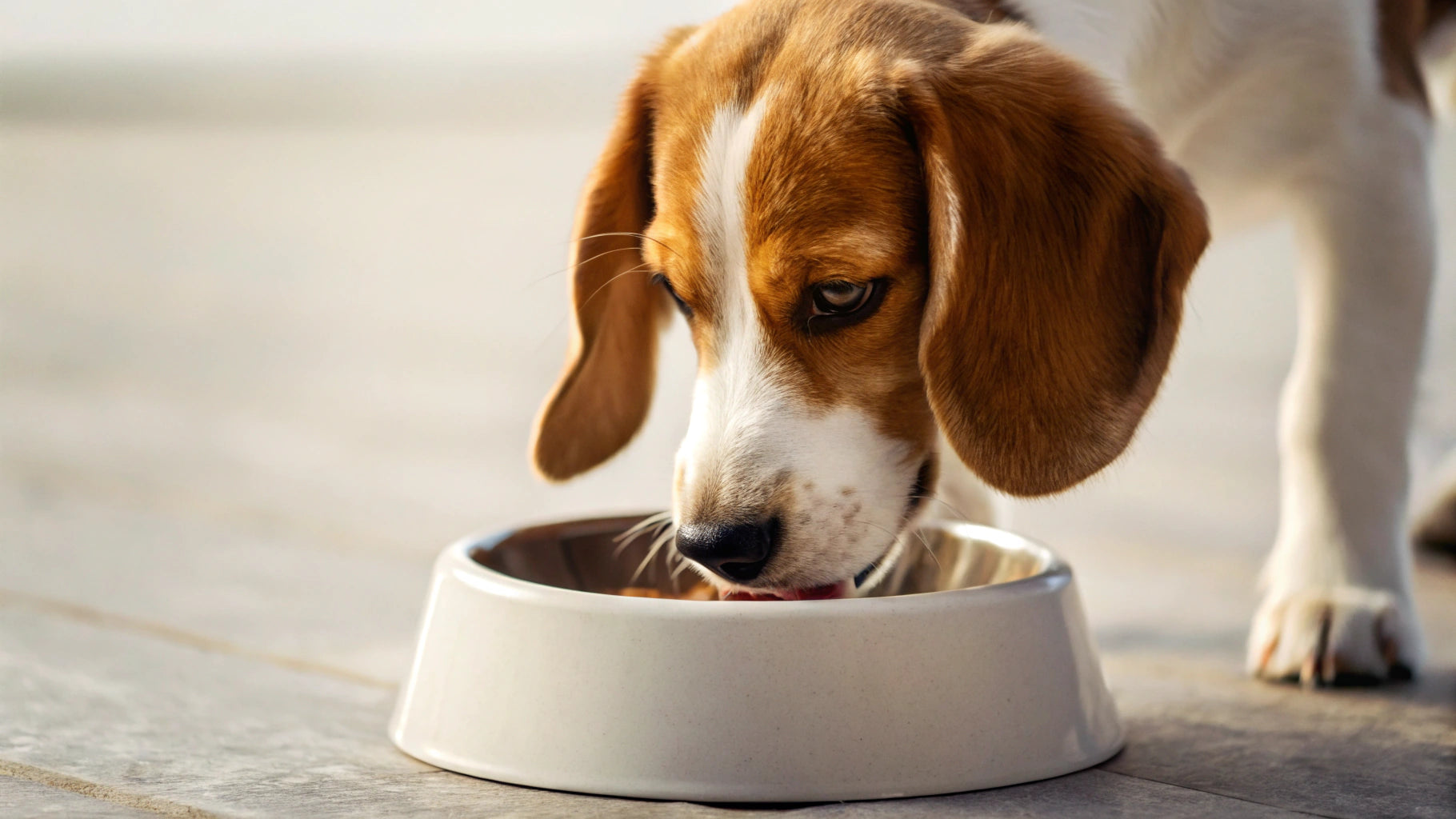
Choose a food with a clear nutritional adequacy statement for your dog’s life stage and size.
For a large-breed puppy, look for language similar to:
“Animal feeding tests using AAFCO procedures substantiate that this product provides complete and balanced nutrition for growth, including growth of large-size dogs weighing 70 pounds or more as an adult.”
Some labels use a formulation statement instead of a feeding-test statement. Both statements relate to whether the food is intended to meet AAFCO nutrient profiles, but the wording can differ.
Also check the calorie information. Two large-breed puppy foods may have very different calories per cup. The lower-calorie food is not automatically better, but calorie density affects how much your dog should eat.
Consider these label details:
- Life stage: growth or all life stages
- Large-size growth statement
- Calories per cup or kilogram
- Feeding guide
- Guaranteed analysis
- Manufacturer contact information
- Lot or batch information
“All life stages” foods are formulated to meet growth needs. However, the label may not always make the large-size growth statement easy to find. If your dog is expected to weigh 70 pounds or more, confirm that the food is appropriate for large-size growth.
The FDA explains that pet food labels must provide information about ingredients, nutritional adequacy, and feeding directions under applicable U.S. rules. You can review its pet food labeling guidance.
How Much Should a Large-Breed Puppy Eat?
Feed enough to support steady growth while keeping the puppy lean. The correct amount depends on the food’s calories and the puppy’s body condition.
A feeding chart is a starting point, not a prescription. Adjustments may be needed if your puppy gains weight too fast, remains too thin, or has a major change in activity.
Hypothetical calorie example
Suppose a food contains 400 calories per cup, and your veterinarian recommends 1,600 calories per day.
The daily amount would be:
1,600 calories ÷ 400 calories per cup = 4 cups per day
If the dog eats three meals, that equals about 1⅓ cups per meal.
This example is only for showing the calculation. Do not use 1,600 calories as a recommendation for your dog.
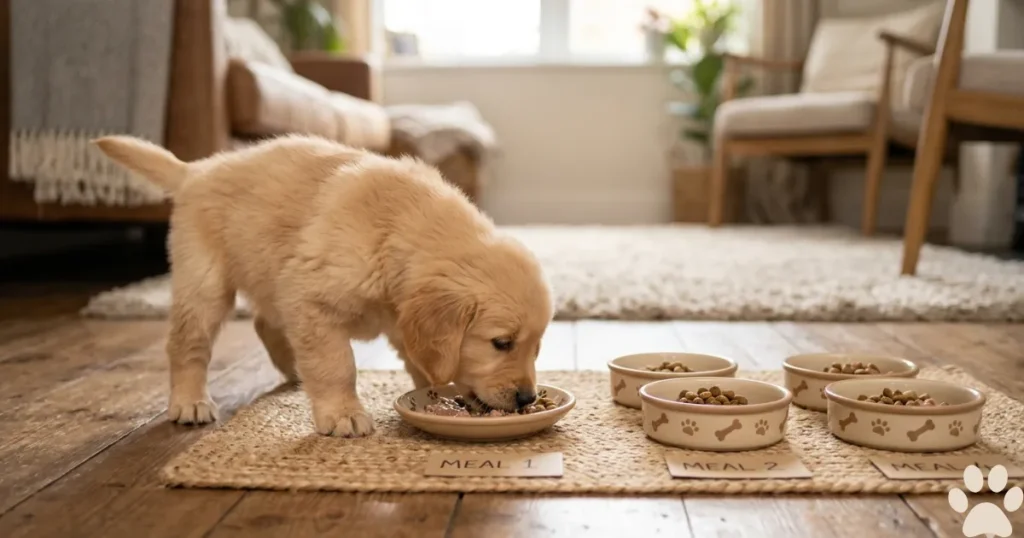
For puppies, divide food into several meals:
- Young puppies often need three or four meals each day
- Many older puppies do well with two or three meals
- Large or deep-chested dogs may need smaller meals rather than one large meal
Ask your veterinarian when to reduce meal frequency. A set meal schedule also makes it easier to track appetite, stool quality, and changes in weight.
Treats count as calories. Keep treats and extras limited, and choose small pieces when training. If treats make up a large part of the diet, they can unbalance nutrition or cause excess weight.

What Happens If You Switch Too Early or Too Late?
Switching too early can deprive a growing large dog of a diet designed for controlled development. Switching too late is not always harmful, but a calorie-dense puppy diet may contribute to weight gain once growth slows.
Switching too early
A large puppy moved to standard adult food too soon may not receive the nutrient profile intended for growth. This is especially concerning if the food is not complete and balanced for growth.
Do not move a puppy to adult food just because it has reached a certain birthday. Check the expected adult size and growth stage first.
Staying on puppy food too long
Puppy food is often more calorie-dense than adult maintenance food. After growth slows, the same portion may provide more calories than the dog needs.
Possible signs include:
- Gradual weight gain
- Loss of a visible waist
- Reduced stamina
- Difficulty feeling the ribs
- Constant begging despite adequate food
The solution may be a smaller portion, a lower-calorie puppy formula, or an adult large-breed food. Make the decision with your veterinarian rather than cutting food sharply.
Changing food too quickly
A sudden diet change can cause loose stool, vomiting, or reduced appetite. Transition over about seven days:
- Days 1–2: 75% old food and 25% new food
- Days 3–4: 50% old food and 50% new food
- Days 5–6: 25% old food and 75% new food
- Day 7: 100% new food
Some dogs need a slower transition. If vomiting continues, diarrhea is severe, blood appears in the stool, or the dog will not eat, contact a veterinarian.
Common Mistakes to Avoid
Large-breed puppy feeding is less about finding a magic brand and more about controlling growth and calories.
Avoid these common mistakes:
Adding calcium supplements
Do not add calcium, phosphorus, or vitamin supplements unless your veterinarian prescribes them. Extra calcium can disrupt mineral balance in a growing large-breed dog.
A complete and balanced commercial diet should already provide the required nutrients. Supplements can make the diet less safe, not more complete.
Feeding based only on the bag
The feeding guide is useful, but it may overestimate or underestimate your dog’s needs. Watch body condition and review weight changes with your veterinarian.
Encouraging rapid growth
A larger puppy is not necessarily a healthier puppy. Large dogs need time to develop bones, muscles, and joints.
Using adult food for weight control without guidance
If a puppy is gaining too quickly, reduce excess calories with professional guidance. A growing dog still needs a diet that supports development.
Ignoring treats and table food
Chews, training treats, toppers, and scraps can add substantial calories. Include them when reviewing the dog’s total daily intake.
Changing food because of a single soft stool
Mild stool changes can happen after stress, treats, or a fast diet switch. Persistent diarrhea, repeated vomiting, weakness, pain, or appetite loss requires veterinary advice.

When to Contact a Veterinarian
Contact your veterinarian before changing food if your large-breed puppy is underweight, overweight, growing unusually fast, or showing signs of pain.
Seek prompt veterinary care for:
- Limping or sudden lameness
- Trouble rising or climbing stairs
- Swollen or painful joints
- Repeated vomiting
- Ongoing diarrhea
- Poor appetite
- Marked lethargy
- Sudden weight loss
- A swollen abdomen
- Trouble breathing
Large dogs can also face a higher risk of gastric dilatation-volvulus, commonly called bloat. A hard or swollen abdomen, repeated unproductive retching, collapse, restlessness, or severe distress is an emergency. Go to an emergency veterinary hospital immediately.
Food alone cannot prevent every bone, joint, or digestive problem. Genetics, exercise, body weight, injury, and disease also matter.
Frequently Asked Questions
Can a large-breed puppy eat regular puppy food?
It can, but it may not be the best choice. If the dog is expected to weigh 70 pounds or more, select a food with an AAFCO statement supporting growth of large-size dogs.
Is large-breed puppy food needed for a 60-pound dog?
The answer depends on expected adult weight, not current weight. A puppy that currently weighs 60 pounds may mature well above 70 pounds. Ask your veterinarian to estimate adult size.
Can large-breed dogs eat puppy food after two years?
Healthy adult dogs usually do not need puppy food after reaching maturity. A puppy formula may provide more calories than an adult dog needs. Your veterinarian may recommend a different diet based on health, activity, or body condition.
How long should a Great Dane eat puppy food?
Many Great Danes need a controlled large-breed growth diet until roughly 18 to 24 months, but individual timing varies. Your veterinarian should guide the transition because Great Danes mature at different rates and can be sensitive to excess calories and minerals.
Can I feed a large-breed puppy homemade food?
Do not create a homemade growth diet without help from a board-certified veterinary nutritionist. Growing large dogs have precise nutrient needs, and small formulation errors can affect bone development.
Conclusion
Most large-breed dogs should eat food made for large-size growth until about 18 to 24 months of age. Giant breeds may need it longer. The best transition point depends on adult size, growth rate, body condition, activity, and veterinary assessment.
Keep the puppy lean, measure meals, limit extra calories, avoid unapproved supplements, and change food gradually. At the next wellness visit, ask your veterinarian to review your dog’s weight, body condition, daily calories, and ideal date for switching to adult food.

Pet Care Writer & Researcher
Daniel writes practical guides on daily care, feeding, and safety, turning complex topics into simple, actionable advice.