What Size Bed Should I Get For My Dog: Find The Perfect Fit
Not sure what size bed should i get for my dog? Use our simple sizing guide to choose a comfortable, supportive bed your dog will love.
Choose a bed that lets your dog stretch fully, turn around, and rest without hanging over the edge.
Choosing what size bed should I get for my dog depends on more than weight or breed. Your dog’s sleeping position, body length, age, health, and bed design all matter. A small dog that curls up may need less space than a long-legged dog that sleeps flat.
After measuring many dogs and comparing common bed styles, I’ve found that the best fit gives your dog room to move while still feeling secure. This guide explains how to measure your dog, understand size charts, avoid common mistakes, and choose the right bed for puppies, seniors, and large breeds.
The Simple Way to Choose the Right Dog Bed Size
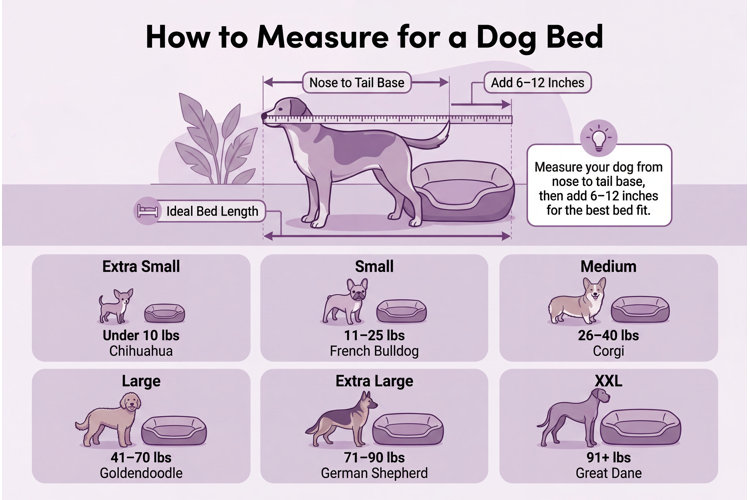
The easiest answer to what size bed should I get for my dog is this: measure your dog from nose to the base of the tail, then add 6 to 12 inches.
This extra space lets your dog stretch, shift positions, and settle without touching the edges. Add more room for dogs that sleep sprawled out or prefer to lie on their side.
Use these general measurements as a starting point:
• Small dogs under 25 pounds often need a bed about 24 to 30 inches long.
• Medium dogs from 26 to 50 pounds often need a bed about 30 to 36 inches long.
• Large dogs from 51 to 90 pounds often need a bed about 36 to 44 inches long.
• Extra-large dogs over 90 pounds may need a bed 44 inches long or larger.
These ranges are not strict rules. A compact 40-pound Bulldog may need less space than a slim 40-pound Greyhound. Your dog’s actual sleeping length is usually more useful than breed or weight alone.

How to Measure Your Dog for a Bed
Accurate measurements make it much easier to decide what size bed should I get for my dog. You only need a soft tape measure, a flat surface, and a few minutes.
Measure your dog while they are standing naturally. Do not pull the tape tight, and do not measure only the back.
-
Measure from the tip of the nose to the base of the tail.
-
Measure from the floor to the top of the shoulders if you are buying a raised or enclosed bed.
-
Add 6 to 12 inches to the body length.
-
Compare the final number with the bed’s inside sleeping area.
For example, imagine your dog measures 28 inches from nose to tail base. A bed with a 34- to 40-inch sleeping area would likely offer a good fit. If the bed has thick bolsters, check the interior space rather than the outside measurement.
Many beds are advertised by outside dimensions. A bed listed as 36 inches wide may have only 29 inches of usable space after padding and walls. Always read the product’s interior measurements when they are available.
Consider How Your Dog Sleeps
Sleeping style is one of the most important parts of deciding what size bed should I get for my dog. Dogs do not all use space in the same way.
Watch your dog for a few nights. Notice whether they curl into a ball, stretch out, lean against a wall, or change positions often.
Dogs that curl up
A dog that curls into a tight ball may enjoy a smaller, round bed. A raised rim can help the dog feel supported and cozy.
Still, avoid choosing a bed that fits too closely. Your dog should be able to turn around without bumping into the sides.
Dogs that stretch out
Dogs that sleep on their side or stomach need a longer bed. Measure from the nose to the tail base, then add at least 8 inches.
Long-bodied breeds, such as Dachshunds and Greyhounds, often need extra length even when their weight suggests a smaller bed.
Dogs that sprawl
Some dogs sleep with their legs extended in every direction. These dogs often need one size larger than a standard chart suggests.
A rectangular mattress usually works better than a round nest bed for a sprawler. The bed should allow full leg extension without forcing the dog onto the floor.
Dogs that lean or burrow
Dogs that lean against something may like a bolster bed. Dogs that burrow may prefer a cave-style bed or a soft blanket placed over part of the bed.
Make sure the structure does not reduce the sleeping area too much. A high rim is helpful only if your dog can still lie comfortably inside it.

Dog Bed Size Chart by Weight and Body Length
A dog bed size chart can help you narrow your choices, but it should not replace measuring your dog. Weight gives a rough idea of body width, while body length tells you how much sleeping space your dog needs.
| Dog size | Typical weight | Suggested bed length | Common examples |
|---|---|---|---|
| Extra small | Up to 10 pounds | 18 to 24 inches | Chihuahua, Toy Poodle |
| Small | 11 to 25 pounds | 24 to 30 inches | Pug, Shih Tzu |
| Medium | 26 to 50 pounds | 30 to 36 inches | Beagle, Cocker Spaniel |
| Large | 51 to 90 pounds | 36 to 44 inches | Labrador Retriever, Boxer |
| Extra large | Over 90 pounds | 44 to 52 inches or more | Great Dane, Mastiff |
Breed names in this chart are only examples. Individual dogs can vary greatly within the same breed.
A Labrador with a long body may need a larger bed than a heavier but shorter Bulldog. When the chart and your dog’s measurement disagree, choose the larger usable sleeping area.

What Size Bed Should I Get for My Dog if They Are Between Sizes?
When your dog falls between two bed sizes, choose the larger option in most cases. Extra space is usually more comfortable than a bed that feels cramped.
A larger bed is especially useful when:
• Your dog sleeps stretched out.
• Your dog is still growing.
• Your dog changes positions often.
• Your dog shares the bed with another pet.
• Your dog has stiff joints or limited mobility.
There are a few exceptions. Very small dogs may feel exposed in an oversized bed with no raised edge. In that case, choose a larger bed with supportive bolsters rather than a flat, open mattress.
The goal is not to buy the biggest bed available. The goal is to give your dog enough room while keeping the bed comfortable and secure.

Choosing a Bed for Puppies
Puppies grow quickly, so deciding what size bed should I get for my dog can be harder during the first year. A bed that fits today may be too small within a few months.
For a growing puppy, measure the expected adult size when possible. You can buy a bed that fits the puppy now and plan to replace it as the dog grows, or choose a larger bed with raised sides that create a smaller resting space.
Keep these points in mind:
• Choose washable and water-resistant materials during house training.
• Avoid loose fillings that a puppy can chew and swallow.
• Select a durable cover with a strong zipper.
• Do not use a giant bed if the puppy seems unsettled or cannot find a comfortable position.
• Check the bed often for torn seams, exposed foam, or loose threads.
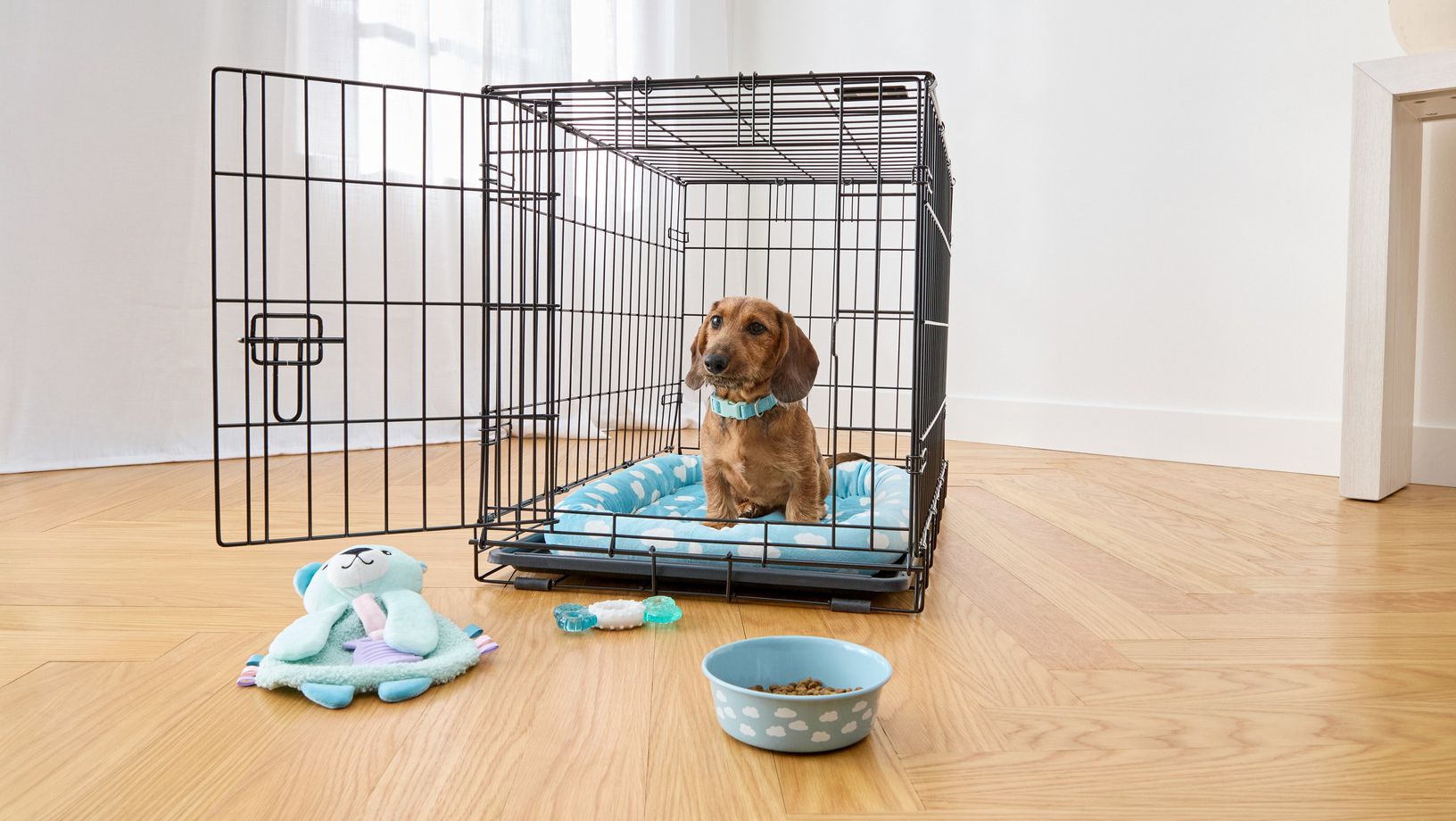
A crate bed should fit the crate floor without bunching. Too much extra fabric can create a chewing hazard and may make the puppy uncomfortable.

Choosing a Bed for Senior Dogs and Dogs With Joint Problems
Older dogs often need more than extra space. They may benefit from firm, supportive foam that cushions pressure without allowing the body to sink too deeply.
For a senior dog, choose what size bed should I get for my dog by measuring their natural sleeping position and leaving extra room for careful movement. A bed that is too small can make turning painful.
Look for these features:
• A low entry point for easy access.
• Memory foam or high-density support foam.
• A non-slip bottom.
• A removable, washable cover.
• Waterproof protection for dogs with incontinence.
• Enough surface area for the dog to change positions.
Veterinary orthopedic guidance commonly favors supportive bedding for dogs with arthritis, hip disease, or other mobility concerns. A comfortable bed cannot treat joint disease, so speak with your veterinarian if your dog struggles to stand, limps, or avoids stairs.
Matching Bed Type to the Correct Size
Bed shape affects how much usable space your dog receives. Two beds with the same outside size may feel very different inside.
Flat mattress beds
Flat beds work well for dogs that stretch, sprawl, or move often. Measure the full interior length and width.
Bolster beds
Bolster beds suit dogs that like to lean or rest their heads on an edge. Since the sides take up space, choose a larger outside size than you might expect.
Donut beds
Donut beds can be comfortable for dogs that curl up. They may not suit long dogs or dogs that sleep with their legs extended.
Elevated beds
Raised beds allow airflow and can work well in warm homes or outdoor areas. Check the weight limit and measure the sleeping platform, not just the frame.
Cave beds
Cave beds appeal to dogs that burrow or seek quiet spaces. The opening must be wide enough for easy entry, and the interior should allow the dog to turn around.
Crate mats
Crate mats should fit the crate floor closely. Measure the crate’s inside length and width, since crate walls reduce the available area.

Common Mistakes When Buying a Dog Bed
Many people focus only on the label marked small, medium, or large. Those labels are not consistent between brands, and this can lead to a poor fit.
Here are common mistakes to avoid:
• Measuring the dog’s back instead of the full body.
• Ignoring the bed’s interior measurements.
• Buying based only on weight.
• Forgetting that bolsters reduce usable space.
• Choosing a soft bed that offers no support for a heavy dog.
• Buying a puppy bed that will not fit the adult dog.
• Selecting a bed that slides across the floor.
• Keeping a damaged bed with exposed foam or stuffing.
One mistake I often see is buying a bed that looks generous in a product photo but has thick, tall sides. The dog ends up sleeping beside the bed because the inside is too small. Measure the usable space, not the marketing label.
How to Know if the Bed Fits Your Dog
Once the bed arrives, watch how your dog uses it. Their behavior can tell you more than the size label.
A well-fitting bed lets your dog:
• Lie down without any part of the body hanging over the edge.
• Turn around without stepping out of the bed.
• Stretch the legs without hitting the sides.
• Rest the head comfortably.
• Enter and leave without fear or strain.
• Change positions during sleep.
The bed may be too small if your dog sleeps partly on the floor, avoids stretching, or constantly pushes against the edges. It may be too large if your dog looks unsettled, avoids the bed, or cannot stay warm in it.
Some dogs need time to accept a new bed. Place it near a familiar sleeping area and add a blanket that smells like home. Do not force your dog into it.
How Often Should You Replace a Dog Bed?
The answer depends on use, material, cleaning, and damage. A high-quality bed may last several years, while a heavily used puppy bed may need replacement much sooner.
Replace the bed when:
• The foam stays flattened.
• The cover cannot be cleaned well.
• The seams split.
• The bed smells after washing.
• The bottom becomes slippery.
• Your dog’s body touches the floor.
• The bed no longer supports your dog evenly.
Washable covers help control dirt, hair, allergens, and odor. Follow the care label, and make sure the bed dries fully before your dog uses it again.
Frequently Asked Questions About What Size Bed Should I Get for My Dog
Should a dog bed be bigger than the dog?
Yes. Your dog should have enough space to stretch, turn, and change positions. Measure from the nose to the tail base and add 6 to 12 inches.
Is it better to buy a dog bed too big or too small?
A slightly larger bed is usually better, especially for dogs that sprawl, grow quickly, or have stiff joints. Very small dogs may prefer a cozy bed with raised sides rather than a huge open mattress.
How do I choose a dog bed size by weight?
Weight can provide a rough starting point, but it is not enough by itself. Body length, sleeping style, and the bed’s interior measurements give a more accurate answer to what size bed should I get for my dog.
What size bed does a 50-pound dog need?
Many 50-pound dogs need a bed with about 30 to 36 inches of usable length. Measure the dog first, because a long, slim dog may need a larger bed than a short, broad dog.
What size bed does a dachshund need?
A Dachshund may need a longer bed than its weight suggests. Measure from the nose to the tail base and add at least 6 to 12 inches, with a rectangular bed often working well.
Does a dog need a bigger bed as it gets older?
A senior dog may need more usable space because turning and stretching can become harder. Choose a supportive bed with a low entry and enough room for comfortable movement.
Can two dogs share one bed?
Two dogs can share a bed if they both choose to do so and have enough room to lie down without crowding. Measure the combined space they use, and consider providing a second bed so each dog has a choice.
Conclusion
The best answer to what size bed should I get for my dog starts with a simple measurement: nose to tail base, plus 6 to 12 inches. Then adjust for sleeping style, bed shape, age, health, and the bed’s real interior space.
Choose a larger size when your dog stretches, grows, shares the bed, or has joint pain. Choose supportive materials, washable covers, and a safe entry point for senior dogs. Take a few minutes to measure before buying, and your dog will have a much better chance of enjoying the bed from the first night.
Measure your dog today, compare the usable dimensions, and share your experience or questions in the comments.

Pet Care Writer & Researcher
Daniel writes practical guides on daily care, feeding, and safety, turning complex topics into simple, actionable advice.