What Size Dog Bed For Puppy: Find The Perfect Fit
Learn what size dog bed for puppy needs, with simple measuring tips and expert guidance to choose a cozy, supportive bed for growing dogs.
Choose a puppy bed that lets your dog stretch out fully, with room to grow without feeling lost.
Knowing what size dog bed for puppy is best can feel confusing because puppies grow fast. A bed that fits today may be too small in a few weeks, while an oversized bed may feel cold or less secure. This guide explains how to measure your puppy, choose the right bed shape, plan for growth, and avoid common sizing mistakes.
What size dog bed for puppy is best?
The best puppy bed size depends on your dog’s current body length, sleeping style, and expected adult size. Breed labels can help, but measurements are more reliable than names such as “small,” “medium,” or “large.”
A puppy should be able to:
• Lie flat without hanging over the edge
• Stretch out on their side
• Turn around without bumping into the walls
• Curl up with a little extra space
• Rest without their legs or head touching the floor
As a simple rule, measure your puppy from the tip of the nose to the base of the tail. Add 6 to 12 inches to that number. This gives your puppy enough room to relax without making the bed feel like an empty box.
For example, if your puppy measures 20 inches from nose to tail base, look for a bed with an inner sleeping area of about 26 to 32 inches.
The phrase what size dog bed for puppy often leads owners to focus only on the outside dimensions. That can cause mistakes. A bed may measure 30 inches across, but thick bolsters can reduce the usable sleeping space to only 22 inches.

How to measure your puppy for a dog bed
Measuring your puppy takes less than a minute. Use a soft measuring tape, or use a piece of string and measure the string with a ruler.
Follow these steps:
- Ask your puppy to stand on a flat surface.
- Measure from the tip of the nose to the base of the tail.
- Measure from the floor to the top of the shoulders.
- Watch your puppy sleep to see whether they curl up, sprawl, or switch positions.
- Add 6 to 12 inches to the body length.
Do not include the full tail in the length measurement. The base of the tail is the best stopping point because it shows the length of the dog’s main body.
If your puppy sleeps in a tight curl, add about 6 inches. If your puppy sleeps stretched out, add closer to 10 or 12 inches. Large-breed puppies often benefit from choosing the upper end of this range.
For example:
• A 12-inch puppy may need a 18 to 24-inch sleeping area.
• A 20-inch puppy may need a 26 to 32-inch sleeping area.
• A 28-inch puppy may need a 34 to 40-inch sleeping area.
Measure the inner area when possible. The inner area is where your dog actually lies. The outside measurement includes walls, fabric, and padding that do not provide sleeping space.
A practical lesson from helping owners choose beds is that many buy by weight alone. Weight matters for strength and support, but body length and sleeping habits matter more for comfort.

Puppy bed size chart by breed and weight
A puppy bed size chart can give you a useful starting point. It should not replace a tape measure, since puppies within the same breed can vary widely.
| Puppy size | Approximate weight | Suggested inner bed length |
|---|---|---|
| Tiny | Up to 10 pounds | 18 to 22 inches |
| Small | 10 to 25 pounds | 22 to 28 inches |
| Medium | 25 to 50 pounds | 28 to 36 inches |
| Large | 50 to 80 pounds | 36 to 44 inches |
| Giant | Over 80 pounds | 44 inches or larger |
These ranges are broad. A long, slim puppy may need a larger bed than a heavier puppy with a compact body.
Common starting points include:
• Chihuahua, Yorkie, and Maltese puppies: 18 to 22 inches
• Dachshund, Shih Tzu, and small terrier puppies: 22 to 28 inches
• Beagle, Cocker Spaniel, and Australian Shepherd puppies: 28 to 36 inches
• Labrador, Golden Retriever, and German Shepherd puppies: 36 to 44 inches
• Great Dane, Mastiff, and Saint Bernard puppies: 44 inches or larger
When asking what size dog bed for puppy, remember that breed estimates describe an average. Your puppy’s actual body length should make the final decision.
Should you buy a puppy bed for current size or adult size?
The best answer is usually between the two. Buy a bed that fits your puppy now but allows moderate growth. Avoid buying the biggest adult bed unless you can make it feel smaller and more secure.
A very large bed may be uncomfortable for a young puppy. Puppies often prefer a snug space that feels like a safe nest. An oversized bed can also make it harder for a puppy to stay warm, especially if the room is cool.
You can safely buy a larger bed for a growing puppy when it has one or more of these features:
• Removable dividers
• Adjustable inserts
• Bolstered sides
• A washable blanket that fills extra space
• A crate-compatible design
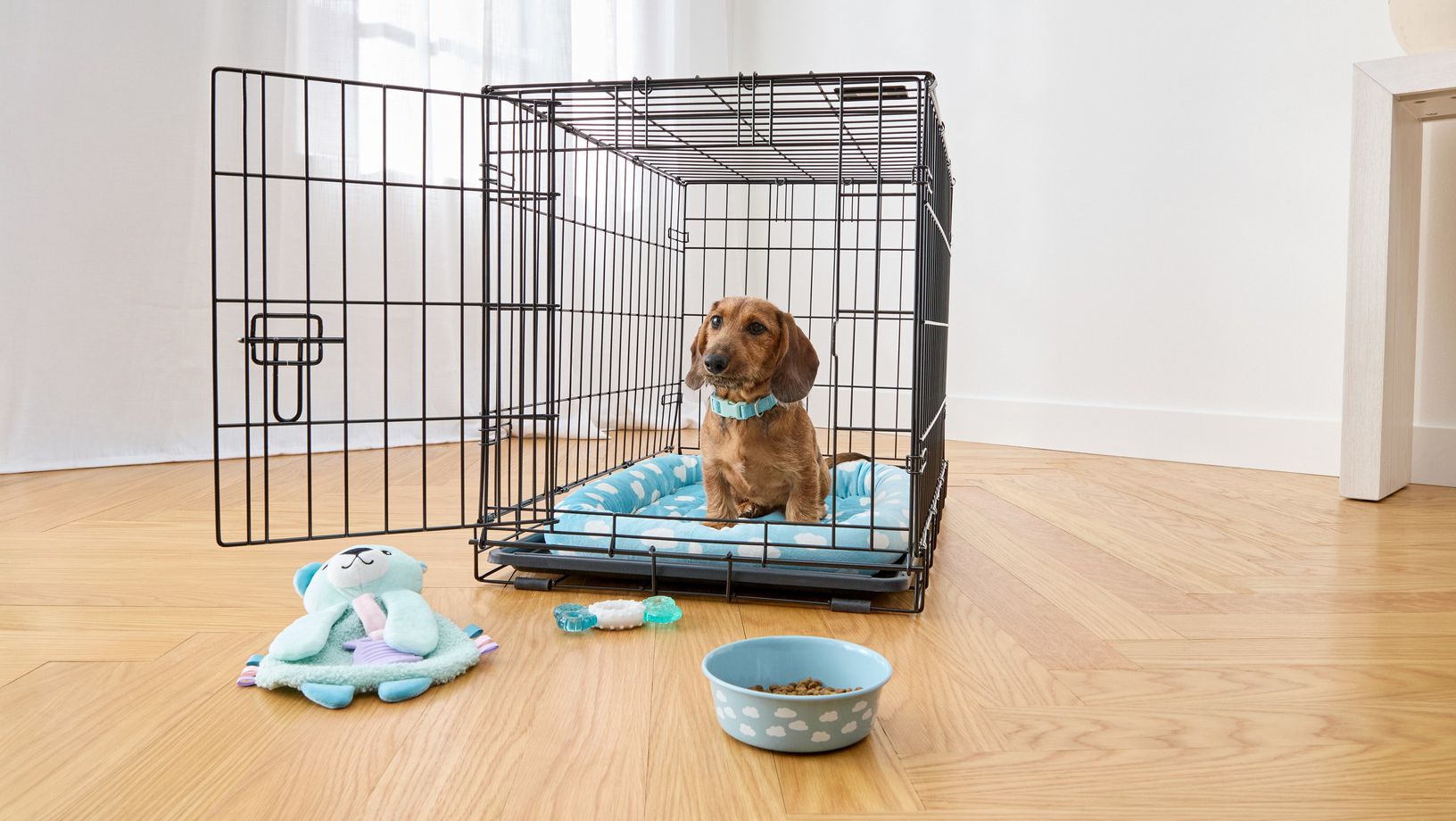
For a crate, use a divider rather than giving a young puppy the full adult space. The area should allow your puppy to stand, turn around, and lie down comfortably. Too much extra crate space may encourage some puppies to sleep in one corner and eliminate in another.
Do not make the bed so small that your puppy must sleep in a curled position. Growth planning should provide flexibility, not limit movement.

Choosing the right dog bed shape
Bed shape affects comfort as much as size. The right design depends on how your puppy rests and how much support they need.
Rectangular beds
Rectangular beds work well for puppies that stretch out. They also fit neatly inside crates, playpens, and corners.
Choose a rectangular bed when your puppy:
• Sleeps on their side
• Likes to move during sleep
• Has a long body
• Uses a crate or kennel
Round beds
Round beds suit puppies that curl into a ball. Raised edges can help a young dog feel protected and may provide a soft place to rest the head.
A round bed should still allow your puppy to stretch at least partway. Do not choose a tiny round bed just because your puppy curls up at night.
Bolster beds
Bolster beds have raised sides. They can help puppies feel secure and give them a pillow for the head.
Check the height of the sides. A very high bolster may be hard for a short-legged puppy to climb over. It can also reduce the usable space inside the bed.
Flat mats
Flat mats are easy to clean and often work well in crates, cars, and travel carriers. They may not provide enough support for a puppy that likes to lean against something.
A flat mat can be a good second bed, especially for travel or warm weather.

How much room should a puppy have in a bed?
A puppy needs enough room to move freely, but not so much room that the bed loses its cozy feel. The ideal fit is similar to a well-sized sleeping bag: comfortable, flexible, and not restrictive.
Your puppy should be able to lie in several positions:
• Curled up
• On the side
• On the stomach
• Stretched from nose to tail base
Check the fit when your puppy is asleep. Puppies often spread out more deeply than they do when they first settle down.
If the bed has raised walls, measure the flat sleeping area inside those walls. If your puppy touches the sides when fully stretched, the bed is too small.
Signs of a bed that is too small include:
• Legs hanging over the edge
• Frequent repositioning
• Restlessness at bedtime
• Avoiding the bed
• Sleeping on the floor beside it
• Chewing the sides because the space feels cramped
Signs of a bed that is too large include:
• Your puppy avoids the bed
• Your puppy sleeps in a corner
• Your puppy appears cold
• The bed does not feel secure
• Your puppy carries blankets into one small area
A larger bed is not always wrong. Add a washable blanket or a smaller cushion if your puppy needs a more enclosed space.

Planning for puppy growth
Puppies grow at different rates. Small breeds may reach adult size within the first year, while large and giant breeds can continue growing for 18 to 24 months.
Growth can happen in stages. A puppy may seem to stay the same size for a few weeks, then suddenly gain several inches. Check the bed fit every two to four weeks during rapid growth.
Keep a simple record of:
• Body length
• Shoulder height
• Body weight
• Bed size
• Changes in sleeping position
This record helps you see when your puppy has outgrown the current bed. It also helps when buying replacement beds.
For fast-growing breeds, a durable adult-size bed with a washable divider may be more practical than replacing several beds. For tiny breeds, buying two smaller beds during growth may be less expensive and easier to manage.
When deciding what size dog bed for puppy, think about replacement cost, washing needs, and expected growth. The cheapest bed is not always the best value if it loses shape after a few washes.