How To Stop Reactive Barking: Proven Tips For A Calmer Dog
Learn how to stop reactive barking with proven training tips that help your dog stay calm, focused, and confident around triggers.
Stop reactive barking by finding the trigger, creating distance, and rewarding calm behavior with steady practice.
Reactive barking can make walks, guests, windows, and even quiet moments at home feel stressful. The good news is that barking is often a sign of fear, frustration, or overexcitement—not stubbornness or spite. This guide explains how to stop reactive barking with humane training, clear steps, and practical advice that fits real life.

What Reactive Barking Means
Reactive barking happens when a dog responds strongly to a person, dog, sound, object, or situation. The response may include barking, lunging, whining, growling, pulling, spinning, or staring.
A reactive dog is not always an aggressive dog. Some dogs bark because they feel afraid. Others bark because they want to greet someone but cannot reach them. A few bark from frustration, excitement, pain, or a learned habit.
Understanding this difference is the first step in learning how to stop reactive barking. Training works best when you treat the cause, not only the noise.
A dog’s reaction often follows this pattern:
- The dog notices a trigger.
- The dog feels stress or excitement.
- The dog barks or lunges.
- The trigger moves away or the owner leaves.
- The dog learns that barking made the trigger disappear.
This is called reinforcement. The dog may not think through the process, but the behavior can become stronger each time it seems to work.
Why Dogs Bark Reactively
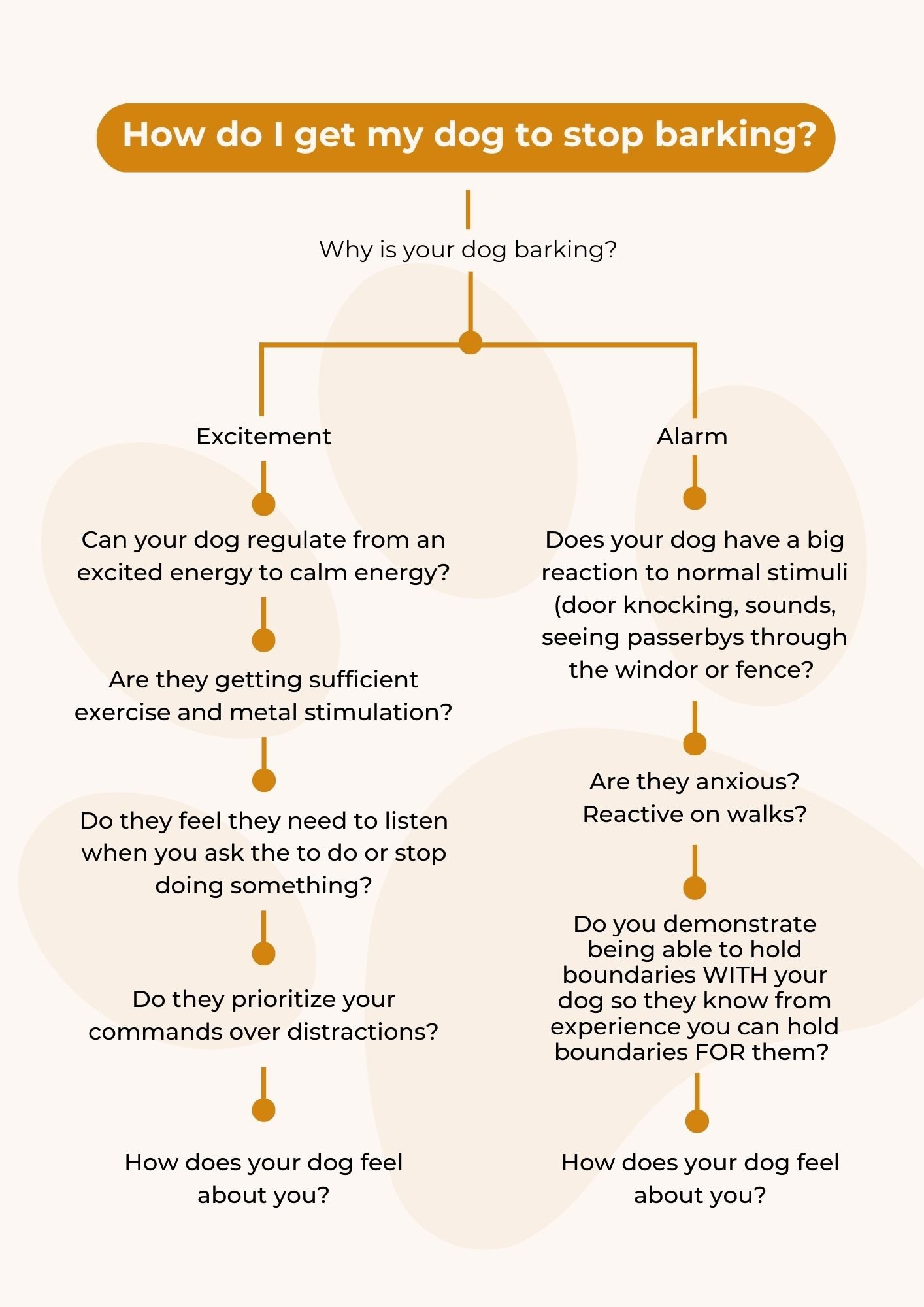
Reactive barking has many possible causes. Two dogs can show the same behavior for very different reasons.
Fear and anxiety
A dog may bark to make something scary go away. Common triggers include unfamiliar dogs, strangers, children, loud trucks, bicycles, or men wearing hats.
Fear-based barking often comes with a stiff body, tucked tail, lowered posture, lip licking, yawning, or attempts to hide. Some dogs move forward while barking because they believe a bold display will keep danger away.
Frustration
Some dogs bark because they cannot reach what they want. A dog may bark at another dog while on a leash but play well in a safe, open area.
Leashes, fences, windows, and car barriers can create frustration. The barrier blocks normal movement, so the dog’s energy builds like steam in a closed pot.
Overexcitement
A dog may bark at squirrels, visitors, toys, or other dogs because the sight creates intense excitement. The dog may pull, jump, whine, and struggle to focus.
Excitement can look similar to aggression, but the body language may be looser. Still, the behavior needs guidance because high arousal makes learning difficult.
Lack of social experience
Dogs that had limited exposure to people, animals, sounds, or new places may react strongly when they meet something unfamiliar. This does not mean socialization failed forever.
Careful exposure can help. However, forcing a nervous dog into busy places can make the fear worse.
Pain or medical problems
Pain can lower a dog’s tolerance. Hearing loss, vision changes, hormonal problems, and neurological conditions may also affect behavior.
A sudden change in barking deserves a veterinary check. Medical causes should be ruled out before treating the issue as a simple training problem.

How to Stop Reactive Barking Safely
Safety comes before training. A dog that is already barking, lunging, or snapping is usually too stressed to learn a new skill.
Start by managing the environment:
• Keep a safe distance from known triggers.
• Use a secure harness or well-fitted collar.
• Choose quiet walking routes and less busy times.
• Block access to windows if outside activity causes barking.
• Use gates to separate your dog from visitors.
• Keep your dog on a leash around unfamiliar animals.
• Avoid dog parks if they cause repeated reactions.
Distance is one of your best training tools. If your dog reacts at 20 feet, begin at 40 or 50 feet. The correct distance is the point where your dog can notice the trigger and still eat, look at you, or respond to a simple cue.
Never punish a dog for growling. A growl is useful information. Punishing it may remove the warning without removing the fear, which can increase bite risk.
Avoid shock collars, leash jerks, yelling, and intimidation. Evidence-based veterinary behavior groups advise reward-based methods because punishment can increase fear and stress while damaging trust.

A Step-by-Step Plan to Stop Reactive Barking
Learning how to stop reactive barking requires a gradual plan. Think of it as teaching your dog a new emotional response, not forcing silence.
Step 1: Identify the trigger
Write down what causes the barking. Include details such as:
• The type of trigger
• The distance from your dog
• The location
• The time of day
• Your dog’s body language
• How long your dog takes to recover
Patterns often appear after a few days. Your dog may react to large dogs but not small dogs, or to people who approach but not people who pass by.
Step 2: Find your dog’s threshold
Threshold means the point where your dog can no longer think clearly. Below threshold, your dog may notice the trigger but remain able to eat and respond.
Over threshold, your dog may bark, lunge, stare, or ignore food. Training should happen below threshold whenever possible.
Step 3: Pair the trigger with something good
When your dog sees the trigger at a safe distance, give a high-value treat. Chicken, turkey, cheese, or a favorite soft treat may work better than regular kibble.
The order matters:
- Your dog sees the trigger.
- You mark the calm moment with “yes” or a click.
- You give the treat.
- You move away before your dog reacts.
At first, do not ask for a long sit or perfect eye contact. Your main goal is to change the dog’s emotional response from “danger” or “frustration” to “good things happen.”
Step 4: Reward calm choices
Reward your dog for looking at the trigger and then looking back at you. This response is often called “look at that” training.
You can also reward:
• Turning away
• Sniffing the ground
• Walking beside you
• Relaxing the body
• Checking in without being asked
These small choices are the building blocks of how to stop reactive barking.
Step 5: Add distance when needed
If your dog begins barking, do not stand there and wait it out. Calmly create more space. Cross the street, step behind a car, or turn around.
Leaving the situation is not failure. It protects your dog’s learning process. Repeated explosions can make the behavior stronger.
Step 6: Increase difficulty slowly
When your dog can stay calm near a trigger several times, reduce the distance slightly or add a small challenge. Change only one factor at a time.
For example, practice with one calm dog at a distance before practicing near a busy dog park. Progress is more like climbing stairs than using an elevator.