How To Stop Reactive Barking: Proven Tips For A Calmer Dog
Learn how to stop reactive barking with proven training tips that help your dog stay calm, focused, and confident around triggers.
Stop reactive barking by finding the trigger, creating distance, and rewarding calm behavior with steady practice.
Reactive barking can make walks, guests, windows, and even quiet moments at home feel stressful. The good news is that barking is often a sign of fear, frustration, or overexcitement—not stubbornness or spite. This guide explains how to stop reactive barking with humane training, clear steps, and practical advice that fits real life.

What Reactive Barking Means
Reactive barking happens when a dog responds strongly to a person, dog, sound, object, or situation. The response may include barking, lunging, whining, growling, pulling, spinning, or staring.
A reactive dog is not always an aggressive dog. Some dogs bark because they feel afraid. Others bark because they want to greet someone but cannot reach them. A few bark from frustration, excitement, pain, or a learned habit.
Understanding this difference is the first step in learning how to stop reactive barking. Training works best when you treat the cause, not only the noise.
A dog’s reaction often follows this pattern:
- The dog notices a trigger.
- The dog feels stress or excitement.
- The dog barks or lunges.
- The trigger moves away or the owner leaves.
- The dog learns that barking made the trigger disappear.
This is called reinforcement. The dog may not think through the process, but the behavior can become stronger each time it seems to work.
Why Dogs Bark Reactively
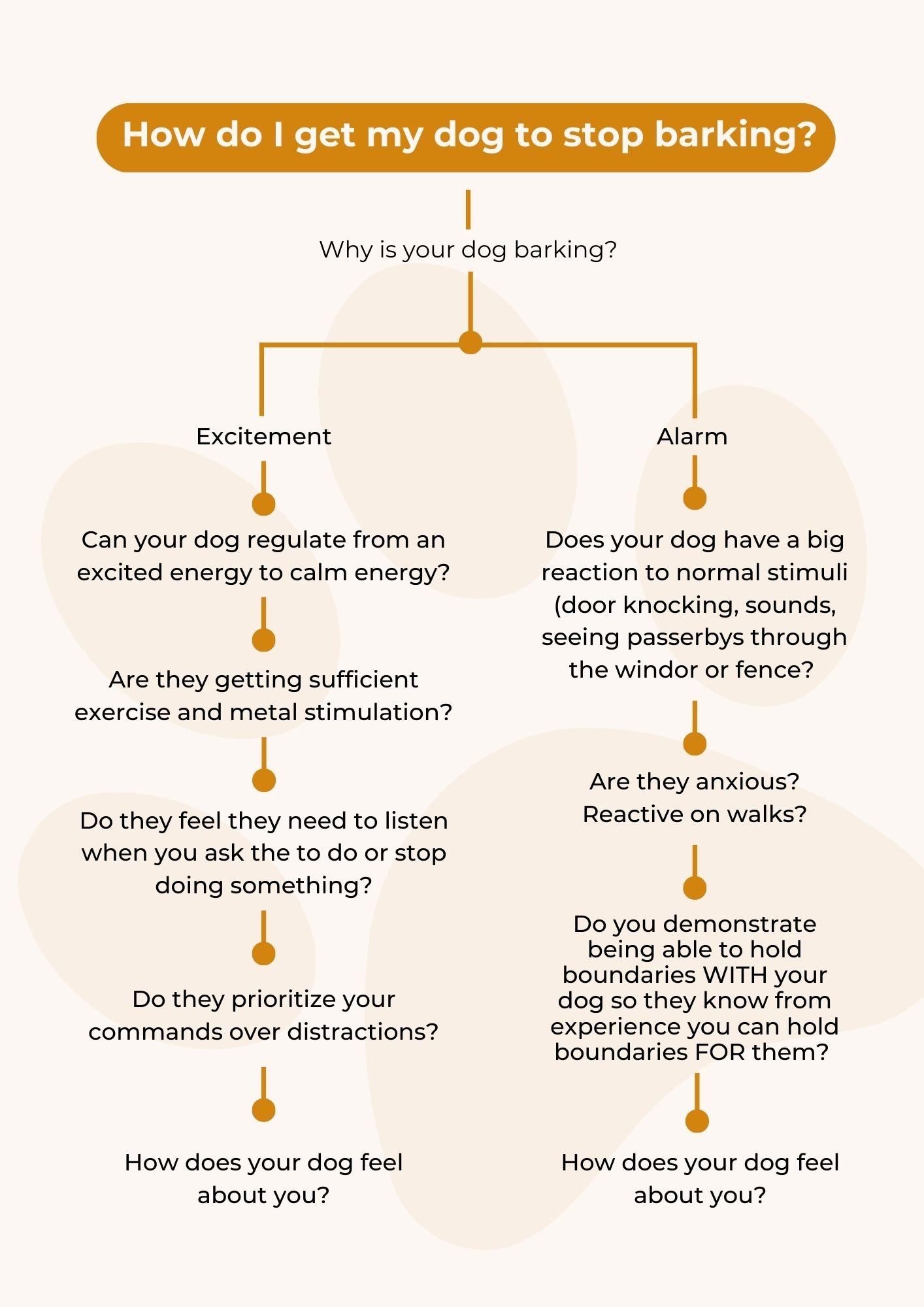
Reactive barking has many possible causes. Two dogs can show the same behavior for very different reasons.
Fear and anxiety
A dog may bark to make something scary go away. Common triggers include unfamiliar dogs, strangers, children, loud trucks, bicycles, or men wearing hats.
Fear-based barking often comes with a stiff body, tucked tail, lowered posture, lip licking, yawning, or attempts to hide. Some dogs move forward while barking because they believe a bold display will keep danger away.
Frustration
Some dogs bark because they cannot reach what they want. A dog may bark at another dog while on a leash but play well in a safe, open area.
Leashes, fences, windows, and car barriers can create frustration. The barrier blocks normal movement, so the dog’s energy builds like steam in a closed pot.
Overexcitement
A dog may bark at squirrels, visitors, toys, or other dogs because the sight creates intense excitement. The dog may pull, jump, whine, and struggle to focus.
Excitement can look similar to aggression, but the body language may be looser. Still, the behavior needs guidance because high arousal makes learning difficult.
Lack of social experience
Dogs that had limited exposure to people, animals, sounds, or new places may react strongly when they meet something unfamiliar. This does not mean socialization failed forever.
Careful exposure can help. However, forcing a nervous dog into busy places can make the fear worse.
Pain or medical problems
Pain can lower a dog’s tolerance. Hearing loss, vision changes, hormonal problems, and neurological conditions may also affect behavior.
A sudden change in barking deserves a veterinary check. Medical causes should be ruled out before treating the issue as a simple training problem.
:strip_icc()/stop-your-dog-from-barking-3877988-v5-TT-350f8d51e1c24802bce9a0430dec82a8.jpg)
How to Stop Reactive Barking Safely
Safety comes before training. A dog that is already barking, lunging, or snapping is usually too stressed to learn a new skill.
Start by managing the environment:
• Keep a safe distance from known triggers.
• Use a secure harness or well-fitted collar.
• Choose quiet walking routes and less busy times.
• Block access to windows if outside activity causes barking.
• Use gates to separate your dog from visitors.
• Keep your dog on a leash around unfamiliar animals.
• Avoid dog parks if they cause repeated reactions.
Distance is one of your best training tools. If your dog reacts at 20 feet, begin at 40 or 50 feet. The correct distance is the point where your dog can notice the trigger and still eat, look at you, or respond to a simple cue.
Never punish a dog for growling. A growl is useful information. Punishing it may remove the warning without removing the fear, which can increase bite risk.
Avoid shock collars, leash jerks, yelling, and intimidation. Evidence-based veterinary behavior groups advise reward-based methods because punishment can increase fear and stress while damaging trust.

A Step-by-Step Plan to Stop Reactive Barking
Learning how to stop reactive barking requires a gradual plan. Think of it as teaching your dog a new emotional response, not forcing silence.
Step 1: Identify the trigger
Write down what causes the barking. Include details such as:
• The type of trigger
• The distance from your dog
• The location
• The time of day
• Your dog’s body language
• How long your dog takes to recover
Patterns often appear after a few days. Your dog may react to large dogs but not small dogs, or to people who approach but not people who pass by.
Step 2: Find your dog’s threshold
Threshold means the point where your dog can no longer think clearly. Below threshold, your dog may notice the trigger but remain able to eat and respond.
Over threshold, your dog may bark, lunge, stare, or ignore food. Training should happen below threshold whenever possible.
Step 3: Pair the trigger with something good
When your dog sees the trigger at a safe distance, give a high-value treat. Chicken, turkey, cheese, or a favorite soft treat may work better than regular kibble.
The order matters:
- Your dog sees the trigger.
- You mark the calm moment with “yes” or a click.
- You give the treat.
- You move away before your dog reacts.
At first, do not ask for a long sit or perfect eye contact. Your main goal is to change the dog’s emotional response from “danger” or “frustration” to “good things happen.”
Step 4: Reward calm choices
Reward your dog for looking at the trigger and then looking back at you. This response is often called “look at that” training.
You can also reward:
• Turning away
• Sniffing the ground
• Walking beside you
• Relaxing the body
• Checking in without being asked
These small choices are the building blocks of how to stop reactive barking.
Step 5: Add distance when needed
If your dog begins barking, do not stand there and wait it out. Calmly create more space. Cross the street, step behind a car, or turn around.
Leaving the situation is not failure. It protects your dog’s learning process. Repeated explosions can make the behavior stronger.
Step 6: Increase difficulty slowly
When your dog can stay calm near a trigger several times, reduce the distance slightly or add a small challenge. Change only one factor at a time.
For example, practice with one calm dog at a distance before practicing near a busy dog park. Progress is more like climbing stairs than using an elevator.

Useful Training Skills for Reactive Dogs
A few simple cues can make how to stop reactive barking easier. Teach these skills at home first, then practice them in quiet places.
Name response
Say your dog’s name once. When your dog looks at you, give a treat. Repeat this in different rooms.
Do not repeat the name again and again. If your dog does not respond, the environment may be too difficult.
Hand target
Hold out your palm. When your dog touches it with their nose, reward them. A hand target can guide your dog away from a trigger without pulling the leash.
U-turn
Teach your dog to turn with you. Say “this way,” turn around, and reward your dog for following.
Practice when nothing is happening. In a real situation, the cue should feel familiar and easy.
Find it
Say “find it” and scatter a few treats on the ground. Sniffing may help lower arousal and gives your dog a simple task.
Do not use this skill to force a dog closer to a trigger. Use it to help your dog disengage and move away.
Settle on a mat
Reward your dog for lying on a mat and relaxing. Start in a quiet room, then slowly add normal household activity.
This skill helps with visitors, delivery workers, and sounds outside the home.

How to Stop Reactive Barking on Walks
Walks should not become daily battles. Choose routes that give you room to move and avoid narrow paths when possible.
Scan ahead. If you see a trigger, act early. You can turn around, cross the street, step behind a parked car, or use a driveway as a temporary buffer.
Keep the leash steady but not tight. Constant tension may add stress and can make your dog feel trapped. Hold the leash securely while allowing enough slack for natural movement.
Bring excellent treats every time. A reactive dog may ignore ordinary biscuits when the environment feels intense.
A useful walking routine looks like this:
- Begin in a quiet area.
- Let your dog sniff and settle.
- Watch for triggers before your dog notices them.
- Create enough distance.
- Reward your dog for seeing the trigger calmly.
- Leave before barking begins.
- End with an easy success.
One common mistake is trying to “prove” that a dog can handle a close trigger. This often leads to barking and lunging. The better goal is to help your dog succeed many times at a safe distance.

How to Stop Reactive Barking at the Window
Window barking can become a strong habit because the dog gets many chances to practice it each day. Every passing person, dog, or vehicle may act as a rehearsal.
Start with management:
• Close blinds during busy times.
• Use frosted window film.
• Move furniture away from the window.
• Add a baby gate.
• Play soft background noise.
• Teach your dog to rest in another room.
Then train an alternative behavior. When your dog notices movement outside, call them away and reward them for coming to you or going to a mat.
Do not rush to the window with your dog. If barking always leads to a dramatic response from you, the excitement may increase.
For some dogs, window access should remain limited. Management is not giving up. It is part of a complete behavior plan.

How to Stop Reactive Barking at Guests
Visitors can be difficult because they enter the dog’s space. Even friendly guests may seem threatening when they walk through the door.
Before the guest arrives, give your dog exercise that does not create more excitement. A sniff walk or food puzzle may help. Place your dog behind a gate with a chew, or keep them in a quiet room at first.
Ask guests to ignore your dog. They should avoid staring, reaching, leaning over, or calling the dog closer.
When your dog is calm, allow brief exposure from a safe distance. Reward quiet behavior. Your dog does not need to greet every visitor.
If your dog has a bite history or cannot settle near guests, contact a qualified behavior professional. Use a properly introduced basket muzzle when recommended, but never use it as a substitute for training or supervision.

Common Mistakes That Slow Progress
Many caring owners accidentally make reactive barking worse. These mistakes are common, but they can be corrected.
Moving too fast
A dog may seem better after one quiet session. That does not mean the dog is ready for a closer trigger or a busier place.
Repeat easy successes before adding difficulty.
Correcting the bark instead of changing the feeling
Yelling may stop the sound for a moment, but it rarely teaches the dog what to do instead. It may also make the trigger seem more frightening.
Focus on distance, calm behavior, and positive associations.
Using treats after a full meltdown
Food is most helpful before the dog reaches the barking stage. Once the dog is highly aroused, learning becomes much harder.
If your dog will not take food, increase distance and lower the challenge.
Practicing too long
Short sessions work well. Five calm minutes can be more useful than 30 stressful minutes.
End while your dog is still successful.
Expecting a quick cure
How to stop reactive barking is not a one-day project. Some dogs improve in weeks, while others need months of careful work.
Progress may include fewer reactions, faster recovery, more distance tolerance, or better focus. Quiet behavior is only one measure of improvement.
When to Seek Professional Help
Professional support is wise when barking includes snapping, biting, redirected aggression, severe fear, or unsafe lunging. It is also helpful when the problem appears suddenly or keeps getting worse.
Start with your veterinarian. The vet can check for pain and other medical causes. They may refer you to a veterinary behaviorist or another qualified professional.
Look for trainers who:
• Use reward-based methods.
• Explain the plan clearly.
• Respect your dog’s stress signals.
• Avoid promises of instant results.
• Do not rely on fear, pain, or dominance language.
Medication may help some dogs learn by lowering extreme anxiety. It does not replace training, but it can make learning possible. A veterinarian should guide all medication decisions.
Be cautious with online advice that labels every reactive dog as dominant or aggressive. Behavior is complex, and a careful assessment matters.
Measuring Progress
Keep a simple training record. Note the trigger, distance, reaction level, and recovery time.
You can use a scale from zero to five:
• Zero: Calm and relaxed
• One: Notices the trigger
• Two: Stares but responds
• Three: Tenses and needs help
• Four: Barks or lunges
• Five: Cannot recover or redirects
Aim to practice at levels one or two. If your dog reaches level four or five, focus on safety and leaving the area.
Progress may not move in a straight line. A dog can have a calm week and then react after poor sleep, pain, a stressful event, or a difficult environment.
That does not erase prior learning. It simply shows that your dog may need more rest, more distance, or an easier session.
Frequently Asked Questions About How to Stop Reactive Barking
Can reactive barking be completely stopped?
Some dogs may become quiet in most situations, while others may always need careful management around certain triggers. The realistic goal is safer behavior, fewer reactions, and faster recovery.
Should I ignore my dog when they bark reactively?
Ignoring the bark rarely solves the cause. Instead, calmly create distance, guide your dog to a safe activity, and reward quiet behavior before the reaction becomes intense.
Do treats reinforce reactive barking?
Giving treats after a dog has already barked does not automatically reinforce the emotion, but timing matters. Reward calm behavior and disengagement, and avoid using food to keep a dog close to a trigger they cannot handle.
Is reactive barking the same as aggression?
No. Reactive barking can come from fear, frustration, excitement, or a desire to create distance. However, any dog that lunges, snaps, or has bitten should be managed seriously and assessed by a qualified professional.
How long does it take to stop reactive barking?
Many dogs show early improvement within several weeks of consistent practice, but full progress may take months. The timeline depends on the trigger, the dog’s history, health, training plan, and how often reactions occur.
Should I use a shock collar to stop reactive barking?
Shock collars may suppress barking without changing the underlying fear or frustration. Reward-based training, careful management, and professional guidance are safer and more effective choices for long-term behavior change.
What should I do if my dog reacts during a walk?
Stay calm, avoid leash jerks, and create distance as soon as possible. Use a practiced U-turn, move behind a barrier, or return home if your dog cannot settle.
Conclusion
Reactive barking is a message, not a character flaw. The most effective plan combines trigger management, safe distance, reward-based training, medical awareness, and steady practice.
Start with one trigger and one simple goal. Reward your dog for noticing the trigger without exploding, and leave before stress becomes overwhelming. With patience and the right support, many dogs can learn calmer ways to handle the world.
Begin today with a quiet training session, track small wins, and speak with your veterinarian or a qualified behavior professional when the problem feels unsafe or overwhelming.