Best Dog Training For Barking: Proven Ways To Stop
Best dog training for barking made simple with proven techniques to calm your dog, reduce noise, and build better behavior at home.
The best dog training for barking uses calm cues, reward-based practice, and humane tools that fit each dog’s needs.
A barking dog can turn a quiet evening into a long test of patience. Your dog may bark at the mail carrier, a neighbor’s pet, passing cars, or every small sound outside. The right training tool can help interrupt that habit, but no device replaces exercise, clear commands, and rewards. I reviewed these popular bark-control products with comfort, range, controls, and daily use in mind. The goal is not to silence a dog by force. It is to teach a better response and make home life calmer for both of you.
YUYQA Ultrasonic Dog Bark Deterrent

The YUYQA bark deterrent uses ultrasonic sound to interrupt barking without a shock. Its listing includes three ultrasonic heads, six training modes, and a stated range of up to 23 feet. That makes it useful for short indoor spaces, patios, porches, and small yards. The rechargeable design also removes the need to keep buying disposable batteries.
I like the simple idea behind this tool: interrupt the bark, then give your dog a quiet cue and a reward. Ultrasonic tools do not work equally well for every dog, since hearing, distance, motivation, and background noise all matter. Use the lowest useful setting and avoid pressing the button again and again. Pairing the device with treats and calm praise gives you a stronger plan for the best dog training for barking.
Pros:
- Six modes allow gradual training adjustments
- Three ultrasonic heads may improve sound direction
- Rechargeable format supports regular use
- Compact size fits indoor and outdoor routines
- Works without a shock or spray
- Useful for short-range barking triggers
Cons:
- Ultrasonic response varies from dog to dog
- Its 23-foot range may feel short in a large yard
- It requires steady training from the handler
HRYYDS Two-Pack Training Whistles

The HRYYDS set gives you two adjustable dog whistles for recall and bark interruption. A whistle can carry farther than a normal voice, which helps when your dog is in a yard or distracted by a busy setting. The adjustable tone lets you find a sound your dog notices. The included lanyards also make the whistles easy to keep close during walks.
This is a basic tool, but basic can be good. I would first teach one whistle sound as a recall cue in a quiet room. Next, I would reward the dog for looking at me, coming over, or pausing the bark. The whistle should mark the moment and guide the dog toward a new behavior, not become a constant blast. For owners who want the best dog training for barking on a budget, this pair offers a low-tech option.
Pros:
- Two whistles support home and outdoor use
- Adjustable tone helps suit different dogs
- Lightweight design feels easy to carry
- Lanyards reduce the chance of losing one
- Useful for recall as well as barking work
- Does not need charging or batteries
Cons:
- The handler must learn consistent whistle cues
- A whistle may bother people nearby
- It does not teach quiet behavior by itself
SEDULAN Portable Ultrasonic Bark Stopper

The SEDULAN device is made for owners who want a portable ultrasonic tool with a longer stated range. Its listing claims coverage up to 50 feet, which may help in a medium yard, driveway, or shared outdoor area. The orange body should be easy to spot in a training bag. It is designed for use with your own dog or, when appropriate, a neighbor’s barking dog.
Range looks helpful, but real results depend on open space, walls, wind, and the dog’s response. I recommend aiming the device toward the barking dog and using it only for a brief interruption. Then call the dog away from the trigger and reward calm behavior. Never use a bark device to punish fear, pain, separation distress, or a behavior caused by illness. Used with care, it can support a humane best dog training for barking routine.
Pros:
- Stated range reaches up to 50 feet
- Portable shape suits indoor and outdoor training
- Ultrasonic approach avoids shock correction
- Bright orange color improves visibility
- Can help create distance from a bark trigger
- Useful for owners managing several outdoor spaces
Cons:
- Walls and outdoor noise can reduce effectiveness
- Some dogs may ignore ultrasonic sound
- Use around another person’s dog requires good judgment
QVNNVQ Four-Mode Bark Deterrent

The QVNNVQ bark deterrent offers four modes and a listed range of up to 35 feet. That middle-ground range may work well for a living room, front porch, garage, or modest backyard. A simple control layout can help new users avoid overcomplicating each training session. Its design suits people who want one tool for indoor and outdoor bark management.
The key is to treat the device as a cue, not a cure. When the dog barks, use a brief setting, say “quiet,” and wait for even one second of silence. Mark that pause with praise or a small treat. Over time, extend the quiet period before the reward. This step-by-step method is more reliable than trying to stop every bark at once and is central to the best dog training for barking.
Pros:
- Four modes offer room for adjustment
- 35-foot range covers many home areas
- Suitable for indoor and outdoor use
- Can support a clear quiet command
- Does not rely on a collar
- Easy option for short daily sessions
Cons:
- It may not reach dogs far across a property
- Results depend on timing and reward use
- Some sensitive dogs may need a different approach
Three-Head Ultrasonic Bark Training Device

This ultrasonic device combines three sound heads, six training modes, and a stated 50-foot range. It also includes a flashlight, which can help during evening walks or low-light yard checks. The rechargeable design makes it practical for repeat sessions. Its broad feature set may appeal to owners who want one handheld tool for several training needs.
More settings do not always mean better results, so I would begin with the lowest effective mode. Hold the device steady, avoid chasing the dog with it, and stop once the dog pauses. Follow the pause with a cue, a redirect, and a reward. The flashlight is a useful extra, but the main value comes from calm timing and consistent handling. That combination matters more than any claimed range when choosing the best dog training for barking.
Pros:
- Three ultrasonic heads may support broad direction
- Six modes allow gradual changes
- 50-foot stated range suits larger outdoor areas
- Rechargeable battery supports repeated use
- Built-in flashlight adds evening convenience
- Handheld format gives the trainer direct control
Cons:
- Many settings may confuse first-time users
- Ultrasonic tools do not work for all dogs
- The flashlight is not a substitute for a training light
FAFAFROG Rechargeable Bark Collar

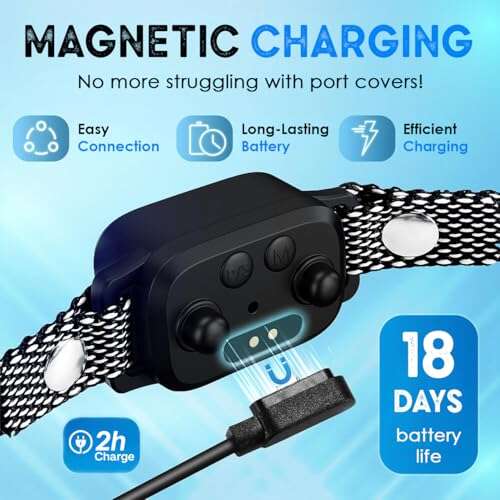
The FAFAFROG collar uses adjustable sensitivity with beep and vibration functions. It is designed for small, medium, and large dogs, although careful fit remains important for every size. A collar can respond when the dog barks without requiring the owner to stand nearby. The rechargeable battery also makes it suitable for planned training sessions.
I would use this type of collar with extra care. Fit it so you can place two fingers between the strap and the dog’s neck, and check the skin often. Start with sound or the lowest vibration level. Do not use a bark collar for a dog that barks from panic, isolation distress, pain, or a medical issue. Reward quiet behavior so the collar supports learning instead of creating confusion. This can be a useful part of the best dog training for barking when used for the right dog and reason.
Pros:
- Five sensitivity levels provide adjustment options
- Beep and vibration offer non-shock settings
- Rechargeable design avoids disposable batteries
- Hands-free response may help in a yard
- Advertised for several dog size groups
- Useful when the handler cannot hold a device
Cons:
- Incorrect fit can reduce comfort and accuracy
- Some dogs may react poorly to collar feedback
- It should not be used for fear-based barking
Two-Pack Adjustable Recall Whistles

This two-pack includes adjustable ultrasonic whistles with lanyards for recall and obedience work. The silent-to-people design can be helpful when you want a clear cue without shouting across the yard. Two units make sense for a home, car, training bag, or second handler. The small size also makes regular practice easier because the whistle is always within reach.
Whistle training works best when the sound has one clear meaning. For example, blow once, step back, and reward your dog for coming to you. Later, use the cue to interrupt mild barking and guide the dog away from the window. Never blow repeatedly during fear or distress. With patience, a whistle can become a clean bridge between the unwanted bark and a better response. It is one of the simplest choices for the best dog training for barking.
Pros:
- Two-piece set supports multiple locations
- Adjustable tone offers training flexibility
- Silent design is less disruptive to people
- Lanyards help prevent loss during walks
- Useful for recall and obedience practice
- No charging or battery care is needed
Cons:
- Dogs need gradual conditioning to the sound
- Whistle use may not suit noise-sensitive homes
- The tool cannot replace rewards and supervision
New Rechargeable Ultrasonic Bark Device
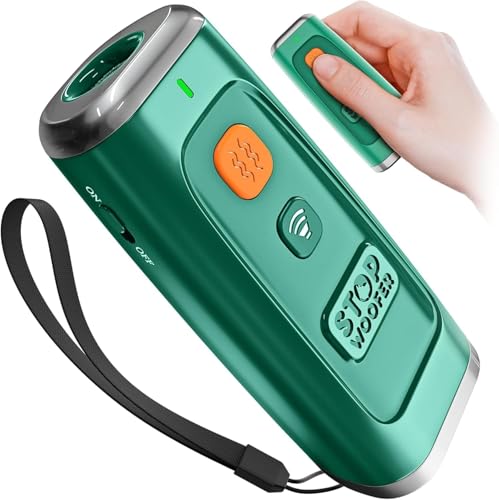
This newer ultrasonic bark device is promoted for small, medium, and large dogs and for indoor or outdoor use. Its rechargeable format supports daily practice without a steady supply of batteries. A handheld design lets you point toward the trigger and then redirect your dog. It may suit owners who want a compact tool for regular home routines.
I would judge this device by your dog’s response rather than its new-product label. Some dogs notice ultrasonic cues at once, while others show little change. Begin in a calm room, pair the sound with a quiet cue, and offer a reward for looking at you. Keep sessions short so the device does not become background noise. A humane tool works best when it opens the door to a new habit.
Pros:
- Rechargeable design supports frequent use
- Suitable for indoor and outdoor practice
- Handheld control helps with precise timing
- Designed for several dog size groups
- No shock-based correction is advertised
- Compact format is easy to store
Cons:
- Effectiveness can vary between individual dogs
- Limited details may make comparison harder
- Owners still need a reward-based training plan
2026 Three-Sonic-Head Bark Device

This 2026-labeled device has three sonic heads, one-touch operation, a stated 50-foot range, and a built-in flashlight. The one-touch design may help when you need to act quickly during a bark episode. Three heads can support a broader sound direction in an open outdoor space. Rechargeable power keeps the tool ready for planned training.
I see this as a good match for an owner who wants fast access and a few practical extras. Still, fast access should not mean rushed or repeated use. Point it from a safe distance, wait for a pause, and reward your dog for turning away from the trigger. If the dog looks worried, hides, or becomes more upset, stop and choose a calmer method. The best dog training for barking should lower stress, not add to it.
Pros:
- One-touch control may support quick use
- Three sonic heads broaden the design
- 50-foot stated range suits many yards
- Rechargeable battery supports repeat sessions
- Flashlight helps with low-light visibility
- Useful for owners who value simple controls
Cons:
- Sound tools may not work on every dog
- Long range may be less useful around walls
- Repeated use can reduce attention to the cue
4500-Foot Remote Dog Training Collar

This remote collar is listed for dogs from 10 to 120 pounds and offers a stated range of up to 4,500 feet. A long range can help with recall work in a safe, open area, though distance claims may change with trees, buildings, and terrain. The remote format lets the handler deliver a cue without standing beside the dog. It may appeal to experienced trainers managing distance-based obedience challenges.
I place this product in a different category from the ultrasonic and whistle tools because the listing identifies it as a shock collar. Professional veterinary behavior guidance favors reward-based training and advises caution with aversive methods. I would not use shock for fear, anxiety, aggression, or unexplained barking. If you choose this collar, learn its controls, use the least intrusive setting, and seek help from a qualified reward-based trainer. For many homes, another option may better fit humane best dog training for barking.
Pros:
- Long stated range supports distance training
- Remote control allows handler-led cues
- Listed for a broad weight range
- May help with structured recall practice
- Useful for experienced handlers in open areas
- Can be part of a wider obedience program
Cons:
- Shock use may cause stress or fear
- Not a good choice for anxiety-based barking
- Requires careful setup, fit, and training skill
- Long range may be reduced by obstacles
My Recommendation
For most families, I would start with a handheld ultrasonic device or an adjustable whistle. These tools let you interrupt barking while keeping the handler involved in the lesson. The YUYQA model is a strong short-range choice because it offers six modes and a rechargeable body. The SEDULAN and three-head models make more sense for owners who need extra outdoor range.
The FAFAFROG collar may suit a dog that responds well to beep or gentle vibration, but fit and supervision matter. I would reserve the remote shock collar for experienced users who understand humane training and have a clear reason to use a remote cue. Never choose a product only because it promises to stop barking fast. Look for comfort, simple controls, safe use, and a plan that rewards quiet behavior.
| Best for | Why |
|---|---|
| Small homes and patios | Short-range ultrasonic tools can interrupt barking near windows, doors, and porches. |
| Yards and outdoor training | Longer-range devices and whistles help reach a dog across open space. |
| Reward-focused owners | Handheld tools let you pair a brief cue with “quiet,” praise, and treats. |
How I Choose the Best Dog Training for Barking
Barking is normal dog communication. The real question is why the dog barks and what happens next. A dog may bark from alertness, play, boredom, fear, frustration, pain, or separation stress. A tool that helps with alert barking may fail completely when the dog feels alone or unsafe.
I first look at the trigger. Watch what happens before the bark, during the bark, and after it. If barking starts at the window, block the view and teach the dog to come to a mat. If the dog barks from boredom, add sniff walks, play, food puzzles, and short training games. If barking begins when you leave, talk with a veterinarian or qualified behavior professional.
I also look at control. A product should have a clear button, useful settings, and a size that feels easy to carry. Rechargeable power helps people train on a schedule. A whistle has fewer parts and can last for years, but it still requires skill. A collar offers hands-free feedback, yet a poor fit or wrong setting can harm trust.
Most of all, I favor tools that support learning. The American Veterinary Society of Animal Behavior recommends reward-based training and warns against methods that cause fear, pain, or distress. The American Kennel Club also stresses finding the reason for barking and teaching an alternative behavior. These principles guide my view of the best dog training for barking.
How to Use a Bark Training Tool Correctly
Start with management. Close blinds, use a white-noise machine, move the dog away from a busy fence, or change the walk route. Every time a dog repeats a bark pattern, that habit can grow stronger. Management gives you time to teach a better response.
Next, choose a quiet cue. Say “quiet” in a calm voice when your dog pauses. Do not yell, because your dog may think you are barking too. Give a tiny treat after one or two seconds of silence. Slowly build to five seconds, ten seconds, and then longer periods.
Use the device before the dog becomes frantic. A mild interruption works better than a tool used after several minutes of nonstop barking. Aim the handheld device from a distance. Give one brief cue, then put your attention on the new behavior. The reward should arrive after the dog turns toward you or settles.
Keep sessions short. Five minutes can be enough for one lesson. End with an easy success, such as looking at you or lying on a mat. Short sessions keep the dog’s mind fresh and help you stay patient. Training should feel like building a bridge, not pushing against a wall.
Do not use a bark tool when you cannot watch the dog. Do not point an ultrasonic device at a dog’s face. Do not leave a collar on for long periods without checking the skin and fit. Stop if your dog shows fear, hiding, trembling, frantic movement, or increased aggression.
Common Barking Problems and Better Fixes
Window barking
Window barking often starts with moving people, cars, or animals. Use curtains, privacy film, or furniture placement to reduce the view. Then reward your dog for moving away from the window and coming to you. A handheld ultrasonic tool may help interrupt the first bark, but management does much of the work.
Fence barking
Fence barking can become a fast loop. The dog sees a person, barks, and the person walks away. The dog may believe the bark caused the person to leave. Bring your dog inside before the pattern grows. Practice recall, hand targeting, and calm yard time with supervision.
Demand barking
Demand barking often works because the dog gets food, play, eye contact, or a door opening. Wait for a quiet pause before giving the desired item. At first, reward one second of silence. Never reward a long bark session with the thing the dog wanted.
Attention barking
Give planned attention before barking starts. A sniff walk, chew, short game, or training drill can meet the dog’s needs. When barking begins, avoid a loud argument. Calmly redirect the dog to a mat or toy, then reward quiet behavior.
Night barking
Night barking may come from outside sounds, poor sleep, discomfort, or age-related changes. Check the dog’s environment and health first. A veterinarian should assess sudden barking in an older dog or any bark pattern linked with pain. A device alone is not the best dog training for barking when a medical issue may be involved.
Safety Tips for Bark Control Devices
Read the manual before the first use. Check the stated range, charging instructions, fit guide, and mode descriptions. Test the controls away from your dog so you do not press the wrong button by mistake. Keep the device dry unless the maker clearly rates it for water.
Use the lowest useful setting. More power is not better training. The dog should have a chance to notice the cue and choose a new behavior. If the dog cannot respond, the trigger may be too strong or the training step may be too hard.
Think about other dogs in the home. An ultrasonic device may be heard by nearby pets, and a collar may respond to another dog’s bark depending on its design. Observe all animals for stress. If a device makes a dog more tense, stop using it.
Do not use these products to correct growling, fear, or aggression without professional help. Growling can warn you that a dog feels unsafe. Punishing the warning may remove the signal without fixing the cause. A certified trainer or veterinary behaviorist can build a safer plan.
FAQs Of best dog training for barking
What is the best dog training for barking?
The best approach combines trigger control, a calm “quiet” cue, rewards, exercise, and short practice sessions. A whistle or ultrasonic device may help interrupt barking, but the dog must learn what to do instead.
Do ultrasonic bark devices work for every dog?
No. Dogs differ in hearing, focus, age, and motivation. Walls, distance, and background noise can also affect results. Use the device briefly and stop if your dog shows stress.
Are bark collars safe for dogs?
Safety depends on the collar type, fit, setting, and dog. Beep and vibration are less intrusive than shock, but they can still upset a sensitive dog. Never use a collar for fear, pain, separation distress, or aggression without professional guidance.
How long does it take to stop nuisance barking?
Some dogs improve in days, while others need several weeks or longer. Progress depends on the cause, the dog’s history, and daily consistency. Measure small wins, such as shorter barking or faster recovery.
Should I yell “quiet” at my barking dog?
No. Yelling often sounds like more barking and may increase excitement. Use a calm cue, wait for silence, and reward the pause. Then teach a useful behavior such as coming to you or settling on a mat.
Final Verdict: Which Should You Buy?
For most homes, I recommend the YUYQA ultrasonic device as a balanced starting point. It has several modes, a rechargeable design, and a short-range format for daily practice. The SEDULAN and three-head models suit larger outdoor spaces, while whistles offer simple, low-cost training.
The best dog training for barking is a plan, not just a product. Pair any tool with management, rewards, exercise, and patience for lasting results.

Pet Care Writer & Researcher
Daniel writes practical guides on daily care, feeding, and safety, turning complex topics into simple, actionable advice.