How To Stop A Dog From Barking In An Apartment: Quick Fixes
Learn how to stop a dog from barking in an apartment with practical training tips, calming techniques, and neighbor-friendly solutions.
Use calm training, daily exercise, sound control, and reward-based routines to reduce apartment barking safely.
Learning how to stop a dog from barking in an apartment starts with finding the cause, not punishing the noise. Dogs bark at hallway sounds, visitors, boredom, fear, excitement, or time alone. The right plan can protect your neighbors, lower your dog’s stress, and make home life calmer. This guide explains what works, what to avoid, and when to call a professional.

Why dogs bark in apartments
Barking is normal dog communication. It can signal fear, alertness, frustration, play, pain, or a need for attention. In an apartment, many triggers are close and hard to avoid.
Your dog may hear footsteps, elevators, doors, voices, plumbing, or dogs in nearby units. These sounds can feel like someone is entering the home. A dog may bark because the noise is sudden and confusing.
Common reasons for apartment barking include:
• Alert barking when your dog hears people near the door
• Separation distress when you leave
• Boredom from too little exercise or mental work
• Fear of unfamiliar sounds, people, or dogs
• Excitement during play or greetings
• Attention seeking because barking has worked before
• Pain, illness, hearing loss, or age related confusion
Watch what happens before the bark. Note the time, sound, body language, and length of the episode. This simple record often reveals the real cause.
A stiff body, raised hackles, growling, or repeated barking at the door may point to fear or guarding. A loose body, wagging tail, and playful movement may suggest excitement. Pacing, drooling, scratching, or panic when alone may signal separation anxiety.
Understanding the trigger is the first step in learning how to stop a dog from barking in an apartment. Treating the wrong cause can make the problem last longer.

Find the barking trigger
Keep a barking log for at least three days. Write down what happened just before the barking began and what stopped it.
Include these details:
• Date and time
• Noise or event that came first
• Where your dog was
• Your dog’s body position and facial expression
• How long the barking lasted
• What you did in response
• Whether your dog settled afterward
You can also use a phone or indoor camera to record barking while you are away. Record only when it is safe and legal. Do not use a camera to frighten, punish, or startle your dog.
Look for patterns. For example, your dog may bark only when people walk past the front door. Another dog may bark for ten minutes after you leave. These are different problems and need different plans.
If the barking began suddenly, schedule a veterinary check. Dental pain, joint pain, skin problems, illness, and changes in hearing can affect behavior. Older dogs may also develop confusion or anxiety.
A veterinarian can rule out medical causes before you begin behavior work. This matters because training cannot fix untreated pain or serious anxiety.
Reduce noise and visual triggers
You cannot control every sound in an apartment, but you can make your dog’s world less intense. Think of this as turning down the volume on a sensitive alarm system.
Try these changes:
• Move your dog’s bed away from the front door and shared walls
• Close blinds when outside movement causes barking
• Use curtains that block views of hallways or balconies
• Run a fan, soft music, or white noise near the door
• Add rugs, curtains, and fabric furniture to soften sound
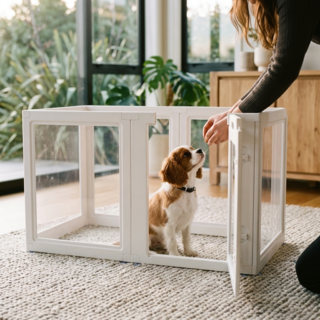
• Use a baby gate to create distance from the entryway
• Give your dog a safe resting area away from busy rooms
Do not trap your dog in a small space for long periods. The goal is comfort, not isolation. Your dog should have water, safe bedding, room to move, and access to bathroom breaks.
Before maintenance workers arrive, place your dog in a calm room with a food puzzle. Tell visitors not to stare at, touch, or call to your dog. Less pressure often means less barking.
These steps are useful, but they do not replace training. Environmental changes reduce the number of barking events. Training teaches your dog what to do instead.

Teach a quiet cue with rewards
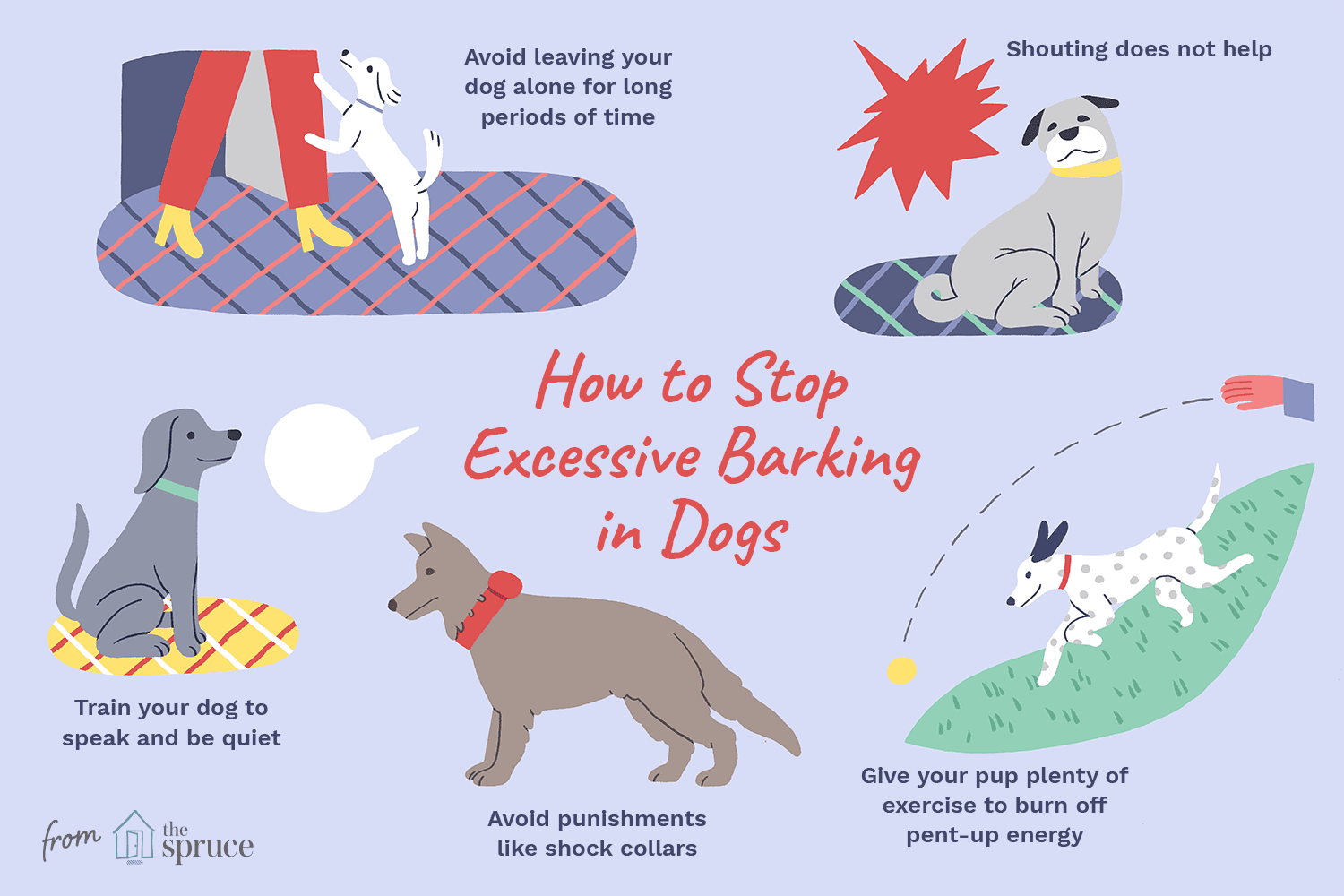
A quiet cue works best after your dog understands that calm behavior earns good things. Avoid shouting “quiet” over loud barking. Your dog may think you are barking too.
Use this simple process:
-
Allow one or two alert barks.
-
Say “thank you” in a calm voice.
-
Place a high value treat near your dog’s nose.
-
When your dog pauses to sniff, say “quiet.”
-
Give the treat during the silent moment.
-
Wait for a few seconds of calm before rewarding again.
-
Slowly increase the quiet time.
Practice when the trigger is mild. If your dog is already frantic, learning becomes difficult. Start with a soft hallway sound or a helper standing far from the door.
Reward calm behavior before barking starts, too. If your dog hears a noise and looks at you without barking, offer a treat. This teaches your dog that hearing a sound does not always require an alarm.
Never punish barking with hitting, yelling, shock collars, or harsh leash corrections. These methods can increase fear and may suppress warning signals without changing the emotion underneath. Major veterinary behavior groups recommend reward based training because it supports learning and welfare.
When using this approach to stop a dog from barking in an apartment, progress may seem slow at first. A one second pause is still progress. Build calm habits one small step at a time.
Use exercise and mental work
A tired dog is not always a quiet dog, but a fulfilled dog often has less energy for nuisance barking. Physical exercise helps release energy. Mental work helps reduce frustration and boredom.
Match activities to your dog’s age, breed, health, and personality. A young herding dog may need more structured activity than an older companion dog.
Useful options include:
• A sniff walk where your dog can explore safely
• Short obedience sessions
• Food puzzles and stuffed rubber toys
• Treat searches around the home
• Safe chewing items
• Hide and seek with family members
• Low impact play approved by your veterinarian
Use several short sessions instead of one exhausting workout. Five minutes of training before breakfast and another five minutes in the evening can make a real difference.
Sniffing is especially helpful. A slow walk with time to smell can be more calming than a fast walk around the block. Smell gives dogs information and uses their brains.
Do not rely on exercise alone if your dog panics when left alone. A distressed dog may bark even after a long walk. Separation anxiety needs gradual alone time training and, in some cases, professional care.

Train your dog to accept alone time
If barking starts soon after you leave, your dog may be experiencing separation related distress. This is more than disobedience. The dog may feel unsafe when alone.
Signs can include:
• Barking or howling after departure
• Scratching doors or windows
• Destructive chewing
• Pacing or repeated movement
• Drooling or heavy panting
• Urinating or defecating despite being house trained
• Escape attempts
Begin with absences shorter than the time that causes distress. For some dogs, this may mean stepping outside for only five seconds. Return before your dog begins to panic.
Follow this pattern:
-
Prepare calmly without dramatic goodbyes.
-
Step away for a few seconds.
-
Return while your dog is still calm.
-
Wait and repeat.
-
Increase the time in very small steps.
If your dog barks, pants, or scratches, the step was too large. Return to an easier duration. Do not force the dog to “get used to it.” Repeated panic can strengthen the fear.
A camera can help you see when stress begins. If your dog cannot remain calm for even short absences, ask your veterinarian about a certified behavior professional. Medication may help some dogs learn, but it should be prescribed and monitored by a veterinarian.

Manage greetings and hallway sounds
Many apartment dogs bark because greetings are too exciting. The doorbell, footsteps, and visitors create a chain of events that quickly becomes hard to control.
Teach a “go to your mat” behavior. Start when no one is at the door. Reward your dog for stepping onto a mat, then reward lying down. Add a release word so your dog knows when the exercise ends.
Next, practice with gentle distractions:
• Knock softly on an interior wall
• Touch the doorknob
• Play a quiet door sound recording
• Ask a friend to walk past the door
• Reward your dog for going to the mat
Keep the sound low enough that your dog can still eat and think. If barking begins, reduce the intensity and try again later.
For real visitors, place treats on the mat before opening the door. Ask guests to ignore your dog until the dog is calm. If your dog cannot settle, use a gate or another room while the guest enters.
Do not force greetings. A dog that feels trapped may bark, lunge, or snap. Choice and distance help your dog feel safe.
This routine is one of the most practical answers to how to stop a dog from barking in an apartment because it replaces door rushing with a clear task.

Avoid common mistakes
Some responses seem helpful but make barking worse. The biggest mistake is rewarding barking by giving attention, opening the door, or offering food after a long barking session.
This does not mean you should ignore every bark. First check for a real need, danger, illness, or distress. Then respond calmly and guide your dog toward a better behavior.
Avoid these common errors:
• Yelling from another room
• Using a shock or spray collar without expert guidance
• Punishing a dog for fear based barking
• Waiting until your dog is fully frantic to train
• Making sudden, large increases in alone time
• Giving inconsistent rules among family members
• Expecting silence all day
• Using a crate as punishment
A crate can be a safe resting place when introduced correctly. It should not be used to confine a panicked dog for hours. Some dogs become more distressed in a crate, especially if they have not been trained to enjoy it.
Also check your lease and local noise rules. A respectful plan protects your relationship with neighbors. You might tell a nearby neighbor that you are working on the issue and provide a way to contact you if barking continues.

Build a practical apartment barking plan
A clear routine is easier to follow than random corrections. Use this seven day starting plan and adjust it to your dog.
Days one and two: Observe
Track the time, trigger, body language, and response. Avoid major changes until you understand the pattern.
Days three and four: Reduce triggers
Move the bed, cover windows, add background sound, and create distance from the door. Begin rewarding calm looks toward triggers.
Days five and six: Teach a replacement behavior
Practice “quiet,” “look at me,” or “go to your mat” for a few minutes at a time. Use small, tasty rewards.
Day seven: Review progress
Count barking episodes and note their length. Look for shorter events, faster recovery, or more calm pauses. Progress is not always complete silence.
Repeat the plan for several weeks. Behavior change often takes time because your dog is learning a new emotional response, not just a new command.
A useful goal is recovery. Can your dog hear a hallway sound, look at you, and settle within a minute? That is meaningful progress, even if one alert bark remains.
If there is no improvement after consistent work, contact a board certified veterinary behaviorist or a certified professional dog trainer who uses reward based methods. Ask about experience with apartment barking, fear, and separation problems.
Know when professional help is needed
Seek professional help if barking involves lunging, snapping, escape attempts, self injury, or severe panic. Contact a veterinarian quickly if the behavior starts suddenly or comes with signs of pain or illness.
A qualified professional can observe the dog, identify triggers, and design a gradual behavior plan. Look for credentials, humane methods, and clear explanations. Be cautious of anyone who promises a guaranteed fix or relies on intimidation.
Professional support is especially important when:
• Your dog barks for hours when alone
• Your dog cannot take food near the trigger
• Neighbors have made formal complaints
• Your dog has bitten or tried to bite
• The barking is linked to aggression
• You feel stressed, unsafe, or unable to cope
There is no shame in asking for help. Apartment living can be hard for dogs and people. Early support often prevents the problem from becoming more serious.
Research on canine behavior supports individualized plans. The same method will not work for every dog, and breed, age, medical history, past experience, and home layout all matter.
Frequently asked questions about how to stop a dog from barking in an apartment
What is the fastest way to stop a dog from barking in an apartment?
Reduce the trigger, add distance, and reward quiet pauses right away. Do not yell, since your dog may treat your voice as part of the barking event.
Should I use a bark collar in an apartment?
Bark collars are not the best first choice, especially for fear, anxiety, or separation distress. They may stop the sound without solving the cause and can increase stress in some dogs.
Can white noise stop apartment barking?
White noise, a fan, or soft music can mask mild hallway sounds and reduce sudden alerts. It works best with training and should not be loud enough to harm hearing.
How long does it take to stop a dog from barking in an apartment?
Some dogs improve within days, while fear and separation problems may take weeks or months. Consistent practice, small steps, and professional guidance can make progress more reliable.
Should I ignore my dog when it barks?
First check for pain, danger, bathroom needs, or distress. If the barking seeks attention, wait for a quiet pause and then reward calm behavior instead of responding during the bark.
Does exercise stop a dog from barking?
Exercise can reduce boredom and unused energy, but it may not solve fear or separation anxiety. Combine physical activity with mental work and behavior training.
When should I call a dog trainer?
Call a qualified trainer when barking continues despite consistent training, causes neighbor complaints, or includes fear and aggression. For severe anxiety, ask your veterinarian about a veterinary behaviorist.
Conclusion
The most effective way to stop a dog from barking in an apartment is to identify the trigger, reduce stress, reward quiet behavior, and practice a replacement routine. Exercise, sound control, mat training, and gradual alone time can work together to create a calmer home.
Avoid punishment and expect steady progress rather than instant silence. Start today by keeping a barking log, rewarding one quiet pause, and making one change near the door. If the problem feels severe, contact your veterinarian or a qualified reward based behavior professional, and share your experience or questions with other dog owners.

Pet Care Writer & Researcher
Daniel writes practical guides on daily care, feeding, and safety, turning complex topics into simple, actionable advice.