What Is The Best Anti Bark Collar For Dogs: Top Picks
What is the best anti bark collar for dogs? Compare safe, effective options and find the right solution for calmer walks and quieter days.
The best anti bark collar for dogs is a safe, adjustable, no-shock model that supports calm training without causing fear.
You love your dog, but nonstop barking can test anyone’s patience. It may wake the baby, upset neighbors, or make quiet time feel impossible. The right bark collar can act like a gentle reminder when barking goes too far, but it should never replace exercise, training, or care. I reviewed these options for fit, bark detection, sound and vibration settings, battery use, water resistance, and ease of daily use. That balance matters when you ask, “what is the best anti bark collar for dogs?”
FAFAFROG Smart Rechargeable Bark Collar

The FAFAFROG rechargeable bark collar is a simple choice for owners who want sound and vibration training. It offers five sensitivity levels, so I can start with a mild setting and adjust it as needed. The collar is designed for small, medium, and large dogs, but correct fit still matters more than the label. A collar should sit snugly without pressing hard into the neck.
I like the clear focus on beep and vibration rather than jumping straight to a harsh correction. The rechargeable design also saves the trouble of buying small batteries. In daily use, I would pair this collar with treats and a quiet command so the dog learns what to do instead of only learning what not to do. That approach makes this model a practical answer for many owners asking what is the best anti bark collar for dogs.
Pros:
- Five adjustable sensitivity levels
- Rechargeable design reduces battery waste
- Beep and vibration offer gentler training choices
- Suitable for many dog sizes when fitted correctly
- Simple design should be easy for new users
- Useful for indoor and outdoor training routines
Cons:
- Sound and vibration may not stop every type of barking
- Fit may need extra care on very small or very large dogs
- It still requires consistent reward-based training
My Recommendation
I recommend the FAFAFROG for owners who want a straightforward, rechargeable collar with adjustable sensitivity. It fits best into a calm training plan for alert barking, yard barking, or barking at doors. I would not use it as a set-and-forget device. Its best value comes from the flexible settings and no need for routine battery replacement.
2-in-1 Remote and Bark Training Collar

This 2-in-1 model combines an automatic bark collar with a remote training collar. Its listed range reaches up to 3,300 feet, though real range can change with trees, walls, hills, and other barriers. It includes five sensitivity levels and an IP67 waterproof rating. Those features make it appealing for owners who train in a yard, park, or open space.
The remote function gives the handler more control than an automatic collar alone. Still, the shock feature means I would use the lowest effective setting and favor beep or vibration whenever possible. A remote should guide a dog, not punish one. Before choosing this model, I would confirm local rules, read the manual, and make sure the collar fits the dog’s neck and coat.
Pros:
- Combines bark control and remote training in one unit
- Long advertised remote range for outdoor work
- Five sensitivity levels allow gradual adjustment
- IP67 water resistance supports active outdoor use
- Rechargeable design is convenient for regular training
- Useful for owners managing more than one training need
Cons:
- Shock mode may not suit every dog or owner
- Long range can vary in real-world conditions
- More controls may feel complex for first-time users
My Recommendation
This collar is best for experienced handlers who need both automatic bark response and remote control. It may suit a dog that barks during outdoor work and also needs clear, controlled cues at a distance. I would choose it only for owners willing to learn the settings and use reward-based methods. For a simple indoor solution, a no-shock collar is usually easier and less equipment than many families need.
Oliry Bark Collar With Five Training Modes

The Oliry bark collar offers five training modes for owners who want more choice than a basic beep-only device. That range can help me test a low level first and move up only if the dog responds well. It is listed for small, medium, and large dogs. Even so, I would measure the neck and check the contact points before use.
A multi-mode collar can be useful, but more options do not automatically mean better results. The collar should respond only to the dog wearing it, and I would watch closely for false triggers. I would also remove it during sleep and check the skin each day. For owners comparing what is the best anti bark collar for dogs, this model stands out for its broad training selection.
Pros:
- Five training modes provide useful flexibility
- Can support gradual, low-level training
- Designed for several dog size groups
- May work for both home and yard routines
- Gives owners more control than a single-mode collar
- Compact format should be easy to carry and store
Cons:
- Multiple modes require careful setup
- Automatic devices may react to some outside sounds
- Owners must monitor fit and skin comfort
My Recommendation
I would choose the Oliry for an owner who wants several training choices in one collar. It is a good match for dogs with different barking triggers, such as windows, visitors, and yard activity. It is less ideal for someone who wants a simple button-free design. Its value depends on starting low, watching the dog’s response, and pairing each quiet moment with praise.
Rechargeable Bark Collar With Eight Sensitivity Levels

This rechargeable bark collar is listed for dogs from 8 to 150 pounds. Its eight sensitivity levels give owners fine control, which can be helpful when a dog has a soft bark or when a home has many background sounds. It also offers three beep and vibration modes. That makes it easier to begin with a mild cue and adjust with care.
The wide weight range sounds useful, but weight alone does not decide fit. Neck size, coat thickness, and the collar’s contact with the skin all matter. I would test the collar for short sessions and check for rubbing after each use. The rechargeable battery and water-resistant design add daily convenience for families that spend time outside.
Pros:
- Eight sensitivity levels allow precise adjustment
- Three beep and vibration modes offer training choice
- Rechargeable battery supports repeated use
- Listed for a broad range of dog weights
- Water resistance helps with outdoor routines
- Useful for dogs with different bark volumes
Cons:
- A wide weight range does not guarantee a perfect fit
- More sensitivity choices may take time to tune
- It may not help barking caused by fear or distress alone
My Recommendation
This is a strong option for owners who want detailed sensitivity control. I see it fitting homes where one dog barks softly and another barks loudly, or where outdoor noise makes simple collars unreliable. It may be the best anti bark collar for dogs when careful adjustment is the main priority. I would still use it with training, enrichment, and a plan to remove the collar when it is not needed.
FESTYLES AI Smart Detection Bark Collar

The FESTYLES collar uses advertised AI smart detection along with beep and vibration cues. It has seven sensitivity levels, which gives owners room to fine-tune the response. The IP67 waterproof rating is helpful for dogs that play outside or walk in wet weather. Its rechargeable design also suits regular training without a steady supply of disposable batteries.
Smart detection may help reduce false responses, but no electronic collar can identify every bark perfectly. I would observe the first sessions and note when the collar activates. If it reacts to another dog, a loud door, or a play growl, I would lower the sensitivity or stop use. A collar should support clear communication, not add confusion or stress.
Pros:
- Seven sensitivity levels offer detailed control
- Beep and vibration support no-shock training
- Advertised smart detection may help limit false triggers
- IP67 waterproof construction suits outdoor use
- Rechargeable format is convenient for daily routines
- Designed for small, medium, and large dogs
Cons:
- Smart detection may still need real-world testing
- Automatic bark collars are not perfect in busy homes
- Owners should monitor the dog during early use
My Recommendation
I recommend FESTYLES for owners who care most about detection control and outdoor durability. It may work well for a dog that barks at passing people, yard sounds, or neighborhood activity. I would not rely on the word “AI” alone; the actual fit and training plan matter more. Overall, it offers a useful blend of sensitivity choices, water resistance, and gentle correction modes.
Rechargeable Bark Collar With Beep, Vibration, and Shock
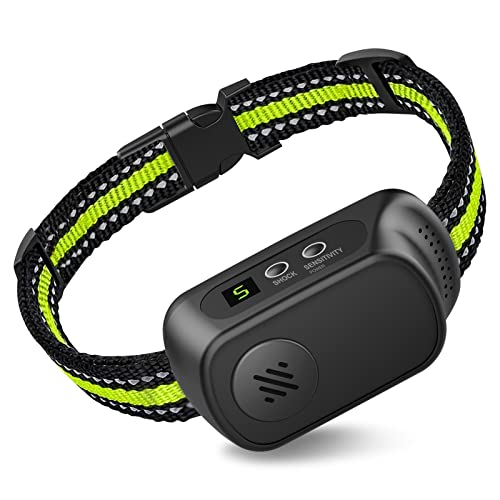
This rechargeable collar offers beep, vibration, and shock modes with five sensitivity levels. That gives the owner a broad set of choices, but it also calls for extra care. I would begin with beep and vibration and use the lowest possible setting. A shock feature should never be the first step, especially for a fearful, anxious, elderly, or reactive dog.
The adjustable sensitivity may help owners tune the collar to different bark levels. Still, sensitivity cannot solve the reason behind barking, such as pain, fear, loneliness, or frustration. I would first rule out health problems and add exercise, calm practice, and rewards. The rechargeable design is convenient, but responsible use is the main measure of value.
Pros:
- Offers three correction choices
- Five sensitivity levels support gradual setup
- Rechargeable battery reduces ongoing battery costs
- Can suit different dog sizes with proper fitting
- Beep and vibration allow a no-shock starting point
- May help owners compare responses during training
Cons:
- Shock mode may be unsuitable for many dogs
- Needs close supervision during every early session
- It cannot address the root cause of problem barking
My Recommendation
This collar is best for an experienced owner who understands canine body language and will use its gentler modes first. I would not pick it for a new dog owner who wants a simple, low-risk tool. It may offer useful flexibility, but the shock function raises the need for careful judgment. For most households, a beep-and-vibration-only collar is the safer starting point.
Green 2-in-1 Remote Training Collar

This green 2-in-1 collar combines automatic bark control with a remote that is advertised to reach up to 3,300 feet. It includes five sensitivity levels and an IP67 waterproof rating. The long range can help during open-field training, though the real distance will depend on terrain and interference. The rechargeable design keeps the setup ready for repeated sessions.
Remote collars can help an owner give a cue at the right moment, but timing is everything. I would pair each cue with a known command and reward calm behavior. The unit includes a shock function, so I would treat it as an advanced tool, not a casual fix. Its green color is a small style detail, while fit, humane handling, and training skill matter far more.
Pros:
- Combines automatic and remote bark training
- Advertised 3,300-foot range supports outdoor work
- Five sensitivity levels permit gradual adjustment
- IP67 rating helps during wet outdoor activities
- Rechargeable design is practical for frequent use
- Remote control can support precise timing
Cons:
- Shock mode requires advanced handling and restraint
- Range may drop around buildings and obstacles
- It has more parts to charge, carry, and manage
My Recommendation
I would reserve this model for a skilled trainer who needs a remote during outdoor sessions. It is not my first choice for basic nuisance barking in an apartment or small home. The automatic bark mode may help at a distance, while the remote adds training flexibility. Owners should read the instructions, start with sound or vibration, and stop if the dog shows fear or confusion.
Orange Smart Bark Collar for Medium and Large Dogs

This smart bark collar is designed for medium and large dogs and includes five modes with five sensitivity levels. The orange color makes it easy to spot on a dark coat or in a yard. Its IP67 waterproof rating supports indoor and outdoor use. I like that the controls offer a clear path from low-level training to more noticeable cues.
A collar made for larger dogs still needs a careful fit. The device should make contact without being tight, and the owner should check the skin often. I would use it for short sessions and remove it when the dog rests or sleeps. The collar may help reduce repeated alert barking, but it should not be used to silence normal communication all day.
Pros:
- Five modes provide useful training flexibility
- Five sensitivity levels allow gradual changes
- IP67 waterproof rating supports wet conditions
- Bright orange color improves visibility
- Designed with medium and large dogs in mind
- Can work indoors or outdoors when fitted correctly
Cons:
- May not fit small dogs well
- More settings can make setup slower
- It should not be worn for long, unsupervised periods
My Recommendation
This model is a good fit for medium and large dogs that bark at outdoor sights or sounds. I would consider it for a home with a secure yard, especially where water resistance and visibility matter. It is less useful for toy breeds or owners who want a tiny, basic collar. Among the choices here, it offers a practical mix of visibility, weather protection, and adjustable training.
No-Shock AI Bark Collar for Small Dogs

This no-shock bark collar is listed for dogs weighing 8 to 40 pounds. It uses advertised AI chip detection and offers three modes with five sensitivity levels. For small dogs, a light and simple collar can feel less bulky than a large training unit. The rechargeable battery and magnetic charging design also make daily upkeep easy.
I especially like the no-shock focus for owners who want a gentle first step. Small dogs can still have big voices, but harsh correction may increase fear or stress. I would use the collar only when I can watch the dog and reward quiet behavior. The best results will come from teaching an alternative, such as looking at the owner or going to a mat.
Pros:
- No-shock design supports gentle training
- Made for small dogs from 8 to 40 pounds
- Three modes and five sensitivity levels offer choice
- Advertised AI detection may help reduce false triggers
- Rechargeable battery lowers daily upkeep
- Magnetic charging is convenient for routine use
Cons:
- May not suit dogs over the listed weight range
- AI detection still needs supervision and testing
- It may not work for barking caused by separation distress
My Recommendation
I recommend this collar first for small-dog owners who want no shock. It is a thoughtful match for a small dog that barks at the door, hallway sounds, or passing activity. The light design and gentle modes may feel less intimidating than a remote shock system. For owners asking what is the best anti bark collar for dogs under 40 pounds, this is one of the strongest humane choices in this group.
DogRook Humane No-Shock Bark Collar

The DogRook collar focuses on beep and vibration rather than shock. That makes it appealing to owners who want a simple, humane reminder for excessive barking. Its rechargeable design means I can use it often without keeping spare batteries nearby. The compact format may work well for everyday home training when the dog’s bark is the main concern.
No-shock does not mean no training. I would still find the bark trigger, give the dog a quiet cue, and reward the pause. The collar should not stay on all day, and I would check the neck for redness or rubbing. For many families, this kind of basic design is easier to understand than a remote system with many settings.
Pros:
- No-shock beep and vibration training
- Rechargeable format supports regular use
- Simple design may suit first-time owners
- Useful for common indoor barking triggers
- Gentler option for owners avoiding static correction
- Easy to pair with praise and treat training
Cons:
- May offer less adjustment than newer multi-mode collars
- Vibration may not be enough for every dog
- It still needs correct fit and regular skin checks
My Recommendation
I would choose DogRook for owners who want a basic no-shock collar without a remote. It is best for routine barking at doors, windows, or household sounds. It may not be enough for a highly driven outdoor barker, but it is a friendly starting point for many homes. Its overall value comes from simple use, rechargeable power, and a gentler training style.
How I Compare Anti Bark Collars
When I review the best anti bark collar for dogs, I do not judge it by the loudest correction or the biggest range claim. I look first at safety, fit, detection, and control. A useful collar should respond to the dog’s bark, not every sound in the room. It should also give the owner a mild setting and a clear way to stop using it.
I also check the power system. Rechargeable collars are convenient, but battery life varies by setting, weather, and how often the collar activates. Water resistance helps, yet waterproof claims do not mean the device should stay submerged for long periods. I always follow the care instructions and keep the charging port dry before use.
What Makes a Good Bark Collar?
The best anti bark collar for dogs should match the dog’s size, coat, bark pattern, and reason for barking. A collar that fits one dog may fail on another. For example, a thick coat can block contact, while a loose collar can move away from the correct position. Measure the neck and follow the maker’s fit guide instead of guessing.
I prefer collars that start with a beep or vibration. These cues can interrupt a bark without causing pain. Sensitivity control is also important because a setting that is too low may miss the bark, while a setting that is too high may react to normal sounds. Good training turns the quiet moment into a reward, like showing a dog the path through a noisy storm.
How to Use a Bark Collar Safely
First, identify the cause of barking. Dogs may bark from fear, pain, boredom, excitement, territorial behavior, or separation distress. A collar cannot fix a medical issue or deep anxiety. If the barking starts suddenly, sounds unusual, or comes with other behavior changes, speak with a veterinarian.
Next, introduce the collar without turning it on. Let the dog sniff it, then offer a treat. Repeat this for a few short sessions. Once the dog seems relaxed, fit it correctly and use the mildest setting. Watch the dog’s body language for tucked ears, cowering, freezing, frantic scratching, or attempts to escape.
Never leave a bark collar on around the clock. Remove it during sleep, crate time, rough play, and long periods without supervision. Check the neck each day for redness, hair loss, swelling, or sores. Move the collar as directed by the instructions, and stop use if the skin looks sore.
Reward quiet behavior at once. If the dog stops barking and looks at you, say “yes” and offer a small treat. Then teach a calm behavior, such as sitting on a mat. This turns the collar from a warning tool into part of a clear lesson. I find that calm practice works better than waiting for the collar to do all the work.
Automatic Bark Collar or Remote Collar?
An automatic collar responds to barking on its own. This may help when the owner cannot stand beside the dog, such as during a short yard session. Yet automatic collars have limits. They may react to another dog, a loud gate, or a playful sound, so supervision remains important.
A remote collar gives the owner control over timing. That can be useful for teaching a command at a distance. It also places more responsibility on the handler. Remote shock collars should not be used by someone who does not understand timing, pressure, and reward-based training.
For most homes, I would start with a no-shock automatic model. A remote collar makes more sense when the owner has a clear training goal and can stay involved. When people ask what is the best anti bark collar for dogs, I usually tell them to choose the simplest tool that meets the need.
Common Mistakes to Avoid
The first mistake is choosing a collar by weight alone. Neck size and coat thickness matter just as much. A small dog with a thick coat may need a different fit than a larger dog with a short coat. Always check the product guide.
The second mistake is setting sensitivity too high. A collar that activates too often can confuse the dog and create stress. Start low, observe, and adjust slowly. If the dog barks from fear, simply adding a stronger correction may make the problem worse.
The third mistake is using a collar without teaching a replacement behavior. Quiet is easier when the dog knows what to do next. Ask for a sit, call the dog away from the window, or guide the dog to a bed. Praise that choice every time at first.
Best Features at a Glance
| Best for | Why |
|---|---|
| Small dogs and no-shock training | The small-dog AI collar offers beep and vibration modes with no shock. |
| Adjustable sensitivity | The eight-level rechargeable collar gives the owner fine control. |
| Remote outdoor training | The 2-in-1 remote models add long-range control and waterproof design. |
FAQs Of what is the best anti bark collar for dogs
What is the best anti bark collar for dogs?
For many owners, the best choice is a rechargeable collar with adjustable sensitivity, beep, and vibration. The small-dog no-shock model suits dogs from 8 to 40 pounds. For broader size needs, the FAFAFROG, FESTYLES, or eight-level model may offer better flexibility.
Are anti bark collars safe for dogs?
They can be used more safely when they fit well, work for short sessions, and support reward-based training. I prefer starting with beep or vibration. Never use a collar to hide pain, fear, separation distress, or another health problem.
Should I use a shock setting?
I would not make shock the first choice. Begin with management, training, beep, or vibration. If a dog shows fear, stress, or confusion, stop using the collar and seek help from a qualified veterinary behavior professional.
Can a bark collar stop separation barking?
A bark collar does not treat separation anxiety. It may suppress sound while leaving the distress in place. Separation barking needs a proper behavior plan, gradual alone-time training, and help from a veterinarian or behavior expert when needed.
How tight should a bark collar be?
It should be snug enough to stay in place but not tight enough to choke or rub. Follow the product guide and check the skin often. Thick coats may make correct contact harder, so take extra care with fit.
Final Verdict: Which Should You Buy?
For most owners, I would choose the FAFAFROG as the best anti bark collar for dogs because it offers rechargeable power, adjustable sensitivity, beep, and vibration. Small-dog owners who want no shock should consider the AI small-dog model.
The best anti bark collar for dogs is a training aid, not a cure. Choose a safe fit, start gently, reward quiet behavior, and address the reason behind the barking.

Pet Care Writer & Researcher
Daniel writes practical guides on daily care, feeding, and safety, turning complex topics into simple, actionable advice.