Why Does My Dog Bark At Dogs On TV: Reasons & Fixes
Why does my dog bark at dogs on TV? Learn the reasons behind this behavior and simple ways to help your dog stay calm during screen time.
Dogs often bark at dogs on TV because movement, sound, and social cues trigger excitement, alertness, or confusion.
If you wonder, “why does my dog bark at dogs on TV?” you are seeing a normal canine response shaped by instinct, learning, and the strange nature of screens. The good news is that most dogs can learn to watch calmly with patient training, better timing, and a few simple changes at home.
Why Does My Dog Bark at Dogs on TV?
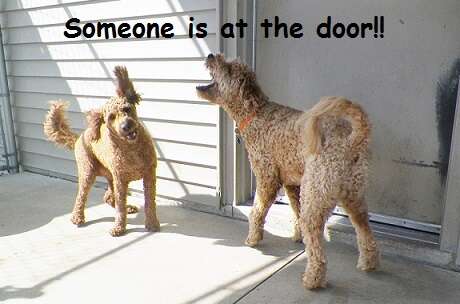
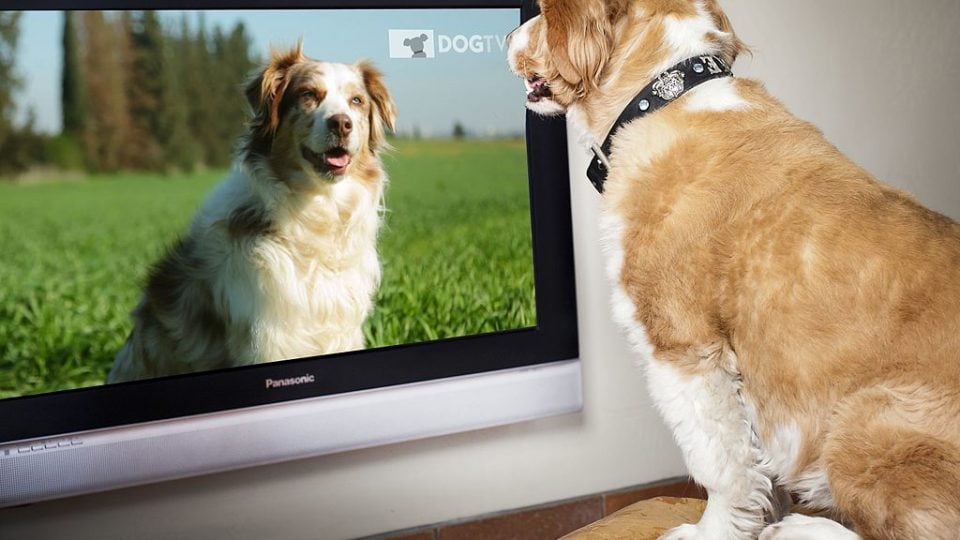
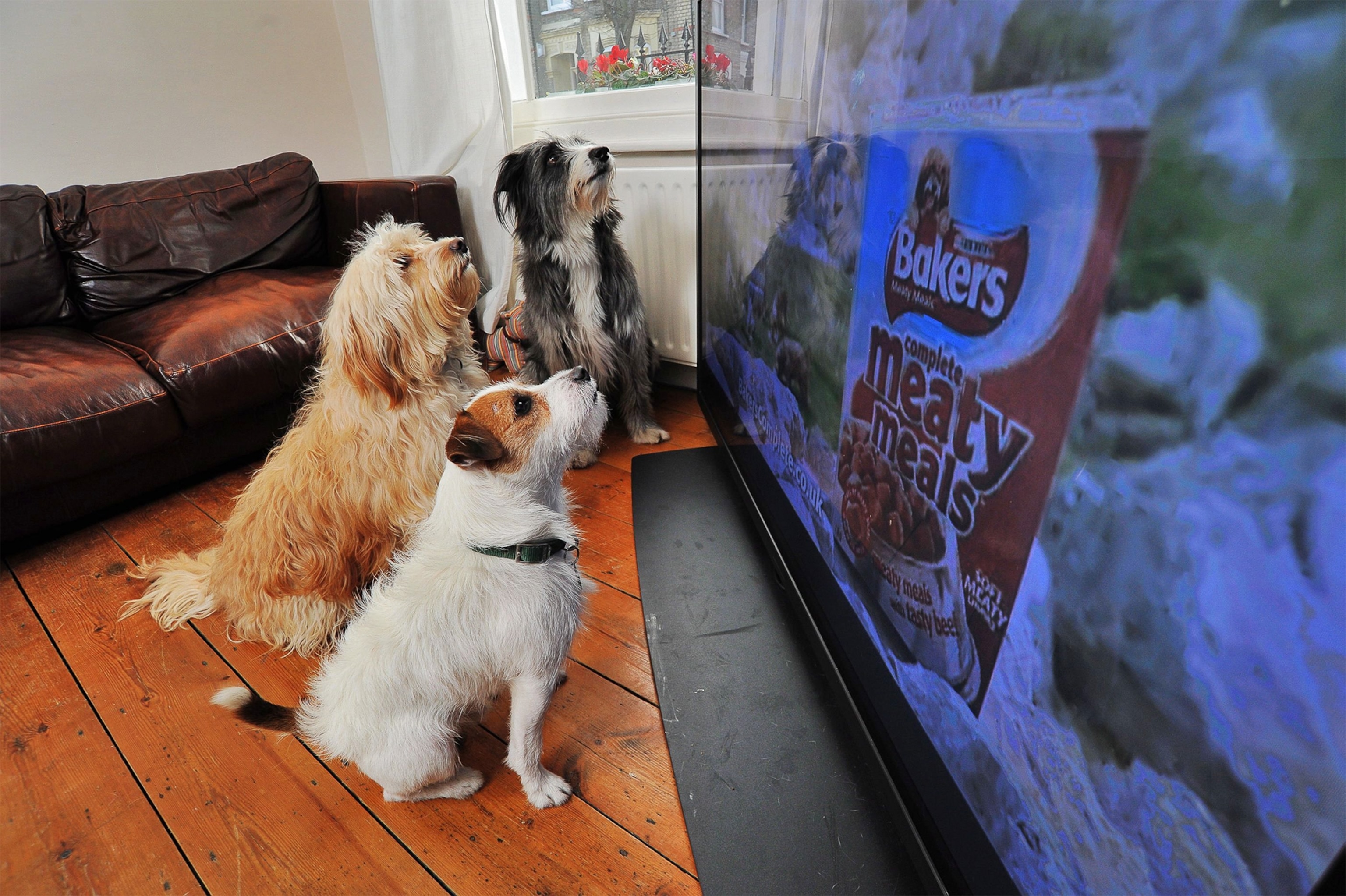
Dogs notice far more than the human eye does. A television may show another dog running, staring, barking, or playing. Your dog may read those signals as real events happening inside the home.
The answer to why does my dog bark at dogs on TV usually involves one or more of these causes:
• Alerting: Your dog thinks another animal has entered the room.
• Excitement: Fast movement and sharp sounds raise your dog’s energy.
• Frustration: Your dog sees a dog but cannot greet or investigate it.
• Social response: Barking dogs may encourage your dog to bark back.
• Territorial behavior: Your dog may feel the screen is showing a stranger near its space.
• Confusion: The flat image does not smell or behave like a real dog.
Barking is not always a sign of anger. It can mean, “What is that?” “Come closer,” “Go away,” or “I want to join in.” Watch your dog’s full body, not only the sound.
A loose body and wagging tail may point to excitement. A stiff body, hard stare, raised hackles, or repeated lunges may show fear, stress, or strong arousal. Body language gives you better clues than barking alone.
How Dogs See and Hear Television
Television is a strange mix of real and unreal signals. Your dog may see a moving animal, hear a bark, and notice your reaction. Yet the screen has no scent, no touch, and no normal movement through the room.
Some dogs see television images clearly, while others see flicker or blurred motion. Modern high-refresh-rate screens often look more natural to dogs than older screens did. Still, dogs do not understand television as humans do. They may not know that the dog on screen is inside a recorded show.
Sound can matter as much as the image. A sudden bark, doorbell, growl, or squeaky toy may trigger your dog before it even notices the picture. Some dogs react to animal sounds from speakers even when the screen is out of view.
This helps explain why does my dog bark at dogs on TV but ignore dogs in real life. The television may present a fast burst of sound and motion with no chance for a normal greeting. In real life, your dog can use smell, distance, and body movement to gather more information.
Does every dog recognize dogs on screen?
No. Dogs vary in vision, hearing, past experience, and temperament. Research on dog media use suggests that age, breed traits, attention, and the type of image can affect how a dog responds.
Dogs bred to notice movement may react strongly to animals running across a screen. A sound-sensitive dog may respond to barking or high-pitched noises. Other dogs may glance at the screen and quickly lose interest.

Common Reasons Dogs Bark at Dogs on TV
Your dog thinks the dog is real
Some dogs treat the television like a window. They may run behind the screen, search the room, or look toward the door after hearing a bark. These actions suggest that the screen has created a real alert for them.
This does not mean your dog lacks intelligence. Television is designed to imitate real life. Humans understand the trick because we know what a screen is. Dogs rely more on direct sensory evidence.
Your dog is excited by movement
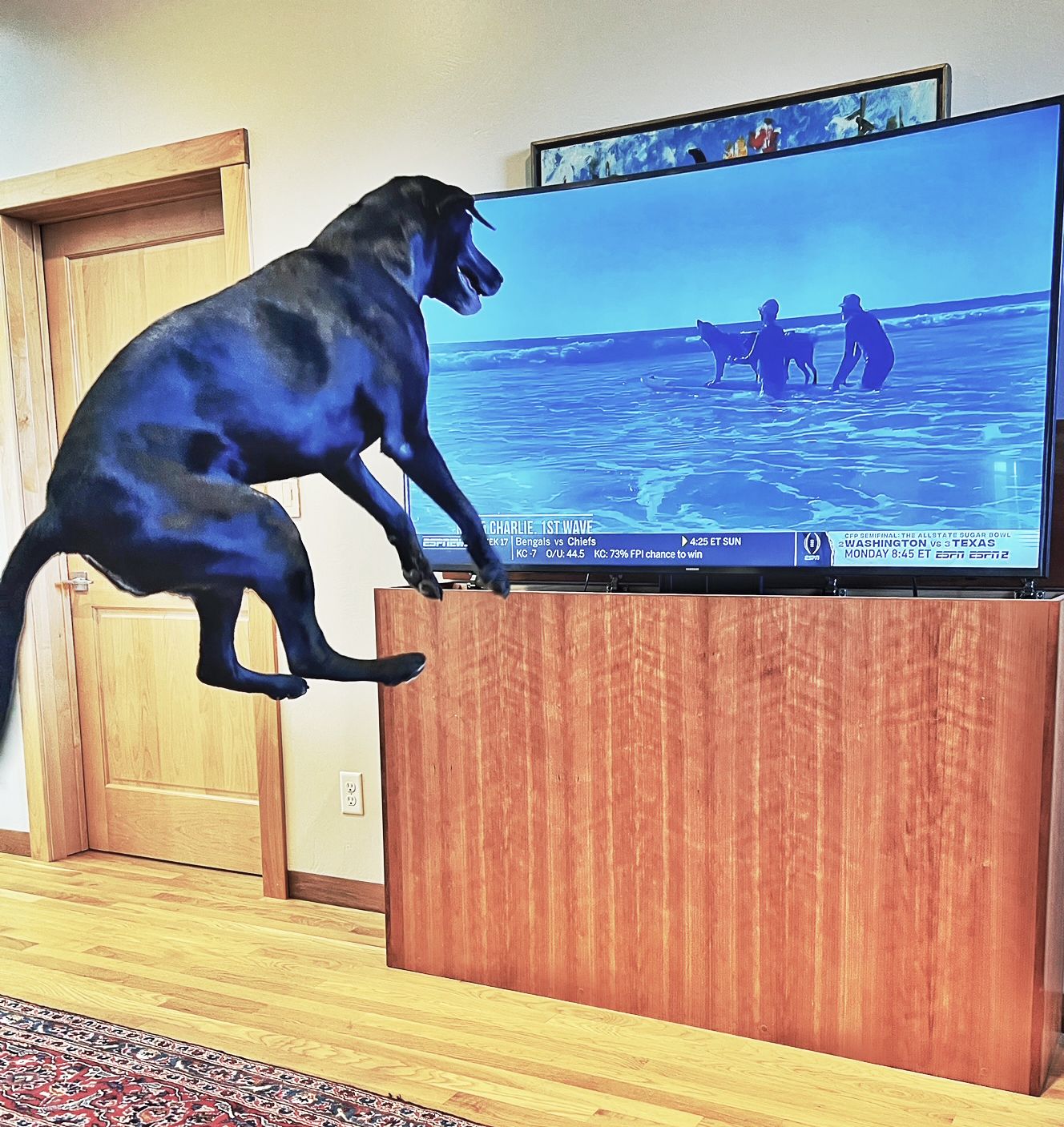
Running, jumping, chasing, and play bows can switch on a dog’s chase or play system. A dog may bark because the moving picture feels like an invitation to act.
Fast cuts can make this stronger. A commercial may show several animals in only a few seconds. Your dog has little time to settle before another exciting image appears.
Your dog feels frustrated
Barrier frustration happens when a dog can see or hear something but cannot reach it. A leash, window, fence, crate, or television can all create this effect.
Your dog may want to greet the dog on screen. It may bark, paw at the television, or spin in circles because the normal social process cannot happen. This is not the same as true aggression, although high frustration can lead to intense behavior.
Your dog is responding to sound
A bark from the television can act like a neighborhood dog barking outside. Your dog may answer because barking is a natural way to send and receive information.
Some dogs react to sounds that people barely notice. The audio may include distant barking, whining, scratching, or high tones. Lowering the volume can sometimes reduce the response right away.
Your dog has learned that barking gets attention
If barking makes you speak, laugh, approach, or change the channel, your dog may learn that barking works. Even negative attention can reward a behavior when the dog wants interaction.
This learning can happen without anyone intending it. A dog barks, a person says, “Stop,” and the dog receives eye contact and conversation. From the dog’s point of view, the behavior produced a result.
Is Barking at TV a Sign of Aggression?
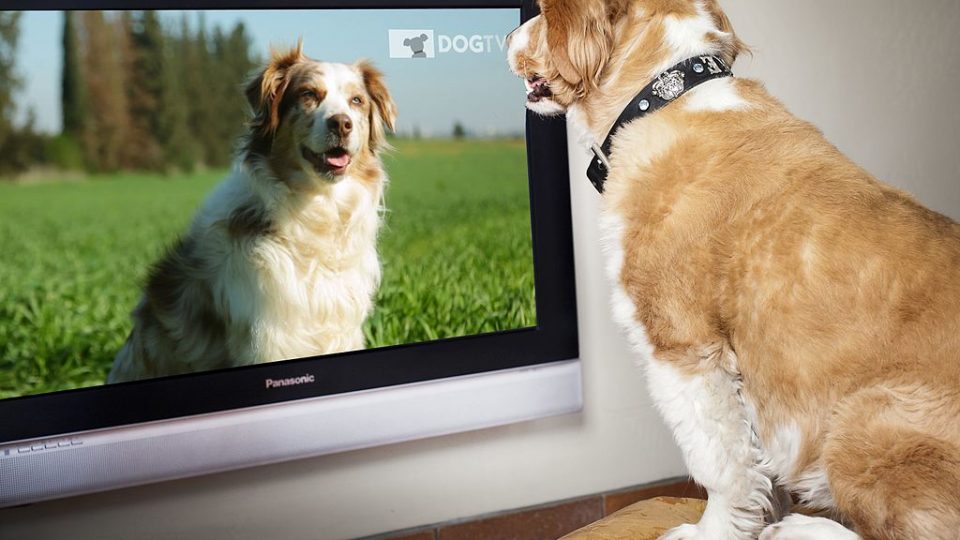
Not always. Barking is a form of communication, and its meaning depends on context, body language, and what happens before and after it.
Signs of excitement or playful interest may include:
• A loose, wiggly body
• A soft or open mouth
• Play bows
• Quick glances between you and the screen
• Brief barking followed by calm behavior
Signs of fear or stress may include:
• A tucked tail
• Ears held tightly back
• Lip licking or yawning
• Hiding or trying to leave
• A stiff posture
• Repeated pacing
• Growling with a hard stare
If your dog freezes, snaps at the screen, or cannot settle after the program ends, take the reaction seriously. It may need more than basic training.
A sudden change also deserves attention. Pain, hearing changes, vision problems, age-related confusion, and anxiety can affect behavior. A veterinarian can check for health causes before you assume the issue is only a training problem.
How to Stop Your Dog From Barking at Dogs on TV
The best plan combines management with reward-based behavior training. Do not wait until your dog is barking at full volume. Training works best when your dog can still think, eat, and respond to you.
1. Lower the trigger
Start with a calm program. Choose a scene with a distant, quiet dog rather than a close-up of a barking animal. Keep the volume low and sit far enough from the screen for your dog to remain relaxed.
You can also:
• Turn off animal sounds
• Close the curtains during highly exciting programs
• Use background music or white noise
• Move your dog to another room during intense scenes
• Place a baby gate between your dog and the television area
Management is not failure. It prevents your dog from practicing the barking pattern while you teach a new response.
2. Find your dog’s calm distance
The right distance is the point where your dog notices the screen but does not explode. This may be across the room at first.
When your dog looks at the screen calmly, say “yes” or use a clicker. Then give a small, tasty treat. Repeat while the dog remains relaxed.
If your dog barks, lunges, or refuses food, the trigger is too strong. Lower the volume, pause the video, increase distance, or choose an easier scene.
3. Pair the screen with rewards
This method is called counterconditioning. You change the emotional meaning of the trigger by pairing it with something your dog loves.
Use a simple pattern:
-
A dog appears on the screen.
-
You mark your dog’s calm look.
-
You give a treat.
-
The dog disappears or the video pauses.
-
The treats stop.
With repetition, your dog may begin to see a dog on television and look at you instead. Keep sessions short, such as two to five minutes.
4. Teach an alternate behavior
Ask for a behavior your dog already knows, such as “look,” “touch,” “sit,” or “go to bed.” Reward the behavior before barking begins.
A mat can be especially helpful. Teach your dog to lie on the mat when the television is off. Then slowly add mild screen activity. The goal is not forced silence. The goal is a calm action your dog can perform instead.
5. Reward quiet moments
Do not focus only on stopping barking. Notice calm behavior that your dog offers on its own.
Give a treat when your dog:
• Looks away from the screen
• Relaxes its body
• Lies down
• Sniffs the floor
• Checks in with you
• Watches without vocalizing
Quiet behavior must become valuable. Over time, your dog learns that calm choices bring better results than frantic barking.

Mistakes That Can Make the Problem Worse
Many well-meaning owners accidentally increase barking. The most common mistake is punishment after the dog is already overwhelmed.
Yelling may sound like another bark to your dog. It can add noise and stress without teaching what to do instead. Punishment can also make the television feel more threatening.
Avoid these common errors:
• Forcing your dog to sit close to the screen
• Holding your dog in place during a barking episode
• Repeating “no” without giving another task
• Playing loud dog videos to “get your dog used to them”
• Rewarding your dog only after a long, intense outburst
• Letting the dog bark at the screen for hours
Flooding a dog with a strong trigger can make fear or frustration worse. Gradual exposure is safer and more effective. Progress may look small, but a calm three-second glance is still progress.
Another mistake is changing too many things at once. If you lower the volume, move the dog, add treats, and switch programs all at once, you may not know what helped. Make one clear change, then observe your dog’s response.
A Simple Training Plan for the Week
Consistency matters more than long sessions. Use a high-value treat, such as tiny pieces of cooked chicken, if your dog can eat it safely.
Days 1 and 2: Build attention
Practice “look at me,” “touch,” or “go to bed” away from the television. Reward quickly and often.
Days 3 and 4: Add a quiet screen
Show a calm animal image at a low volume. Reward your dog for looking and then turning back to you. Stop before your dog becomes excited.
Days 5 and 6: Increase the challenge
Use a slightly more active scene. Keep the dog farther from the screen if needed. Reward calm behavior and pause the video at the first sign of rising stress.
Day 7: Practice normal life
Watch a short program while keeping treats nearby. Give your dog a chew or food puzzle on its mat. End the session while your dog is still calm.
Some dogs improve in days. Others need several weeks. Age, temperament, past learning, and the strength of the trigger all affect the pace.
When to Contact a Veterinarian or Behavior Professional
Seek professional help if your dog’s reaction is intense, sudden, or spreading to other situations. A veterinarian can rule out medical issues and refer you to a qualified behavior professional when needed.
Get help promptly if your dog:
• Tries to bite the television
• Redirects bites toward people or other pets
• Cannot calm down after the screen is turned off
• Shows panic, shaking, or repeated escape attempts
• Stops eating during training
• Reacts to many sounds or moving objects
• Has developed the behavior suddenly
Look for a reward-based trainer or a board-certified veterinary behaviorist. Ask what methods they use. Avoid professionals who promote shock, pain, intimidation, or claims that every barking problem comes from dominance.
Professional support is especially useful when barking is part of a larger issue, such as separation anxiety, noise sensitivity, fear, or compulsive behavior. The aim should be emotional stability, not simply a silent dog.

Frequently Asked Questions About Why Does My Dog Bark at Dogs on TV
Why does my dog bark at dogs on TV but not outside?
Television combines quick movement and sound without the normal scent and distance cues of a real dog. Your dog may find this unusual mix more exciting or confusing than a calm outdoor encounter.
Should I let my dog watch dogs on TV?
You can, if your dog stays relaxed. Choose calm scenes, keep the volume low, and stop the program if your dog shows stress or cannot settle.
Does barking at the TV mean my dog is aggressive?
No. Barking may show excitement, alertness, frustration, fear, or social interest. Look at body language and the dog’s ability to recover before judging the behavior.
How can I stop my dog from barking at dogs on TV?
Start with distance and low volume, then reward calm looks and attention toward you. Gradually increase the challenge while keeping your dog below its barking threshold.
Why does my dog bark at TV sounds when no dog is visible?
Dogs have sensitive hearing and may respond to barking, whining, scratching, or other sounds that people miss. Lowering the volume or muting the program can help identify whether sound is the main trigger.
Will my dog grow out of barking at the television?
Some dogs become less interested over time, but many keep the habit if it is practiced often. Calm training and careful management usually work better than waiting for the behavior to disappear.
Conclusion
The answer to why does my dog bark at dogs on TV is usually a mix of alertness, excitement, frustration, sound sensitivity, and confusion about the screen. Barking does not automatically mean aggression, but your dog’s posture and recovery time deserve close attention.
Lower the trigger, reward calm behavior, teach an alternate action, and avoid yelling or forced exposure. With short, steady practice, the television can become ordinary background noise instead of a daily canine drama. Start with one calm training session today, and consider speaking with your veterinarian or a reward-based behavior professional if the reaction is severe.

Pet Care Writer & Researcher
Daniel writes practical guides on daily care, feeding, and safety, turning complex topics into simple, actionable advice.