Can You Call Animal Control On A Barking Dog: What To Do
Can you call animal control on a barking dog? Learn when to report excessive noise, document complaints, and resolve the issue legally.
Yes, you can call animal control on a barking dog when the noise is persistent, excessive, or violates local rules.
Barking is normal dog behavior, but nonstop or late-night noise can affect sleep, work, and your sense of peace. Whether animal control can act depends on your city’s noise ordinance, the length and timing of the barking, and the evidence you provide. This guide explains when to report a barking dog, what animal control may do, and how to solve the problem without making a neighbor dispute worse.

Can you call animal control on a barking dog?
Yes, you can call animal control on a barking dog if the barking is repeated, excessive, or disruptive. Many local governments treat unreasonable barking as a public nuisance or noise violation.
However, animal control may not respond to one short burst of barking. A dog may bark because it sees a stranger, hears a loud sound, or feels afraid. The main issue is usually a pattern that continues for a long time or happens often.
Rules differ across the United States. Some cities set a time limit, such as barking for 10 or 15 minutes without stopping. Others consider the time of day, the volume, and how often the problem occurs.
When you ask, “Can you call animal control on a barking dog?” the most accurate answer is: usually yes, but the agency may ask you to follow a complaint process first.
When is barking considered excessive?
Normal barking is not always a legal problem. Dogs may bark for short periods during play, when someone approaches the home, or when they hear an unusual sound.
Excessive barking usually means barking that is:
• Continuous for a long period
• Repeated many times each day
• Loud enough to disturb sleep or daily activities
• Common late at night or early in the morning
• Uncontrolled when the owner is away
• Frequent enough to affect several nearby homes
Some ordinances use exact time limits. Others use broad terms such as “unreasonable,” “disturbing,” or “creating a nuisance.” This means an officer may consider the full situation instead of counting every bark.
For example, five minutes of barking after a delivery may not support a complaint. Barking for two hours every night may be a stronger case.
If you are wondering, “Can you call animal control on a barking dog?” consider both the sound and the pattern. A clear record is more useful than a single angry report.

What should you do before calling animal control?
A calm first step may solve the problem faster than a formal complaint. Many dog owners do not know how much sound travels through walls, fences, or open windows.
If it feels safe, speak with the owner at a reasonable time. Avoid starting the conversation while you are angry or while the dog is barking. Explain the effect of the noise instead of attacking the owner.
You might say:
“I wanted to let you know that your dog has been barking for about an hour most evenings. It is loud in our bedroom, especially after 10 p.m. Could we work out a solution?”
The owner may be unaware of the issue. They may also have a simple explanation, such as separation anxiety, a new pet, illness, or a broken fence.
Do not enter the property, threaten the owner, or confront someone who seems aggressive. If you fear retaliation, skip direct contact and use the proper local reporting system.
When deciding, “Can you call animal control on a barking dog?” remember that direct communication is optional, not required. Your safety comes first.

How to document a barking dog complaint
Good records help animal control or code enforcement understand the problem. They also show that the complaint is based on a repeated pattern rather than a personal disagreement.
Keep a simple log for at least several days, unless the barking is urgent or extreme. Include:
• The date
• The time the barking began and ended
• How often it happened
• Whether it was continuous or came in bursts
• Where you heard it
• How it affected sleep, work, children, or pets
• Any steps you took to contact the owner
A legal recording may also help, but recording laws vary by state. In many places, recording sound from your own property is different from entering private property or capturing a private conversation. Do not trespass or use recording equipment to invade someone’s privacy.
Ask other affected neighbors to make their own honest reports. Do not pressure them to exaggerate. Separate, accurate complaints often carry more weight than one report signed by many people.
Animal control may ask for a written statement, a sound recording, witness names, or proof that the barking violates a local rule. The exact requirements depend on the agency.

Who handles a barking dog complaint?
The right agency depends on your location. Animal control is one option, but it may not be the only one.
Possible agencies include:
• Animal control
• Code enforcement
• The local police department’s nonemergency line
• A county animal services office
• A city noise control department
• A homeowners association
• A landlord or property manager
Do not call 911 for ordinary barking. Emergency services are for immediate threats, such as an attack, serious injury, or a dangerous animal at large.
Search your city or county website for terms such as “barking dog complaint,” “animal nuisance,” or “noise ordinance.” You can also call the city’s general information line and ask which office handles nuisance animals.
If you ask, “Can you call animal control on a barking dog?” the agency may direct you elsewhere. That does not mean your complaint is invalid. It may simply mean another department enforces the local noise code.

What happens after you report a barking dog?
The process varies, but a typical complaint may follow these steps:
-
You submit a complaint online, by phone, or in writing.
-
The agency checks whether the reported conduct violates a local rule.
-
An officer may contact the dog owner.
-
The owner may receive a warning or education about the problem.
-
The agency may ask you to keep a barking log or provide evidence.
-
A formal notice, citation, hearing, or fine may follow if the barking continues.
Animal control may not remove the dog. In many cases, the agency focuses on compliance rather than punishment. The owner may be told to reduce the noise, repair a fence, provide more exercise, seek veterinary care, or work with a qualified trainer.
Some cities require a signed complaint from one or more neighbors. Others require an officer to hear the barking or verify a recording. You may need to participate in a hearing if the case becomes formal.
Ask about confidentiality before filing. Some public records laws may reveal a complainant’s name, even when an agency tries to protect personal details.

Can animal control remove a barking dog?
Usually, animal control does not remove a dog simply because it barks. Barking alone is often handled as a nuisance or noise issue.
Removal may be considered when the dog is also:
• Dangerous or aggressive
• Neglected or abused
• Kept in unsafe conditions
• Running loose
• Involved in repeated attacks
• Part of a serious and unresolved legal violation
A barking dog may be taken into custody in rare cases when a court order or local law allows it. The outcome depends on the facts, the owner’s response, and the rules in that jurisdiction.
If the dog appears sick, injured, trapped without water, or exposed to dangerous heat or cold, report the welfare concern separately. Animal welfare cases may receive a different response from ordinary noise complaints.
Do not try to rescue, move, feed, or enter the property to help the animal without permission. Contact animal control or the appropriate emergency service instead.
Why do dogs bark nonstop?
Understanding the cause can point to a better solution. Barking is a form of communication, not a sign that a dog is automatically aggressive.
Common causes include:
• Separation anxiety
• Boredom or a lack of exercise
• Fear of people, animals, or sounds
• Territorial behavior
• Hunger, pain, or illness
• Attention-seeking
• Excitement
• Confusion caused by changes at home
• Outdoor triggers, such as traffic or wildlife
A dog left alone in a yard may bark because the yard has become its entire world. Each passing car acts like a new alarm. A dog with separation anxiety may bark, howl, scratch doors, or pace when the owner leaves.
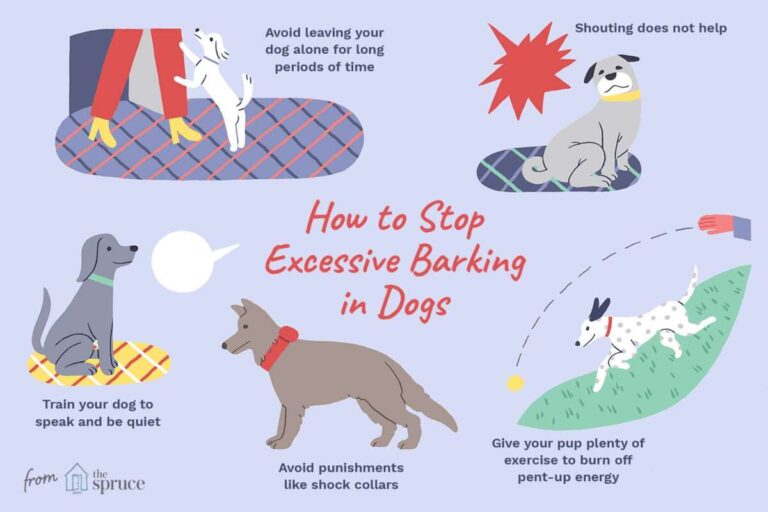
Training, enrichment, veterinary care, and changes to the dog’s routine may help. Punishment can make fear-based barking worse. Experts commonly recommend reward-based training and a professional behavior assessment for severe cases.
This does not mean you must tolerate constant noise. It simply explains why a lasting solution may require more than a warning.
Humane ways to reduce barking
If you own the dog, or if the owner is willing to help, several humane steps may reduce nuisance barking:
• Schedule daily walks and active play
• Use puzzle feeders and safe enrichment toys
• Block the dog’s view of busy streets
• Bring the dog indoors during quiet hours
• Teach a calm “quiet” cue with rewards
• Treat pain or illness through a veterinarian
• Use gradual training for separation anxiety
• Hire a certified, reward-based trainer
Avoid shock collars, physical punishment, and yelling. These methods may increase fear and stress. They can also damage trust and fail to address the reason for the barking.
Do not use a whistle, loud device, chemical spray, or other tool against a neighbor’s dog. Such actions may frighten or injure the animal and could create legal problems for you.
In cases I have seen discussed with neighbors and community groups, the best results usually come from clear facts and small changes. A dog moved indoors at night, given more exercise, or treated for anxiety may improve within days or weeks.
What mistakes should you avoid?
A barking dog can test anyone’s patience. Still, certain actions can weaken your complaint or turn a manageable issue into a serious conflict.
Avoid these common mistakes:
• Making threats
• Shouting at the dog or owner
• Trespassing
• Damaging a fence or property
• Using poisons or harmful substances
• Filing repeated false complaints
• Exaggerating the length or volume of the barking
• Posting accusations online before checking the facts
• Calling 911 for a nonemergency noise issue
• Expecting an immediate dog removal
One mistake I often see is waiting until frustration peaks. The first report then sounds emotional, even when the problem is real. Start a factual log early, save polite messages, and use the correct agency.
Another mistake is assuming animal control has unlimited power. Officers must follow local law and evidence rules. A complaint can begin an investigation, but it does not guarantee a citation or a specific outcome.
What if the barking continues after you report it?
Follow up through the same official channel. Provide updated dates, times, recordings if allowed, and copies of earlier case numbers.
Ask these practical questions:
• Was the complaint officially opened?
• Does the agency need a signed statement?
• What evidence is accepted?
• Is there a required waiting period?
• Will an officer contact the owner?
• Can you appeal or request a hearing?
If you rent your home, notify your landlord or property manager in writing. Your lease may contain noise rules, and the landlord may have authority to address a tenant who creates a repeated disturbance.
If you live in a homeowners association, review its covenants and complaint process. HOA rules may be stricter than city rules, but the HOA still must apply them fairly and follow its own procedures.
For threats, harassment, property damage, or retaliation, contact the police nonemergency line or seek legal advice. Keep all messages and avoid direct arguments.
Does a barking dog complaint affect the owner?
It can. A warning may be harmless, but repeated violations can lead to fines, hearings, court orders, or other penalties. The effect depends on the local ordinance and the owner’s response.
A complaint does not automatically mean the owner is abusive or irresponsible. Some barking problems involve medical or behavioral conditions that the owner is trying to manage. Fair reporting gives the owner a chance to correct the issue while protecting your right to reasonable peace.
Before asking, “Can you call animal control on a barking dog?” check whether the owner is already taking steps. A short conversation may reveal that training, medication, or a move indoors is already underway.
Still, an owner’s good intentions do not always solve the problem. If the barking remains severe, use the formal process and keep your records accurate.
Frequently asked questions about calling animal control for a barking dog
Can I call animal control for barking at night?
Yes, you can report nighttime barking when it is persistent or violates your local noise ordinance. Late-night barking may receive more attention because it can interfere with sleep, but the agency may still require a log or other evidence.
Will animal control respond to one barking complaint?
It may, but many agencies require repeated complaints or proof of an ongoing nuisance. A single short event often does not meet the legal standard for excessive barking.
Can I report a barking dog anonymously?
Some agencies accept anonymous tips, while others require your name and a signed statement. Ask about confidentiality and public records before filing.
What evidence do I need for a barking dog complaint?
A dated barking log is often the most useful evidence. Depending on local rules, you may also provide lawful recordings, witness statements, written communication, or proof that the noise affects your home.
Can I call the police about a barking dog?
Use the police nonemergency line only if your local police department handles noise complaints. Do not call 911 unless there is an immediate danger, such as an attack or a person facing serious harm.
Can a landlord help with a neighbor’s barking dog?
A landlord may help if the dog owner rents the property or if the noise violates a lease. Send a clear written complaint and include dates, times, and the effect of the barking.
Conclusion
Yes, you can call animal control on a barking dog when the noise is ongoing, unreasonable, or against local rules. Start by checking your city ordinance, speaking with the owner only if you feel safe, and keeping a clear record of the barking.
Animal control may give a warning, request evidence, or begin a formal nuisance process. It may not remove the dog, and the final result depends on local law, the evidence, and the owner’s response.
Stay factual, avoid retaliation, and use the correct agency. Check your local animal control website today, save the complaint number, and share your experience or questions in the comments.

Pet Care Writer & Researcher
Daniel writes practical guides on daily care, feeding, and safety, turning complex topics into simple, actionable advice.