Do Pomskies Bark A Lot: What To Know
Do pomskies bark a lot? Learn why they vocalize, what triggers barking, and practical tips to help your Pomsky stay calm and quiet.
Yes, Pomskies can bark a lot, but training, exercise, and routine often make a big difference.
If you are asking, “do Pomskies bark a lot,” the honest answer depends on the dog. Pomskies mix the alert nature of the Pomeranian with the vocal, active traits of the Siberian Husky. Understanding why they bark is the key to managing noise and choosing the right home routine.
Do Pomskies Bark a Lot?
Yes, many Pomskies are fairly vocal dogs. However, barking levels can vary widely between individual dogs. Some Pomskies bark only when they see a stranger, while others react to sounds, demand attention, or become noisy when left alone.
Pomskies come from two breeds known for strong communication. Pomeranians often use sharp alert barks. Huskies may howl, whine, talk, and make many other sounds. A Pomsky can inherit any mix of these traits.
This does not mean every Pomsky will bark all day. Genetics, early socialization, daily exercise, training, health, and home life all shape behavior. A bored Pomsky may become much louder than a well-exercised dog with a steady routine.

Why Do Pomskies Bark?
Barking is a form of communication. Your Pomsky may be trying to warn you, ask for something, release energy, or express fear. The sound alone does not explain the cause, so watch what happens before and after the bark.
Common reasons include:
• Alert barking: Your Pomsky may bark at visitors, delivery workers, wildlife, cars, or sounds outside.
• Excitement: Some Pomskies bark when they see a leash, toy, food bowl, or favorite person.
• Attention seeking: If barking brings petting, eye contact, play, or food, the behavior may continue.
• Boredom: A Pomsky without enough mental or physical activity may bark to create stimulation.
• Fear: Strange people, loud noises, new places, or other dogs can trigger defensive barking.
• Separation distress: Some Pomskies bark, howl, pace, or scratch when left alone.
• Frustration: A dog may bark when it cannot reach another dog, chase a squirrel, or get through a gate.
• Pain or illness: Sudden or unusual vocal behavior can signal discomfort and deserves veterinary attention.
The most useful step is to keep a simple barking log. Write down the time, trigger, location, and what stopped the barking. After a few days, patterns often become clear.
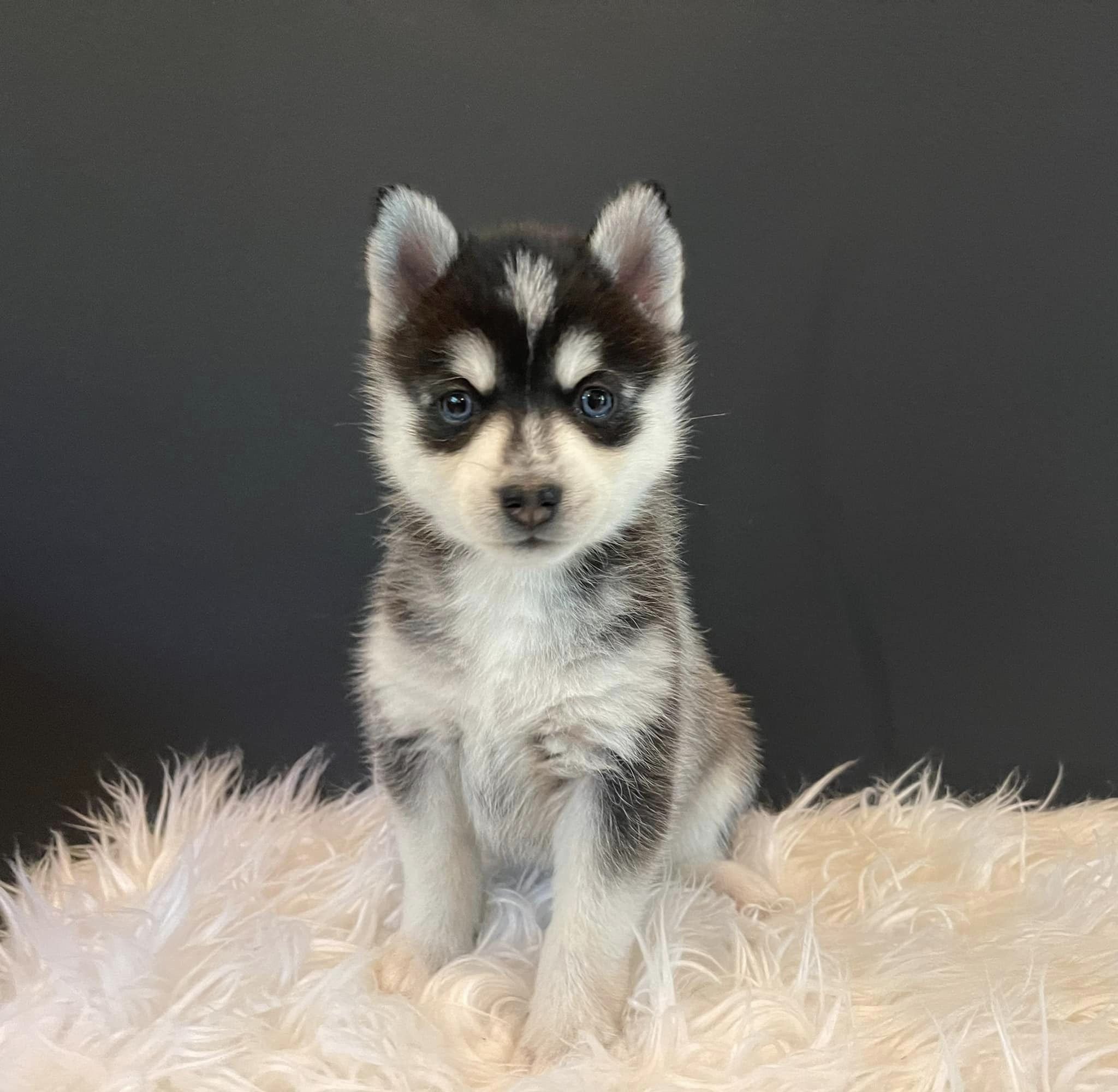
Are Pomskies More Vocal Than Other Dogs?
Pomskies may be more vocal than calm companion breeds, but there is no perfect rule for every dog. Their parent breeds help explain why many owners describe them as expressive.
Pomeranians are small but confident watchdogs. Their size does not stop them from alerting the household. Huskies are also known for vocal communication, although they often howl or “talk” instead of using a typical bark.
A Pomsky may inherit:
• A high-pitched alert bark from the Pomeranian side
• Howling, whining, or talking from the Husky side
• Strong awareness of movement and sound
• A need for frequent interaction
• A quick response to changes in the environment
This mix can make Pomskies entertaining and expressive. It can also make them challenging in apartments, shared housing, or homes with noise limits.
Size does not predict noise level. A small Pomsky can make a surprisingly loud sound. Before adopting one, spend time with adult Pomskies and ask the breeder or rescue group about the dog’s parents and known behavior.

What Makes a Pomsky Bark More?
Several daily conditions can increase barking. Many owners first notice the problem after a change in schedule, a move, a new pet, or reduced exercise.
Lack of Exercise
Pomskies are active dogs. A short potty walk may not meet their needs. When unused energy builds up, barking can become an outlet.
Daily activity may include:
• Brisk walks
• Safe play in a fenced area
• Puzzle feeders
• Scent games
• Fetch or toy play
Puppies need age-appropriate activity. Too much forced exercise can harm growing joints, so ask a veterinarian about safe limits.
Lack of Mental Stimulation
Physical exercise alone may not be enough. Pomskies are often curious and quick to learn. Without mental work, they may invent their own activities, such as barking at windows.
Try hiding treats around a room, teaching new cues, or using a food puzzle. Five to ten minutes of training can tire a dog’s mind more than a long period of aimless play.
Window and Fence Triggers
A Pomsky that watches people, dogs, birds, or traffic may bark each time something moves. The repeated trigger can become a habit.
Use curtains, window film, or a different resting area to reduce visual stimulation. Do not leave a Pomsky outside alone for long periods, especially if fence barking has started.
Inconsistent Responses
If barking sometimes earns attention and sometimes earns silence, your dog may bark more. This is similar to a slot machine: unpredictable rewards can make a behavior very persistent.
Everyone in the home should follow the same plan. Avoid shouting, because your Pomsky may think you are joining the noise.
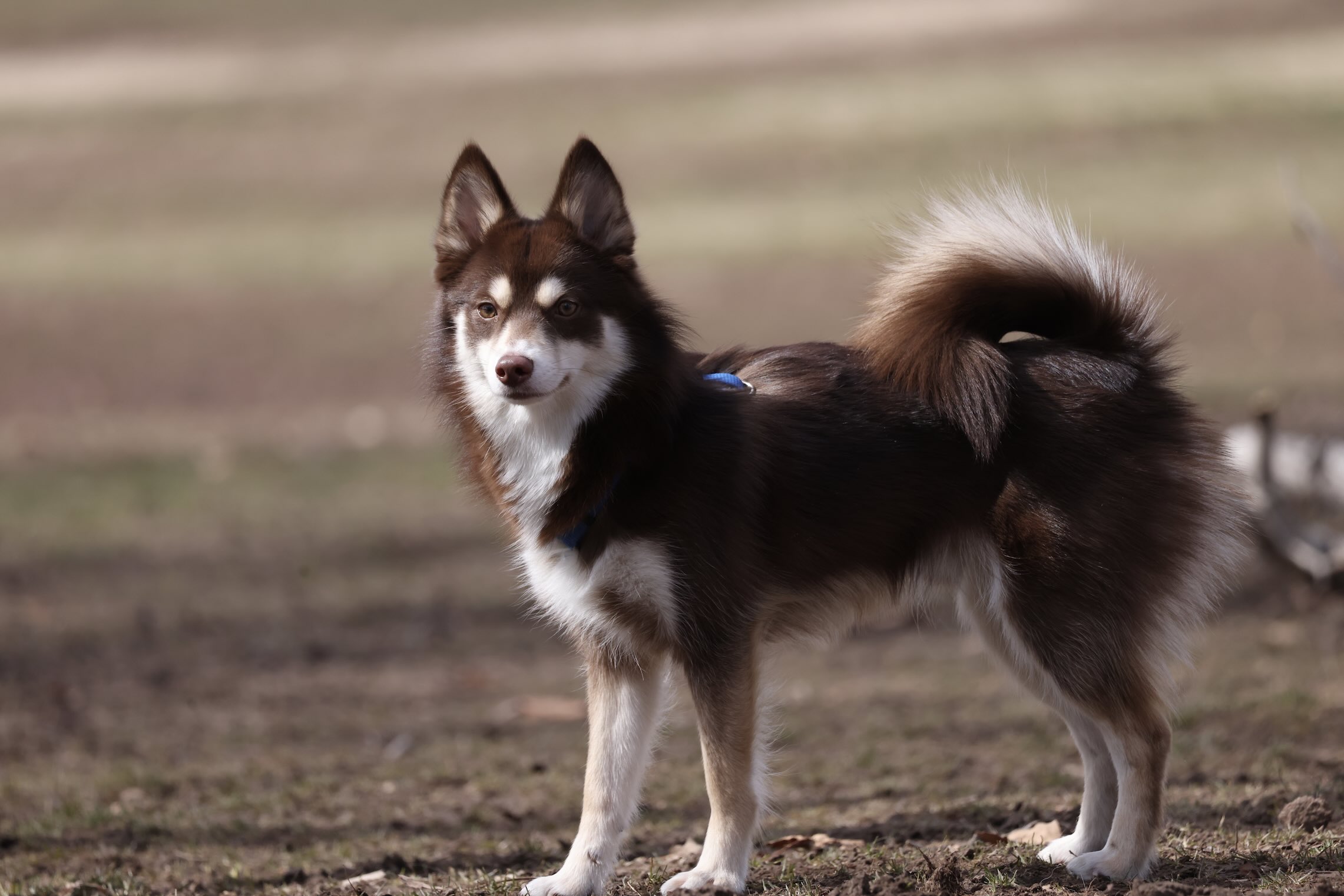
How to Stop a Pomsky From Barking
The goal is not to silence every bark. Barking is normal dog behavior. The goal is to reduce unnecessary barking and teach your Pomsky a better response.
Follow these steps:
-
Identify the trigger. Note whether the barking comes from visitors, windows, boredom, isolation, or excitement.
-
Reduce the trigger. Close blinds, increase distance from other dogs, or move your dog to a quiet room.
-
Teach a quiet cue. When your Pomsky pauses, calmly say “quiet,” then give a small treat. Reward the pause, not the bark.
-
Teach an alternative behavior. Ask for “sit,” “touch,” or “go to mat” when a trigger appears.
-
Reward calm behavior. Give attention when your dog is resting quietly. Do not wait only for barking to begin.
-
Increase daily enrichment. Add sniff walks, puzzle toys, and short training games.
-
Practice in small steps. Begin with mild triggers and slowly increase the challenge.
-
Stay consistent. Behavior change may take weeks, not one afternoon.
A useful example is door barking. Ask a family member to knock softly. Before your Pomsky becomes highly aroused, guide the dog to a mat and reward calm behavior. Repeat the exercise with slightly louder knocks and longer pauses.
Never reward barking by opening the door, offering a toy, or giving food immediately after the noise. Wait for a calm moment first.
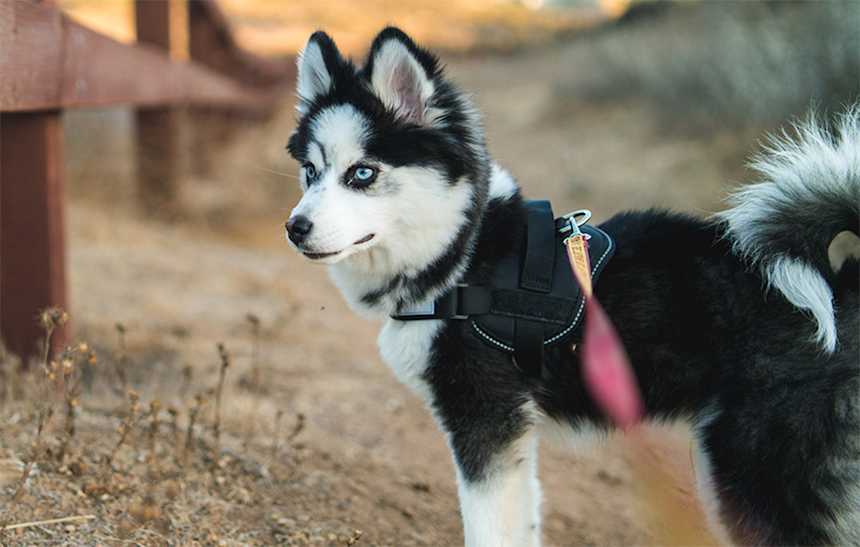
How to Handle Pomsky Barking at Night
Night barking can result from loneliness, outside sounds, fear, excess energy, or a need to use the bathroom. Puppies may also wake because they have not yet developed reliable bladder control.
Start with a calm bedtime routine. Offer a bathroom break, quiet play, and a comfortable sleep area. Keep the room dark and limit access to windows that face busy streets.
If your puppy cries at night, check for real needs without turning the event into a play session. Keep your voice calm and your visit brief. As your puppy matures, gradually build longer periods of quiet rest.
Adult dogs that suddenly bark at night should receive extra attention. Pain, hearing changes, anxiety, or cognitive problems may affect older dogs. A veterinarian can help rule out medical causes.
Avoid using shock or spray collars as a first response. These tools may suppress sound without fixing fear or anxiety. They can also make a dog associate people, sounds, or places with discomfort.

How to Prevent Excessive Barking in a Pomsky Puppy
Early training can prevent many barking habits. Socialization is especially important during puppyhood, when safe and positive experiences help shape future reactions.
Introduce your puppy slowly to:
• Friendly people
• Calm, vaccinated dogs
• Household sounds
• Car rides
• Grooming
• Different surfaces
• Quiet public places
Pair new experiences with praise, treats, and space. Do not force a frightened puppy to approach a person or object. Fear can grow when a dog feels trapped.
Teach basic cues such as “come,” “sit,” “leave it,” and “place.” These cues give you useful tools before barking becomes intense. Keep lessons short and upbeat.
One mistake many new owners make is rewarding cute barking. A tiny puppy bark may seem funny, but the same behavior can become difficult when the dog is older and louder. Decide early which sounds are acceptable and respond consistently.

Pomsky Barking and Separation Anxiety
Some Pomskies bark because they struggle when alone. Separation anxiety is more than ordinary boredom. Signs may include continuous barking, howling, pacing, drooling, destruction near doors, escape attempts, or accidents only when the owner leaves.
A camera can help you understand what happens after you leave. Do not punish damage or barking that occurred hours earlier. Dogs usually cannot connect delayed punishment with the original behavior.
Helpful steps may include:
• Practicing very short departures
• Returning before panic begins
• Leaving calmly without dramatic goodbyes
• Providing safe enrichment
• Using a predictable daily schedule
• Working with a certified behavior professional
Severe cases may need a veterinary behavior plan. Medication can sometimes support behavior work, but it should only be used under veterinary guidance.
If your Pomsky shows panic, do not simply leave the dog alone for longer periods and hope it improves. Repeated panic can make the problem harder to treat.

Do Pomskies Bark a Lot in Apartments?
Pomskies can live in apartments, but their noise and exercise needs require planning. A large home does not automatically prevent barking, and a small home does not guarantee a problem.
Apartment owners should focus on sound triggers, exercise, and neighbor-friendly training. Use rugs or soft furnishings to reduce echoes, keep your dog away from shared hallway views, and provide daily walks with time to sniff.
Teach your Pomsky to settle after exciting events. After a walk, offer water and a quiet activity rather than immediately starting rough play. A dog that never learns to relax may remain restless even after exercise.
Before bringing home a Pomsky, check building rules and consider your schedule. A dog that spends many hours alone in a thin-walled apartment may struggle. Honest planning protects both your dog and your neighbors.
When Barking Needs Professional Help
Contact a veterinarian if barking starts suddenly, sounds painful, or comes with changes in appetite, movement, sleep, or bathroom habits. Medical problems can change behavior, and training should not replace a health check.
A qualified dog trainer or veterinary behaviorist can help when:
• Barking happens for long periods each day
• Your Pomsky shows fear or aggression
• Separation distress causes panic or destruction
• Training attempts have not helped
• You feel frustrated or unsafe
Choose reward-based help. Look for clear credentials, humane methods, and a willingness to assess the whole situation. Be cautious of anyone who promises a guaranteed fix or relies mainly on punishment.
From a practical standpoint, the biggest lesson is to act early. Owners often wait until barking has disturbed neighbors or damaged their relationship with the dog. Small changes are easier before the habit becomes deeply established.
Frequently Asked Questions About Do Pomskies Bark a Lot
Do Pomskies bark more than Huskies?
Pomskies may bark more than some Huskies because Pomeranians are often alert and reactive to sounds. However, Huskies may howl, whine, or vocalize in other ways, so total noise depends on the individual dog.
Can you train a Pomsky not to bark?
You can reduce unnecessary barking, but you cannot remove every bark. Reward-based training, trigger control, exercise, and consistent routines usually work better than yelling or punishment.
Are Pomskies good dogs for apartments?
Pomskies can live in apartments when they receive enough exercise, enrichment, and quiet-time training. Their alert nature and possible vocal habits may make them harder for some apartment homes than naturally quiet breeds.
Why does my Pomsky bark at everything?
Your Pomsky may be reacting to movement, sounds, fear, excitement, boredom, or attention rewards. Track the trigger and timing, then reduce exposure while teaching a calm alternative behavior.
Do Pomskies bark when left alone?
Some Pomskies bark or howl when left alone, especially if they have separation anxiety or little training for independence. Gradual alone-time practice can help, while severe distress may require professional support.
Are male or female Pomskies more vocal?
There is no reliable rule that one sex always barks more. Genetics, temperament, socialization, training, health, and daily routine have a stronger effect on vocal behavior.
Conclusion
So, do Pomskies bark a lot? Many can be vocal, but frequent barking is not unavoidable. The main causes are often alert behavior, excess energy, boredom, fear, attention seeking, or separation distress.
Learn your Pomsky’s triggers, provide daily mental and physical activity, reward quiet behavior, and begin training early. If barking changes suddenly or includes signs of panic or illness, seek help from a veterinarian or qualified behavior professional.
With patience and a steady plan, your Pomsky can remain expressive without becoming a constant source of noise. Explore more reward-based training resources, and share your own Pomsky experience in the comments.

Pet Care Writer & Researcher
Daniel writes practical guides on daily care, feeding, and safety, turning complex topics into simple, actionable advice.