Do Puppies Bark A Lot: Causes And Solutions
Do puppies bark a lot? Learn why puppies bark, what it means, and proven ways to reduce excessive barking with calm, practical training tips.
Yes, puppies bark a lot at times, but frequent barking is usually normal and often improves with guidance.
If you wonder, “do puppies bark a lot,” the answer depends on age, breed, health, energy, and daily routine. Puppy barking is communication, not bad behavior by itself. This guide explains why puppies bark, how to read the sound, what training works, and when barking may signal a deeper problem.
Do puppies bark a lot?
Yes, many puppies bark often during their first months. They are still learning how to handle fear, excitement, frustration, boredom, and new sounds. Barking is one of the few tools they have to get your attention or express a need.
Some puppies bark more than others. Herding breeds, terriers, and many small alert breeds may be naturally vocal. A quiet breed may still bark a great deal if it lacks sleep, exercise, or calm training.
Puppies also have poor impulse control. A sound at the window may feel urgent. A closed door may seem unfair. A moving leaf may become the most exciting thing in the world. Their brains are still developing, so a small event can create a large reaction.
The key is to look at the whole pattern. Ask what happens before the barking, what the puppy does during it, and what happens after. This simple habit can reveal the cause faster than counting the number of barks.

Why do puppies bark a lot?
Puppies bark for many reasons. The same bark can mean different things in different situations, so context matters more than sound alone.
Attention and social contact
A puppy may bark because it wants you to look at it, play, feed it, or open a door. If barking leads to attention, even a scolding, the puppy may learn that barking works.
This does not mean the puppy is trying to control you. It means the behavior has been rewarded in some way. From the puppy’s view, barking is like pressing a button that sometimes produces a result.
Excitement
Many puppies bark when they see a toy, greet a person, or prepare for a walk. Excitement barking often comes with jumping, spinning, running, or a fast-wagging tail.
Excited barking is common, but it still needs guidance. A puppy that always gets access to fun while barking may grow into an adult dog that becomes loud before every enjoyable event.
Fear or anxiety
Fear barking can sound sharp, repeated, or urgent. The puppy may back away, hide, lower its body, tuck its tail, or lick its lips. Common triggers include strangers, traffic, storms, vacuum cleaners, and unfamiliar dogs.
Do not force a frightened puppy to approach the trigger. Give it space and pair the trigger with something pleasant, such as small treats. If fear grows, contact a qualified positive-reinforcement trainer or veterinarian.
Boredom and excess energy
A bored puppy may bark at people, furniture, shadows, or outdoor sounds. Puppies need play, exploration, training, rest, and safe chewing time. Without those outlets, barking can become a daily habit.
Exercise alone is not always the answer. Too much intense activity can create an overtired puppy who cannot settle. Short play sessions and gentle brain work often help more than nonstop running.
Frustration
A puppy may bark because it cannot reach a toy, greet another dog, leave a crate, or get through a baby gate. This is common when the puppy has not learned how to wait.
Frustration tolerance develops slowly. Reward brief moments of quiet, then increase the waiting time by small steps. Asking for too much too soon can make barking worse.
Basic needs
A puppy may bark because it needs to urinate, feels hungry, is too hot or cold, or has discomfort. Young puppies also need frequent bathroom breaks and long periods of sleep.
A sudden change in barking deserves attention. Pain, illness, digestive problems, hearing changes, or sleep loss can affect behavior. A veterinarian should assess barking that appears with other signs of illness.

How to understand puppy barking
The best way to understand barking is to study the trigger and body language. Keep a simple log for two or three days. Write down the time, location, trigger, duration, and what helped.
Notice these clues:
• A loose body and wagging tail may point to excitement or play.
• A stiff body, fixed stare, or raised fur may show alertness or stress.
• Hiding, trembling, lip licking, or refusing food can suggest fear.
• Barking near the door may relate to visitors, outside sounds, or a need to go out.
• Barking in a crate may reflect a bathroom need, loneliness, discomfort, or poor crate training.
• Barking before meals may come from hunger, excitement, or a learned routine.
A single clue is not enough. For example, tail wagging does not always mean a puppy feels happy. Dogs can wag when they are highly aroused or unsure. Read the full body, not one moving part.
A useful rule is this: solve the need first, then train the behavior. A puppy that needs to pee cannot focus well on a quiet cue. A puppy that is terrified cannot learn simply because someone says “no.”

How to stop a puppy from barking
You cannot remove every bark, and you should not try to silence useful communication. The goal is to reduce unnecessary barking and teach the puppy a calmer response.
1. Meet basic needs
Start with a daily routine that includes:
• Regular potty breaks
• Age-appropriate meals
• Safe play
• Short training sessions
• Chew toys
• Gentle social exposure
• Quiet nap time
Puppies often need much more sleep than new owners expect. Many young puppies sleep about 18 to 20 hours in a day, although needs vary by age and individual. An overtired puppy can act like an overtired child: loud, wild, and unable to settle.
2. Find and manage triggers
Close the curtains if the puppy barks at people outside. Move the crate away from a noisy window. Use soft background sound during busy periods. Ask visitors to ignore the puppy until it is calm.
Management is not failure. It prevents the puppy from practicing the behavior repeatedly while you teach a better one.
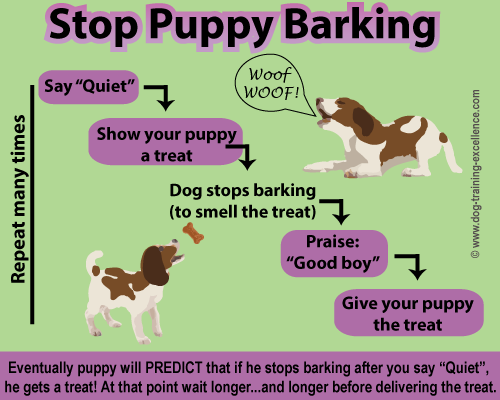
3. Reward quiet behavior
Wait for one or two seconds of silence. Mark the quiet moment with a calm “yes,” then offer a treat. Repeat this often.
As the puppy improves, slowly extend the quiet period. Keep your voice gentle. If you become loud or frustrated, the puppy may think you are joining the barking.
4. Teach a calm alternative
Give the puppy another job. Useful choices include:
• Looking at you
• Touching your hand
• Going to a mat
• Sitting
• Finding treats on the floor
• Chewing a toy
For example, if your puppy barks when the doorbell rings, practice with a quiet recording. Play it softly, reward calm behavior, and stop before the puppy reacts. Over time, increase the sound and add realistic practice.
5. Use gradual exposure
Socialization means safe, positive exposure to people, places, sounds, surfaces, and handling. It does not mean flooding a puppy with every experience at once.
Keep the puppy far enough from a trigger that it can still eat and respond to you. If it stops taking treats or begins barking hard, increase the distance. Progress should feel easy, not overwhelming.
6. Avoid punishment
Shouting, leash jerks, shock collars, and frightening corrections may stop a bark for a moment, but they can increase fear and stress. They may also suppress warning sounds without fixing the emotion beneath them.
Reward-based training is recommended by major veterinary behavior groups because it builds desirable behavior without adding fear. A qualified trainer can help you create a safe plan for difficult cases.

Crate barking and nighttime barking
Many puppies bark in a crate during the first nights. They may be away from their littermates for the first time and unsure what the new routine means. Some also need a bathroom break because they cannot hold their bladder for long.
Place the crate near your bed at first. This lets you hear signs that the puppy needs to go out and can make the transition less lonely. Keep nighttime trips quiet and boring, then return the puppy to the crate.
During the day, build positive crate habits. Feed meals near or inside the crate, give safe chews, and leave the door open during relaxed practice. Then close the door for short periods while you remain nearby.
Do not let a puppy panic for long periods. Brief complaining is different from intense distress. Drooling, frantic scratching, repeated escape attempts, or self-injury calls for a slower plan and professional help.
A common mistake is releasing the puppy while it is barking every time. This can teach the puppy that louder barking opens the door. Instead, first check for a real need, then wait for a brief calm pause before opening it when safe.

How much barking is normal?
There is no single number that defines normal puppy barking. A short burst at a new sound may be normal. Barking for long periods every day, struggling to settle, or reacting to nearly everything suggests that the puppy needs more support.
Consider these questions:
• Can the puppy relax after the trigger goes away?
• Does it eat treats and respond to you?
• Is barking limited to certain events?
• Does the puppy sleep well?
• Has the barking increased suddenly?
• Are there signs of fear, pain, or illness?
Breed also matters. A vocal beagle may bark more than a quiet greyhound, but breed is not destiny. Training, environment, early learning, genetics, and health all shape behavior.
Puppy barking often changes as the dog matures. Improvement is usually gradual, not instant. Think in weeks and months rather than expecting a perfect response after one lesson.

When puppy barking may signal a problem
Contact your veterinarian if barking begins suddenly or appears with changes in appetite, movement, sleep, bathroom habits, or mood. Puppies can hide pain, and behavior may be the first clue that something is wrong.
Seek professional behavior help when the puppy:
• Panics when left alone
• Barks and lunges at people or dogs
• Cannot settle after common triggers
• Shows repeated fear or aggression
• Injures itself in a crate
• Guards food, toys, or resting spaces
• Becomes harder to handle despite consistent training
A veterinary behaviorist can assess medical and emotional causes. A certified trainer who uses reward-based methods can help with daily exercises. Avoid anyone who promises a quick fix or relies mainly on fear and punishment.
The goal is not to label a puppy as “bad.” Barking is information. When we listen carefully, we can solve the need and teach a safer response.

Real-life lessons from puppy training
A common case involves a puppy that barks at every person passing the front window. The family first told the puppy to stop, but the barking continued. Once they blocked the view, added short training games, and rewarded quiet looks, the behavior began to fade.
The lesson is simple: do not wait for a puppy to fail many times before changing the setup. Preventing rehearsal gives the brain room to learn. Training becomes easier when the puppy is calm enough to think.
Another frequent mistake is giving a puppy too much freedom too soon. A puppy may bark at every room, sound, and visitor because the home feels overwhelming. A smaller quiet area, a predictable schedule, and planned breaks can make a major difference.
Progress is rarely perfect. A puppy may improve for a week and then bark more during teething, a growth stage, a move, or a change in routine. Stay patient, review the basics, and adjust the plan instead of assuming training has failed.
Frequently Asked Questions About Do Puppies Bark a Lot
Do puppies bark a lot at night?
Many puppies bark at night because they feel alone, need to potty, or have not learned the sleep routine. Keep the crate close, offer calm bathroom breaks, and build positive crate practice during the day.
At what age do puppies start barking?
Puppies may begin making early vocal sounds within their first few weeks, but clear barking often develops as they explore more of the world. Barking may increase during the first few months as puppies become more alert and independent.
How can I stop my puppy from barking at strangers?
Keep the puppy at a safe distance from strangers and reward calm behavior before barking begins. Ask visitors to ignore the puppy at first, then allow contact only when the puppy looks relaxed.
Should I ignore my puppy when it barks?
Ignoring barking can help when the puppy wants attention, but first check for potty needs, pain, fear, hunger, or discomfort. Reward quiet behavior rather than ignoring every bark without understanding its cause.
Do puppies bark more when they are tired?
Yes, an overtired puppy may bark, bite, jump, and struggle to settle. Planned naps, calm chew time, and shorter play sessions can help the puppy rest before behavior becomes chaotic.
Can barking be a sign of separation anxiety?
Barking can be part of separation anxiety, especially when it starts soon after you leave and comes with pacing, destruction, drooling, or escape attempts. A veterinarian or qualified behavior professional can help identify the cause and create a gradual treatment plan.
Will my puppy outgrow excessive barking?
Some puppy barking decreases with maturity, but unwanted habits may continue if they are repeatedly rewarded. Early training, good management, enough sleep, and professional help when needed give the best chance of improvement.
Conclusion
So, do puppies bark a lot? Many do, and most barking has a reason. Puppies bark to communicate, react to new experiences, express excitement, or cope with unmet needs.
Watch the trigger, protect your puppy from overwhelming situations, and reward calm behavior in small steps. Meet basic needs, avoid harsh punishment, and seek veterinary or behavior support when barking is intense, sudden, or linked to fear.
With patience and steady practice, your puppy can learn that quiet behavior works too. Start with one trigger today, track your progress, and explore trusted puppy-training resources for continued support.

Pet Care Writer & Researcher
Daniel writes practical guides on daily care, feeding, and safety, turning complex topics into simple, actionable advice.