Do Puppies Need A Dog Bed: Benefits And Buying Tips
Do puppies need a dog bed? Learn the benefits, ideal bed types, and simple tips for creating a cozy, safe sleep space for your puppy.
Yes, puppies need a safe sleeping space, but the bed itself is not always essential.
Do puppies need a dog bed? In most homes, a puppy bed is a smart tool for comfort, sleep, training, and joint support. Still, the best choice depends on your puppy’s age, chewing habits, size, health, and sleeping area. This guide explains when a dog bed helps, how to choose one, and what to do if your puppy keeps turning it into a chew toy.
Why Do Puppies Need a Dog Bed?
Puppies sleep a lot. Many young puppies need 18 to 20 hours of sleep each day. Their bodies and brains grow during rest, so a calm sleeping place is as important as good food and safe play.
A dog bed gives your puppy a clear place to relax. It can also help your puppy learn that rest does not always happen on your lap, the couch, or your bed.
A good puppy bed may provide several benefits:
• Comfort after play, training, and walks
• Support for growing bones and joints
• A warm place away from cold floors
• A familiar space during stressful moments
• Support for crate training and house training
• A clear boundary between play time and rest time
Think of the bed as your puppy’s small island of calm. It should feel safe, easy to reach, and free from pressure.
However, a dog bed is not a medical treatment. A soft bed cannot correct a bone problem, replace proper exercise, or solve serious anxiety. If your puppy struggles to sleep, cries often, or shows signs of pain, contact a veterinarian.

Benefits of a Dog Bed for Puppies
Better sleep and rest
A comfortable bed can help a puppy settle after exciting activity. This matters because overtired puppies often act wild, bite more, bark, or struggle to focus.
A quiet bed gives your puppy a place to switch off. It may take time, but many puppies learn to nap when they see the bed as a familiar rest spot.
Support for growing bodies
Puppies grow quickly. Large-breed puppies, in particular, can put stress on their developing bones and joints. A bed with light support can cushion the body from a hard floor.
The bed does not need to be very soft or thick. In fact, a surface that sinks too much may make it harder for a puppy to stand up or change position. Look for a stable surface that offers comfort without trapping the puppy in one spot.
A safe place during busy moments
Puppies can become overwhelmed by visitors, children, noise, and household activity. A bed placed in a quiet corner gives your puppy a place to retreat.
Teach family members to leave the puppy alone while it rests. This simple rule can reduce stress and help prevent defensive behavior around the sleeping area.
Help with crate training
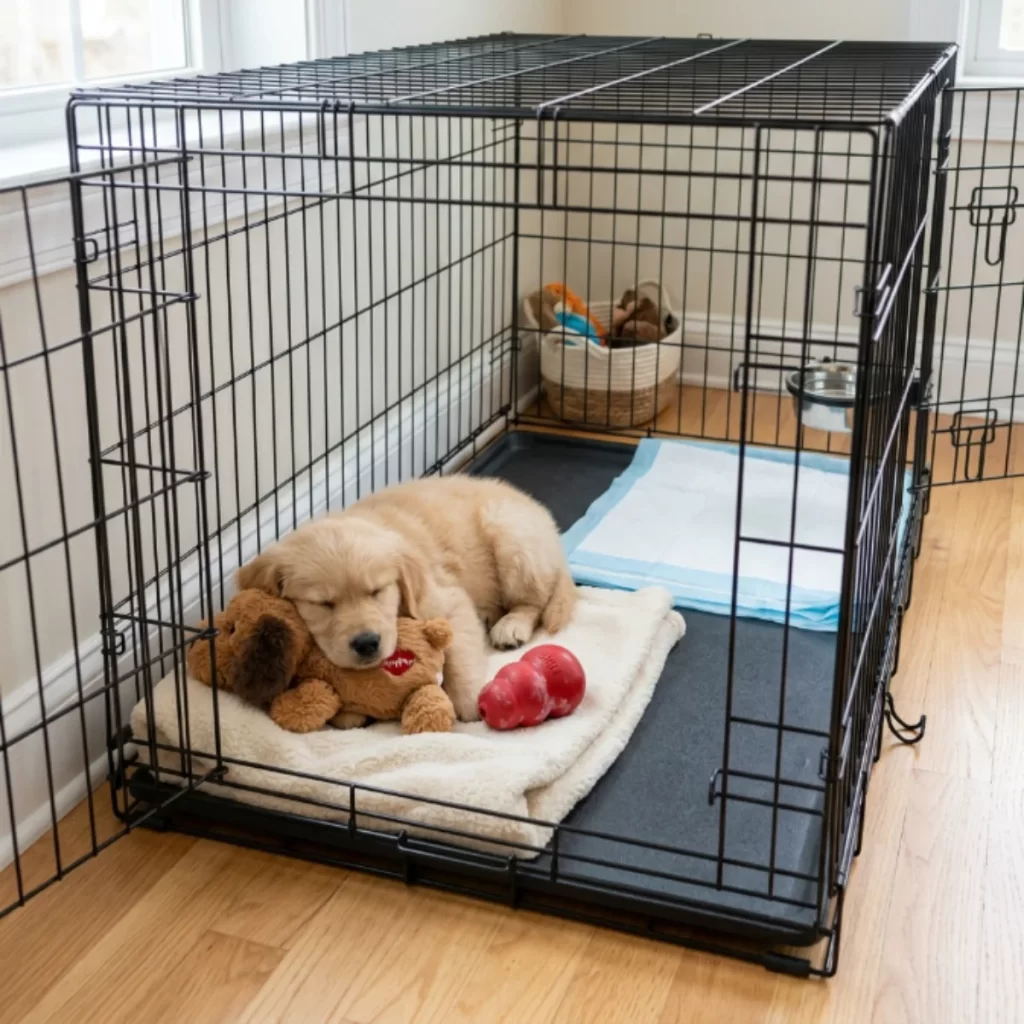
Many puppy owners place a small bed or crate mat inside the crate. This can make the crate feel more inviting.
That said, some puppies chew bedding when left alone. In that case, remove the bed for a while and use a safe, washable crate tray. Add bedding later when your puppy can relax without chewing it.
Support for house training
A puppy may avoid soiling a clean sleeping area, especially when the bed is the right size. But this is not a guarantee. Young puppies have small bladders and may still have accidents.
Choose a washable bed and take your puppy outside on a regular schedule. Do not punish accidents. Calm cleaning and steady routines work better.

Do Puppies Need a Dog Bed in a Crate?
A puppy does not always need a dog bed inside the crate. The right choice depends on safety and behavior.
If your puppy lies down calmly and does not chew the bed, a thin crate mat can add comfort. If your puppy tears, eats, or pulls apart bedding, the bed may become unsafe.
Swallowed fabric or foam can cause a dangerous intestinal blockage. Loose threads can also catch around a puppy’s toes, nails, or teeth.
Use this simple test:
-
Give your puppy a plain, durable mat while you supervise.
-
Watch for chewing, digging, pulling, and tearing.
-
Remove the mat if your puppy bites or swallows pieces.
-
Try again later when your puppy is calmer and more mature.
Never use thick blankets, loose pillows, or stuffed beds for a puppy that destroys bedding. A bare crate with a safe floor is better than a comfortable bed that creates a health risk.
The crate should also be large enough for your puppy to stand, turn around, lie down, and stretch. It should not be so large that your puppy can sleep in one corner and use another corner as a bathroom.

Choosing the Best Dog Bed for a Puppy
The best puppy bed is safe, washable, durable, and suited to your puppy’s size. A high price does not always mean better quality.
Choose the correct size
Your puppy should be able to lie on the bed in several positions. Measure your puppy from nose to tail base, then add several inches.
For a growing puppy, you can buy a bed that fits the expected adult size. Use a divider or smaller sleeping area if the bed is too large for the current crate.
A bed that is too small may cause discomfort. A bed that is too large may feel less secure and can make house training harder in a crate.
Pick washable materials
Puppies have accidents, track in dirt, and may drool or vomit. A removable, machine-washable cover is one of the most useful features you can buy.
Look for:
• A strong zipper or secure closure
• A cover that can handle frequent washing
• Colorfast fabric
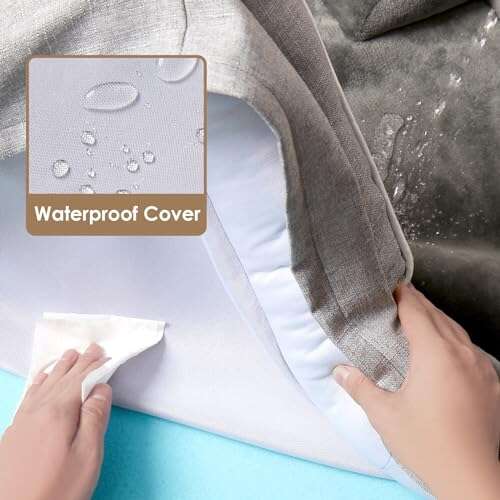
• A waterproof inner liner
• Seams that are difficult to pull apart
Avoid beds with small buttons, beads, ribbons, or loose decorations. These can become choking hazards.
Consider the bed style
Different beds suit different puppies.
• Flat mats work well in crates and for warm rooms.
• Bolster beds give puppies a side to lean against.
• Waterproof beds help with accidents and outdoor use.
• Cooling beds may help in hot weather, but they should not replace shade and fresh water.
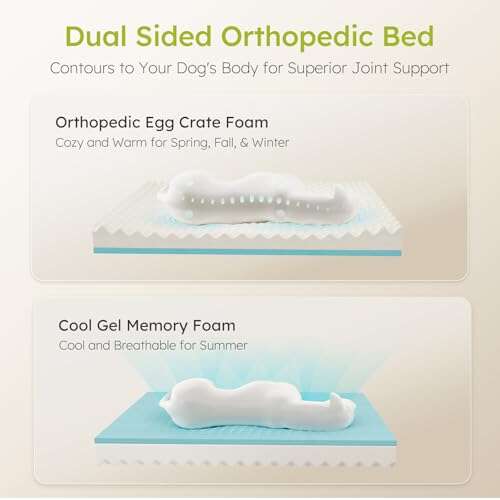
• Orthopedic foam may help older dogs or puppies with special needs, but most healthy puppies do not need expensive memory foam.
For most puppies, start with a simple flat mat or durable bolster bed. You can learn your puppy’s preferences over time.
Think about temperature
Puppies can become cold more easily than healthy adult dogs, but overheating is also a risk. Keep the bed away from drafts, heaters, fireplaces, and direct sun.
Do not use electric heating pads unless your veterinarian specifically recommends one and you can follow strict safety instructions. Young puppies may chew cords or fail to move away from excess heat.

Where Should a Puppy’s Bed Go?
Place the bed in a calm area where your puppy can still see and hear the family. A corner of the living room often works well during the day.