What Is The Best Dry Food For Large Dogs: Expert Guide
Find out what is the best dry food for large dogs, with expert tips on nutrition, ingredients, and choosing the right formula for a healthier pet.
Introduction
The best dry food for a large dog in the United States is a complete and balanced food made for the dog’s life stage, size, health needs, and activity level. There is no single kibble that suits every large-breed dog.
For most healthy adult dogs, look for a food with an AAFCO nutritional adequacy statement, controlled calories, named animal protein, and feeding directions for adult maintenance. Large-breed puppies need a different formula because excess calories and minerals may affect growing bones and joints.
This guide explains how to choose dry dog food in the U.S., how to read the label, which ingredients matter, and when a veterinarian should choose the diet.

Quick answer: Which dry food is best?
The best dry food for your large dog should match these points:
- It is labeled complete and balanced for the correct life stage.
- It is made for adult maintenance, growth, or all life stages, as appropriate.
- A large-breed puppy food is labeled for growth, including growth of large-size dogs when applicable.
- It provides enough protein but not excessive calories.
- Your dog keeps a healthy body shape on it.
- Your dog has firm stools, steady energy, healthy skin, and a good coat.
- Your veterinarian approves it if your dog has a medical condition.
Large dogs often need fewer calories per pound than small dogs. They also place more stress on their hips, elbows, knees, and spine. The right food supports steady growth, lean body mass, and a healthy body weight.
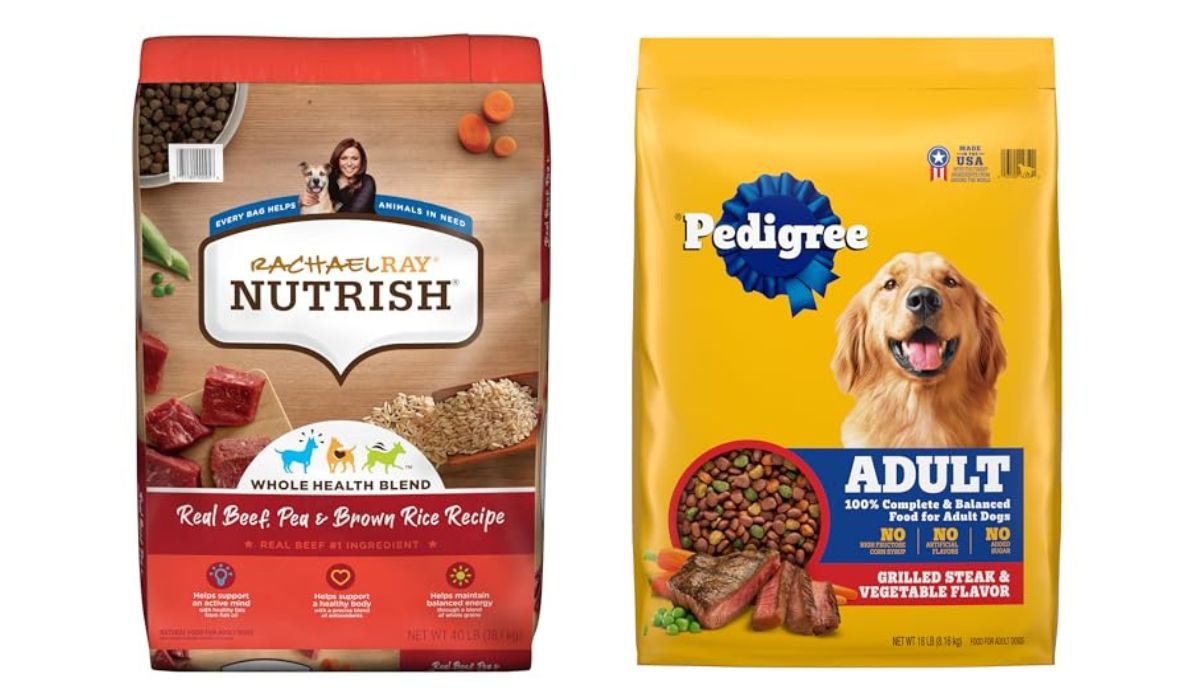
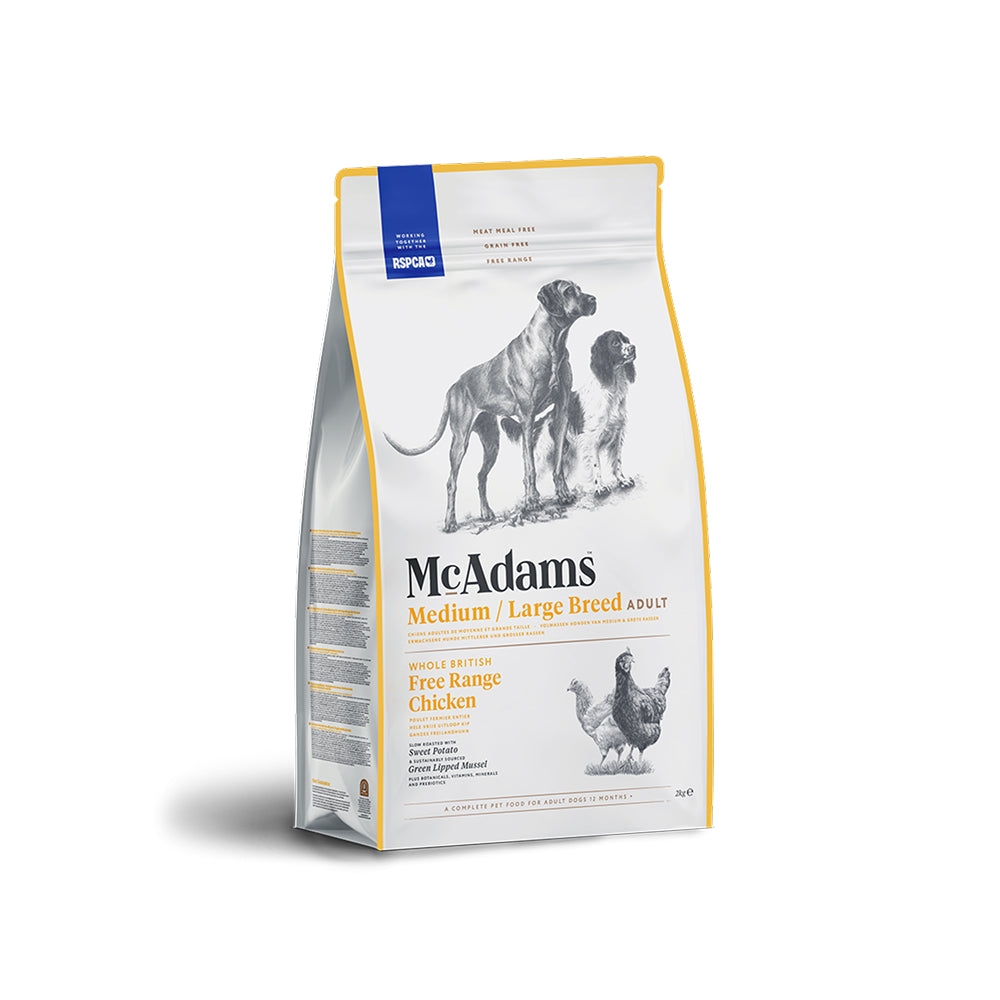
For a healthy adult dog, reliable examples may include large-breed formulas from established manufacturers such as Purina Pro Plan, Hill’s Science Diet, Royal Canin, Iams, Eukanuba, and other brands that provide clear nutrition and quality information. These names are examples, not a universal ranking. Formula names, recipes, and availability can change, so read the current U.S. label before buying.
What makes a good large-breed dog food?
A good food does more than list meat near the top of the ingredient panel. It must provide the right nutrients in the right amounts.
1. Complete and balanced nutrition
The first label to check is the nutritional adequacy statement. In the United States, this statement is usually based on nutrient profiles or feeding trials set by the Association of American Feed Control Officials, or AAFCO.
Look for wording such as:
“Animal feeding tests using AAFCO procedures substantiate that this product provides complete and balanced nutrition…”
or:
“Formulated to meet the nutritional levels established by the AAFCO Dog Food Nutrient Profiles…”
The statement should match your dog’s needs. A puppy, adult dog, pregnant dog, and senior dog do not all need the same diet.
“Premium,” “natural,” “holistic,” and “human-grade” are not substitutes for nutritional adequacy. They may describe marketing or processing features, but they do not prove that a food is better for your dog.
2. Appropriate calories
Calories matter because extra weight increases the load on a large dog’s joints. A food with moderate calories can make weight control easier, especially for dogs that are calm, neutered, older, or prone to weight gain.
Check the label for:
- Calories per cup
- Calories per kilogram
- Suggested daily feeding amount
- Fat percentage
- Fiber percentage
Feeding charts are only starting points. Two dogs of the same breed and weight may need very different amounts. Track your dog’s body shape and adjust food with veterinary guidance.
A large dog should usually have:
- Ribs that can be felt without a thick fat layer
- A visible waist when viewed from above
- An abdominal tuck when viewed from the side
- No heavy fat pad at the base of the tail
The Body Condition Score system from the World Small Animal Veterinary Association can help you judge body fat more reliably than body weight alone.
3. Enough protein for lean muscle
Protein supplies amino acids for muscles, skin, organs, and immune function. Large dogs need enough high-quality protein, but a high protein number alone does not prove that a food is superior.
The ingredient list can show protein sources, but it cannot tell you the full amino acid quality or digestibility of the finished diet. The guaranteed analysis also does not show how much protein your dog actually absorbs.
Useful label clues include:
- A named animal protein, such as chicken, beef, lamb, turkey, or salmon
- A clear guaranteed analysis
- A complete and balanced statement
- Manufacturer contact details
- Feeding directions and calorie information
Avoid judging a food only by whether it contains grains or by the position of one ingredient. Ingredients work together as a complete recipe.
4. Controlled minerals for growing puppies
Large-breed puppies need careful mineral and calorie control. Rapid growth can place stress on developing bones and joints.
Calcium and phosphorus are especially important. More is not always better. Adding calcium supplements to a complete puppy food can create an imbalance and may harm a growing dog.
Choose a food designed for large-breed puppy growth. Do not use an adult maintenance food for a puppy unless your veterinarian specifically recommends it.
5. Digestibility and tolerance
A food can look excellent on paper and still fail for one dog. Your dog’s response matters.
Signs that a food agrees with your dog include:
- Firm, formed stools
- Normal stool frequency
- Stable weight
- Good appetite
- Normal energy
- Healthy skin and coat
- No repeated vomiting or gas
If a diet causes ongoing diarrhea, itching, ear problems, or poor appetite, do not keep changing foods at random. Ask your veterinarian to look for parasites, allergies, food intolerance, or another medical cause.

Best dry food by dog type
The right answer changes with age, body condition, activity, and health.
| Dog type | What to look for | Main caution |
|---|---|---|
| Large-breed puppy | Food labeled for growth, including large-size dogs where applicable | Avoid excess calories and calcium supplements |
| Healthy adult | Adult maintenance food with moderate calories | Adjust portions to body condition |
| Senior large dog | Complete diet with suitable calories and protein | “Senior” is not a regulated life stage in the same way as puppy or adult |
| Overweight dog | Calorie-controlled food and measured portions | Exercise and medical causes also matter |
| Very active or working dog | More energy-dense food when needed | Do not overfeed on rest days |
| Sensitive stomach | A highly digestible diet with simple, consistent feeding | Chronic symptoms need veterinary evaluation |
| Suspected food allergy | Veterinary elimination diet | Over-the-counter “limited ingredient” foods may contain trace proteins |
| Joint disease | Weight control first; veterinary diet may help | Food cannot repair damaged joints |
Best food for large-breed puppies
For a large-breed puppy, choose a food that specifically supports controlled growth. Follow the feeding chart, weigh the puppy often, and keep treats to a small part of daily calories.
Do not try to make a puppy grow as fast as possible. A steady growth rate is generally safer for the skeleton than rapid weight gain.
A veterinarian should monitor puppies expected to weigh about 50 pounds or more as adults, especially breeds such as Great Danes, German Shepherd Dogs, Labrador Retrievers, Golden Retrievers, Mastiffs, and Rottweilers. The exact diet and feeding plan may vary by breed, size, activity, and health.
Best food for healthy adult large dogs
Most healthy adult large dogs do well on an adult maintenance food from a manufacturer that has strong quality controls and clear nutrition information.
Choose a formula based on:
- Current body condition
- Activity level
- Stool quality
- Any history of food reactions
- Calorie needs
- Your veterinarian’s advice
A formula labeled “large breed” may offer larger kibble or a different nutrient profile, but the phrase itself does not guarantee better nutrition. Read the full label.
Best food for overweight large dogs
For an overweight dog, a weight-management diet may be more useful than simply feeding less of a regular food. These diets may provide fewer calories per cup, more fiber, or a nutrient profile designed to support weight loss.
Your veterinarian can calculate a safe calorie target. Sudden, aggressive restriction can leave a dog hungry and may fail to provide the right nutrient balance.
Treats, table scraps, dental chews, and supplements count. If they provide calories, include them in the daily plan.
Best food for senior large dogs
Older dogs may need fewer calories, but age alone does not tell you exactly what to feed. Some senior dogs lose weight, while others become less active and gain weight.
A senior diet may be useful when it matches the dog’s needs. However, “senior” is not a single universal nutrient standard. Check the adequacy statement and ask your veterinarian about kidney, heart, joint, dental, or digestive concerns.
A sudden change in appetite or body weight is a health signal, not merely a reason to switch brands.

How to compare dry dog food labels
Use the label in this order.
Step 1: Confirm the life stage
Find the AAFCO adequacy statement. Confirm that it says the food is complete and balanced for:
- Growth
- Adult maintenance
- All life stages
For puppies expected to become large adults, choose a formula with appropriate large-size growth guidance.
Step 2: Check calories
Compare calories per cup rather than judging portions by volume alone. A cup of one food may contain far more calories than a cup of another.
Example calculation:
If a dog needs about 1,800 calories per day and the food contains 400 calories per cup:
1,800 ÷ 400 = 4.5 cups per day
This is only a hypothetical example. A veterinarian should help set the calorie target, and the actual amount should change with body condition.
Step 3: Review the guaranteed analysis
The guaranteed analysis usually lists minimum crude protein and crude fat, plus maximum crude fiber and moisture. These figures help compare foods, but they have limits.
For a fair comparison between foods with different moisture levels, use a dry-matter basis. A simple formula is:
Dry-matter protein percentage = protein percentage ÷ (100 − moisture percentage) × 100
Example:
A food with 24% protein and 10% moisture has:
24 ÷ 90 × 100 = 26.7% protein on a dry-matter basis
This calculation does not prove that the food is better. It only makes label comparisons more meaningful.
Step 4: Read the ingredient list in context
Ingredients appear by weight before cooking. Meat may contain a lot of water, so ingredient order does not reveal the final nutrient value by itself.
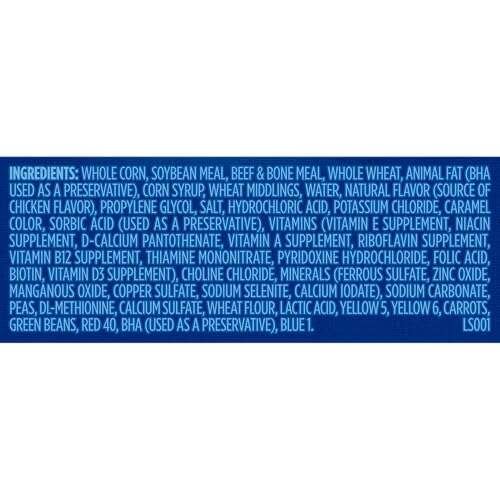
Look for a recipe that clearly identifies its ingredients and provides a way to contact the manufacturer. Be cautious of claims that rely only on dramatic ingredient language, such as “ancestral,” “detox,” or “superfood.”
Step 5: Evaluate the manufacturer
The WSAVA nutrition toolkit suggests asking manufacturers about formulation, quality control, research, and nutrition expertise.
Useful questions include:
- Who formulates the food?
- Does the company employ qualified animal nutrition experts?
- Where is the food made?
- What quality tests are performed?
- Are ingredients and finished products tested?
- Does the company conduct feeding trials or other research?
- Can the company provide calorie and nutrient information?
A company that cannot answer basic nutrition and quality questions deserves caution.

Dry food ingredients large dogs may benefit from
Large dogs do not need a special ingredient list simply because they are large. They need a complete diet that supplies required nutrients.
Some ingredients may have a practical role:
- Animal proteins: Provide amino acids and support palatability.
- Fish oil: Can supply EPA and DHA, omega-3 fats often used in joint and skin nutrition.
- Fiber sources: May support stool quality and fullness.
- Glucosamine and chondroitin: Often included in joint diets, but results can vary and they are not cures for arthritis.
- Antioxidant nutrients: Support normal cell function as part of a balanced diet.
- Grains: Can provide starch, fiber, vitamins, and minerals when properly formulated.
- Peas, potatoes, or legumes: May be safe in some formulas, but the overall recipe and manufacturer practices matter more than one ingredient.
The U.S. Food and Drug Administration has investigated reports of canine dilated cardiomyopathy involving diets with high proportions of peas, lentils, other legumes, or potatoes. The FDA has not established that these ingredients alone cause heart disease in every dog, and the issue is complex. If your dog eats such a diet and develops weakness, coughing, breathing trouble, fainting, or reduced exercise ability, contact a veterinarian promptly.
Do not add taurine, vitamins, minerals, oils, or joint supplements without professional advice. Supplements can interact with medications or unbalance an otherwise complete diet.
How to switch your large dog to a new dry food
Change food over about seven days unless your veterinarian gives different instructions.
| Days | Old food | New food |
|---|---|---|
| 1–2 | 75% | 25% |
| 3–4 | 50% | 50% |
| 5–6 | 25% | 75% |
| 7 | 0% | 100% |
Use the same measuring method each day. A kitchen scale is often more accurate than a scoop, especially for calorie control.
Slow the change down if your dog develops mild loose stool. Return to the last ratio that worked, then increase the new food more gradually.
Call your veterinarian for:
- Repeated vomiting
- Bloody diarrhea
- Severe or ongoing diarrhea
- Refusal to eat
- Marked weakness
- Signs of dehydration
- Breathing problems
- Sudden abdominal swelling
Do not use a food change to manage a serious symptom at home.

Common mistakes when choosing food for a large dog
Choosing by ingredient order alone
The first ingredient does not tell the whole nutrition story. The finished food must meet nutrient requirements and suit the dog.
Feeding the label amount without checking body condition
Feeding charts are estimates. A sedentary dog may need less, while a working dog may need more.
Adding calcium to puppy food
Complete puppy food already contains calcium. Extra calcium can create an unhealthy balance.
Assuming grain-free means healthier
Grain-free food is not automatically safer or more nutritious. Dogs can digest properly cooked grains, and some dogs need diets that include them.
Changing food too often
Frequent changes make it hard to identify the cause of stomach problems. Change diets with a clear reason and keep notes.
Ignoring treats
Treats can quietly add many calories. Keep them modest and use part of the daily food allowance when needed.
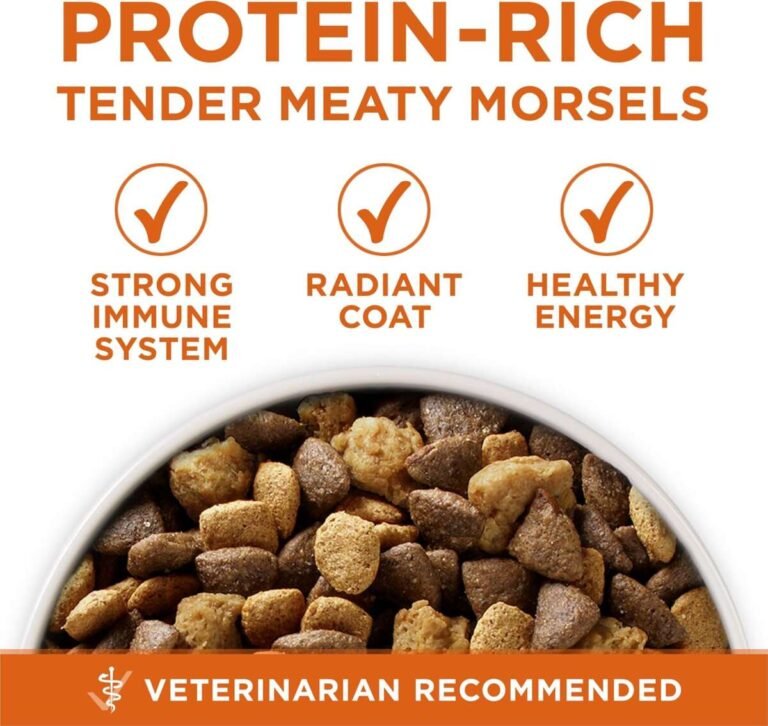
Believing “veterinarian recommended” without context
A claim may refer to a survey, a specific product, or an advertising study. Ask what was measured and under what conditions.

When your large dog needs a veterinary diet
A regular over-the-counter food may not be suitable for a dog with a diagnosed medical problem. Veterinary diets can be useful for conditions such as:
- Kidney disease
- Urinary stones
- Diabetes
- Severe food allergy
- Chronic intestinal disease
- Pancreatitis
- Certain heart conditions
- Liver disease
- Obesity
These diets are designed around medical goals, such as mineral control, digestibility, fat content, or nutrient restriction. Use them with veterinary guidance rather than mixing several diets or adding supplements.
Seek veterinary help if your dog has ongoing itching, ear infections, chronic loose stool, repeated vomiting, weight loss, excessive thirst, or reduced stamina. Food may be involved, but many illnesses can look like a food reaction.
FAQs about dry food for large dogs
Is large-breed dog food necessary?
Not always. A healthy adult large dog may do well on a complete and balanced adult maintenance food that provides suitable calories. Large-breed puppy food is more important during growth because puppies need careful control of calories and minerals.
Should large dogs eat high-protein food?
Large dogs need adequate protein, but “higher” is not automatically better. Choose a complete food with suitable calories and protein quality. Dogs with kidney disease or other conditions may need a specific veterinary diet.
Is dry food better than wet food for large dogs?
Neither is always better. Dry food is convenient and calorie-dense. Wet food adds water and may help dogs that prefer soft food. Some owners use a mix. The complete diet, total calories, and your dog’s response matter most.
How many cups of dry food should a large dog eat?
There is no safe answer based on weight alone. Use the food’s calorie information, your dog’s activity, and body condition. Ask your veterinarian for a starting calorie target, then adjust based on weight and body shape.
Can large dogs eat grain-free dry food?
They can eat it, but grain-free is not automatically healthier. Choose a diet for a clear reason, not because the label sounds more natural. Discuss grain-free feeding with your veterinarian, especially if your dog has a heart condition or related symptoms.
Final recommendation
For most healthy adult large dogs in the United States, start with a complete and balanced adult-maintenance dry food from a transparent manufacturer, then choose calories and portions based on body condition.
For a large-breed puppy, use a large-breed growth formula and avoid calcium supplements. For an overweight, senior, allergic, or medically fragile dog, ask a veterinarian to select the diet.
The best food is not the one with the loudest label. It is the one that meets recognized nutrition standards, fits your dog’s life stage, keeps your dog lean, and produces steady health over time.

Pet Care Writer & Researcher
Daniel writes practical guides on daily care, feeding, and safety, turning complex topics into simple, actionable advice.