Do Aussiedoodles Bark A Lot: What Owners Should Know
Do Aussiedoodles bark a lot? Learn why they bark, how much to expect, and practical training tips for a quieter, happier home.
Aussiedoodles may bark more than some breeds, but most do not bark constantly when their needs are met.
Do Aussiedoodles bark a lot? The honest answer depends on genetics, training, exercise, age, and home life. This Australian Shepherd and Poodle mix is bright, social, and alert. Those traits can make an Aussiedoodle vocal, but they also make the dog highly trainable. In this guide, you will learn why Aussiedoodles bark, how much barking is normal, and what you can do to create a quieter, happier home.
Do Aussiedoodles bark a lot?
Aussiedoodles can bark often, but they are not always excessive barkers. Their barking level can range from low to high. Each dog is different because this mix can inherit traits from either the Australian Shepherd or the Poodle.
Australian Shepherds often use their voices while working, herding, or alerting their families. Poodles are also alert and intelligent. Some Poodles bark at sounds, people, or changes around the home. When these traits combine, an Aussiedoodle may notice nearly everything.


Still, barking is only one part of the picture. A well-exercised, trained, and secure Aussiedoodle may bark briefly and then settle. A bored, lonely, or anxious dog may bark for long periods.
Common factors that affect Aussiedoodle barking include:
• Age and puppy development
• Daily exercise and mental stimulation
• Separation anxiety
• Noise and activity near the home
• Genetics and personality
• Socialization
• Training history
• Health or pain
So, do Aussiedoodles bark a lot? Some do, especially when they lack structure. Others are fairly quiet. It is best to view barking as communication rather than a character flaw.


Why do Aussiedoodles bark?
Dogs bark for many reasons. Before you try to stop the barking, identify the cause. Training works much better when you solve the problem behind the behavior.
Alert barking
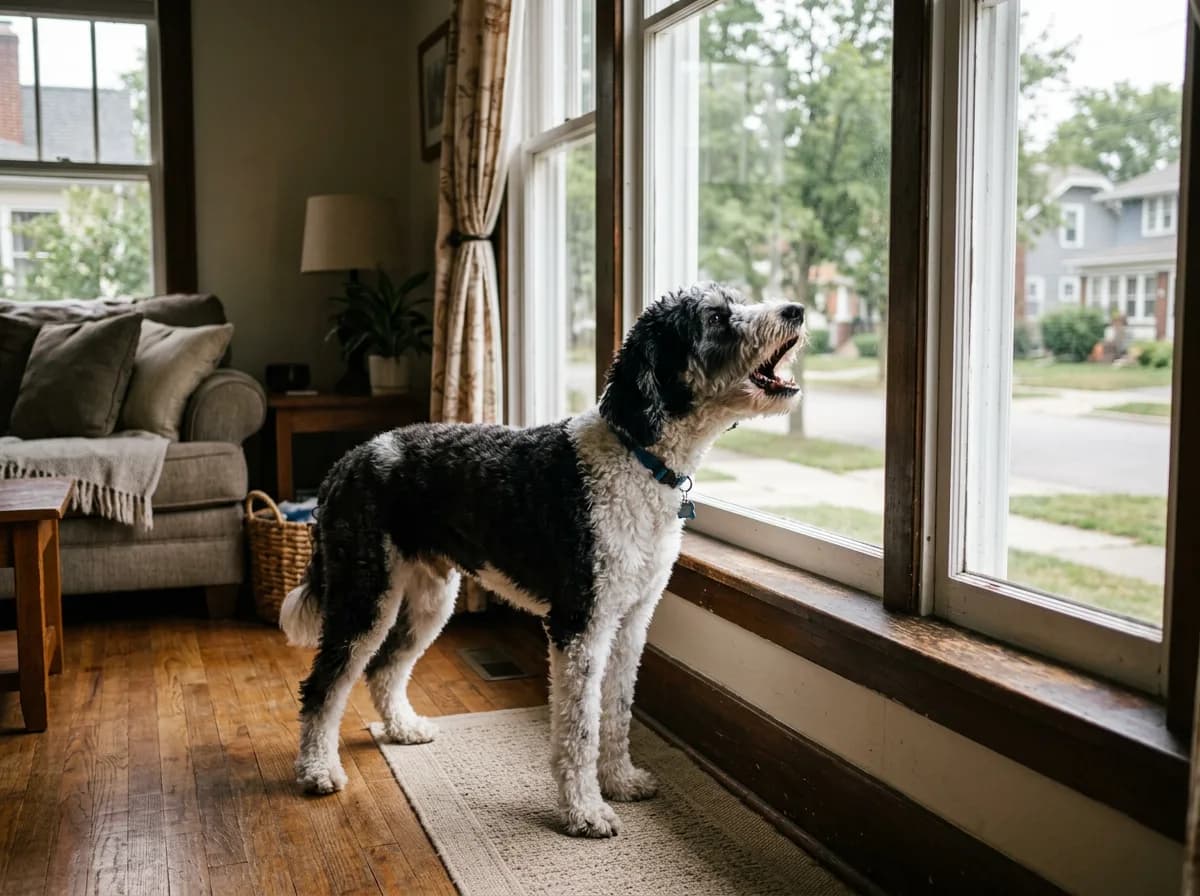
Aussiedoodles often bark when they hear a door, car, dog, or unfamiliar voice. Their alert nature can make them quick to respond. A few warning barks are normal.
The problem starts when the dog cannot calm down after the trigger passes. For example, your Aussiedoodle may bark at every person who walks by the window. Blocking the view and teaching a “quiet” cue can help.
Excitement barking
Some Aussiedoodles bark when they see a leash, toy, visitor, or food bowl. This is common in young dogs. The bark may sound happy, but it can still become loud and repetitive.
Reward calm behavior before exciting events. Ask your dog to sit, then give access to the toy or walk. This teaches your dog that calm behavior opens the door to good things.
Boredom barking
Aussiedoodles are smart working dogs. Their minds need daily tasks. Without enough activity, they may invent their own games, such as barking at birds, chewing furniture, or chasing shadows.
A long walk helps, but physical exercise alone may not be enough. Add simple training, scent games, puzzle toys, and safe play.
attention barking
An Aussiedoodle may bark because barking has worked before. If barking brings petting, eye contact, food, or a thrown toy, the dog may repeat it.
Try not to reward demand barking. Wait for a short pause, then give attention. At first, even one quiet second is worth rewarding.
Fear or anxiety barking
Fear barking often comes with a stiff body, tucked tail, pacing, hiding, or wide eyes. The dog may bark at strangers, cars, loud sounds, or other dogs.
Do not punish fear. Punishment can make the trigger feel more dangerous. Instead, increase distance, stay calm, and use gradual desensitization. A qualified behavior professional can help when fear is strong.
Separation-related barking
Some Aussiedoodles bark when left alone. They may also whine, scratch doors, destroy items, or pace. These signs can point to separation anxiety rather than simple boredom.
Leaving the dog alone for longer periods will not always fix the issue. A gradual departure plan, enrichment, and professional guidance may be needed.


How much barking is normal for an Aussiedoodle?
There is no exact number of barks that counts as normal. Dogs bark more in some settings than others. A few barks at a delivery person can be normal. Continuous barking for an hour is a sign that something needs attention.
Pay attention to the pattern. Ask yourself:
• What happens just before the barking?
• How long does it last?
• Can your dog stop after the trigger goes away?
• Does the barking happen only when alone?
• Does your dog show fear, frustration, or excitement?
• Has the barking changed suddenly?
A healthy, well-adjusted dog may bark to alert you and then relax. A dog that remains tense, frantic, or unable to settle may need more support.
The setting matters, too. An Aussiedoodle living in a busy apartment may bark at hallway sounds. One living in a quiet rural home may bark at wildlife. Neither dog is automatically “bad.” The environment shapes the behavior.
Remember that mixed-breed traits are hard to predict. One Aussiedoodle may be quiet like a calm Poodle. Another may be vocal and watchful like a working Australian Shepherd. Breed information can guide you, but your individual dog matters most.

What makes Aussiedoodles more likely to bark?
Some daily conditions can increase barking. The good news is that many are manageable.
Too little exercise
Aussiedoodles often need regular movement. A short bathroom walk may not meet the needs of an active adult. Dogs with unused energy may bark, jump, or race around the house.
Aim for a mix of walks, play, and training. Do not suddenly increase exercise in a young puppy. Growing joints need safe, age-appropriate activity.


Too little mental work
These dogs often learn quickly. Repeating the same walk may not challenge the brain. Use food puzzles, scent searches, trick training, and short obedience sessions.
Five minutes of focused training can tire a dog more than a long period of random activity. Think of mental work as reading for your dog’s brain.
Poor early socialization
A puppy that sees very few people, places, sounds, or friendly dogs may react with fear later. Safe socialization helps the puppy learn that new things are not always threats.
Socialization does not mean forcing a puppy to greet everyone. Let the puppy observe from a safe distance. Pair new sights and sounds with treats and praise.
Inconsistent rules
If barking sometimes earns a toy and sometimes earns a correction, your dog may become confused. Everyone in the home should respond in the same way.
Set simple rules. For example, wait for quiet before opening the door. Use the same cue and reward calm behavior each time.
Lack of sleep
Puppies and young dogs often need a great deal of sleep. An overtired Aussiedoodle may become restless, mouthy, and vocal. Scheduled naps can make a major difference.
Health problems
Pain, hearing changes, vision loss, hormone problems, or cognitive changes can affect barking. A sudden change deserves a veterinary check.
Do not assume that every behavior problem is a training problem. Good care starts with ruling out medical causes.

How to stop an Aussiedoodle from barking
The goal is not to silence every bark. Barking is normal dog behavior. The goal is to reduce unnecessary barking and teach your dog how to settle.
1. Find the trigger
Keep a simple barking log for several days. Write down the time, trigger, length, and your dog’s body language.
You may find a clear pattern, such as:
• Barking at windows from 7 to 9 a.m.
• Barking when children run in the yard
• Barking when left alone
• Barking before meals
• Barking during evening noises
Once you know the trigger, you can choose the right plan.
2. Reduce access to triggers
Management is not a failure. It prevents your dog from practicing the unwanted behavior.
You can:
• Close curtains during busy times
• Use a window film that blocks the lower view
• Move furniture away from windows
• Add soft background sound
• Keep your dog away from the front door during deliveries
• Use a secure, quiet rest area
Every time a dog rehearses barking, the habit can become stronger. Management gives training a better chance to work.
3. Teach a calm “quiet” cue
First, allow one or two alert barks. Then say “quiet” in a calm voice. Hold a treat near your dog’s nose. Most dogs pause to sniff. Mark that pause with praise and give the treat.
Repeat this process often. Gradually increase the quiet time before the reward. Never shout the cue. Loud human voices can sound like more barking to the dog.
4. Reward calm behavior
Notice your Aussiedoodle when it is quiet. Give a small treat while your dog rests on a mat or watches the world calmly.
This is one of the most useful lessons for any vocal dog. If you only react after barking starts, your dog may learn that barking gets your attention. Rewarding quiet moments teaches a better habit.
5. Use positive training
Reward-based training is supported by modern animal behavior guidance. It builds clear communication without adding fear. Punishment may stop a bark for a moment, but it can increase stress or damage trust.
Avoid shock collars, yelling, and physical corrections. These methods can hide warning signs without solving the cause. A quiet dog is not always a relaxed dog.
6. Build a daily routine
A predictable routine can lower stress. Include exercise, meals, rest, training, and alone time.
A simple day might include:
-
A morning walk with time to sniff
-
Breakfast in a puzzle feeder
-
A short training session
-
A quiet nap
-
Afternoon play or scent work
-
A calm evening walk
The exact plan will vary by age, health, and energy level. Consistency matters more than having a perfect schedule.

How to reduce barking when your Aussiedoodle is home alone
If your Aussiedoodle barks only when alone, look for signs of separation anxiety. A pet camera can help you see what happens after you leave. Some dogs bark for five minutes and settle. Others remain distressed for the entire absence.
Start with very short departures. Leave for a few seconds, return calmly, and repeat. Slowly build the time only when your dog stays relaxed.
Helpful steps include:
• Practice picking up keys without leaving
• Open and close the door without going out
• Give a safe food toy before a short departure
• Keep arrivals and departures calm
• Increase alone time in small steps
• Avoid leaving the dog alone longer than it can handle
If your dog panics, goes backward, or cannot manage even short absences, contact a veterinarian or certified behavior professional. Severe separation anxiety often needs a structured plan. In some cases, veterinary treatment can support behavior work.
Do not use a crate as a cure for anxiety. A crate can be useful when introduced positively, but a distressed dog may injure itself while trying to escape.

Do Aussiedoodles bark more in apartments?
An Aussiedoodle can live in an apartment, but the home needs a good plan. Shared walls make normal alert barking more noticeable. Hallway sounds, elevators, neighbors, and outdoor traffic can all become triggers.
Choose an Aussiedoodle with a temperament that fits your lifestyle when possible. An adult dog with a known behavior history may be easier to assess than a puppy with unknown traits.
Apartment strategies include:
• Use white noise near the entry door
• Teach a mat settle behavior
• Exercise before busy hallway times
• Block views of high-traffic areas
• Reward quiet responses to outside sounds
• Tell neighbors that you are working on training
Do Aussiedoodles bark a lot in apartments? They can, especially when bored or exposed to constant noise. Yet many adapt well when they receive exercise, enrichment, and calm training.

Are Aussiedoodles good for people who want a quiet dog?
An Aussiedoodle may be a poor match if you need a very quiet dog with little training. This mix often has strong social and mental needs. It can be wonderful for an active household that enjoys teaching and interacting with a dog.
Before choosing one, consider:
• How much time you have for exercise
• Whether the dog will be alone for long hours
• Your tolerance for alert barking
• Noise rules in your home
• Access to training support
• The dog’s parent temperaments and history
Do not choose an Aussiedoodle only because it is advertised as low-shedding or intelligent. Coat traits and behavior traits are separate issues. A low-shedding dog can still bark, shed some hair, or need extensive care.
When meeting a puppy or adult dog, watch how it responds to new sounds. Does it recover quickly? Does it seek help, explore, or remain tense? Recovery is often more important than whether the dog barks once.

Common mistakes that make barking worse
Many caring owners accidentally reinforce barking. This is easy to do because barking is stressful and attention often feels like the fastest solution.
Common mistakes include:
• Shouting “stop,” which can sound like participation
• Giving treats only after long barking sessions
• Opening the door while the dog is barking
• Allowing window patrol all day
• Using punishment without finding the cause
• Expecting exercise to solve anxiety
• Changing the rules from day to day
One lesson trainers often stress is to reward the behavior you want before the problem grows. If your Aussiedoodle lies quietly while a person walks past, reward that moment. Do not wait for barking to begin.
Progress may be uneven. Your dog may improve at home but bark at the park. That does not mean training failed. It means the dog needs practice in new places and around stronger triggers.
When should you contact a professional?
Seek professional help when barking is intense, sudden, or linked with fear. A veterinarian should assess a sudden behavior change, especially in an older dog.
Contact a qualified trainer or veterinary behavior professional if your Aussiedoodle:
• Barks for long periods every day
• Shows panic when alone
• Growls, lunges, or snaps
• Cannot settle after common triggers
• Injures itself at doors or windows
• Has barking that disrupts sleep or neighbors
Choose a professional who uses reward-based methods and can explain the plan clearly. Behavior problems are easier to solve when addressed early.
A professional should also consider the whole dog. Sleep, pain, diet, exercise, environment, learning history, and family routines can all matter. There is rarely one magic command.
Frequently Asked Questions About Do Aussiedoodles Bark a Lot
Do Aussiedoodles bark more than other dogs?
Some Aussiedoodles bark more than quiet companion breeds because both parent breeds can be alert and vocal. However, individual temperament, training, exercise, and home life have a major effect.
Are Aussiedoodles yappy dogs?
Aussiedoodles are not automatically yappy dogs. Repeated high-pitched barking is more likely when the dog is bored, anxious, overexcited, or rewarded for demanding attention.
Can you train an Aussiedoodle not to bark?
You can reduce unnecessary barking and teach a calm response, but you cannot remove normal dog communication completely. Find the trigger, manage the environment, reward quiet behavior, and use consistent training.
Why does my Aussiedoodle bark at strangers?
Your Aussiedoodle may be alert, excited, fearful, or protective when strangers approach. Watch the body language and use distance, treats, and gradual socialization instead of punishment.
Will an Aussiedoodle bark when left alone?
Some Aussiedoodles bark when alone, especially if they have separation anxiety or too little enrichment. Short practice departures, food toys, and professional help can support a calmer response.
Do Aussiedoodle puppies bark a lot?
Puppies often bark during play, frustration, fear, teething, or attention seeking. Early socialization, naps, gentle training, and a steady routine can prevent many barking habits from becoming stronger.
Conclusion
Do Aussiedoodles bark a lot? Some can, but frequent barking is not guaranteed. Their alert nature, intelligence, energy, and sensitivity can make them vocal when they are bored, worried, excited, or undertrained.
Start by finding the reason for the barking. Then provide suitable exercise, mental work, rest, trigger management, and reward-based training. If the barking is sudden, severe, or linked with anxiety, involve a veterinarian or qualified behavior professional.
With patience and clear routines, many Aussiedoodles learn to bark less and settle more. Begin by tracking your dog’s triggers today, reward every calm moment, and explore trusted training resources for continued support.

Pet Care Writer & Researcher
Daniel writes practical guides on daily care, feeding, and safety, turning complex topics into simple, actionable advice.