What Is The Best Dog Bed For A Golden Retriever: Guide
Find out what is the best dog bed for a golden retriever, with expert tips on size, support, durability, and comfort for better sleep.
The best dog bed for a Golden Retriever is usually a large orthopedic bed with a thick, supportive foam base, a washable cover, and enough room for your dog to stretch out. For most adult Goldens in the United States, a bed around 40 by 30 inches is a useful starting point, but your dog’s sleeping style matters more than breed alone.
Choose a firmer memory-foam or foam-and-fiber bed for an older dog, a Golden with stiff joints, or a dog that struggles to rise. A washable bolster bed may suit a younger dog that likes to rest its head on an edge. For hot U.S. climates, add a breathable cover or cooling bed rather than choosing a thick, heat-trapping design.

Quick answer: Which type of bed is best?
A large orthopedic memory-foam dog bed is the best all-around choice for most Golden Retrievers. It supports the hips, shoulders, and spine while giving a large dog enough space to change position.
Look for these features:
- A sleep surface at least as long as your dog from nose to tail base
- A width that lets your dog lie on its side with legs extended
- A supportive foam base rather than loose filling alone
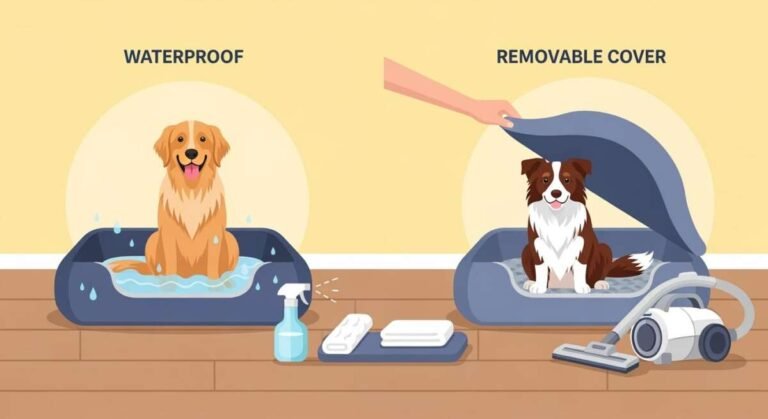
- A removable, machine-washable cover
- A non-slip bottom
- Water-resistant or waterproof protection under the cover
- A low entry for senior dogs or dogs with joint pain
- Strong stitching and a cover that can withstand regular washing
A bolster edge is helpful if your Golden likes to lean or rest its head. However, a high edge can make it harder for an older dog to climb in. The best design depends on age, health, sleeping style, and the room where you will use the bed.
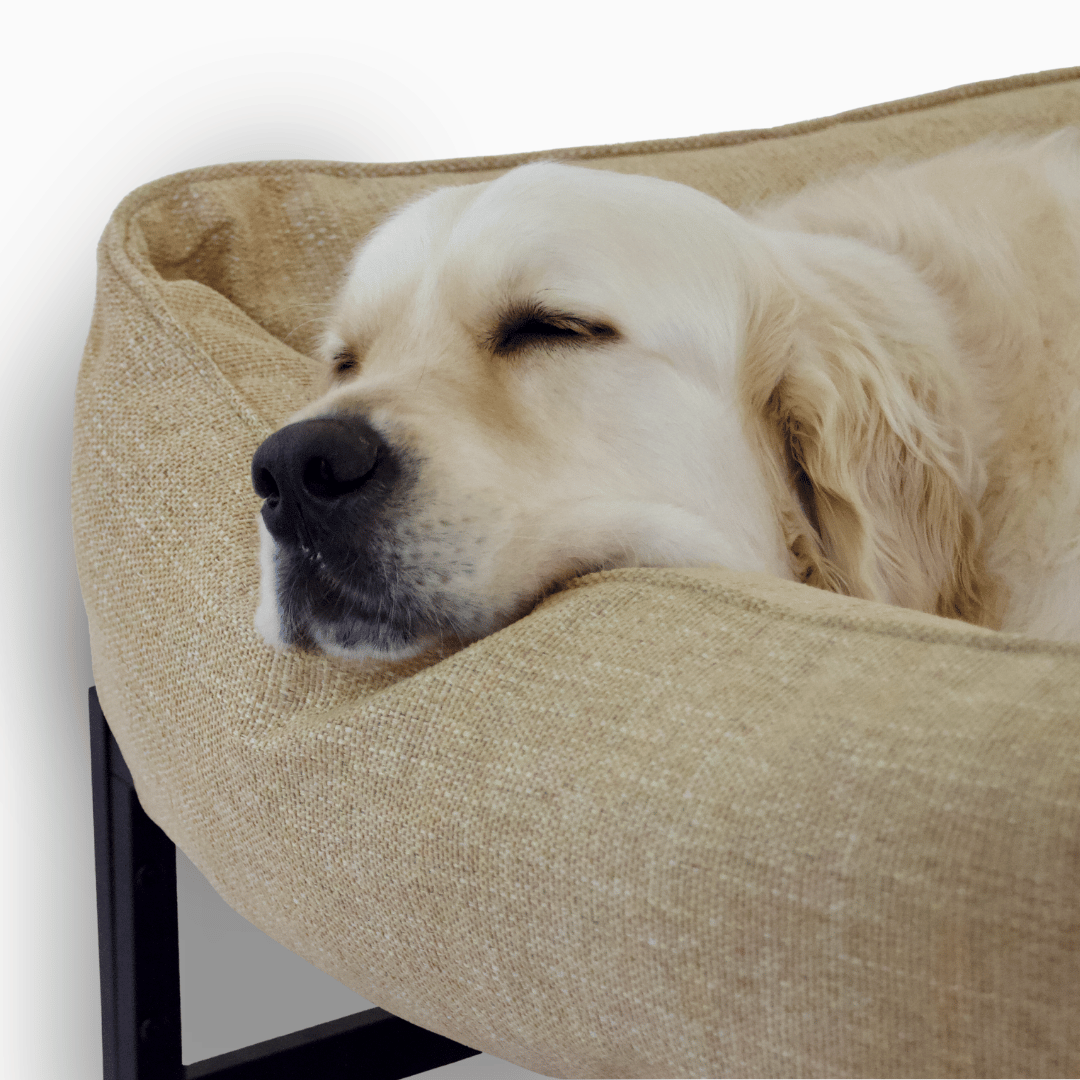
Why Golden Retrievers need a well-sized, supportive bed
Golden Retrievers are large dogs with heavy frames and active lifestyles. The American Kennel Club lists adult males at about 65 to 75 pounds and adult females at about 55 to 65 pounds, though individual dogs can fall outside those ranges.
Their size puts more load on a bed than a small dog would create. A thin pad may flatten quickly, leaving the dog on the floor. A supportive base can also make it easier for a stiff dog to stand, although a dog bed cannot treat arthritis, hip dysplasia, or another joint disorder.
Golden Retrievers may also need a bed that handles:
- Shedding
- Wet fur after walks
- Drool and dirt
- Frequent washing
- Long sleep periods
- Heat in warm parts of the United States
- Chewing during puppyhood
A good bed should spread your dog’s weight instead of allowing the hips and shoulders to press against a hard floor. That is the practical reason orthopedic foam is often a better choice than a thin cushion.

How to choose the right size
Measure your Golden Retriever while the dog is lying in its usual stretched-out position. Measure from the nose to the base of the tail, then measure the widest part of the body. Add about 6 to 12 inches to each measurement.
For example, if your dog measures 34 inches from nose to tail base, a sleep surface of about 40 to 46 inches may be more comfortable than a 36-inch bed.
| Golden Retriever sleeping style | Useful starting size | What to check |
|---|---|---|
| Curled-up sleeper | 36 by 24 inches or larger | The dog should not spill over the edge |
| Side sleeper | 40 by 30 inches or larger | Legs should fit without hanging off |
| Stretched-out sleeper | 44 by 30 inches or larger | Measure the dog before buying |
| Senior or stiff dog | Large, low-entry model | The dog should step in without lifting its legs high |
| Shared dog bed | Extra-large model | Each dog needs room to turn and rest |
These are starting points, not fixed rules. Bed labels differ between brands, and some brands list the outside dimensions rather than the actual sleeping area.
Signs the bed is too small
The bed may be too small if your dog:
- Sleeps with its head or legs hanging off
- Avoids the bed despite liking the material
- Frequently changes position
- Lies beside the bed instead of on it
- Cannot turn around without stepping out
A bed that is slightly too large is usually more useful than one that is too small. Extra space lets a Golden Retriever move away from heat, stretch after sleep, and choose a comfortable position.

Which bed material is best?
The best material depends on your dog’s age, health, habits, and climate. No single material works well for every Golden Retriever.
Memory foam
Memory foam can spread weight across the body and reduce pressure on the hips and shoulders. It is often a strong choice for senior dogs or dogs with joint discomfort.
Choose memory foam when your dog:
- Is older
- Has trouble standing after rest
- Sleeps on hard floors
- Has a history of joint problems
- Needs a stable surface
Check whether the foam forms a firm base under the dog. A bed described only as “orthopedic” may not provide much useful information, because that word is widely used in marketing.
Foam and fiber fill
A foam base with a softer fiber layer can offer support and comfort. This design may feel less firm than solid memory foam and may suit a young, healthy Golden Retriever.
The main drawback is maintenance. Fiber can shift or flatten over time, especially under a heavy dog. Look for a cover that allows you to inspect or replace the inner cushion.
Polyester fiber or loose fill
Loose fill is soft and often costs less. It can work as a travel bed or temporary bed, but it may not provide stable support for a large dog.
A Golden Retriever may also push the fill into lumps. If the bed becomes uneven, replace it or add a supportive insert rather than relying on extra blankets.
Elevated mesh beds
Elevated beds allow air to move beneath the dog. They can work well for outdoor use, garages, porches, and hot homes.
They are less suitable when:
- The frame is hard to step over
- The fabric sags
- The dog has trouble climbing
- The edges are sharp
- The bed lacks a soft layer for joint comfort
An elevated cot can be useful in summer, but it may not be the best only bed for a senior Golden Retriever.
Cooling gel beds
Cooling beds may help a dog settle in warm weather, but they do not replace shade, water, airflow, or veterinary care. Some dogs dislike the feel of gel, and aggressive chewers may damage gel inserts.
Never use a cooling bed as a way to manage suspected heatstroke. Heavy panting, weakness, vomiting, confusion, collapse, or very hot skin requires urgent veterinary attention.
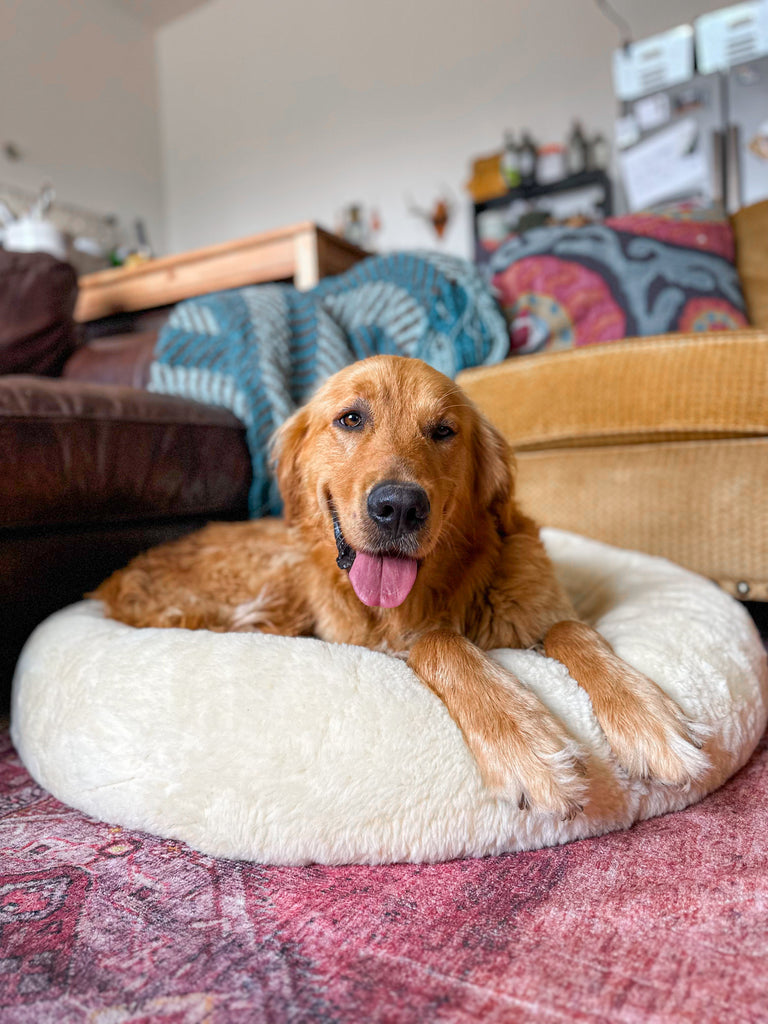
The best dog bed for each type of Golden Retriever
The right choice changes with the dog. Use this guide instead of buying based on appearance alone.
| Your Golden Retriever | Best bed style | Main reason |
|---|---|---|
| Healthy adult | Large foam bed with washable cover | Balanced support and comfort |
| Senior dog | Thick orthopedic foam with low entry | Easier access and stable support |
| Dog with joint pain | Firm foam base with soft top | Helps limit pressure without sinking deeply |
| Puppy | Durable, washable bed with protected seams | Easier cleaning and better chewing resistance |
| Heavy chewer | Simple, tough cot or reinforced bed | Fewer loose parts and easier inspection |
| Hot sleeper | Breathable foam cover or elevated cot | Better airflow |
| Dog that nests | Durable bolster bed with replaceable cover | Supports digging and head resting |
| Dog that has accidents | Waterproof liner and washable cover | Limits damage to the inner foam |
| Travel dog | Foldable mat or portable cot | Easier transport and cleaning |
If your Golden Retriever has diagnosed hip dysplasia, arthritis, or another painful condition, ask your veterinarian what type of support and access height may suit the dog. A bed can improve comfort, but it is not a substitute for diagnosis or treatment.

Features that matter most
Some bed features are genuinely useful. Others mainly add cost or visual appeal.
Supportive base
The base should stay reasonably level under your dog’s weight. A bed that collapses until the dog reaches the floor offers little support.
If the manufacturer provides foam details, review them. Still, foam density and thickness are not the only factors. The cover, construction, temperature, and your dog’s weight also affect how the bed feels.
Washable cover
Golden Retrievers shed heavily. A removable cover that can go into a household washing machine is much easier to maintain than a bed that must be hand-washed.
Before buying, check:
- Whether the cover is machine washable
- The required water temperature
- Whether the cover can go in a dryer
- Whether replacement covers are sold
- Whether the zipper is protected
- Whether the inner foam can be cleaned safely
Do not put a foam core in a washing machine unless the care instructions clearly allow it. Foam can hold water and may develop mold if it does not dry fully.
Waterproof protection
A waterproof liner can protect foam from urine, vomit, wet fur, and spills. This is especially useful for puppies, older dogs, and dogs recovering from illness.
A water-resistant outer cover is not always waterproof. Look for a separate liner or a clearly stated waterproof barrier.
Low entry
A low front edge helps dogs step into the bed. This matters for older Goldens and dogs with limited hip or knee movement.
Avoid a high wall if your dog must jump into the bed. Repeated jumping may be uncomfortable for a dog with joint problems.
Non-slip bottom
A non-slip base helps the bed stay in place on hardwood, tile, and vinyl floors. This can reduce sliding when a dog stands up.
Place a non-slip rug pad under the bed if the base still moves. Make sure the pad does not create a trip hazard for people or pets.
Strong seams
A strong cover matters more than decorative fabric. Check customer photos and product details for reinforced seams, protected zippers, and replacement parts.
No fabric is truly chew-proof. Inspect the bed often and remove it if your dog tears out foam, fabric, or filling.

How much should you spend?
Price alone does not prove that a bed is better. A low-cost bed may work for a puppy or travel, while a more expensive bed may be worthwhile for a large senior dog that uses it every day.
Compare the total value, not just the starting price:
- Thickness and support of the base
- Actual sleeping area
- Cover quality
- Cost of replacement covers
- Warranty terms
- Shipping and return rules
- Ease of cleaning
- Expected service life
- Whether the bed stays supportive under your dog’s weight
A simple calculation can help. If a bed costs $150 and lasts three years, its purchase cost is about $50 per year before replacement covers. If a cheaper bed costs $60 but must be replaced every six months, four beds would cost $240 over two years.
This is only a hypothetical comparison. Real service life depends on washing, chewing, moisture, sunlight, and the dog’s weight.

Where should you place the bed?
Place the bed in a quiet area near the family, not in an isolated corner. Many Golden Retrievers want to rest while still watching the people in the home.
Keep the bed away from:
- Direct heat vents
- Wood stoves and radiators
- Strong drafts
- Damp basements
- Direct summer sun
- Busy doorways
- Stairs where the dog may fall
A washable mat under the bed can protect floors from moisture and dirt. In a multi-level home, consider one bed on each floor if your dog has trouble using stairs.
For crate training, use a bed that fits the crate without forcing the dog against the walls. Remove thick bedding if the puppy chews it or cannot move comfortably.

Common mistakes to avoid
Buying by breed label alone
“Golden Retriever bed” is not a reliable size measurement. Adult Goldens vary in weight, body shape, and sleeping style. Measure the dog and compare the usable sleep surface.
Choosing a soft bed with no support
A very plush bed may feel comfortable in the store but flatten under a large dog. Check how far the dog sinks and whether the hips touch the floor.
Ignoring heat
A thick foam bed can retain warmth. If your dog pants, leaves the bed, or sleeps on a cool floor, add airflow or choose a cooler surface.
Choosing a high bolster for a stiff dog
A tall edge can block access. Pick a low-entry design if your dog has trouble with hips, knees, or back movement.
Assuming “water-resistant” means waterproof
These terms are not interchangeable. Confirm whether the inner foam has a waterproof liner.
Leaving a damaged bed in use
Torn fabric, exposed foam, loose thread, and broken zippers can become choking or intestinal blockage hazards. Remove the bed until it is repaired or replaced.
Washing without drying fully
Damp foam can smell and grow mold. Follow the care label and allow every layer to dry completely before returning the bed to your dog.

How to help a Golden Retriever use a new bed
Put the new bed where your dog already likes to rest. Add a familiar blanket if it is clean and safe.
Reward calm behavior near the bed. You can place a treat on the bed, praise your dog for stepping onto it, and allow the dog to leave without pressure.
Do not force a dog to stay on a bed. If your dog avoids it, check for common problems:
- The bed may be too hot.
- The surface may feel unstable.
- The size may be too small.
- The edge may be difficult to cross.
- The cover may have a strong odor.
- The dog may have pain when lying down or standing up.
If your dog suddenly stops using all beds, struggles to rise, limps, cries, or changes sleeping habits, contact a veterinarian. A bed preference can sometimes reveal discomfort, but it cannot identify the cause.

Best overall recommendation
For most Golden Retrievers in the United States, choose a large, low-entry orthopedic foam bed with a washable cover, waterproof liner, non-slip base, and enough room for full-body stretching.
Choose a bolster only if your dog likes a headrest and can step over it easily. Choose an elevated cot for airflow, outdoor use, or hot weather, but pair it with a softer option if your dog is older or has joint pain. For a puppy or chewer, prioritize washable parts, simple construction, and safe materials over luxury padding.
The best bed is not the thickest or most expensive one. It is the bed your Golden can enter safely, use comfortably, stay cool on, and keep clean.
Frequently asked questions
What size dog bed does a Golden Retriever need?
Many adult Golden Retrievers fit a bed with an actual sleep surface of about 40 by 30 inches or larger. Measure your dog while stretched out and add 6 to 12 inches to the length and width.
Are orthopedic beds good for Golden Retrievers?
Yes, an orthopedic foam bed can provide more stable support than a thin cushion. It may improve resting comfort, but it does not cure arthritis, hip dysplasia, or other medical conditions.
Should a Golden Retriever bed have raised sides?
Raised sides can give a dog a place to rest its head and may make the bed feel secure. Use low sides for senior dogs or dogs with limited mobility.
How often should a dog bed be washed?
Wash the cover when it is dirty, smells, or has visible hair and stains. Dogs with allergies, accidents, or skin problems may need more frequent cleaning based on veterinary advice.
Can a Golden Retriever sleep on a cooling bed?
A cooling bed may help a dog settle in warm weather. It should be used with shade, water, and good airflow. Signs of heat illness require immediate veterinary care.
Is memory foam safe for dogs?
Memory foam is commonly used in dog beds, but the cover and foam should remain intact. Stop use if your dog chews the material or can reach loose foam, gel, or fabric.
Final takeaway
The best dog bed for a Golden Retriever is a properly sized orthopedic foam bed that is easy to clean and easy to enter. Measure your dog, match the bed to its age and health, and check the support rather than trusting labels such as “luxury” or “orthopedic.”
Before buying, confirm the usable sleep area, cover-care instructions, waterproof protection, return policy, and replacement-cover options. Then inspect the bed often and replace it when it becomes flat, damaged, or unsafe.
Sources for further reading
- American Kennel Club: Golden Retriever breed information
- American Animal Hospital Association: pet health resources
- U.S. Food and Drug Administration: pet safety information
- American Veterinary Medical Association: pet health resources

Pet Care Writer & Researcher
Daniel writes practical guides on daily care, feeding, and safety, turning complex topics into simple, actionable advice.