What Is The Best Dog Bed For German Shepherd: Best Guide
Find out what is the best dog bed for german shepherds, with expert tips on orthopedic support, durability, size, and comfort.
The best dog bed for a German shepherd is usually a large, firm orthopedic bed with a washable cover, strong support, and enough room for the dog to stretch out. A low, easy-entry design is best for older dogs or dogs with hip or joint pain. A raised or cooling bed may work better for dogs that run hot.
There is no single bed that fits every German Shepherd. The right choice depends on your dog’s size, age, sleep style, health, chewing habits, and the climate in your part of the United States.
This guide explains what to look for, how to choose the right size, and which features matter most.

The Best Overall Bed Type for a German Shepherd
For most German Shepherds, the best starting point is a large orthopedic mattress bed with high-density foam and a removable, washable cover.
German Shepherds are large, active dogs. Many spend long periods resting after walks, training, or play. A thin cushion may flatten under their weight and leave hips, elbows, and shoulders close to the floor. A supportive foam mattress helps spread body weight across a wider area.
Look for these core features:
- A firm but comfortable foam base
- A flat sleeping area
- A washable and water-resistant cover
- Strong stitching
- A non-slip bottom
- Enough room for the dog to lie fully on its side
- A low step-in edge for senior dogs
- A material that does not trap too much heat
An orthopedic bed may improve comfort, but it does not treat hip dysplasia, arthritis, an injury, or another medical condition. The American College of Veterinary Surgeons identifies hip dysplasia as a developmental condition that can affect large-breed dogs, including German Shepherds. A veterinarian should assess signs of pain or reduced movement.
For a healthy adult German Shepherd, a firm mattress often offers the best mix of comfort, support, and ease of cleaning. For a senior dog, choose support plus a low entry point. For a dog that overheats, choose breathable fabric or a raised cot-style bed.

How to Choose the Right Dog Bed Size
The correct bed size is based on your dog’s sleeping position, not only on breed labels.
Measure your German Shepherd while the dog is lying down in its most relaxed position. Measure from the nose to the base of the tail. Then measure from the front paws to the back paws if your dog sleeps fully stretched out.
Add about 6 to 12 inches to the larger measurement. This gives your dog space to shift, stretch, and change position.
Example size calculation
If your dog measures:
- 40 inches from nose to tail
- 30 inches from front to back paws
A bed with a sleeping surface of about 46 to 52 inches long may provide better comfort than a 40-inch bed.
Many German Shepherds need a bed marketed as large, extra-large, or giant, but product labels differ. Always check the bed’s actual inner sleeping area. A bed may be called “extra-large” while its thick bolsters reduce the usable space.
Size guide
| Dog and sleeping style | Suggested sleeping area |
|---|---|
| Smaller adult or curled sleeper | About 36–42 inches long |
| Average adult German Shepherd | About 42–48 inches long |
| Large adult or stretched-out sleeper | About 48–54 inches long |
| Dog that shares the bed with another pet | Measure both dogs together |
These are starting points, not fixed rules. A very large male German Shepherd may need more room than a smaller female. A dog that curls up may use less space than one that sleeps flat on its side.
The bed should let your dog lie down without hanging over the edge. If the dog often rests its head on the floor or avoids the bed, the sleeping area may be too small or too warm.

Which Bed Materials Work Best?
The best material depends on how your German Shepherd uses the bed.
Memory foam
Memory foam can cushion pressure points and mold to the body. It may suit older dogs or dogs with stiff joints. However, some memory foam beds hold heat, and low-quality foam can lose its shape.
Choose memory foam only when the product provides a thick, supportive base and a cover that allows airflow.
High-density support foam
High-density foam gives more stable support than loose fiber fill. It is often a good choice for large dogs because it is less likely to collapse under repeated use.
A foam core should return to shape after your dog gets up. If the bed stays deeply compressed, it may not provide enough support.
Polyester fiber fill
Fiber-filled beds are soft and often less expensive. They can work for puppies or dogs that prefer a nest-like surface. Large dogs may flatten them quickly, though.
Fiber fill can also shift to one side after washing. Check whether the inner insert has separate chambers or secure stitching.
Elevated fabric beds
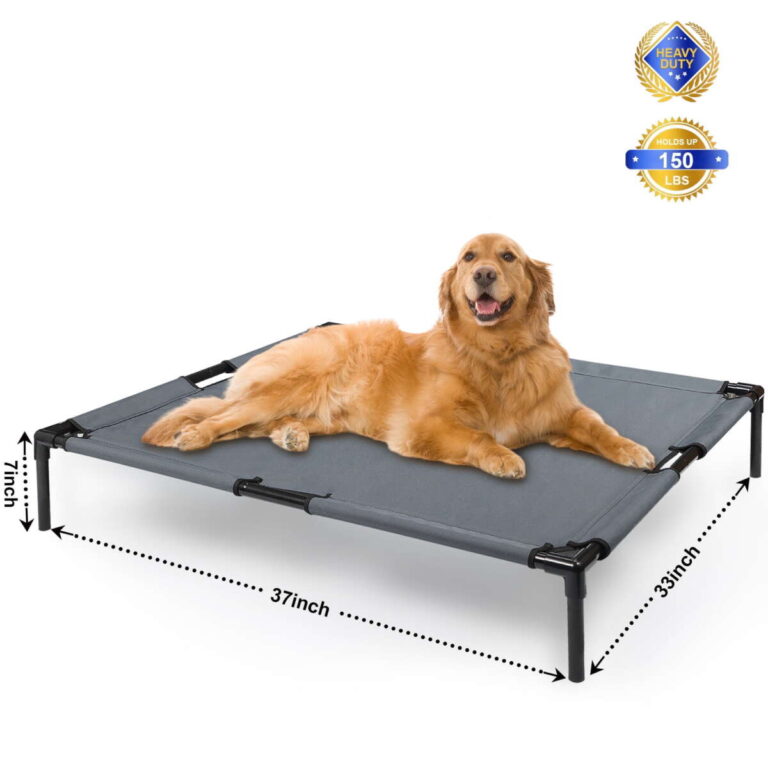
A raised cot lifts the dog off the floor. This can improve airflow and keep the dog away from cold floors, damp surfaces, or hot flooring.
Raised beds may not suit every senior dog. Some dogs with weak legs or poor balance find it hard to step onto a high frame. Choose a low frame with a stable design if mobility is limited.
Cooling gel or cooling mats
Cooling mats may help a dog rest on hot days. They should not replace shade, water, airflow, or a cool indoor space. A German Shepherd can still overheat while using a cooling product.
Avoid products that contain loose gel if your dog chews. Follow the manufacturer’s instructions, and stop use if the cover becomes damaged.

Important Features for German Shepherds
A good bed should match your dog’s body, behavior, and daily routine. The following features often matter more than color or style.
Firm support
The bed should feel supportive rather than hard. Your dog should not sink until its hips or elbows touch the floor.
Large dogs place more load on a bed than small dogs. A thick base with firm foam usually lasts longer than a thin pad.
Low entry
A low edge helps older dogs and dogs with joint pain step onto the bed. It also reduces the need to jump.
A high bolster can still be useful for dogs that like to rest their head on something. In that case, choose a bed with one lower side or a cutout.
Washable cover
German Shepherds shed heavily. A removable cover makes hair, dirt, and odor easier to manage.
Look for:
- A full zipper
- Machine-washable fabric
- Strong seams
- A separate inner liner
- Replacement covers or parts
Read the wash instructions before buying. Some covers require cold washing or air drying. High heat can shrink fabric or damage waterproof layers.
Water resistance
A water-resistant cover helps with drool, wet paws, accidents, and muddy fur. It is not always fully waterproof.
If your dog has frequent accidents, use a waterproof liner under the washable cover. For a puppy, a simple bed with replaceable parts may be more practical than an expensive one-piece design.
Non-slip base
A non-slip bottom keeps the bed in place on wood, tile, and vinyl floors. This matters for large dogs that rise quickly or turn in circles before lying down.
A bed that slides can make a dog hesitant to use it. It may also increase the chance of a slip, especially for an older dog.
Durable fabric
Choose fabric based on behavior:
- Microfiber or canvas can suit dogs that dig or circle.
- Fleece can feel warm but may collect hair.
- Mesh improves airflow but may be less comfortable for some dogs.
- Waterproof fabric helps with spills but can feel less soft.
No fabric is truly chew-proof. A dog that tears bedding should be supervised and given a simpler, safer setup.

The Best Bed for Different German Shepherds
The “best” bed changes with age, health, and behavior.
For a healthy adult German Shepherd
Choose a large orthopedic mattress with:
- Firm foam
- A flat sleeping surface
- A washable cover
- A non-slip base
- Enough space to stretch out
A flat mattress is often easier to enter and exit than a deep nest bed.
For a senior German Shepherd
Choose a low orthopedic bed with thick support and a soft but stable surface.
Avoid very high steps, deep gaps, and beds that collapse when the dog stands. Place the bed on one level of the home if possible. Keep it away from drafts and slippery floors.
If your dog has trouble standing, limps, pants while resting, or avoids stairs, speak with a veterinarian. A bed alone cannot diagnose or correct joint disease.
For a German Shepherd with joint pain
A supportive foam bed may reduce pressure on sore areas. It should be easy to reach and large enough for the dog to change position.
Ask your veterinarian whether your dog needs a specific type of support. Dogs with severe pain may need medical care, weight management, physical therapy, or prescribed treatment in addition to a comfortable bed.
For a puppy
A puppy bed should be washable, durable, and easy to replace. Do not choose a bed with loose pieces, exposed foam, or strings that the puppy can swallow.
A crate mat may work inside a crate, but it must allow the puppy to stand, turn, lie down, and stretch. Remove damaged bedding at once.
For a German Shepherd that chews
Use a simple bed with tough fabric and no loose buttons, cords, or foam access. Watch your dog with any new bed.
If your dog repeatedly destroys bedding, provide a safe resting surface while you work on the chewing behavior. Swallowed foam or fabric can cause an intestinal blockage and needs prompt veterinary attention.
For a hot climate
In states with hot summers, choose breathable materials, shade, and good airflow. A raised cot or thin cooling mat may help.
Do not depend on a bed to prevent heatstroke. The American Kennel Club advises owners to watch for heat illness signs such as heavy panting, weakness, confusion, vomiting, or collapse. These signs require urgent action.

Orthopedic Bed vs. Elevated Cot: Which Is Better?
An orthopedic mattress is usually better for cushioning. An elevated cot is usually better for airflow and keeping the dog off the floor.
| Feature | Orthopedic mattress | Elevated cot |
|---|---|---|
| Joint cushioning | Usually stronger | Varies by fabric tension |
| Airflow | Low to moderate | Usually high |
| Ease of entry | Good with a low edge | Depends on frame height |
| Cleaning | Washable cover; may hold hair | Often easy to wipe or hose |
| Chewing risk | Foam may be exposed if damaged | Fabric or frame may be chewed |
| Cold-floor protection | Good | Good |
| Hot-weather comfort | Depends on fabric | Often better |
| Senior-dog access | Usually easier | May be harder |
Many homes benefit from two beds: a supportive indoor mattress and a breathable cot for warm rooms or outdoor use. If you buy only one, match it to the dog’s main need.
A bed should not be used outdoors unless the material and frame are rated for outdoor conditions. Moisture can lead to odor, mold, and material damage.

How to Set Up the Bed
Place the bed where your German Shepherd already likes to rest, but avoid unsafe locations.
Good locations include:
- A quiet corner near the family
- A cool area away from direct sun
- A place with a clear view of the room
- A floor with enough space around the bed
- An area away from heaters and strong drafts
Do not place the bed where doors can hit it or where the dog may block stairs. Keep water nearby, but not so close that spills soak the bed.
Introduce the bed without force. Put a familiar blanket on it and reward calm behavior near the bed. Never use the bed as punishment.
The setup is working when your dog chooses the bed, settles without constant shifting, and gets up without showing discomfort.

Cleaning and Replacing a German Shepherd’s Bed
Wash the cover as often as needed to control hair, dirt, and odor. Dogs with allergies, skin disease, accidents, or heavy outdoor exposure may need more frequent cleaning.
A simple cleaning routine is:
- Remove loose hair with a vacuum or brush.
- Wash the cover according to its label.
- Dry it fully before use.
- Check the foam, seams, zipper, and base.
- Replace damaged parts before the dog uses the bed again.
Do not use a bed that smells musty, has exposed foam, or has broken plastic parts. A damaged bed may become a chewing hazard or lose its support.
Replace the bed when the foam remains flat, the dog sinks to the floor, or the cover no longer protects the inner material. A bed does not need to look worn out to be unsupportive.

Common Mistakes to Avoid
The most common mistake is buying by breed label alone. “German Shepherd bed” does not guarantee enough sleeping space or support.
Other mistakes include:
- Choosing a bed that is too small for stretching
- Buying soft filling that collapses under a large dog
- Ignoring the inner sleeping area
- Choosing a high edge for a dog with poor mobility
- Using a cooling mat as a substitute for heat safety
- Leaving damaged foam within reach
- Placing the bed on a slippery floor
- Forgetting to measure doorways and crates
- Buying a cover that cannot be washed
- Assuming an orthopedic bed will cure joint disease
A bed can improve rest, but it cannot replace veterinary diagnosis or treatment.

When Should a Veterinarian Check Your German Shepherd?
Contact a veterinarian if your German Shepherd shows new or worsening problems such as:
- Difficulty standing or lying down
- Limping or stiffness
- Reluctance to climb stairs
- Repeatedly changing position at night
- Crying or panting while resting
- Swollen joints
- Sudden weakness
- Loss of balance
- Loss of appetite
- Trouble breathing
- Collapse
Seek urgent veterinary care for collapse, severe breathing trouble, extreme weakness, or signs of heatstroke.
If your dog avoids every bed, the problem may not be the bed. Pain, anxiety, heat, skin irritation, or digestive discomfort can all affect sleep.

Quick Buying Checklist
Before you buy, confirm that the bed:
- Fits your dog when fully stretched out
- Has firm, stable support
- Has a removable washable cover
- Uses durable stitching
- Has a non-slip bottom
- Allows easy entry and exit
- Does not expose foam or loose parts
- Matches your dog’s temperature needs
- Fits the space where you plan to use it
- Has replacement covers or parts if available
For most adult German Shepherds, a large orthopedic mattress with a washable cover and low entry is the safest general recommendation. Add a raised cot if heat and airflow are major concerns.

FAQs
What size bed does a German Shepherd need?
Many German Shepherds need a sleeping surface about 42 to 54 inches long, but measure your dog first. Add 6 to 12 inches to the dog’s nose-to-tail measurement so it can stretch out.
Is memory foam good for German Shepherds?
Memory foam can provide comfort and pressure relief, especially for older dogs. Choose a supportive bed with adequate airflow, since some memory foam products retain heat.
Should a German Shepherd sleep on a hard floor?
A healthy dog may choose the floor at times, especially when warm. A hard floor does not provide the same cushioning as a supportive bed and may be less comfortable for dogs with joint stiffness.
Are elevated beds safe for German Shepherds?
Elevated beds can be safe when the frame is stable, the fabric is secure, and the dog can step onto the bed without struggling. Use extra care with senior dogs or dogs with poor balance.
How often should I wash a dog bed?
Wash the cover whenever it becomes dirty or smells. Many homes need weekly or biweekly cleaning, but dogs with allergies, accidents, or heavy outdoor exposure may need more frequent washing.
Can a dog bed prevent hip dysplasia?
No. A bed may improve resting comfort, but it cannot prevent or cure hip dysplasia. Ask a veterinarian about your dog’s risk, symptoms, weight, exercise, and treatment options.
Conclusion
The best dog bed for a German Shepherd is one that supports the whole body, allows full stretching, stays clean, and matches the dog’s age and health.
For most dogs, choose a large orthopedic mattress with firm foam, a washable cover, a non-slip base, and a low entry. Choose an elevated bed when airflow and heat control matter most. Measure your dog before buying, and replace any bed that has flattened or become damaged.
Start by measuring your German Shepherd while fully stretched out. Then choose the largest supportive bed that fits your home and your dog’s daily needs.

Pet Care Writer & Researcher
Daniel writes practical guides on daily care, feeding, and safety, turning complex topics into simple, actionable advice.