What To Look For In Healthy Dog Food: Smart Guide
Learn what to look for in healthy dog food, from quality ingredients to balanced nutrition, and choose meals that support your dog’s health.
Look for complete, balanced nutrition, clear ingredients, proper calories, and a formula suited to your dog’s needs.
Knowing what to look for in healthy dog food can feel confusing when every bag promises better health, shiny coats, and longer lives. The best choice is not always the most expensive food or the one with the most impressive words on the package. It is the food that meets recognized nutrition standards, fits your dog’s age and health needs, and supports steady energy, healthy digestion, and an ideal body weight.
What to Look for in Healthy Dog Food
The first step in understanding what to look for in healthy dog food is to focus on nutrition, not marketing. Words such as “natural,” “premium,” and “holistic” may sound helpful, but they do not fully explain whether a food is right for your dog.
A healthy dog food should provide the right balance of:
• Protein for muscles, organs, skin, and tissue repair
• Fat for energy, brain health, and skin support
• Carbohydrates for energy and fiber
• Vitamins and minerals for bones, immunity, and body functions
• Water to support hydration and digestion
The food should also be complete and balanced for your dog’s life stage. This means it contains all required nutrients in suitable amounts, according to recognized nutritional standards.
When deciding what to look for in healthy dog food, think of the label as a nutrition map. The front of the bag attracts attention, but the nutritional adequacy statement and feeding directions often tell you much more.
Check the Nutritional Adequacy Statement
A nutritional adequacy statement is one of the most important parts of a dog food label. In the United States, this statement usually appears near the guaranteed analysis or feeding directions.
Look for language showing that the food is:
• Complete and balanced for growth and development
• Complete and balanced for adult maintenance
• Complete and balanced for all life stages
• Intended for a specific health need under veterinary guidance
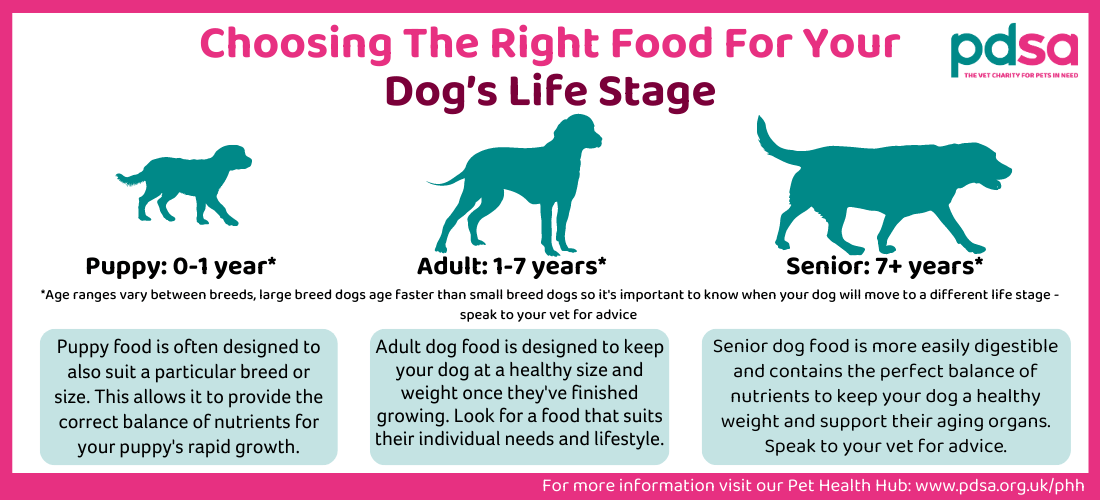
The statement should identify the life stage covered by the food. Puppies, adult dogs, pregnant dogs, nursing dogs, and senior dogs can have different nutritional needs.
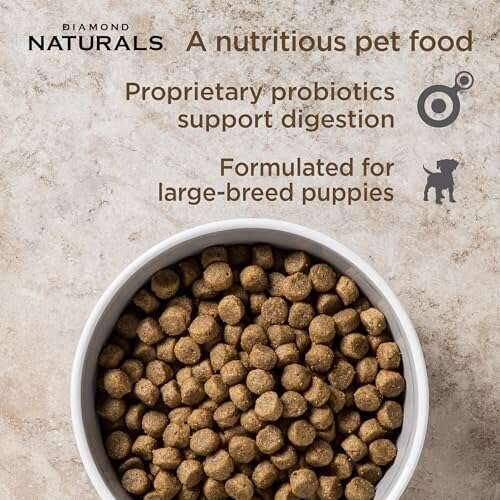
Puppies often need more energy and carefully balanced minerals for growth. Large-breed puppies may need food designed to support controlled growth. Adult dogs may need fewer calories, while working dogs may need more energy.
A food labeled for “intermittent or supplemental feeding only” is not meant to be your dog’s main diet. It may be useful as a treat or supplement, but it should not replace a complete meal.
This is a key part of what to look for in healthy dog food because a beautiful ingredient list cannot make up for missing or unbalanced nutrients.
:strip_icc()/sps-tier-3-primary-best-dog-food-weight-loss-ahuang-037-ce3edd322a1345f4b574389ec94f28b1.jpeg)
Review the Ingredient List Carefully
The ingredient list can help you understand the main ingredients, but it should not be the only tool you use. Ingredients are listed by weight before cooking, so foods with added water may appear higher on the list than dry ingredients.
Good questions to ask include:
• Is there a clear source of animal or plant protein?
• Does the formula contain useful sources of fat?
• Are the ingredients suitable for my dog’s age and health?
• Does the recipe contain nutrients from a range of safe ingredients?
• Are unusual ingredients included for a real purpose?
Common protein sources include chicken, turkey, beef, lamb, fish, eggs, and plant proteins such as peas, lentils, and soy. Dogs can digest and use nutrients from both animal and plant sources. The total nutrient profile matters more than one ingredient alone.
Some owners avoid ingredients with unfamiliar names. That is not always necessary. Many technical terms describe useful nutrients, vitamins, minerals, or safe preservatives. For example, tocopherols are forms of vitamin E that may help preserve food.
A simple ingredient list is helpful, but “simple” does not always mean “better.” A food with many ingredients may still be safe and nutritious, while a food with only a few ingredients may not meet all nutritional needs.
Choose the Right Protein and Fat Levels
Protein supports muscle, skin, organs, enzymes, hormones, and immune function. Dogs need protein, but the ideal amount depends on age, size, activity, health, and the food’s total formula.
Healthy dog food may contain protein from meat, fish, eggs, dairy, legumes, grains, or a mix of these sources. A higher protein number is not automatically better for every dog. Some healthy dogs thrive on moderate protein, while growing puppies, active dogs, and certain working breeds may need more.
Fat is also important. It provides concentrated energy and helps the body absorb vitamins A, D, E, and K. Essential fatty acids, including omega-3 and omega-6 fats, support the skin, coat, brain, and immune system.
When considering what to look for in healthy dog food, avoid judging quality from protein and fat percentages alone. Compare the calories per cup or can, and consider the amount your dog actually eats.
A dog that gains weight on a rich food may need a lower-calorie formula. A thin, highly active dog may need more calories or a higher-energy diet. Your dog’s body condition is often more useful than the label’s marketing claims.
Understand the Guaranteed Analysis
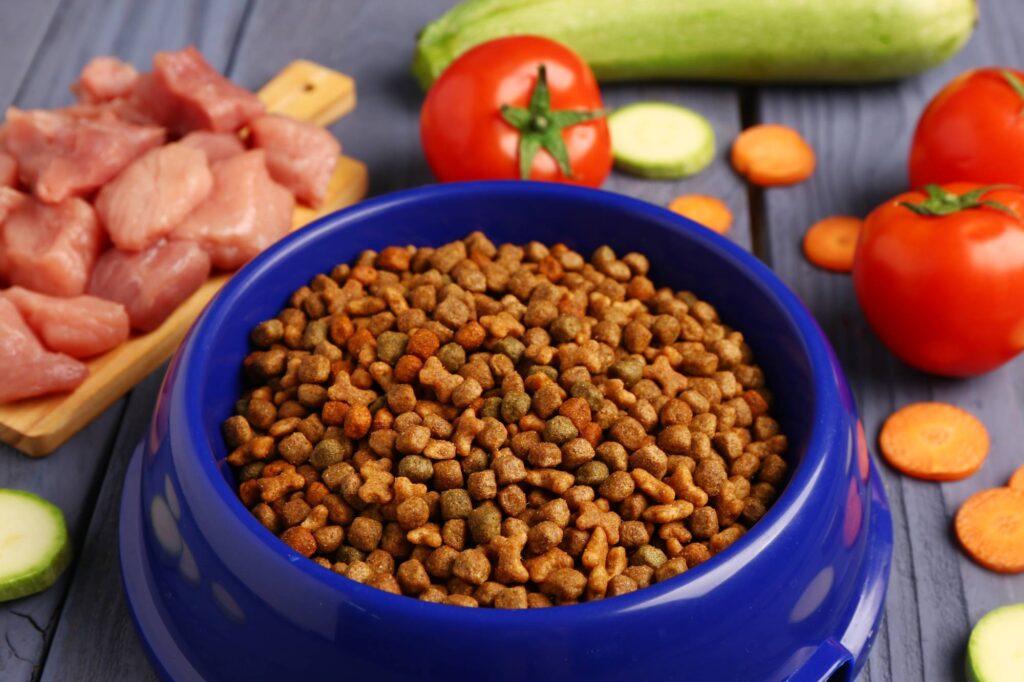
The guaranteed analysis lists minimum or maximum amounts of key nutrients. It commonly includes:
• Crude protein
• Crude fat
• Crude fiber
• Moisture
“Crude” does not mean poor quality. It refers to the laboratory method used to measure the nutrient category.
Dry and wet foods cannot be compared directly by looking only at the label percentages. Canned food contains much more water, so its protein percentage may look lower even when it provides a similar amount of protein on a dry-matter basis.
For a more accurate comparison, you can convert nutrients to a dry-matter basis:
- Subtract the moisture percentage from 100.
- Divide the listed nutrient percentage by the remaining dry-matter percentage.
- Multiply by 100.
For example, if a wet food contains 10% protein and 75% moisture, it contains 40% protein on a dry-matter basis:
10 ÷ 25 × 100 = 40%
This calculation can help when comparing canned and dry dog food. However, calories, digestibility, and the full nutrient profile still matter.
Consider Your Dog’s Life Stage and Size
One of the most practical parts of what to look for in healthy dog food is matching the formula to your dog’s current life stage.
Puppies
Puppies need food that supports rapid growth, brain development, bones, and muscles. Large-breed puppies may need carefully controlled calcium, phosphorus, and calorie levels.
Adult dogs
Adult dogs need enough nutrients to maintain a healthy body without excess calories. Activity level matters. A couch-loving dog and a daily running partner may need very different portions.
Senior dogs
Older dogs do not all need the same diet. Some remain active and healthy, while others develop arthritis, dental disease, kidney problems, or weight changes. Senior food should be selected based on the dog’s health, not age alone.
Pregnant and nursing dogs
Pregnant and nursing dogs have increased nutrient and energy needs. A veterinarian can help select a diet that supports the mother and developing puppies.
Small and large breeds
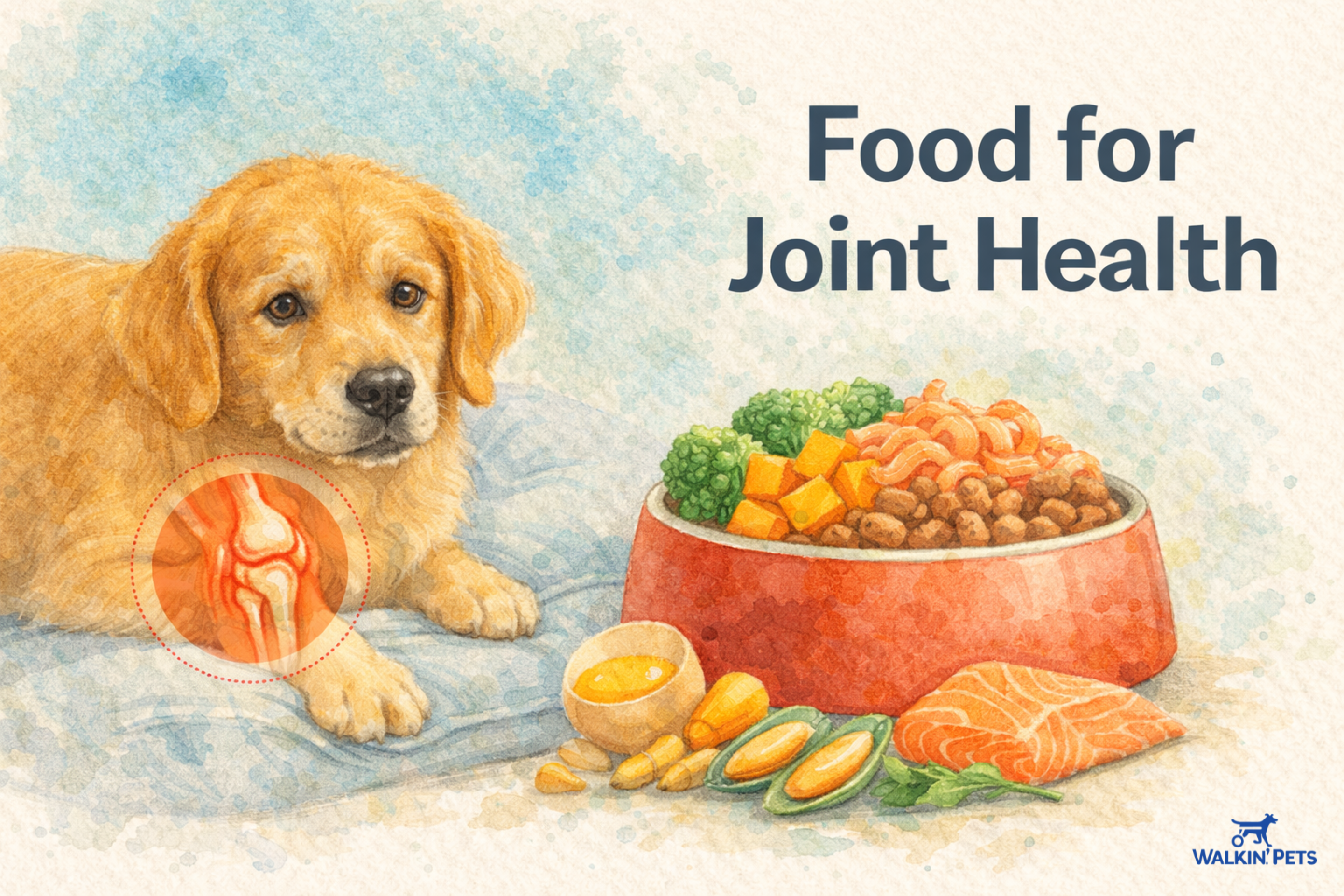
Small dogs often need calorie-dense food because they eat smaller portions. Large dogs may benefit from food designed for joint support, controlled growth, or appropriate calorie intake.

Look at Calories, Portions, and Body Condition
A nutritious food can still cause problems if your dog eats too much of it. Excess calories can lead to weight gain, and obesity increases the risk of joint disease, diabetes, breathing problems, and reduced quality of life.
The feeding chart on the package is a starting point, not an unbreakable rule. Dogs of the same weight can need different amounts because of age, activity, metabolism, and health.
Use these signs to assess body condition:
• You should be able to feel the ribs without pressing hard.
• The waist should be visible from above.
• The abdomen should gently rise behind the rib cage.
• There should not be heavy fat around the tail base or chest.
Treats, table scraps, dental chews, and supplements add calories. As a general rule, treats should make up no more than about 10% of daily calories unless your veterinarian gives different advice.
When applying what to look for in healthy dog food, remember that portion control is part of nutrition. Even excellent food can become unhealthy when served in excess.
Evaluate Food Quality and Manufacturer Practices
Ingredient quality matters, but manufacturing quality matters too. A responsible company should be able to explain where it makes its food, how it checks ingredients, and how it tests finished products.
Useful questions include:
• Does the company employ qualified animal nutrition experts?
• Does it perform nutrient testing on finished products?
• Does it follow strong quality-control practices?
• Can it provide clear contact information?
• Does it explain how feeding trials or research support its food?
• Does it respond openly to safety concerns or recalls?
A company that makes clear, specific statements is often easier to trust than one that relies only on emotional marketing.
Research on pet food can vary in depth. Some foods have feeding-trial data, while others are formulated to meet nutrient profiles. Neither label alone tells the whole story, so consider the company’s transparency and your veterinarian’s advice.
Be careful with dramatic claims such as “detox,” “miracle cure,” or “never feed this ingredient.” Nutrition is rarely that simple. Dogs differ, and a food that works well for one dog may cause trouble for another.
Decide Between Dry, Wet, Fresh, and Raw Food
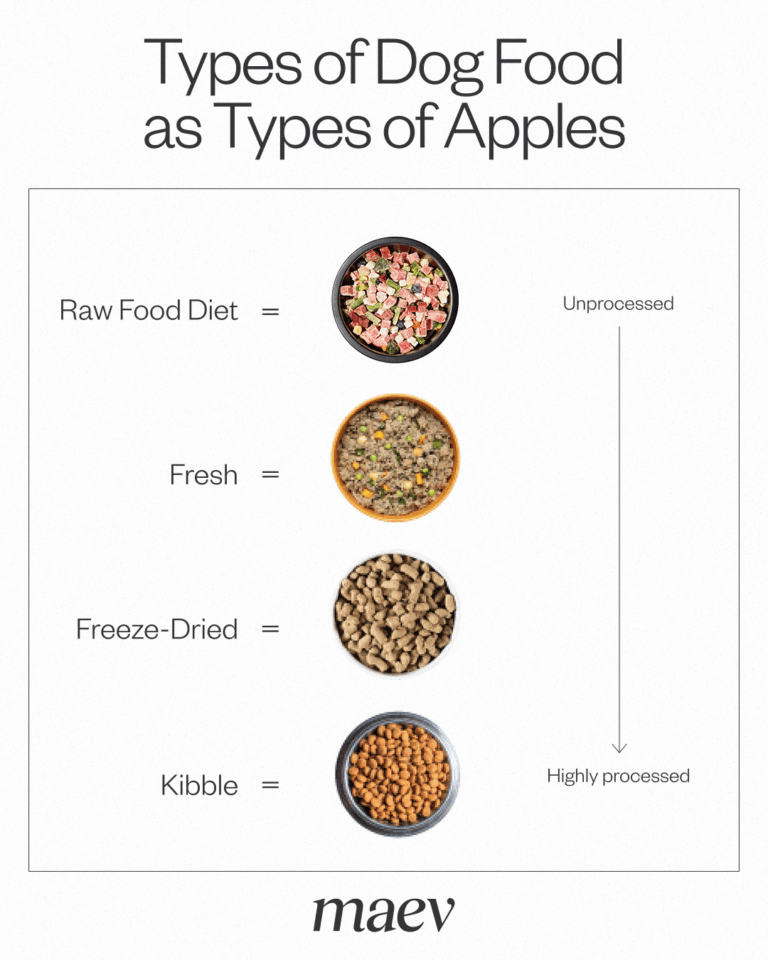
Dry, wet, fresh, and raw diets can all be formulated to provide complete and balanced nutrition. The best format depends on your dog, your budget, your storage needs, and your ability to feed it safely.
Dry food
Dry food is convenient, easy to measure, and often less expensive per meal. It usually contains less water than canned food, so dogs eating mostly dry food should have regular access to fresh water.
Wet food
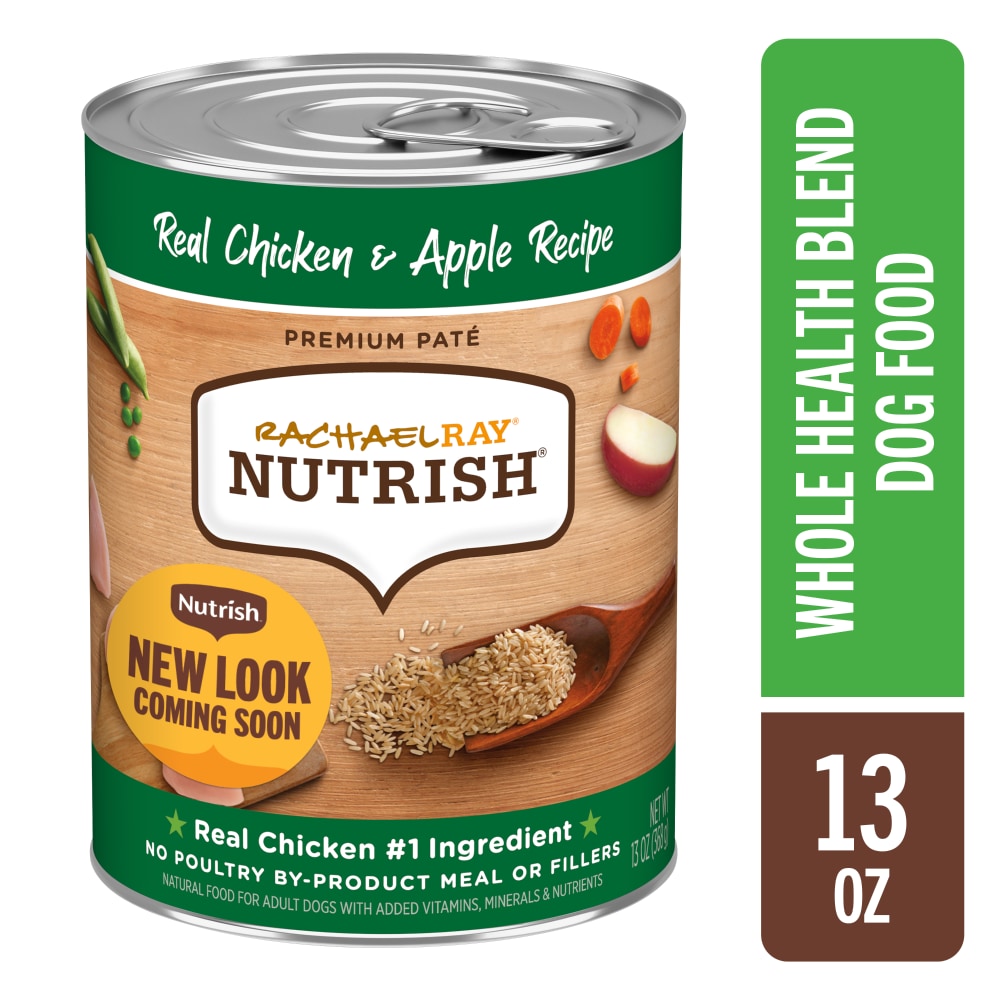
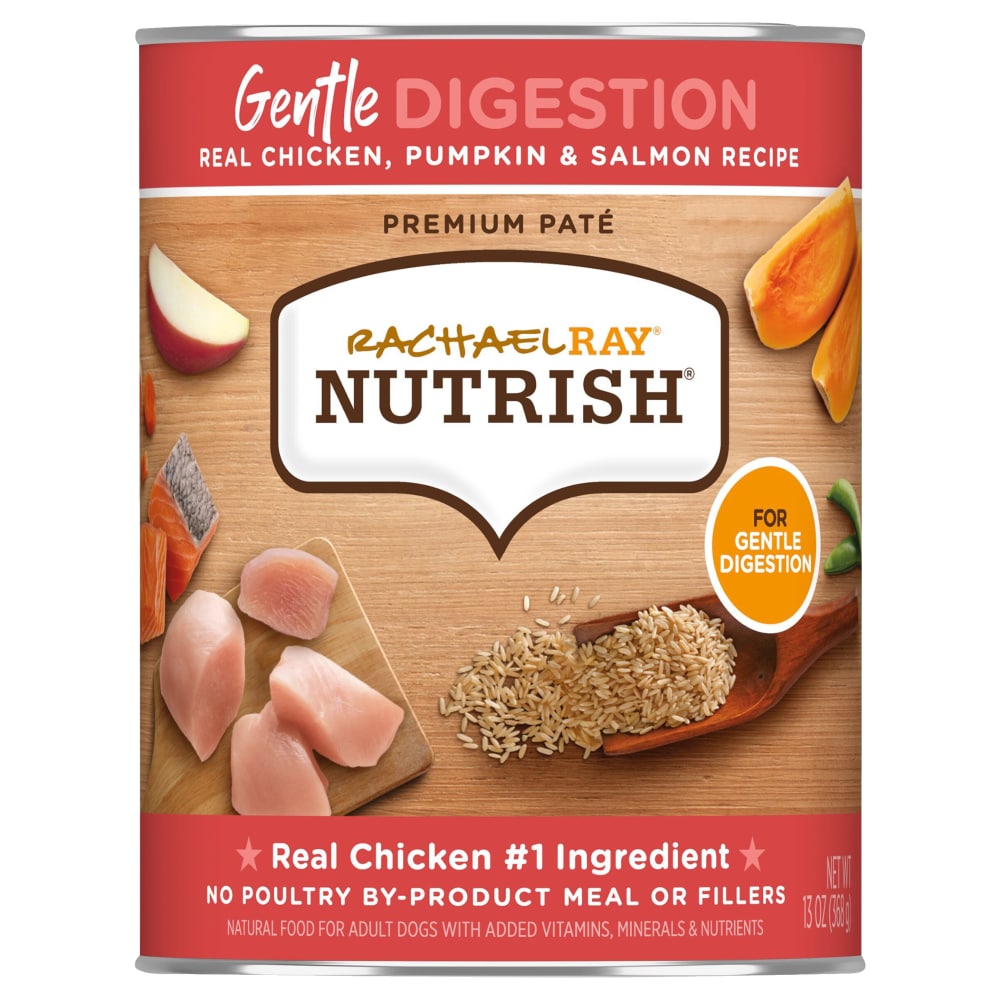
Canned food contains more water and may help dogs that need extra moisture. It can be useful for dogs with low appetite or dental discomfort, but it is often more expensive and spoils faster after opening.
Fresh or refrigerated food
Fresh food can be convenient and appealing. Check that it is complete and balanced, stored correctly, and handled according to the package directions.
Raw food
Raw diets carry risks from harmful bacteria, including risks to dogs and people in the home. They may also become nutritionally unbalanced if prepared at home without help from a veterinary nutrition professional.
The most important part of what to look for in healthy dog food is not whether it is dry, wet, fresh, or raw. The key is whether it is safe, complete, balanced, suitable, and practical for your household.
Be Careful With Grain-Free and “Natural” Claims
Grains are not automatically harmful to dogs. Many dogs digest grains well, and grains can provide carbohydrates, fatty acids, vitamins, minerals, and fiber.
Some dogs have a confirmed food allergy or intolerance, but true grain allergies are less common than many owners believe. Beef, dairy, chicken, and other animal proteins are often reported more commonly as food allergens in dogs.
Some diets high in peas, lentils, chickpeas, or potatoes have been investigated because of reports of canine dilated cardiomyopathy. The exact causes are complex and may involve several factors. If your dog eats a grain-free diet, discuss the choice with your veterinarian, especially if the diet contains large amounts of legumes or potatoes.
“Natural” is also not a complete definition of quality. A natural food can still be too high in calories, unsuitable for a health condition, or poorly balanced.
This is why what to look for in healthy dog food should focus on evidence and your dog’s response rather than fear-based trends.
Watch for Food Allergies and Health Needs
Some dogs need more than general maintenance food. They may require a therapeutic diet or a carefully selected formula for:
• Kidney disease
• Urinary problems
• Diabetes
• Pancreatitis
• Food allergies
• Obesity
• Joint disease
• Heart disease
• Digestive disorders
Signs that may point to a food-related problem include repeated vomiting, chronic diarrhea, excessive gas, itchy skin, recurring ear infections, or unexplained weight change. These signs can have many causes, so do not assume food is the answer without a veterinary examination.
For suspected food allergies, a veterinarian may recommend a strict elimination diet. This usually means feeding a prescribed novel-protein or hydrolyzed-protein diet for a set period, with no unapproved treats.
Do not add supplements or switch to a special diet without guidance. Some supplements can interact with medication or provide too much of certain nutrients.
Avoid Common Dog Food Mistakes
Even careful owners can make simple feeding mistakes. Here are common problems to avoid:
• Choosing food only because the package looks attractive
• Switching diets suddenly
• Ignoring calorie content
• Feeding too many treats
• Assuming expensive food is always better
• Using supplements to “fix” an incomplete diet
• Feeding homemade food without a balanced recipe
• Choosing a diet based on social media claims
• Ignoring changes in weight, stool, skin, or energy
• Buying food that is not appropriate for the dog’s life stage
I often recommend treating a diet change like a road trip. A slow transition gives the digestive system time to adjust. Sudden changes can cause loose stool, gas, or vomiting even when the new food is good.
Transition to a New Dog Food Safely
A gradual change can reduce digestive upset. A common seven-day plan is:
- Days 1 and 2: Feed about 75% old food and 25% new food.
- Days 3 and 4: Feed about 50% old food and 50% new food.
- Days 5 and 6: Feed about 25% old food and 75% new food.
- Day 7: Feed 100% new food.
Some dogs need a slower transition over 10 to 14 days. Puppies, older dogs, and dogs with sensitive stomachs may benefit from extra care.
Monitor appetite, stool quality, vomiting, itching, and energy. If your dog has repeated vomiting, severe diarrhea, weakness, blood in the stool, or refuses food, contact a veterinarian promptly.
How to Read a Dog Food Label
Reading the label in the right order can make shopping easier.
- Check the life stage and nutritional adequacy statement.
- Review the calorie content.
- Read the guaranteed analysis.
- Scan the ingredient list for major protein and fat sources.
- Check feeding directions and serving size.
- Look for manufacturer contact details.
- Confirm storage and expiration information.
Do not compare foods by ingredient order alone. Compare complete formulas, calories, nutrient levels, quality control, and your dog’s health response.
A practical checklist for what to look for in healthy dog food includes:
• Complete and balanced nutrition
• A formula suited to age, size, and activity
• Appropriate calories
• Reliable protein and fat sources
• Safe manufacturing practices
• Clear feeding instructions
• Good stool, skin, coat, weight, and energy results
Frequently Asked Questions About What to Look for in Healthy Dog Food
What is the most important thing to look for in healthy dog food?
Look for a food labeled complete and balanced for your dog’s life stage. Then check calories, feeding directions, ingredient quality, and whether the food supports a healthy body weight.
Is expensive dog food always healthier?
No. Price does not guarantee better nutrition or better manufacturing. A reasonably priced food can be an excellent choice if it is complete, balanced, safe, and suitable for your dog.
Should dogs eat grain-free food?
Most dogs do not need a grain-free diet unless a veterinarian identifies a specific reason. Grains can provide useful nutrients, and a grain-free label does not automatically mean the food is healthier.
How do I know if a dog food is working well?
Watch your dog’s weight, stool, appetite, coat, skin, energy, and comfort. A suitable food usually supports steady energy, firm stool, a healthy body condition, and no ongoing digestive or skin problems.
Can I make healthy dog food at home?
You can, but homemade diets are easy to make unbalanced. Work with a board-certified veterinary nutrition professional or use a professionally formulated recipe that includes the required vitamins and minerals.
How often should I change my dog’s food?
There is no need to change food if your dog is healthy, maintains a good weight, and does well on the current diet. Change foods when there is a medical reason, a life-stage change, a safety concern, or a clear nutritional need.
Conclusion
Knowing what to look for in healthy dog food starts with the basics: complete and balanced nutrition, the right life-stage formula, suitable calories, trustworthy manufacturing, and careful portion control. Ingredient lists matter, but they should be considered with the full label, your dog’s health, and professional veterinary advice.
Choose food based on evidence rather than bold claims. Introduce changes slowly, track your dog’s weight and digestion, and ask your veterinarian for help when allergies or medical conditions are involved. Use this guide the next time you shop, and share your experience or questions in the comments.

Pet Care Writer & Researcher
Daniel writes practical guides on daily care, feeding, and safety, turning complex topics into simple, actionable advice.