Why Do Dogs Bark When Someone Is At The Door: Causes
Why do dogs bark when someone is at the door? Learn the reasons behind this behavior and practical ways to help your dog stay calm.
Dogs bark at the door to alert you, defend their space, express excitement, or respond to a person they cannot yet identify.
Understanding why do dogs bark when someone is at the door can make home life calmer for everyone. The sound may seem simple, but it often reflects several feelings at once, such as fear, excitement, territorial behavior, or learned habit. With the right approach, you can meet your dog’s needs without shouting, punishment, or unrealistic expectations.
Why do dogs bark when someone is at the door?
Dogs bark at the door because it is a high-value event. A sound appears outside their safe space, yet they cannot see the full cause. The door blocks important details, so your dog may bark to gather information, warn you, or make the unfamiliar person go away.
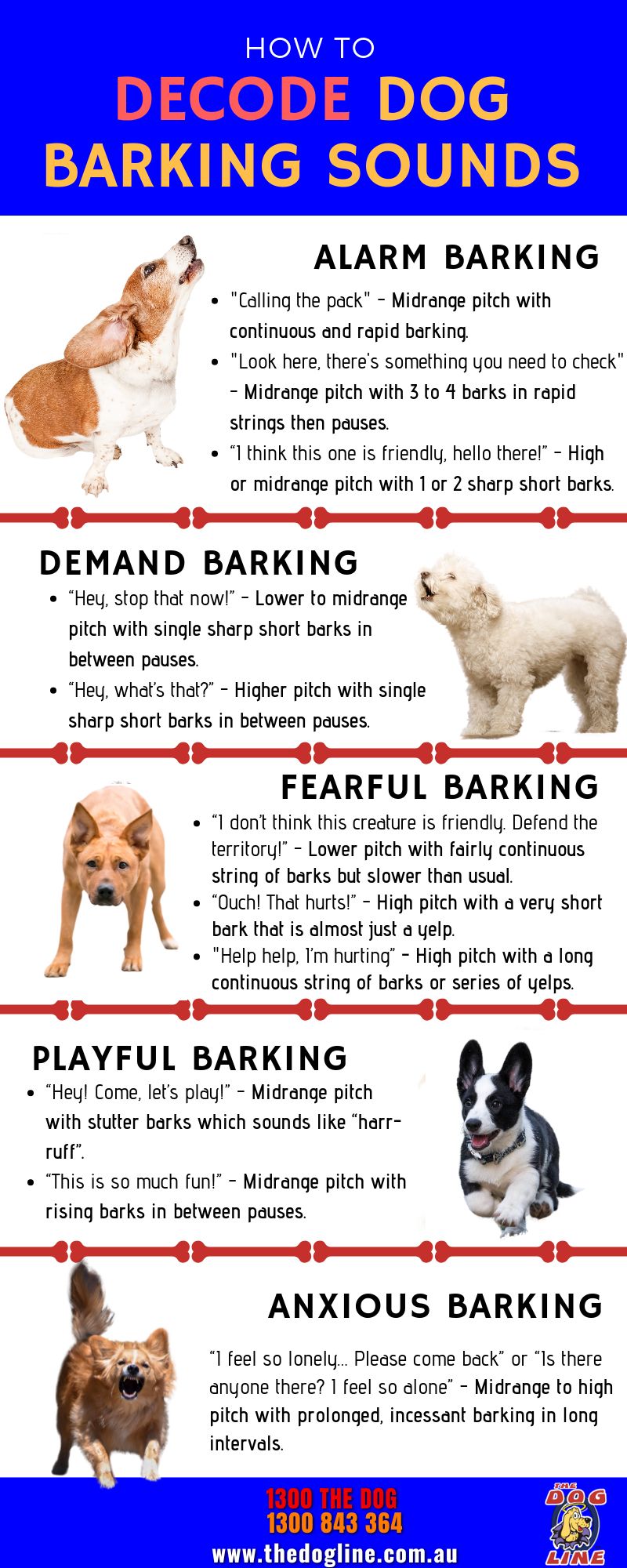
Barking is also normal canine communication. Dogs use different sounds, body postures, and facial signals to share their emotional state. A sharp, repeated bark may signal alertness, while a high-pitched bark may show excitement or frustration.
• Alerting the household to a new sound or person
• Protecting territory, family members, food, or resting areas
• Feeling afraid of strangers or sudden movement
• Showing excitement about visitors
• Feeling frustrated because the door prevents access
• Copying a barking dog outside or in a nearby home
• Learning that barking makes people approach, enter, or leave
In many homes, the barking has more than one cause. A dog may start with an alert bark, then become excited when the visitor enters. This is why simply telling the dog to “stop” often does not solve the problem.
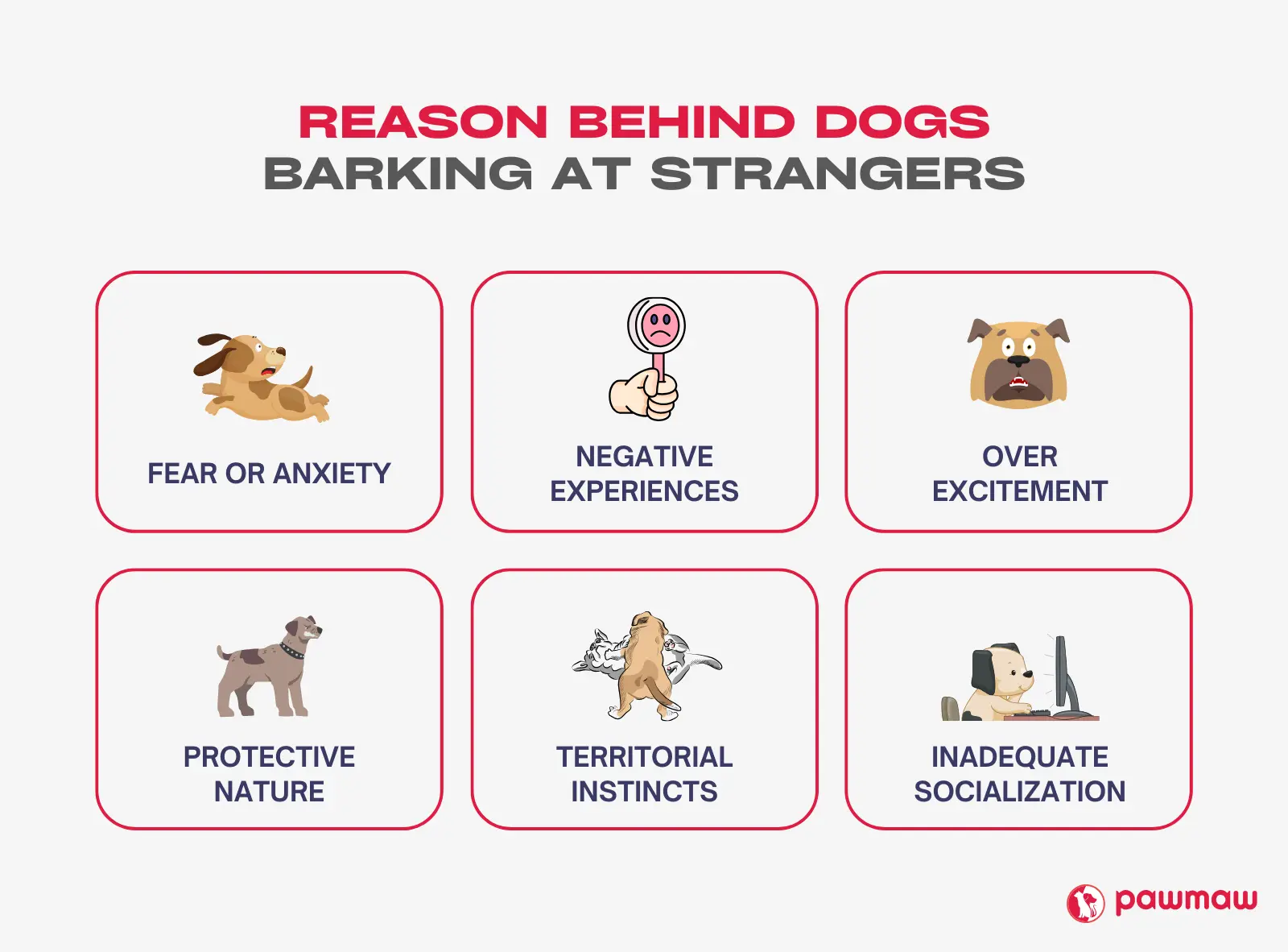
The main emotional triggers behind door barking
Territorial behavior
A home is often a dog’s most important territory. The front door marks a clear boundary between the inside world and the outside world. When someone approaches, your dog may feel responsible for guarding that boundary.
This does not mean your dog is trying to dominate the family. Modern behavior science does not support the idea that most household behavior problems come from a simple desire for status. In many cases, door barking is driven by emotion, habit, or a strong reaction to movement and sound.
Fear and uncertainty
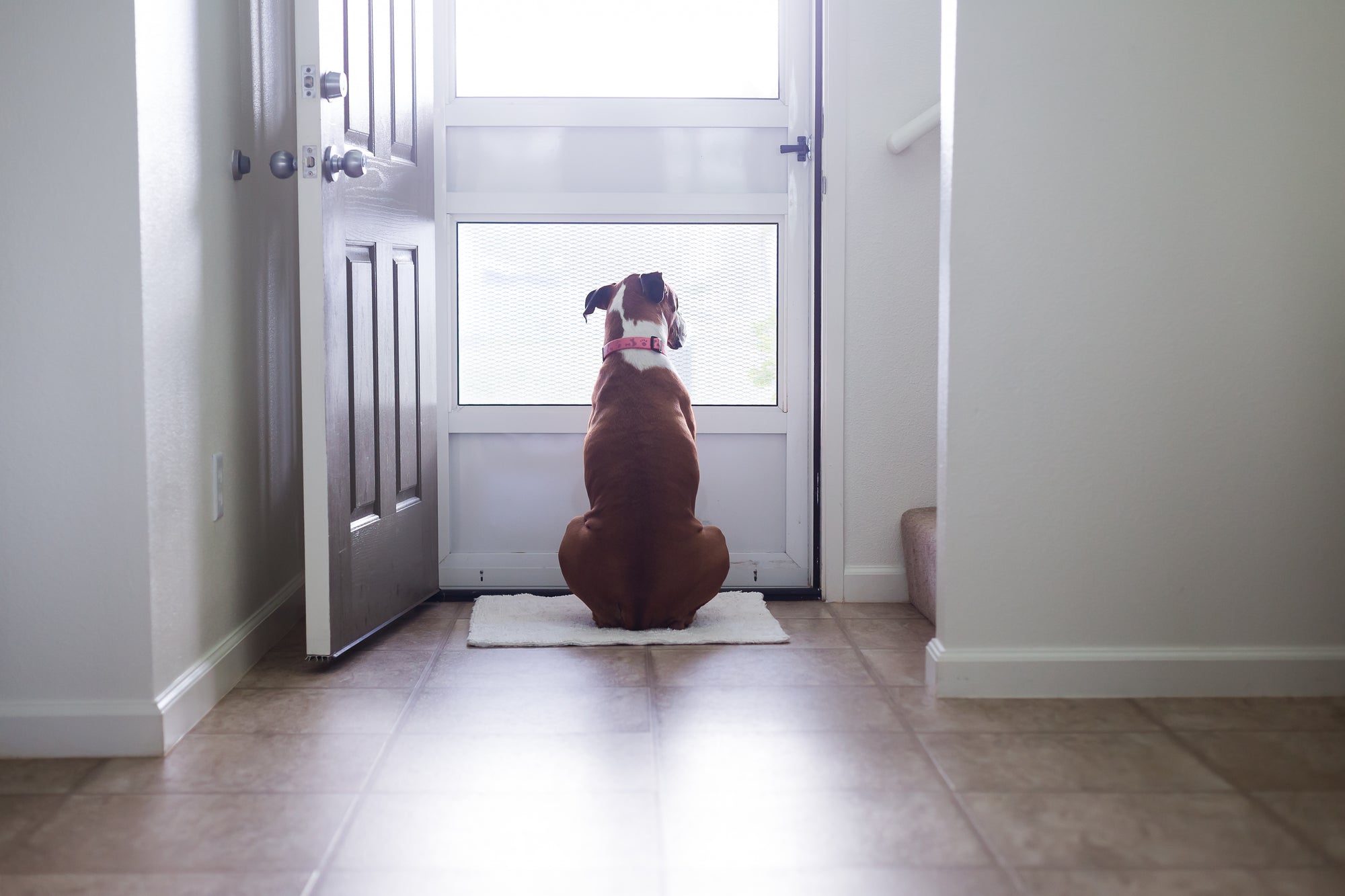
Some dogs bark because they feel unsure. A stranger’s footsteps, a knock, or a loud doorbell can create a sudden threat in the dog’s mind. Barking may help the dog create distance from something that feels unsafe.
Watch your dog’s body language. Fear may appear as:
• A low body position
• Ears pulled back
• A tucked tail
• Lip licking or yawning
• Avoiding eye contact
• Hiding behind furniture
• Barking while moving away
A fearful dog needs space and support. Forcing the dog to greet visitors can make the fear stronger.
Excitement and social anticipation
Not all barking is defensive. Some dogs bark because they love visitors. They may expect play, attention, walks, or treats when the door opens.
Excited dogs often show a loose body, fast tail movement, jumping, whining, or playful movement. Still, excitement can become difficult to manage. A friendly dog may knock over a child or rush through an open door without meaning to cause harm.
Frustration at the barrier
A closed door prevents your dog from seeing, smelling, and greeting the person outside. This barrier can create frustration. The dog may bark, scratch, spin, or run from the door to you and back again.
This pattern is sometimes called barrier frustration. It can occur even in dogs that are friendly once they meet the visitor. The problem is not always the person. Sometimes the problem is being blocked from reaching the person.
Learned behavior
Barking can become a habit when it produces a result. For example, a dog barks, and the visitor steps away from the door. The dog may believe, “My barking worked.”
The visitor may leave for a normal reason, but the dog cannot understand that. From the dog’s point of view, the bark happened before the person disappeared. This is one reason door barking can grow stronger over time.
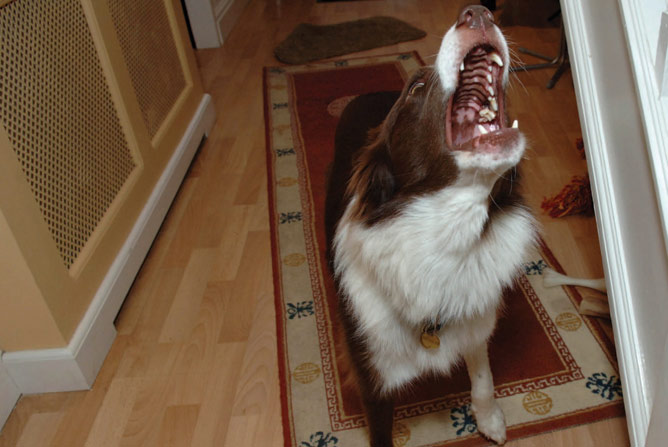
What your dog’s bark may be telling you
The sound alone does not provide the full answer. You need to observe the dog’s whole body, the setting, and what happens after the barking begins.
A useful behavior check includes:
• Pitch: High sounds often suggest excitement or distress, while lower sounds may signal concern or threat.
• Speed: Rapid barking may show high arousal. Slower barking can reflect caution or focused alertness.
• Body position: A loose body may suggest excitement. A stiff body may suggest tension.
• Tail movement: A wagging tail does not always mean happiness. Fast, stiff wagging can reflect stress.
• Distance: A dog that rushes forward may feel bold or aroused. A dog that backs away may feel afraid.
• Recovery time: A dog that calms within seconds may have a mild alert response. A dog that remains upset for many minutes may need a more careful plan.
Consider keeping a short behavior log. Write down the time, trigger, bark pattern, body language, and recovery time. This can reveal whether the main trigger is a delivery worker, a neighbor, guests, a doorbell sound, or footsteps on the porch.
How to stop a dog from barking at the door
The best plan combines management, training, and emotional support. Your first goal is not perfect silence. Your first goal is to prevent repeated, intense barking while teaching a better response.
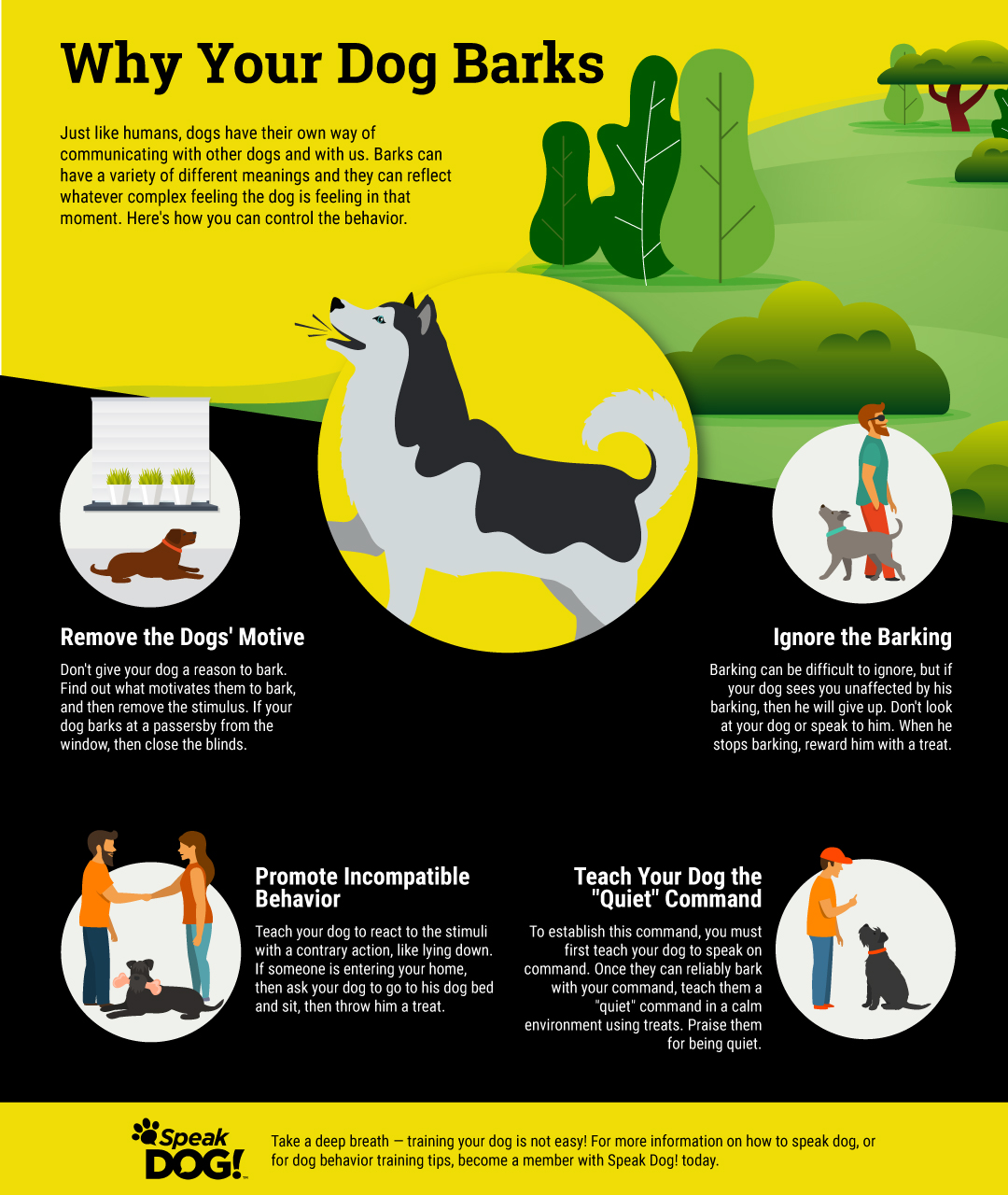
1. Manage the doorway
Management keeps your dog from practicing the behavior. Every intense barking episode can make the pattern more automatic.
Try these steps:
• Use a baby gate to create distance from the entry.
• Keep your dog in a quiet room before expected visitors arrive.
• Close curtains if outside movement triggers barking.
• Use soft background sound to reduce hallway or porch noise.
• Ask delivery workers not to knock when possible.
• Place a leash near the door for planned visits.
• Keep high-value treats within reach of the entry.
Management is not a failure. It is the same principle used in many behavior plans: reduce the trigger while new skills develop.
2. Teach a “go to mat” behavior
A mat gives your dog a clear job. Begin when no one is at the door.
-
Place a comfortable mat several feet from the entry.
-
Reward your dog for looking at or stepping onto the mat.
-
Add a simple cue, such as “mat.”
-
Reward staying on the mat for a few seconds.
-
Slowly increase the time and add mild distractions.
-
Practice with a soft knock or quiet doorbell sound.
-
Reward calm behavior before the dog reaches full excitement.
Use small treats and many short sessions. If your dog starts barking, the practice is too hard. Lower the sound, increase the distance, or end the session and try again later.
3. Build a doorbell response
Many dogs learn that the doorbell predicts chaos. You can change that prediction through gradual practice.
Record your doorbell sound or ask a helper to tap softly. Play the sound at a low volume, then give your dog a treat. Repeat until the sound predicts food instead of alarm.
Over several sessions, increase the volume very slowly. Your dog should remain relaxed enough to eat. If the dog freezes, rushes to the door, or barks, reduce the intensity right away.
This process is called desensitization and counterconditioning. It changes the emotional response rather than merely suppressing the bark.
4. Reward quiet moments
Do not wait for perfect silence. Reward small signs of calm, such as turning away from the door, taking a breath, or looking at you.
You can say “thank you” in a calm voice, then guide your dog to the mat and offer a treat. This acknowledges the alert without creating a long, exciting conversation.
Avoid repeating “quiet” many times while your dog is barking. The dog may hear it as extra attention or even join the noise.
5. Practice with a helper
A reliable friend can make training easier. Ask the person to stand far from the door, knock once, and wait. Reward your dog for looking at the door and then turning toward you.
Keep the first visit short. The helper may enter only after your dog has calmed. If the dog cannot settle, have the person leave and try an easier version later.
Mistakes that can make door barking worse
Shouting at the dog
When you shout, your dog may think you are barking too. Your loud voice can increase arousal and make the event feel more serious.
Use a low, steady voice. Move calmly, create distance, and guide the dog to a safe activity.
Punishing fear
Shock collars, leash corrections, and harsh yelling may stop a bark for a moment. However, they can add fear to the visitor or the doorway. A dog that feels trapped may become more defensive.
Reward-based methods are recommended by veterinary behavior professionals because they teach the dog what to do instead of adding more stress.
Opening the door during a frenzy
If your dog is lunging and barking, opening the door can reward that state. Ask the visitor to wait, or place your dog behind a gate before opening the door.
Safety comes first. A calm greeting is useful, but a controlled separation is better than a rushed interaction.
Using treats only after the dog explodes
Food can help, but timing matters. Give the treat when the dog notices the sound and can still think. Once the dog is highly aroused, it may ignore even a favorite snack.
Expecting instant results
Door barking often develops over months or years. Improvement may take repeated practice across many days. Progress may look like fewer barks, faster recovery, or turning to you without being asked.
:strip_icc()/stop-your-dog-from-barking-3877988-v5-TT-350f8d51e1c24802bce9a0430dec82a8.jpg)
A practical training plan for real homes
Here is a simple routine you can use:
-
Identify the trigger. Is it a knock, bell, footsteps, voices, or movement outside?
-
Reduce exposure. Use a gate, closed blinds, or background sound.
-
Choose a replacement behavior. A mat, hand target, sit, or quiet look at you can work.
-
Prepare rewards. Use small, tasty treats that your dog can eat quickly.
-
Start below the barking level. Use a soft sound or a distant helper.
-
Reward calm choices. Mark the moment your dog looks away, pauses, or moves to the mat.
-
Add difficulty slowly. Change only one factor at a time.
-
Practice short sessions. Two to five minutes can be enough.
-
End on success. Stop before your dog becomes overwhelmed.
-
Repeat in different settings. Practice with family members, friends, and varied sounds.
One lesson that comes up again and again in dog behavior work is that owners often move too fast. They invite a friend inside, ring the bell many times, and hope the dog will adapt. A better approach is to make the first step almost boring. Calm, easy repetitions build trust.

When door barking may signal a bigger problem
Door barking deserves professional help when it involves aggression, panic, or poor recovery. Contact a veterinarian or a qualified reward-based behavior professional if your dog:
• Lunges, snaps, or bites
• Cannot calm down after the visitor leaves
• Tries to break through windows or doors
• Hurts itself while scratching or rushing
• Shows severe fear, shaking, or hiding
• Guards one family member from visitors
• Suddenly develops intense barking later in life
A sudden behavior change can have a medical cause. Pain, hearing changes, vision loss, and age-related cognitive changes may alter how a dog reacts to sounds or people. A veterinary check is wise when the behavior is new, severe, or paired with other changes.
Look for professionals with recognized education in animal behavior. A board-certified veterinary behaviorist can assess medical and emotional factors. A certified trainer with reward-based methods can help build a safe home plan. Avoid anyone who promises a fast cure or relies mainly on fear and punishment.

Why do dogs bark when someone is at the door at night?
At night, dogs may react more strongly because the home is quiet and outside sounds stand out. Lower visibility can also make people and noises harder to identify. A dog that is already anxious may feel less secure after dark.
Close blinds, use a small light near the entry, and play gentle background noise. Do not send a fearful dog outside to investigate alone. Reward calm attention toward you instead.
Why do dogs bark when someone is at the door even after training?
Training does not erase every reaction. A new person, unusual sound, illness, stress, or a long gap in practice can cause a setback. Return to an easier training level and reward the behavior you want.
Is door barking always a sign of aggression?
No. Dogs bark at the door because of many emotions, including alertness, excitement, fear, and frustration. Body language and behavior after the door opens provide better clues than barking alone.
Should I ignore my dog when someone knocks?
Ignoring the barking may help only when attention is maintaining it. It will not solve fear, territorial stress, or barrier frustration by itself. Manage the doorway, teach a replacement behavior, and reward calm responses.
Can I teach my dog to stop barking completely?
Most dogs will still give an alert bark from time to time. A realistic goal is fewer barks, a softer response, and a faster return to calm. Complete silence is not necessary for safe and successful behavior.
Should my dog greet every visitor?
No. Your dog does not need to greet every person who enters the home. Some dogs do best with a calm separation, especially when they are fearful, elderly, ill, or easily overwhelmed.
Conclusion
Why do dogs bark when someone is at the door? Usually, the bark is a message shaped by alertness, territory, fear, excitement, frustration, or past learning. The most effective response is to observe the dog’s body language, manage the doorway, teach a calm alternative, and reward small improvements.
Start with one easy step today: place a mat away from the door and reward your dog for using it when a mild sound occurs. With steady practice and professional help when needed, the doorway can become a calm routine instead of a daily alarm. Share your experience with a trainer, veterinarian, or trusted dog behavior community to keep building a plan that works for your dog.

Pet Care Writer & Researcher
Daniel writes practical guides on daily care, feeding, and safety, turning complex topics into simple, actionable advice.