Why Do Dogs Bark When Someone Knocks At The Door: The Reason
Why do dogs bark when someone knocks at the door? Learn the reasons behind this behavior and simple ways to help your dog stay calm.
Dogs bark at a door knock because they sense a possible stranger, feel alert, and want to protect their home.
If you have ever watched your dog race to the door at the first knock, you have seen a normal mix of instinct, learning, and emotion. Understanding why do dogs bark when someone knocks at the door can help you respond with calm training instead of frustration. This guide explains the causes, the warning signs to watch for, and humane ways to build a quieter door routine.
Why Do Dogs Bark When Someone Knocks at the Door?
Dogs bark at door knocks because the sound is sudden, unfamiliar, and linked to someone arriving. For many dogs, barking is a message that means, “Something is happening,” “Someone is near us,” or “Please check this out.”
The knock can trigger several responses at once:
- Alertness: Your dog notices a new sound and turns toward it.
- Territorial behavior: Your dog may feel that a person is entering its home area.
- Fear: A nervous dog may bark to make the visitor go away.
- Excitement: Your dog may expect a favorite person, a walk, or a delivery.
- Learned behavior: Barking may have worked before, so the dog repeats it.
Dogs have sharp hearing and strong pattern recognition. A knock is often more meaningful than a random noise because it predicts an event. The sound may be followed by a person entering, people talking, or a package arriving.
This is why do dogs bark when someone knocks at the door even when the visitor is friendly. Your dog does not know the visitor’s intentions right away. The bark is often an emotional response, not proof that the dog wants to attack.

The Main Reasons Dogs Bark at the Door
1. They are warning the household
Many dogs use barking as an alarm system. The knock tells them that someone is close to the home, so they alert the people inside.
This behavior has deep roots. Dogs and their wild relatives rely on vocal signals to warn others about movement, danger, or unusual sounds. Modern dogs may live in apartments or quiet suburbs, but their basic alarm response remains.
A dog that stands tall, faces the door, and gives a few sharp barks may be saying, “I heard something.” This is different from a dog that hides, trembles, or shows signs of panic.
2. They are protecting their territory
A home is a dog’s safe space. The front door marks a clear boundary between the inside world and the outside world.
When a person knocks, your dog may feel that someone is testing that boundary. This can cause territorial barking, especially when the visitor remains near the door or enters the home.
Territorial behavior may become stronger when:
- The dog spends much of the day watching windows or doors.
- People often approach the home.
- The dog has limited exposure to visitors.
- Family members react with alarm.
- The dog has learned that barking makes people leave.
A dog may bark at a mail carrier, then stop after the person walks away. That does not always mean the dog believes it scared the person off, but the timing can still reinforce the behavior.
3. They feel excited
Not every bark is a threat. Some dogs bark because they are thrilled that someone may be coming inside.
Your dog may know that a knock often brings:
- A family member returning home
- A friend who gives attention
- A dog walker
- A delivery
- A chance to greet someone
An excited dog may wag its tail, bounce, whine, spin, or bring a toy. Its body may look loose rather than stiff.
Excitement can still create a problem. A friendly dog may jump, rush through the doorway, or knock someone over. Calm behavior matters even when the dog’s feelings are positive.
4. They are afraid or unsure
Fear is one of the most important reasons why do dogs bark when someone knocks at the door. A dog may bark because it wants more distance from the visitor.
Look for these signs:
- Ears pinned back
- Tail tucked or held low
- Lip licking
- Yawning
- Trembling
- Hiding
- Stiff posture
- Wide eyes
- Growling or snapping
Fear-based barking needs a gentle plan. Yelling can make the dog feel that the visitor really is dangerous. Punishment may stop the sound for a moment, but it can increase fear and make future reactions worse.
5. They have learned that barking gets results
Dogs repeat actions that lead to useful outcomes. If your dog barks and the visitor leaves, the dog may believe barking worked.
The same thing can happen when barking makes a person open the door. The dog may learn this pattern:
- A knock happens.
- The dog barks.
- The door opens.
- A person appears.
From the dog’s point of view, barking is part of the process. It may not understand that the visitor would have entered anyway.
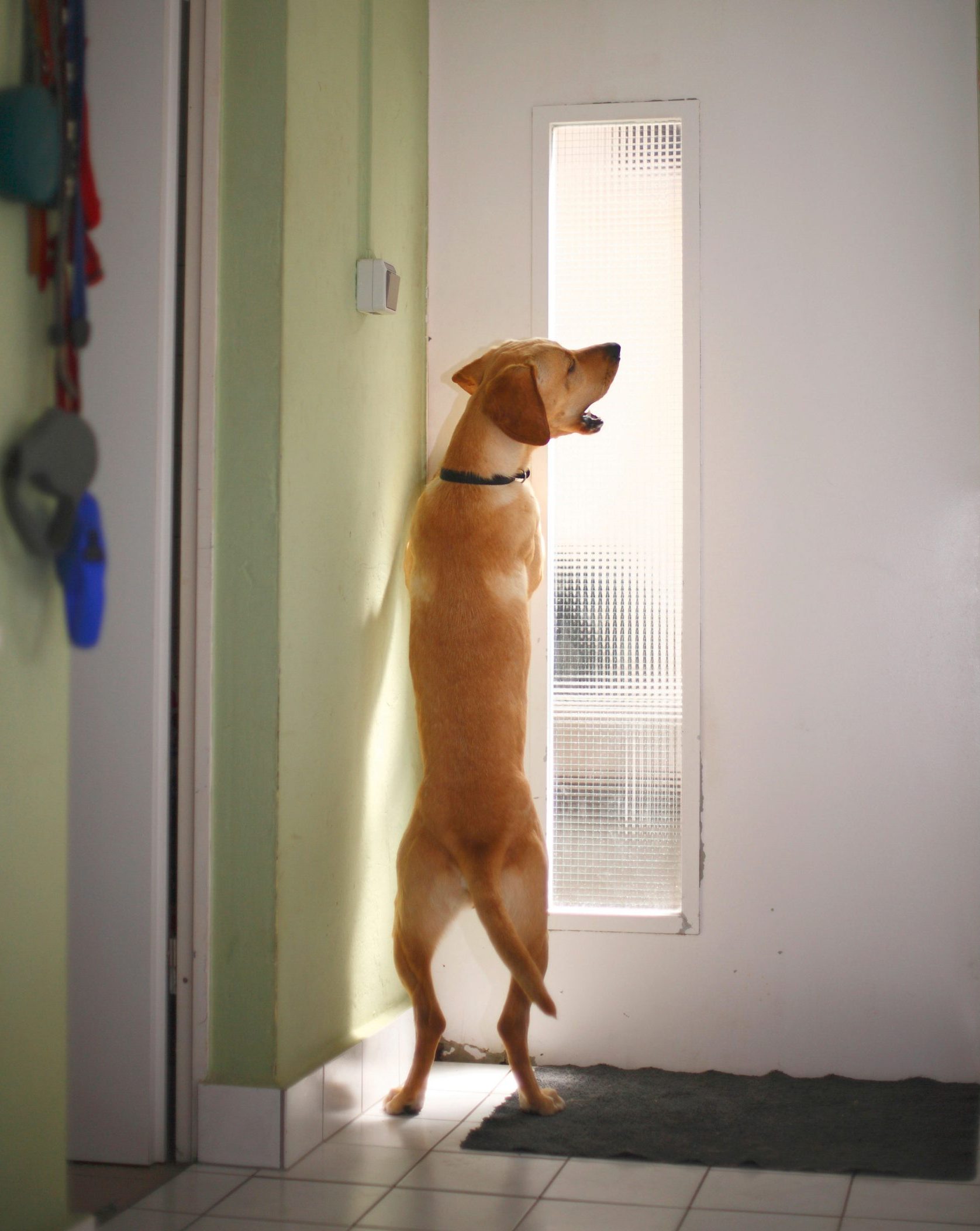
What Your Dog’s Barking Is Trying to Say
The sound alone does not tell the full story. You need to study the dog’s body language, pitch, movement, and recovery time.
A short burst of barking with a relaxed body often suggests alertness or excitement. Deep, repeated barking with a stiff body may suggest serious arousal or discomfort.
Use the whole body as your guide:
- Loose body and wagging tail: The dog may feel excited or social.
- Stiff body and hard stare: The dog may feel tense or defensive.
- Backing away while barking: The dog may feel afraid.
- Lunging at the door: The dog may be highly aroused and needs more distance.
- Hiding after barking: The sound may have triggered anxiety.
- Fast recovery: The dog can likely learn a calm response with practice.
- Slow recovery: The dog may need a slower training plan and professional help.
Tail wagging does not always mean happiness. A fast, high tail wag can occur during stress or intense excitement. Facial tension, posture, and movement provide better clues.
A useful habit is to record a short video from a safe distance. Watch it later when the event is over. You may notice small signs that are hard to see in the moment.

Is Barking at the Door Normal?
Yes, barking at a door knock is common dog behavior. A few alert barks can be normal and useful, especially when the dog settles after you acknowledge the sound.
The behavior becomes a concern when it creates a safety or welfare problem. Seek help if your dog:
- Cannot settle after the visitor enters
- Tries to bite or escape
- Charges the door
- Breaks windows or damages doors
- Shows intense fear
- Reacts to every sound for long periods
- Redirects aggression toward family members
- Stops eating or sleeping because of door-related stress
The goal is not always complete silence. A realistic goal is a dog that hears the knock, alerts briefly, and then follows a calm cue.
Veterinary behavior specialists often assess the dog’s emotional state before recommending a training plan. This matters because fear, territorial behavior, pain, poor hearing, and other health issues can affect behavior.
Sudden changes deserve extra attention. If a normally calm dog starts barking intensely at doors, schedule a veterinary check. Medical problems can sometimes increase irritability, confusion, or sensitivity to sound.
How to Stop a Dog From Barking at the Door
The safest approach combines management, positive reinforcement, and repeated practice. Do not wait for a real visitor every time you train. Short, controlled sessions help your dog learn without becoming overwhelmed.
Step 1: Prevent rehearsals
Every intense barking episode gives the behavior more practice. Reduce opportunities while you build new skills.
Try these steps:
- Use a baby gate to keep your dog away from the entry.
- Close blinds if window watching triggers barking.
- Keep treats near the door.
- Ask visitors to text instead of knocking during early training.
- Use a white noise machine for dogs that react to hallway sounds.
- Place your dog on a leash before opening the door.
Management is not a failure. It is like putting a seat belt on before learning to drive. It keeps everyone safer while training improves.
Step 2: Teach a “place” cue
Choose a mat, bed, or rug several feet from the door. Reward your dog for stepping onto it, then reward calm standing or sitting.
Practice when no one is outside. Say “place,” guide your dog to the mat, and give a treat. Slowly increase the time your dog stays there.
Keep the first sessions easy. A dog that succeeds ten times is learning more than a dog that fails ten times.
Step 3: Add a soft knock
Tap a table or door very gently. The moment your dog hears the sound and remains calm, offer a treat.
If your dog barks, the sound was too strong or the distance was too small. Reduce the intensity and try again.
This process changes the emotional meaning of the knock. Instead of predicting uncertainty, the sound starts predicting good things.
Step 4: Reward calm behavior
Many people focus only on stopping barking. It is more effective to show the dog what to do instead.
Reward your dog for:
- Looking at you
- Moving to the mat
- Sitting
- Staying quiet for one second
- Turning away from the door
- Relaxing after the knock
At first, reward very small moments. As your dog improves, wait a little longer before giving the treat.
Step 5: Practice with a helper
Ask a calm friend to stand outside. Start with a quiet tap or text message. Then slowly work toward a normal knock.
Use a simple routine:
- The helper knocks once.
- You say, “Thank you.”
- Your dog goes to the mat.
- You reward the dog.
- The helper enters only when the dog is calm enough.
Do not force the dog to greet the person. Some dogs need to stay behind a gate or in another room while visitors enter.
Step 6: Keep greetings calm
Excited greetings can increase future barking. Ask visitors to ignore the dog for the first few minutes.
They should avoid:
- Leaning over the dog
- Staring into the dog’s eyes
- Reaching over the dog’s head
- Hugging the dog
- Speaking in a loud voice
- Encouraging jumping
Let the dog choose whether to approach. A calm visitor helps your dog learn that people at the door are not a major event.

Mistakes to Avoid When Training Door Barking
Understanding why do dogs bark when someone knocks at the door is only half the solution. Your response can either calm the pattern or add fuel to it.
Do not yell
Many dogs hear yelling as more noise and excitement. Some may even think you are barking with them.
Use a calm voice and guide the dog to a trained behavior. Quiet leadership works better than a louder reaction.