Why Is My Dog Barking At Nothing In My Room: Causes
Why is my dog barking at nothing in my room? Learn the common causes, signs to watch for, and simple ways to help your dog feel calm.
Your dog may bark at unseen sounds, scents, movement, anxiety triggers, or health problems in your room.
If you are wondering, “why is my dog barking at nothing in my room,” you are not alone. Dogs sense far more than people do, but sudden barking can also point to fear, boredom, pain, or a change in the home. This guide explains the most likely causes, how to observe the pattern, and what to do safely.
Why Is My Dog Barking at Nothing in My Room?
Your dog is probably reacting to something that you cannot detect. A faint sound behind the wall, a scent near a window, or a small movement in the shadows may be clear to your dog but invisible to you.
Dogs have sharper hearing and smell than humans. They can notice a distant vehicle, a mouse inside the wall, a bird on the roof, or a neighbor walking outside. Their eyes also detect movement well, especially in low light.
Still, sensory clues are not the only answer. The behavior may come from stress, excitement, aging, pain, or a learned habit. The best way to understand why your dog is barking at nothing in your room is to study when it happens and what occurs just before it.

Common Reasons Dogs Bark at Things People Cannot See
Your dog hears a sound you miss
Dogs can hear higher-pitched sounds and detect noise from farther away than people can. Your room may seem silent, yet your dog may hear:
- Pipes clicking inside the wall
- An elevator, alarm, or appliance in another room
- Small animals in the ceiling or walls
- Footsteps outside the door
- Electronic sounds from chargers or smoke detectors
- Wind moving a branch against the window
A dog may bark at a sound because it seems unusual or threatening. If the barking stops when you turn off a fan, move an appliance, or close a window, sound is a strong possibility.
Your dog smells something unfamiliar
A dog’s nose is built to collect information. New furniture, cleaning products, food, another animal, or a visitor’s scent can make your room feel different.
Even after a smell seems gone to you, traces may remain on carpet, bedding, shoes, or clothing. Dogs may bark while trying to investigate a scent they cannot identify.
Shadows and reflections catch your dog’s attention
Headlights, phone screens, mirrors, and moving shadows can trigger barking. A dog may see a reflection on the wall or a flash of light under the door and treat it as a living object.
This is more common at night. Your dog may also react to a television, a ceiling fan, or curtains moving in the breeze. Watch the dog’s eyes and head. If the gaze follows a clear path, a visual trigger may be present.
Your dog is alerting you
Barking is one way dogs communicate. Your dog may be saying, “Something changed,” or “I want you to check this.” Some dogs bark at a closed door because they expect someone to enter.
Alert barking is not proof that danger exists. It means your dog noticed a change and wants a response. Calmly checking the room once is reasonable, but repeatedly searching can teach your dog that barking always brings excitement.
Your dog feels anxious or afraid
A room may become linked with a frightening event. For example, a loud storm, dropped object, argument, or painful experience may make your dog uneasy there.
Signs of fear can include:
- Barking with a low or tense body
- Pacing or hiding
- Lip licking or yawning
- Ears held back
- A tucked tail
- Trembling
- Looking toward the door or trying to leave
When fear is the cause, punishment can make the problem worse. Your dog needs safety, distance, and calm support.
Your dog wants attention
Dogs quickly learn which actions get a reaction. If barking makes you talk, touch, play, or open the door, your dog may repeat it.
This does not mean your dog is being spiteful. It means the behavior worked before. Attention seeking often appears when a dog is bored, under-exercised, or used to frequent interaction.
Your dog has excess energy
A dog with unused physical or mental energy may bark at small changes. This is especially common in puppies, working breeds, and active dogs.
A walk alone may not meet every dog’s needs. Sniffing games, food puzzles, simple training, and safe play can help your dog settle. Mental work often tires a dog in a different way than running.

Could Your Dog Be Seeing a Ghost?
There is no reliable scientific evidence that dogs can see ghosts or spirits. Dogs do notice things that humans miss, but an unseen cause is not automatically paranormal.
When a dog barks at an empty corner, consider ordinary explanations first:
- A sound inside the wall
- A scent left by an animal
- A reflection or shadow
- Insects near a light
- A draft moving fabric
- A memory linked to the room
- Anxiety or confusion
It is understandable to feel uneasy when your dog stares into a dark space. However, a calm investigation is more useful than assuming a supernatural cause. Check the room in daylight, inspect vents and windows, and note whether the behavior follows a repeatable pattern.
If your dog seems confused, stares into space often, walks in circles, or has sudden behavior changes, contact a veterinarian. Those signs may have a medical cause.

Medical Reasons for Sudden Barking
A sudden change in barking deserves attention. Dogs may vocalize more when they are in pain, losing sensory function, or experiencing changes in the brain.
Possible medical causes include:
- Ear infection or hearing changes
- Vision loss
- Dental pain
- Joint or muscle pain
- Skin irritation
- Hormonal illness
- Seizure-related activity
- Canine cognitive dysfunction in older dogs
Older dogs may bark at night because of confusion, sleep changes, anxiety, or reduced vision. Canine cognitive dysfunction can affect memory and awareness, much like dementia in people. It should be assessed by a veterinarian because some symptoms may have other causes.
Seek prompt veterinary help if barking occurs with weakness, collapse, trouble breathing, repeated vomiting, seizures, severe pain, or sudden disorientation. Do not assume unusual barking is only a behavior issue.
A veterinarian may examine your dog’s ears, eyes, mouth, joints, nervous system, and general health. Keeping a short video of the episode can make the visit more useful.

How to Find the Trigger
You do not need to guess. A simple behavior log can reveal the cause.
Write down:
- The exact time barking begins
- How long it lasts
- Where your dog looks
- Your dog’s body language
- What happened just before the barking
- Weather, lighting, and household noise
- Whether the barking stops when you leave the room
- Any recent change in food, routine, furniture, or visitors
Try changing one factor at a time. Close the curtains for two nights. Then test the room with a fan turned off. Move a mirror or cover a reflective surface. This process works like solving a small puzzle.
Avoid changing everything at once. If you remove the trigger, add new toys, start a new exercise plan, and use a sound machine on the same day, you will not know what helped.
A home camera can also help. Place it where it shows your dog and the area your dog watches. Review the video for subtle triggers, such as moving shadows, outside activity, or pacing before barking.
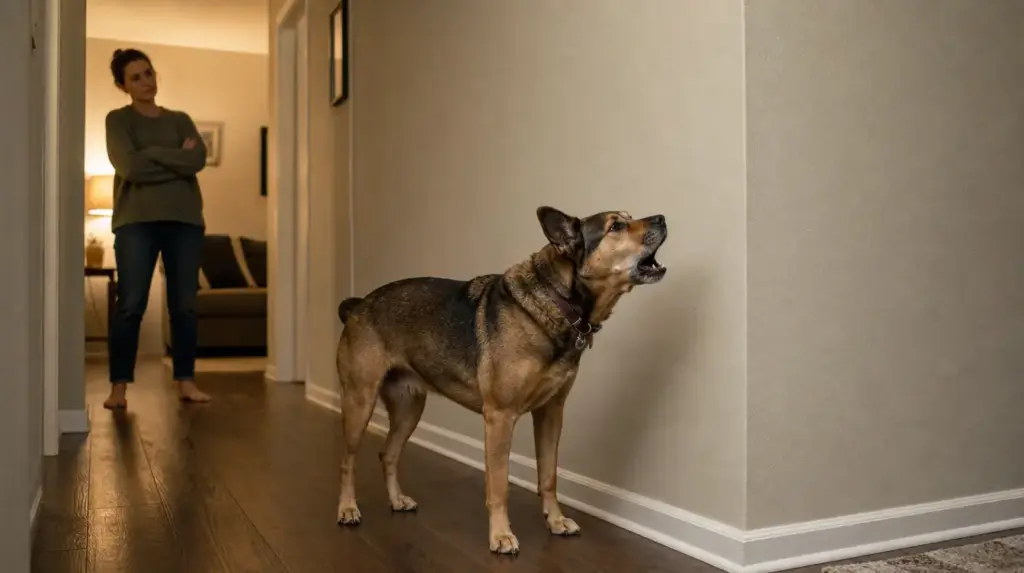
What to Do When Your Dog Barks at Nothing
Start with calm, practical steps. Your response can either lower the excitement or make the barking stronger.
Check for a real environmental trigger
Look for noises, scents, reflections, pests, and movement. Inspect windows, vents, smoke detectors, appliances, and wall areas. If you find a problem, fix it rather than simply correcting your dog.
Stay calm
Use a soft voice and relaxed body language. Do not yell across the room. Yelling may sound like you are barking along with your dog, which can increase arousal.
Reward quiet behavior
Wait for a brief pause, then calmly praise your dog or offer a small treat. Over time, your dog learns that quiet behavior earns good things.
If your dog cannot pause, increase distance from the trigger. Ask your dog to come to you, touch your hand, or settle on a mat. Reward small steps.
Teach a quiet cue
First, allow one or two alert barks. Then say “quiet” in a calm voice. Hold a treat near your dog’s nose. Most dogs pause to sniff. The moment your dog is quiet, reward the pause.
Practice when the room is calm. Training during a full barking episode is harder. Keep sessions short and repeat them often.
Provide healthy activity
Offer a balanced routine that may include:
- Daily walks with time to sniff
- Short obedience sessions
- Puzzle feeders
- Safe chew items
- Fetch or tug
- Relaxation practice
- Regular sleep
Do not use intense exercise as the only solution. Some dogs become more excited when pushed too hard. Calm enrichment is often more helpful.
Make the room feel safe
Give your dog a comfortable bed away from windows and busy doorways. Use soft lighting at night if shadows seem to trigger barking. White noise may reduce outside sounds, but avoid loud volume.
Never force a fearful dog toward the area it fears. Allow choice and distance. Confidence grows when a dog can approach gradually without being overwhelmed.

Mistakes to Avoid
Many well-meaning owners accidentally strengthen barking. Avoid these common errors:
- Shouting or scolding repeatedly
- Punishing a dog for fear
- Using shock or other painful tools without professional guidance
- Dragging the dog toward a suspected trigger
- Rewarding barking with constant attention
- Ignoring a sudden behavior change
- Assuming every strange action is paranormal
- Making several changes at once
- Giving human medication without veterinary advice
Punishment may stop sound for a moment, but it does not explain what the dog feels. If the cause is fear or pain, punishment can reduce trust and increase stress.
A reward-based trainer or veterinary behaviorist can help when the issue is frequent, intense, or difficult to manage. Look for professionals who use humane methods supported by modern behavior science.

When to Call a Veterinarian or Behavior Professional
Book a veterinary appointment if your dog’s barking is new, worsening, or paired with other changes. This is especially important for senior dogs.
Contact a professional if your dog:
- Barks for long periods every day
- Cannot settle after the trigger is gone
- Shows fear, aggression, or panic
- Damages doors or windows
- Stops eating or sleeping normally
- Seems confused or loses house-training skills
- Has changes in hearing, vision, balance, or movement
A veterinarian should be the first stop when medical problems are possible. If health concerns are ruled out, a qualified behavior professional can create a training plan.
Behavior advice has limits without seeing the dog. Breed, age, history, environment, and body language all matter. A short video and behavior log can improve the accuracy of any assessment.
A Simple Seven-Day Plan
Use this plan to learn what is happening without overwhelming your dog.
- Record each barking episode for seven days.
- Note sounds, light, smells, visitors, and time of day.
- Check the room for simple triggers.
- Prevent access to the strongest trigger when possible.
- Add calm exercise and mental enrichment.
- Reward quiet pauses and relaxed body language.
- Contact your veterinarian if the behavior is sudden or unusual.
One week may not solve the problem, but it can reveal a pattern. For example, you may discover that barking starts only when headlights pass the window or when a certain appliance turns on.
If you are still asking why your dog is barking at nothing in your room after tracking the behavior, share the log with your veterinarian or trainer. Clear details are more useful than a general description such as “my dog acts strange.”
Frequently Asked Questions
Why is my dog barking at nothing in my room at night?
Nighttime barking may result from outside sounds, shadows, wildlife, anxiety, or reduced vision. In older dogs, nighttime confusion or cognitive changes can also play a role, so sudden night barking should be discussed with a veterinarian.
Why is my dog barking at an empty corner?
Your dog may hear or smell something near the corner, notice a reflection, or associate that area with a past event. Check for pests, vents, drafts, and moving shadows before assuming the cause is unusual.
Should I ignore my dog when it barks at nothing?
Do not ignore a sudden change or signs of fear, pain, or illness. If your dog is healthy and the barking is attention seeking, calmly wait for a quiet pause and reward that pause instead of giving attention during barking.
Can anxiety cause my dog to bark at nothing?
Yes. Anxiety can make small sounds, shadows, or changes feel threatening. Look for pacing, trembling, hiding, panting, lip licking, or attempts to escape, and seek professional help if the fear continues.
Is barking at nothing a sign of a health problem?
It can be, especially when the behavior begins suddenly or affects an older dog. Ear disease, vision changes, pain, neurological problems, and cognitive dysfunction are possible causes that require veterinary assessment.
How can I stop my dog from barking in my room?
First, identify and reduce the trigger. Then use calm training, reward quiet behavior, provide enrichment, and create a comfortable resting area; avoid yelling or punishment.
Conclusion
When you wonder why your dog is barking at nothing in your room, remember that “nothing” often means something you cannot hear, smell, or see. Environmental triggers, fear, attention seeking, boredom, aging, and medical problems can all produce the same sound.
Watch the pattern, record what happens, check the room, and reward calm behavior. If the barking is sudden, intense, or linked with confusion or pain, arrange a veterinary checkup rather than treating it as a simple training problem.
Start with one small change today and observe your dog with patience. For more practical dog behavior guidance, explore trusted veterinary resources, speak with a qualified professional, or share your experience in the comments.

Pet Care Writer & Researcher
Daniel writes practical guides on daily care, feeding, and safety, turning complex topics into simple, actionable advice.