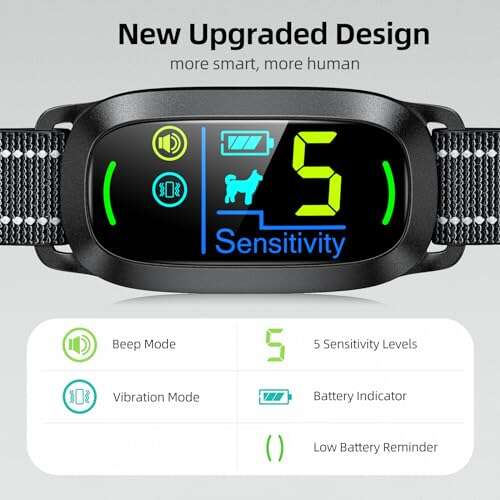
Best Vibration Bark Collar For Small Dogs: Top Gentle Picks
Find the best vibration bark collar for small dogs with gentle, effective options, fit tips, and buying advice for quieter walks and happier pets.
The best vibration bark collar for small dogs offers gentle alerts, smart detection, comfort, and simple daily training.
A small dog may bark at every footstep, squirrel, door sound, or passing car. That noise can wear down your patience and disturb neighbors, even when your dog only feels alert or afraid. A vibration bark collar can act like a quiet tap on the shoulder. It gives your dog a clear signal without using static shock. I reviewed these collars for fit, bark detection, vibration control, battery use, water resistance, and ease of training. The goal is not to silence a dog all day. It is to help your pet learn when barking is useful and when calm behavior earns praise.
FAFAFROG Smart Vibration Bark Collar

The FAFAFROG smart bark collar is a strong starting point for owners who want beep and vibration training without shock. Its five sensitivity settings give you room to adjust the collar to a small dog’s bark level. That matters because a quiet Chihuahua and a sharp Jack Russell bark may trigger a sensor in very different ways. The rechargeable design also removes the need to keep buying small batteries.
I like the simple training path here: the collar can use sound first, then vibration when needed. That gives a dog a chance to stop before the stronger cue arrives. The black finish looks plain and easy to match with most coats. As with any bark collar, place it on a calm dog, check the fit often, and reward quiet behavior so the device supports training rather than replacing it.
Pros:
- Five adjustable sensitivity levels
- Uses beep and vibration instead of shock
- Rechargeable design helps lower battery costs
- Suitable for small, medium, and large dogs
- Simple control layout for first-time users
- Black finish hides normal outdoor marks
Cons:
- The broad size range may require careful fitting on toy breeds
- Some dogs may need a slower introduction to the vibration cue
- Sound-sensitive dogs may react to the beep at first
DogRook Rechargeable Beep and Vibration Collar

DogRook’s humane collar focuses on two basic tools: a warning beep and vibration. That simple setup can work well for a small dog that responds to sound and touch but does not need a complex screen. The rechargeable build suits owners who want a collar ready for regular practice. It is also a sensible choice for people who prefer fewer controls and less setup.
In my view, the main strength is its training-friendly approach. A beep can interrupt a bark, while vibration can provide a clear second cue when the noise continues. This collar should not stay on a dog for long, unsupervised periods, and it should not be used to correct fear-based barking without finding the cause. Used with treats, praise, and short sessions, it can help build a calmer routine.
Pros:
- Humane beep and vibration operation
- Rechargeable for repeated training sessions
- Easy choice for owners who dislike complex menus
- Useful for basic indoor and yard training
- Light control system may feel less distracting
- Works best when paired with praise
Cons:
- Fewer adjustment options than some newer models
- Fit may need extra care on very narrow necks
- Beep-only training may not stop every persistent bark
YJWFHPU Two-Pack Small Dog Collar

The YJWFHPU two-pack is made for homes with two dogs or owners who want a spare collar ready to use. It is listed for small dogs from 5 to 30 pounds, which makes its target audience clearer than many all-size collars. Seven sensitivity levels allow more control over false triggers. The no-shock beep and vibration design keeps the training approach gentle.
The IP67 waterproof rating is useful for rainy walks, damp grass, and active dogs that enjoy outdoor play. Still, waterproof does not mean you should leave any electronic collar on during swimming unless the instructions clearly allow it. The two-unit package can also save time when two dogs share a home and both need the same training plan. Start with the lowest effective setting and watch each dog’s body language.
Pros:
- Two collars help multi-dog households
- Seven sensitivity levels offer fine adjustment
- Designed for small dogs from 5 to 30 pounds
- No-shock beep and vibration training
- IP67 water resistance supports outdoor use
- Smart bark detection may help reduce random triggers
Cons:
- A two-pack may cost more than one collar
- More settings can take longer to learn
- Owners must charge and fit two units
No-Shock Small Dog Collar with Smart Screen
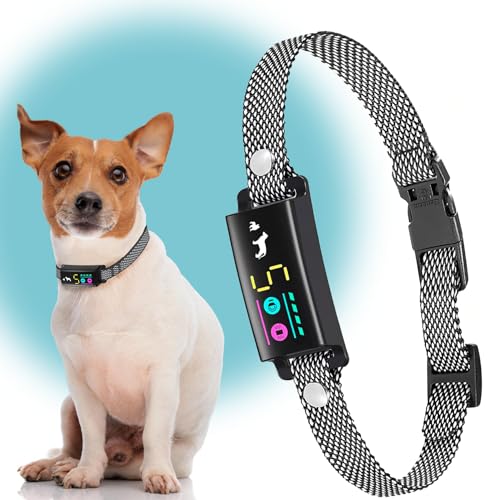
This no-shock bark collar targets dogs from about 8 to 40 pounds and adds a smart screen to the basic beep-and-vibration format. The display can make selected settings easier to see than tiny buttons alone. Five sensitivity levels let you start gently and increase only when needed. Its magnetic rechargeable system may also make charging less of a chore.
The IP67 waterproof design gives this model a practical edge for dogs that spend time outdoors. Its anti-false-trigger feature is especially important in a busy home where doors, voices, and other dogs create noise. However, no sensor can understand every situation perfectly. I would test it indoors first, then use it during calm outdoor sessions while checking for comfort and correct contact.
Pros:
- Smart screen makes settings easier to view
- Five sensitivity choices support gradual training
- No-shock beep and vibration operation
- Magnetic rechargeable setup is convenient
- IP67 waterproof design suits wet conditions
- Anti-false-trigger feature may reduce unwanted alerts
Cons:
- May be too large for dogs below the listed range
- A screen adds another part that needs protection
- Owners must follow the charging instructions closely
Oliry Five-Mode Bark Collar

The Oliry bark collar offers five training modes and is designed for small, medium, and large dogs. That broad design can appeal to families with more than one dog size. It gives owners several ways to build a cue, rather than forcing one response from every pet. The black color is discreet and works well for everyday wear during supervised sessions.
More modes can help you find a setting your dog understands, but choice is only helpful when used with a plan. I recommend starting with the least intense sound or vibration option and changing one setting at a time. Do not use the collar as a quick fix for separation distress, pain, or fear. Those problems need training and, when needed, advice from a veterinarian or qualified behavior professional.
Pros:
- Five training modes provide flexibility
- Fits a wide range of dog sizes
- Useful for homes with several dogs
- Simple black appearance
- Supports gradual cue selection
- Can complement reward-based training
Cons:
- The broad fit range may not suit very tiny breeds
- Several modes may confuse first-time users
- Product details should be checked for exact water resistance
FESTYLES AI Smart Detection Collar

FESTYLES stands out with AI smart detection, seven sensitivity levels, and beep and vibration cues. The goal of smart detection is to respond to barking while ignoring more ordinary sounds. That can help in homes with televisions, children, or other pets. It is rechargeable and listed as IP67 waterproof, so it suits owners who want a feature-rich collar for supervised outdoor use.
I would choose this model for an owner who is willing to test and adjust the settings. AI labeling sounds impressive, but real-world results still depend on the dog, the bark, and the collar position. A correct fit remains more important than a long feature list. Use the collar for short lessons, give praise right after quiet behavior, and remove it after training or outdoor activity.
Pros:
- AI smart detection aims to limit false triggers
- Seven sensitivity levels allow detailed adjustment
- Beep and vibration options avoid shock
- Rechargeable for regular use
- IP67 waterproof design supports active dogs
- Good feature set for experienced owners
Cons:
- Advanced features may require a longer setup
- AI detection cannot guarantee perfect bark recognition
- The collar may be more than a quiet, simple barker needs
DogRook Rechargeable Collar for Daily Training

This DogRook model is another no-shock option for owners who value a basic training tool. Its beep and vibration cues can interrupt nuisance barking without adding static correction. The rechargeable design makes it convenient for repeated use. It may be a good fit for a dog that already responds to a verbal “quiet” cue but needs a consistent reminder.
The best results will come from using it as part of a wider routine. Identify the trigger, call your dog away, wait for a quiet moment, and reward that pause. The collar can mark the moment, but it cannot teach a dog why the trigger is safe. I also suggest checking the contact points and neck area each day, especially on small dogs with thin coats.
Pros:
- No-shock beep and vibration training
- Rechargeable for convenient upkeep
- Useful for dogs that know basic commands
- Simple design is easy to introduce
- Works well with reward-based methods
- Suitable for supervised home training
Cons:
- May offer less control than seven-level models
- Small dogs need careful strap adjustment
- Not a substitute for solving fear or separation issues
FAFAFROG Clear Smart Bark Collar

This clear FAFAFROG version offers the same type of smart training approach as the black model, with five adjustable sensitivity levels and beep and vibration cues. Its lighter-looking finish may appeal to owners who want a less noticeable collar. The collar is designed for large, medium, and small dogs, but small breeds still need a careful fit check. Rechargeable power keeps the routine simple.
I see this as a practical choice for owners who want a clean look and direct controls. Begin with the lowest setting and watch for stress signs such as freezing, tucked ears, lip licking, or repeated scratching. A vibration cue should guide attention, not frighten the dog. With calm practice and rewards, this model can become a useful part of a quiet-home plan.
Pros:
- Five adjustable sensitivity settings
- Beep and vibration training without shock
- Clear finish looks less bold on some dogs
- Rechargeable battery reduces maintenance
- Broad size range offers household flexibility
- Easy to pair with praise and treats
Cons:
- Clear styling may show dirt more easily
- Small dogs still need careful sizing
- Exact battery life can vary with use and settings
Rechargeable Bark Collar with Shock Mode
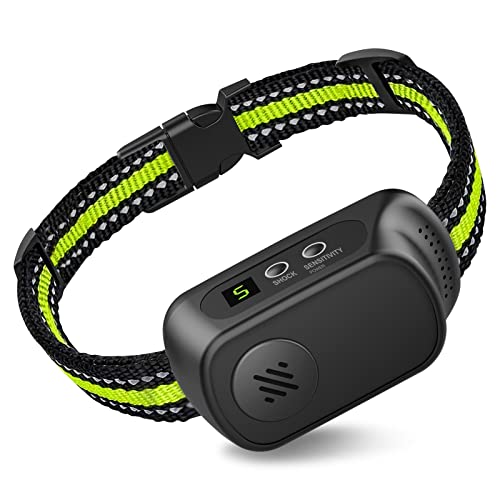
This rechargeable collar includes beep, vibration, and shock modes with five sensitivity levels. Because it includes shock, I place it lower for owners specifically searching for a no-shock vibration bark collar for small dogs. Some buyers may want the extra mode, but a shock feature creates more responsibility and more room for misuse. For a small or nervous dog, I would use beep and vibration only, if the collar can be locked to those settings.
Its advantage is control for an experienced handler who understands humane training and local rules. Its drawback is the need for strict care, correct placement, and close supervision. Never use a shock setting to punish fear, pain, aggression, or separation distress. If you choose this model, confirm the mode before fitting it and follow reward-based steps first.
Pros:
- Offers beep and vibration options
- Includes five sensitivity levels
- Rechargeable for repeated sessions
- Can provide more control for experienced handlers
- May suit homes with different training needs
- Supports a beep-first approach when used carefully
Cons:
- Includes shock, which many small-dog owners want to avoid
- Requires extra care to prevent incorrect mode selection
- Not my first choice for fearful or sensitive dogs
Smart Collar for Dogs from 8 to 150 Pounds

This smart bark collar covers a very wide weight range, from about 8 to 150 pounds. It includes three beep and vibration modes plus eight sensitivity levels. Those controls can help owners fine-tune the response for different dogs or barking habits. The black design is practical for general training and daily supervised use.
The wide range is useful for a family with more than one dog, but it also tells me to inspect the physical fit carefully. A collar that works on a large dog may feel bulky on a small one. Use the lightest effective setting, keep two fingers between the strap and neck, and check the skin after use. This is a flexible choice, but not automatically the best vibration bark collar for small dogs simply because it has many settings.
Pros:
- Eight sensitivity levels offer detailed control
- Three beep and vibration modes add flexibility
- Broad size range suits multi-dog homes
- Rechargeable smart design is convenient
- Useful for owners who want more adjustment
- Can support gradual, low-level training
Cons:
- May feel bulky on very small dogs
- Many settings can overwhelm new users
- Owners must confirm the current mode before use
My Recommendation
For most small-dog owners, I would start with the FAFAFROG black model or the YJWFHPU two-pack. The FAFAFROG is a straightforward single-collar choice with five sensitivity levels. The YJWFHPU is better for two-dog homes and offers seven levels plus IP67 water resistance. If you want a screen, the smart-screen model is worth considering, especially for dogs in the 8-to-40-pound range.
The best vibration bark collar for small dogs should match the dog, not just the product list. A tiny, sensitive dog needs a light fit and a low cue. A busy outdoor dog may benefit from water resistance and stronger false-trigger control. I would avoid the shock model unless an experienced professional has explained safe use, and I would never leave any bark collar on a dog all day.
| Best for | Why |
|---|---|
| First-time users | FAFAFROG offers simple beep and vibration training with five sensitivity levels. |
| Two-dog households | YJWFHPU includes two collars, seven sensitivity levels, and water resistance. |
| Feature-focused owners | FESTYLES adds smart detection, seven levels, rechargeability, and IP67 protection. |
How I Evaluate a Vibration Bark Collar for Small Dogs
A good review should look past bright packaging and long feature lists. I first check the stated weight range and strap design. Small dogs have narrow necks, fine skin, and less room for a heavy device. A collar can be powerful yet still be a poor choice if it slips, twists, or presses on the throat.
I also look at the training signals. Beep and vibration are usually easier for owners to control than shock. Adjustable sensitivity matters because false triggers can make a dog confused or worried. A good bark collar should respond to the dog’s bark, not every sound in the room.
Battery care matters in real homes. A rechargeable collar is convenient, but owners still need to check the charge before a training session. Water resistance helps during rain and wet grass, yet the product instructions remain the final guide. I never assume that an IP rating means a device is safe for long swimming sessions.
Finally, I judge the collar as one part of a training plan. Barking has a cause. Dogs bark from excitement, alarm, boredom, fear, pain, or a desire for attention. A collar may interrupt the sound, but praise, exercise, calm exposure, and a clear “quiet” cue teach the long-term lesson.
How to Use a Vibration Bark Collar Safely
Start by letting your dog sniff the collar while it is turned off. Give a treat and keep your voice calm. Place it on the neck for a short time without activating it. This makes the collar feel like a normal object instead of a surprise.
Fit the strap so it stays in place without squeezing. You should normally be able to slide two fingers between the strap and the dog’s neck. The sensor and contact area should sit where the instructions show. Check the skin after each early session for redness, rubbing, or pressure marks.
Choose the lowest useful sensitivity and the mildest cue. If the collar has beep and vibration, let the beep come first when possible. When the dog stops barking, praise at once and offer a small reward. The pause is the behavior you want to strengthen.
Keep early sessions short. Ten to fifteen minutes can be enough for a first lesson. Remove the collar when the dog is sleeping, crated, playing roughly, or left alone unless a veterinarian or qualified trainer gives different advice. Rotate the collar position and inspect the neck each day.
Do not use a bark collar for a dog that barks from panic, separation distress, or pain without addressing the root problem. A sudden change in barking can signal illness or discomfort. In that case, arrange a veterinary check before starting a correction device.
Vibration Versus Shock Bark Collars
Vibration collars use a moving motor to create a tactile cue. Many dogs notice that cue without pain. It can act like a tap that breaks the barking pattern. The dog still needs a reward and a clear lesson after the cue.
Shock collars use electrical stimulation. They can create fear, confusion, or stress when the owner uses the wrong level or timing. They may also suppress a warning bark without changing the emotion behind it. That is why I favor beep and vibration models for most small dogs.
No device should be called fully humane simply because it says “smart” on the package. Humane use depends on fit, timing, supervision, and the reason for the barking. The safest choice is often the lowest setting that gets the dog’s attention, followed by praise and a reward.
Common Buying Mistakes to Avoid
The first mistake is choosing by weight alone. Measure the dog’s neck and compare it with the collar’s stated range. A collar can list small dogs but still be too wide or heavy for a toy breed.
The second mistake is setting sensitivity too high. A high setting may react to another dog, a door slam, or a person talking. Begin low and test in a quiet room. Increase only when you know the collar is missing the dog’s actual bark.
The third mistake is expecting instant silence. A bark collar is not a remote control for a dog’s emotions. It works best when the owner removes the trigger, teaches a calm behavior, and rewards the dog for choosing quiet.
The fourth mistake is ignoring battery checks. A weak battery can make a collar inconsistent. Charge it before planned training, clean it as directed, and store it in a dry place. Also check the current mode each time you turn it on.
The last mistake is leaving the collar on for too long. Small dogs can develop irritation faster than owners expect. Remove the collar often, inspect the skin, and stop use if your dog shows pain, fear, or unusual behavior.
FAQs Of best vibration bark collar for small dogs
Is vibration safer than shock for a small dog?
Vibration is generally the gentler option because it does not use electrical stimulation. However, it can still startle a sensitive dog. Use the lowest effective setting and pair the cue with praise.
What is the best vibration bark collar for small dogs?
For most owners, the FAFAFROG model is a practical starting point because it offers beep, vibration, five sensitivity levels, and rechargeable power. The best choice still depends on neck size, weight, temperament, and barking cause.
Can a bark collar stop fear-based barking?
It may interrupt the sound, but it does not fix fear. Use distance, calm training, rewards, and professional help when needed. A veterinarian should check sudden or unusual barking.
How tight should a small dog bark collar be?
It should sit securely without pressing into the neck. In most cases, two fingers should fit between the strap and skin. Check the fit again after your dog moves, plays, or gets wet.
Can my dog wear a vibration collar all day?
I do not recommend all-day wear. Remove it during sleep, unsupervised time, rough play, and long breaks. Inspect the neck often and follow the product instructions.
Final Verdict: Which Should You Buy?
The FAFAFROG is my top general pick for the best vibration bark collar for small dogs. It combines beep, vibration, five sensitivity levels, and rechargeable use without shock.
For two dogs, choose YJWFHPU. For smart detection, consider FESTYLES. Use any collar with patience, rewards, correct fit, and short supervised lessons.

Pet Care Writer & Researcher
Daniel writes practical guides on daily care, feeding, and safety, turning complex topics into simple, actionable advice.