How To Stop A Dog Barking At Strangers: Calm Training Tips
Learn how to stop a dog barking at strangers with calm, proven training tips that reduce fear, build confidence, and create quieter walks.
Reward-based training, calm routines, and careful distance can stop a dog barking at strangers.
Learning how to stop a dog barking at strangers takes patience, timing, and a clear plan. Most dogs bark because they feel afraid, excited, protective, or unsure—not because they are being stubborn. This guide explains the causes, training steps, common mistakes, and safety tips that experienced trainers and veterinary behavior experts use to change this habit.
Why Dogs Bark at Strangers
Barking is normal dog communication. A dog may bark to warn you, ask for space, greet someone, or release built-up stress. The same bark can have different meanings, so the first step in learning how to stop a dog barking at strangers is to understand what drives the behavior.
Common causes include:
• Fear or anxiety: The dog feels unsafe and uses barking to make the person move away.
• Territorial behavior: The dog sees a stranger near the home, yard, car, or family.
• Excitement: The dog wants to greet someone but lacks control.
• Frustration: A leash, window, fence, or door blocks access to the person.
• Lack of social exposure: The dog has not met enough calm, friendly people.
• Learned behavior: Barking has worked before. When a stranger leaves, the dog may believe the barking caused it.
• Pain or illness: A sudden change in behavior can point to discomfort, hearing loss, vision loss, or another health issue.
Watch your dog’s body language. A fearful dog may crouch, tuck its tail, pin its ears back, lick its lips, or avoid eye contact. A dog showing territorial confidence may stand tall, lean forward, raise its hackles, and stare.
The goal is not to silence every bark. The goal is to help your dog feel safe and respond in a calmer way.

Find Your Dog’s Barking Trigger
Before training begins, identify the exact situation that causes the barking. “Strangers” may mean different things to different dogs. Your dog may bark at people wearing hats but remain calm around others. It may react only when a person walks past the house or approaches on a leash.
Keep a simple behavior log for one week. Record:
• Where the barking happened
• How far away the stranger was
• What the person was doing
• Your dog’s body language
• How long the barking lasted
• What helped the dog calm down
• Whether your dog took a treat
Distance is a useful clue. If your dog can see a stranger but still eat treats and respond to its name, the trigger is manageable. If your dog lunges, screams, freezes, or refuses food, the person is too close.
This is called staying below the dog’s threshold. Training works best below that point. Once a dog is overwhelmed, it may not be able to learn or respond to familiar cues.

How to Stop a Dog Barking at Strangers Outside
Window and yard barking can become a daily habit. Each time your dog rushes to the window and barks, the routine becomes stronger. You can reduce this pattern by managing the environment while teaching a new response.
Start with these steps:
-
Block the view: Use curtains, privacy film, furniture placement, or a temporary window barrier.
-
Limit yard patrols: Do not leave your dog outside alone for long periods.
-
Add background sound: Calm music or white noise can reduce sudden outdoor sounds.
-
Call your dog early: Use its name before the barking grows intense.
-
Reward calm behavior: Give a treat when your dog looks at the stranger and then turns back to you.
-
Practice short sessions: End the session before your dog becomes tired or reactive.
You can teach a “look at me” cue. Hold a treat near your face, say the cue once, and reward eye contact. Practice indoors first. Then use it near a window or doorway, but only when your dog can still focus.
If your dog barks at every passerby, do not stand at the window shouting. Your dog may think you are joining the alarm. Calmly guide the dog away, close the curtain, and reward quiet behavior in another room.

How to Stop a Dog Barking at Strangers on Walks
Walking past strangers is a common challenge. The safest approach is to create space before your dog reacts. You can cross the street, step behind a parked car, turn down a quiet path, or move into a driveway.
When your dog notices a stranger, follow this pattern:
-
Say your dog’s name in a calm voice.
-
Offer a high-value treat, such as small pieces of chicken or cheese.
-
Reward your dog for looking at the person without barking.
-
Keep feeding while the stranger passes.
-
Stop the treats when the person is gone.
This process changes the dog’s emotional response. Instead of thinking, “A stranger is dangerous,” the dog begins to think, “A stranger appears, and good things happen.”
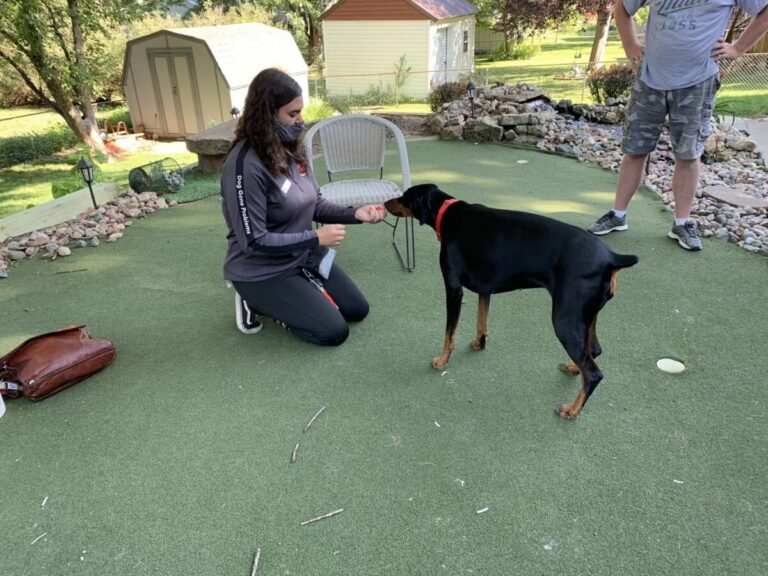
Do not wait for a perfect sit. At first, calmly looking at the stranger may be enough. Small wins build confidence. Over time, you can ask for a hand target, eye contact, or a few steps beside you.
Use a secure harness and a standard leash. Avoid retractable leashes during behavior training because they make distance harder to control. If your dog has a bite history, use professional guidance and appropriate safety equipment.

Teach an Alternative Behavior
A dog cannot bark, lunge, and perform every behavior at the same time. Teaching an alternative gives your dog a clear job.
Useful behaviors include:
• Looking at you
• Touching your hand with its nose
• Walking beside you
• Going to a mat
• Sitting calmly
• Turning away from a person
• Sniffing for treats on the ground
Start in a quiet room. Reward the behavior many times before adding a stranger as a distraction. Then increase difficulty in small steps.
For example, to teach “go to your mat,” place the mat near you and reward your dog for stepping onto it. Add a short stay. Next, practice while a family member walks around. Later, ask a calm friend to enter the room.
A cue should not become a threat. Avoid repeating “quiet” ten times while your dog continues barking. Say it once, then help your dog succeed by increasing distance or removing the trigger.

Use Desensitization and Counterconditioning
Desensitization means exposing a dog to a trigger at a low level. Counterconditioning means pairing that trigger with something positive. Together, these methods are among the most useful tools for how to stop a dog barking at strangers.
Imagine your dog reacts to a person at 30 feet. Begin at 50 or 60 feet, where your dog can remain calm. The moment your dog sees the person, offer treats. When the person disappears, the treats stop.
Repeat this process over several sessions. Only reduce the distance when your dog stays relaxed. If barking starts, calmly move farther away. This is not failure. It is information that the last step was too difficult.
A helpful training plan looks like this:
• Stage one: Watch a person from a great distance.
• Stage two: Watch while eating treats.
• Stage three: Walk past at a safe distance.
• Stage four: Stand near a calm person.
• Stage five: Practice a brief greeting, if your dog enjoys greetings.
Never force a fearful dog to approach. Forced contact can increase fear and may lead to defensive aggression. The American Veterinary Society of Animal Behavior supports reward-based methods and warns against training methods that rely on fear, pain, or intimidation.

Manage Visitors at Home
Many owners focus on how to stop a dog barking at strangers outdoors but forget about visitors inside the home. Doorbell barking can become intense because the sound predicts a person entering the dog’s space.
Before opening the door:
• Place your dog behind a baby gate or in a separate room.
• Give your dog a food puzzle or a long-lasting chew.
• Ask visitors to ignore the dog at first.
• Keep greetings calm and brief.
• Avoid reaching over the dog’s head.
Once your dog settles, you can decide whether a greeting is suitable. Some dogs should remain separated during visits. That is a safe and responsible choice, not a training failure.
Practice with a helper. Ask the person to knock softly, then wait. Reward your dog for moving to its mat or looking at you. Increase the sound and duration slowly.
A useful house rule is “no forced greetings.” Visitors should not stare, touch, hug, or lean over a nervous dog. Dogs often see these actions as threatening, even when people mean well.
What Not to Do
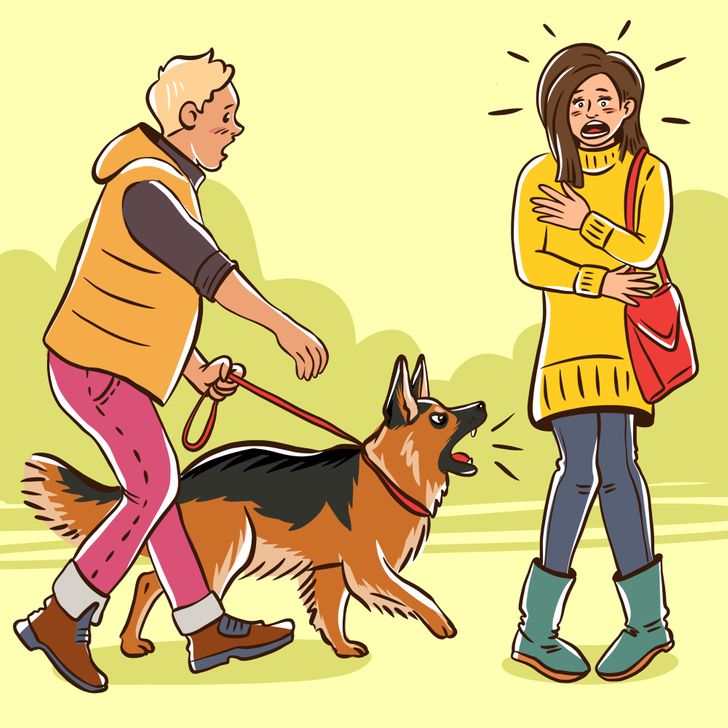
Some popular reactions can make barking worse. Yelling may add excitement or make the dog believe that danger is real. Punishment can also suppress warning signals without changing the fear behind them.
Avoid these mistakes:
• Shouting at the dog
• Hitting, kicking, or scolding
• Using shock, prong, or choke collars without expert guidance
• Forcing the dog to greet strangers
• Allowing strangers to corner the dog
• Waiting until the dog is fully over threshold
• Rewarding barking with attention or access
• Using treats to lure the dog closer than it can handle
Reward-based training does not mean allowing unwanted behavior. You can set firm limits while staying calm. Management, distance, and clear rewards often work better than confrontation.
One lesson many trainers learn early is that timing matters more than the size of the treat. A reward given after a calm glance is useful. A reward given after five minutes of frantic barking may arrive too late to teach the desired response.

Build a Daily Training Routine
Short, regular practice is more effective than one long session each week. Aim for three to five minutes at a time. Stop while your dog is still successful.
A simple weekly plan may include:
• Day one: Practice name recognition indoors.
• Day two: Teach hand targeting.
• Day three: Reward calm behavior near a window.
• Day four: Watch people from a quiet distance.
• Day five: Practice walking past one calm person.
• Day six: Repeat the easiest successful exercise.
• Day seven: Rest or use a sniffing walk.
Use small treats. Soft food is often easier to eat quickly than hard biscuits. Keep a portion of your dog’s daily food allowance for training so rewards do not cause weight gain.
Track progress by measuring behavior, not perfection. Your dog may still bark sometimes. Improvement may look like barking for five seconds instead of one minute, recovering faster, or responding to its name from a greater distance.

Meet Your Dog’s Exercise and Mental Needs
A bored or under-stimulated dog may react more strongly to strangers. Exercise can help, but physical activity is only part of the answer. A long, high-energy game may leave some dogs more aroused rather than calm.
Add activities that support relaxation and thinking:
• Sniff walks
• Food puzzles
• Scatter feeding
• Basic obedience games
• Chew items
• Scent searches
• Calm tug with clear start and stop cues
Sniffing allows dogs to gather information and may help them settle. It is not a cure for fear, but it can support a broader behavior plan.
Sleep matters, too. Puppies and young dogs often need far more rest than owners expect. An overtired dog may bark, nip, or react much like an overtired child.
Know When to Contact a Professional
Seek veterinary advice if barking starts suddenly, becomes much worse, or appears with aggression, confusion, pain, or other behavior changes. A veterinarian can check for medical causes and discuss treatment options.
A qualified behavior professional can help when:
• Your dog has bitten or tried to bite.
• Your dog cannot take food around strangers.
• Your dog reacts from a great distance.
• You cannot safely control the dog.
• Progress stops after several weeks.
• The dog shows severe anxiety or panic.
Look for a certified veterinary behaviorist or a trainer who uses reward-based methods. Ask what tools and methods they use. Be cautious of anyone who promises a guaranteed cure, claims dominance explains everything, or recommends fear and pain as the main solution.
Medication may help some dogs with serious anxiety. It does not replace training, but it can lower fear enough for learning to occur. Only a licensed veterinarian should prescribe it.
A Realistic Example
Consider a dog named Milo who barked at every person near his apartment. His family first tried telling him “no,” but the barking grew louder. They then blocked the window, used a harness, and began feeding small treats whenever Milo noticed a person from a safe distance.
At first, Milo could work only from across the parking lot. After several weeks, he could pass people on the sidewalk while checking in with his owner. He still barked when someone moved quickly toward him, so the family continued to create space rather than testing him.
The important lesson is that progress is not a straight line. A bad day does not erase learning. Stress, poor sleep, pain, weather, and a crowded place can all lower a dog’s ability to cope.
Frequently Asked Questions About How to Stop a Dog Barking at Strangers
Why does my dog bark at strangers?
Dogs may bark at strangers because of fear, excitement, territorial behavior, frustration, or limited social experience. Watch the dog’s body language and note when the barking happens to identify the likely cause.
How long does it take to stop a dog barking at strangers?
Many dogs show early improvement within a few weeks of consistent training, but lasting change can take several months. The timeline depends on the dog’s age, history, health, trigger intensity, and training environment.
Should I punish my dog for barking at strangers?
Punishment can increase fear and may hide warning signals without fixing the underlying emotion. Calm management, distance, reward-based training, and professional help are safer and more effective choices.
Should I let strangers give my dog treats?
Only if your dog is comfortable and you can control the situation. A fearful dog may feel pressured when a stranger reaches toward it, so toss treats away from the person or reward the dog yourself instead.
Can socialization stop my dog from barking at strangers?
Careful socialization can help, especially when it pairs new people with calm, positive experiences. Do not force interaction; controlled exposure at a comfortable distance is more helpful than crowded or intense encounters.
What should I do if my dog lunges at strangers?
Create distance immediately and avoid letting the dog greet people. Use secure equipment, practice emergency turns, and contact a qualified behavior professional if the dog may bite or cannot settle.
Will a bark collar stop my dog from barking at strangers?
A bark collar may interrupt noise but does not address fear, excitement, or territorial behavior. Some dogs become more anxious when punished, so behavior training and environmental management are generally safer starting points.
Conclusion
The best way to stop a dog barking at strangers is to understand the cause, prevent overwhelming situations, and reward calm choices. Use distance, teach an alternative behavior, manage windows and visitors, and practice in short sessions.
Progress may be gradual, but each calm glance is a step forward. Start today with one easy exercise, keep your dog below its reaction threshold, and seek professional help when safety or severe anxiety is involved. Share your experience with a trusted trainer or explore reputable behavior resources for continued support.

Pet Care Writer & Researcher
Daniel writes practical guides on daily care, feeding, and safety, turning complex topics into simple, actionable advice.