Why Do Dogs Bark At Squirrels: Dog Barking Explained
Why do dogs bark at squirrels? Learn the instincts behind this behavior and practical ways to reduce excessive barking on walks and at home.
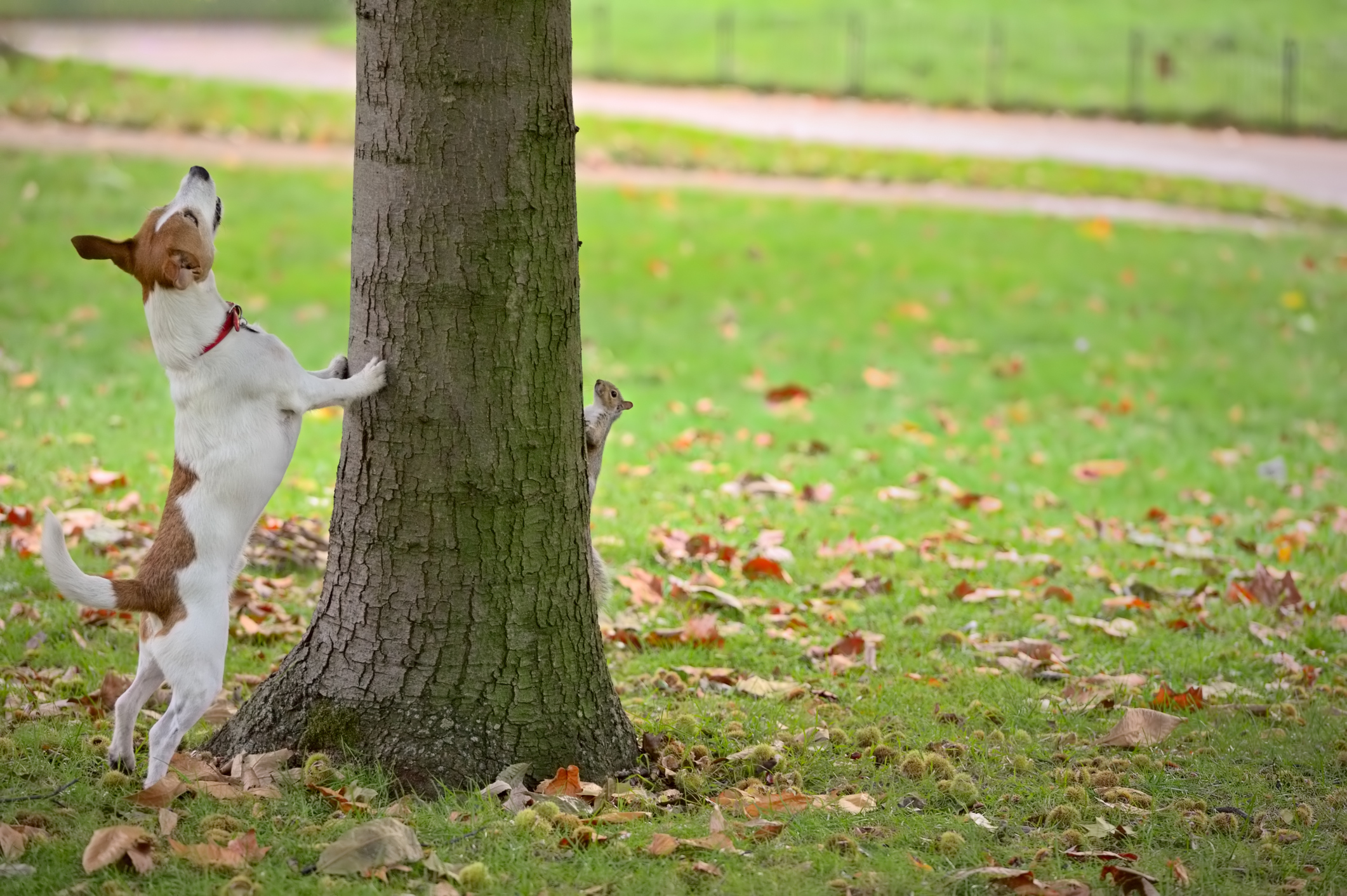
Dogs bark at squirrels because movement triggers their prey drive, excitement, alert system, and instinct to chase.
If you have ever watched your dog freeze, stare, and explode into sharp barks at a squirrel, you have seen several instincts work at once. Understanding why do dogs bark at squirrels can help you respond with calm training instead of frustration. This guide explains the behavior, what your dog may feel, when barking is normal, and how to reduce it safely.
Why Do Dogs Bark at Squirrels?
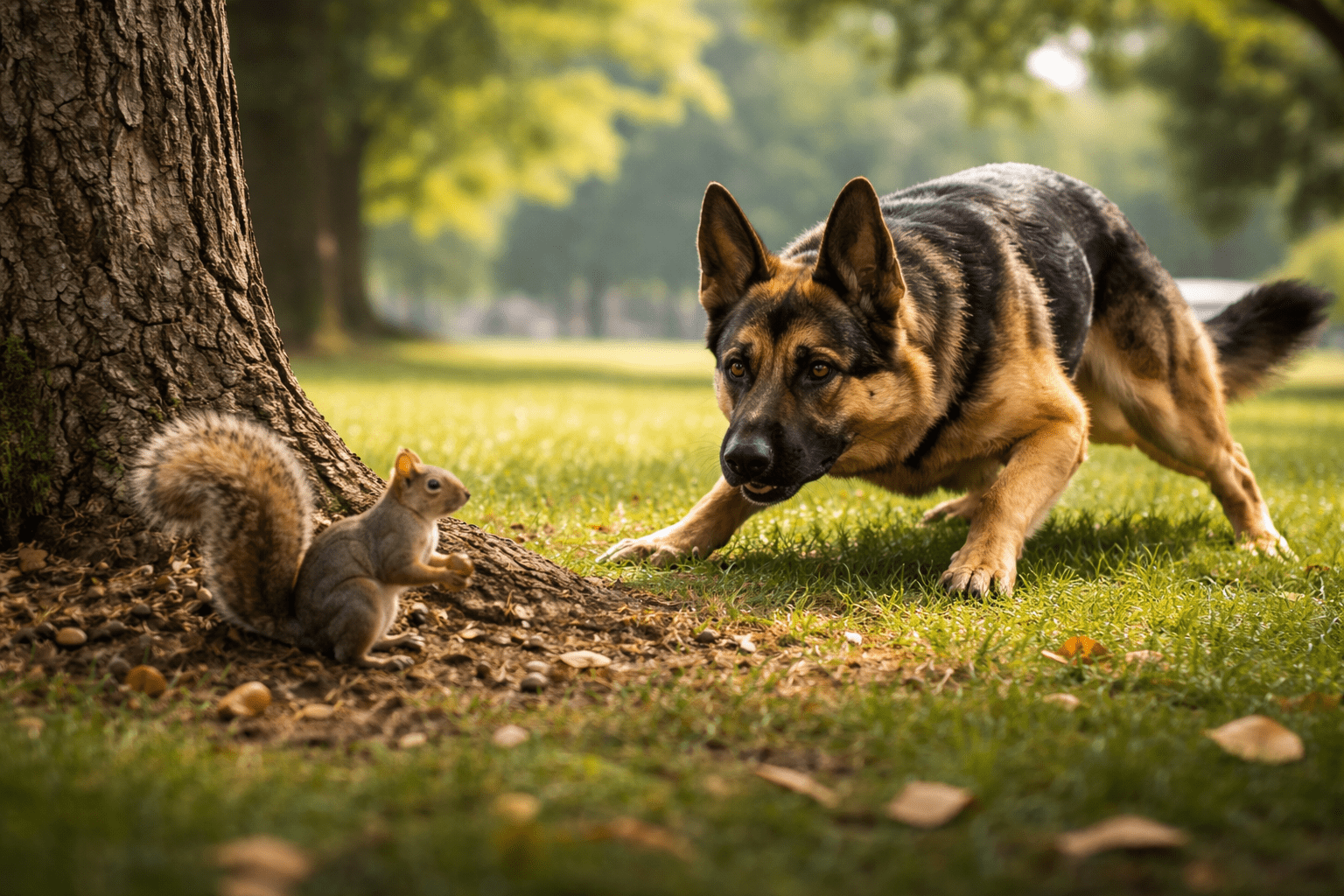
Dogs bark at squirrels for several connected reasons. A squirrel is small, fast, unpredictable, and often appears close to your dog’s home or walking path. That combination can act like a flashing alarm button.
The main reasons include:
• Prey drive: Many dogs are wired to notice and chase small, quick animals.
• Excitement: A squirrel can create a sudden rush of energy.
• Frustration: Your dog may want to chase but cannot get past a fence or leash.
• Territorial behavior: Your dog may see the yard as home ground.
• Alerting: Barking can warn you that something unusual is nearby.
• Learned behavior: If barking makes the squirrel run away, your dog may think the barking worked.
It is important to remember that barking does not always mean aggression. A dog can bark because it is excited, curious, worried, or frustrated. Your dog’s posture, facial expression, tail position, and recovery time give better clues than sound alone.
The Role of Prey Drive
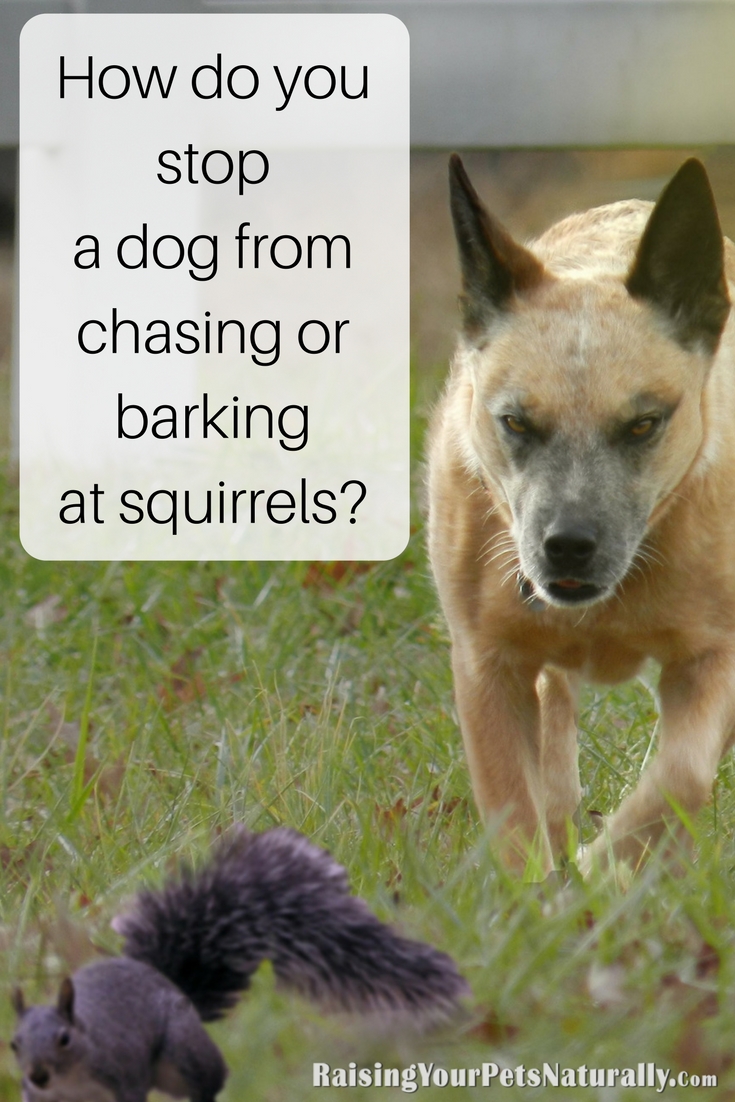
Prey drive is the natural urge to notice, follow, chase, and sometimes catch moving animals. It is stronger in some breeds, but every dog has it to some degree. Even a gentle family dog may react strongly when a squirrel darts across the grass.
Dogs often notice movement before people do. Their vision is built to detect motion, and their sense of smell adds more information. A squirrel may leave a scent trail, rustle leaves, or flick its tail before your dog even sees it.
This helps explain why do dogs bark at squirrels even when the squirrel seems harmless. Your dog is not judging the animal as a person would. The dog is responding to a fast-moving target that activates an old survival pattern.
Herding dogs may stare, stalk, or circle. Terriers may lunge and bark with intense focus. Hounds may sniff and track. Retrievers may become excited and try to chase. These breed patterns are not fixed rules, but they can affect how a dog reacts.
Prey drive is not automatically a behavior problem. The goal is not to remove every natural instinct. Instead, teach your dog to notice the squirrel and then return attention to you.

Barking From Excitement and Frustration
A squirrel can create a powerful emotional mix. Your dog may want to chase, but a leash, window, fence, or closed door blocks the path. This creates barrier frustration.
Barrier frustration happens when a dog cannot reach something it wants. The dog may bark harder, pull forward, spin, paw at the window, or bite the leash. The behavior may look aggressive, but the main feeling can be excitement mixed with helplessness.
This is another key part of why do dogs bark at squirrels. The squirrel moves freely while your dog remains trapped behind a barrier. From your dog’s view, the chase is close enough to see but impossible to complete.
Dogs can also learn that barking changes the scene. If a squirrel runs away after your dog barks, the dog may believe the bark caused the escape. In reality, the squirrel was likely going to leave anyway. Still, the lesson feels real to your dog.
You can reduce this cycle by rewarding quiet attention before the barking becomes intense. Once your dog reaches a high level of excitement, learning becomes much harder.

Territorial Barking at the Window or Yard
Some dogs bark at squirrels because they believe the animal has entered their territory. Windows, porches, and fenced yards can become important control points. Your dog may feel responsible for announcing every visitor.
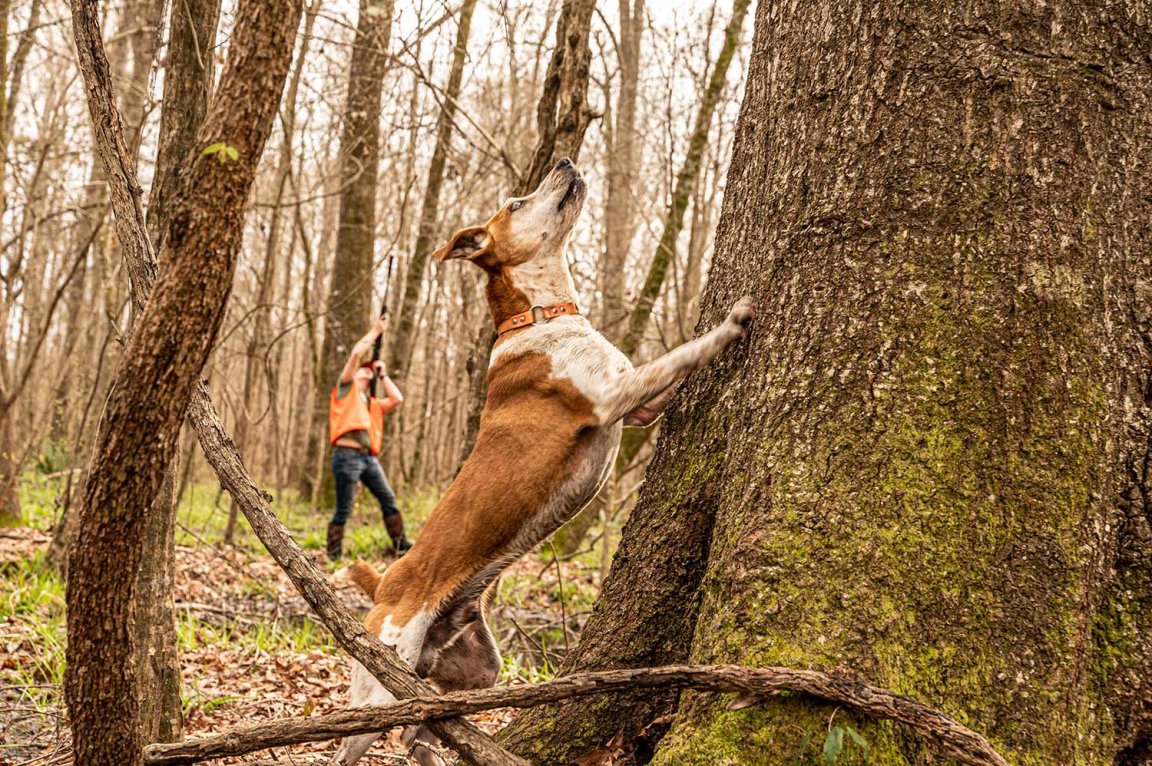
Territorial barking often includes a stiff body, forward weight, raised hackles, and a deep or repeated bark. Your dog may patrol the fence or rush from one window to another. However, body language can vary, so do not judge the emotion from barking alone.
A dog that barks at squirrels through a window may also bark at birds, delivery workers, cats, or people walking past. In these cases, the squirrel is one part of a larger pattern of visual alerting.
Blocking access to the most active windows can help. You can use curtains, privacy film, furniture placement, or a baby gate. In the yard, supervise outdoor time and call your dog away before the reaction becomes intense.
Do not punish a dog for warning you. Instead, teach a replacement behavior, such as coming to you, touching your hand, or lying on a mat. This gives your dog a job that is calmer and easier to manage.
How to Read Your Dog’s Body Language
The bark itself tells you little. Look at the entire body to understand what your dog may be feeling.
A dog that is excited but not fearful may show:
• A loose or wiggly body
• Forward ears
• Quick movements
• A wagging tail, sometimes held high
• Interest in treats after seeing the squirrel
A dog that feels worried may show:
• A low body
• Ears held back
• Lip licking or yawning
• Avoidance
• A tucked or low tail
• Difficulty taking food
A dog that may become unsafe can show:
• A stiff, still posture
• Hard staring
• A closed mouth
• Weight shifted forward
• A high, rigid tail
• Growling or snapping
These signs are not perfect labels. Tail wagging does not always mean happiness, and a growl is not proof of aggression. The best approach is to observe patterns and create distance when your dog cannot respond calmly.
This body language also explains why do dogs bark at squirrels differently from one dog to another. One dog may bark from joy, while another barks from fear or conflict.
How to Stop a Dog From Barking at Squirrels
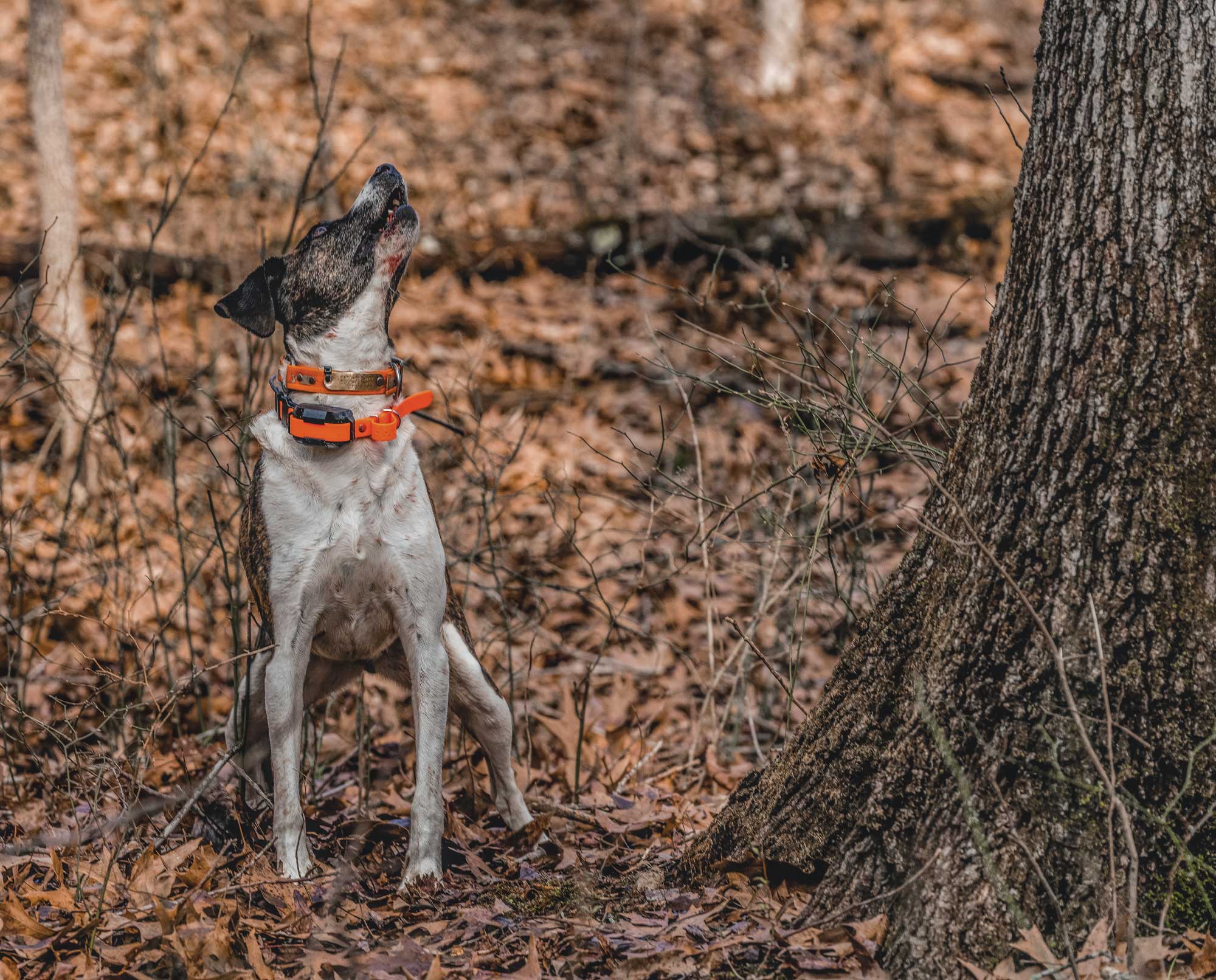
The most effective plan combines management, distance, rewards, and steady practice. Avoid waiting until your dog is lunging and barking at full volume.
1. Find your dog’s threshold
Your dog’s threshold is the distance at which the squirrel is visible but your dog can still think. At this point, your dog may look at the squirrel and still eat a treat or respond to its name.
If your dog is already barking, pulling, or ignoring food, move farther away. Training cannot work well when your dog is overwhelmed.
2. Reward calm noticing
The moment your dog sees a squirrel, say a calm marker word such as “yes.” Then give a small, tasty treat. If your dog looks back at you, reward again.
With practice, your dog learns this pattern:
-
See the squirrel.
-
Stay calm.
-
Look back at the person.
-
Receive a reward.
This technique is a form of counterconditioning. It changes the emotional response by pairing the trigger with something pleasant.
3. Teach a reliable attention cue
Practice “look,” “watch me,” or your dog’s name indoors first. Then practice outside with mild distractions. Use high-value rewards, such as small pieces of chicken or cheese, if your dog enjoys them and can eat them safely.
Do not repeat the cue many times. Say it once, help your dog succeed, and reward the response.
4. Use a cheerful emergency turn
Teach your dog to turn away with you when you say “this way.” Practice it without squirrels. Reward your dog for turning and walking with you.
On a walk, this cue lets you create space before the reaction grows. Turning away is not giving up. It is smart management.
5. Add distance and end on success
Short sessions work best. If your dog calmly notices one squirrel and then walks away, that may be enough for the day. Repeated exposure at a high stress level can make barking stronger.
The goal is not to force your dog to sit beside a squirrel. The goal is calm behavior at a safe distance.
What Not to Do When Your Dog Barks
Some common responses can make the behavior worse.
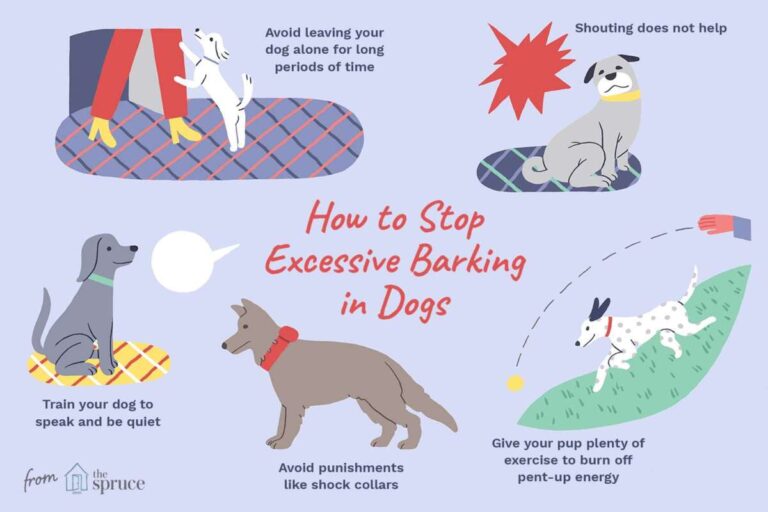
• Do not yell: Your dog may think you are barking too. Loud corrections can add stress and excitement.
• Do not jerk the leash: Sudden pressure may increase fear or frustration.
• Do not force a greeting: Your dog does not need to approach a squirrel.
• Do not allow repeated fence charging: Rehearsal strengthens the habit.
• Do not use punishment-based tools without professional guidance: Pain and fear can damage trust and may increase aggressive responses.
• Do not reward barking by opening the door or releasing your dog to chase: This can teach your dog that barking leads to access.
Some owners make the mistake of waiting for perfect silence before offering help. By then, the dog may be too upset to learn. A better plan starts early, when the squirrel is still far away.
The practical lesson from many dog behavior cases is simple: prevent the explosion whenever possible, then reward the calm choice. Good training is less like winning an argument and more like building a new habit one small step at a time.
Managing Squirrel Reactions at Home
Your home setup can reduce many barking episodes. Management does not replace training, but it prevents your dog from practicing the unwanted behavior all day.
Try these steps:
• Close curtains during the busiest squirrel hours.
• Apply frosted window film to the lower part of windows.
• Move beds away from windows that face trees or fences.
• Use a fan or soft background sound to reduce outdoor noise.
• Supervise yard time instead of leaving your dog outside alone.
• Call your dog indoors before a squirrel reaches the fence.
• Offer a food puzzle or chew after coming inside.
If squirrels visit a bird feeder, consider moving the feeder away from windows or removing spilled seed. Never use poison or unsafe traps to control wildlife around pets. Contact local wildlife professionals if squirrels are entering your home or causing property damage.
A calm indoor routine can also help. Dogs with enough sleep, exercise, sniffing time, and mental work often recover faster from exciting events. Exercise alone will not cure barking, but a balanced daily routine supports better self-control.
When Squirrel Barking May Need Professional Help
Occasional barking at squirrels is normal. Seek help if the behavior is intense, sudden, or hard to control.
Contact your veterinarian if:
• The barking began suddenly in an adult or senior dog.
• Your dog seems confused, painful, or unusually restless.
• Your dog reacts to things that are not present.
• Your dog cannot settle after the squirrel leaves.
• Your dog has injured its mouth, neck, or paws while lunging.
• Your dog has stopped eating or sleeping normally.
Pain, hearing changes, vision loss, anxiety, and age-related changes can affect behavior. A veterinarian can check for medical causes before you treat the issue as simple training.
A qualified reward-based trainer or veterinary behaviorist can help when your dog lunges, bites, redirects onto people, escapes the yard, or shows serious fear. Choose a professional who explains methods clearly and avoids guarantees. Behavior change takes time, and progress is not always perfectly steady.
The reason why do dogs bark at squirrels may seem simple, but the right solution depends on the dog’s emotion, history, health, and environment.
A Simple Training Plan for Daily Practice
Use this short plan for five to ten minutes at a time.
-
Choose a quiet outdoor area where squirrels may appear at a distance.
-
Bring small, soft treats that your dog loves.
-
Keep your dog on a secure leash or long line.
-
When your dog notices a squirrel, mark the calm look.
-
Give a treat before barking begins.
-
Invite your dog to turn toward you.
-
Walk away if your dog becomes tense or stops taking food.
-
Repeat only a few times.
-
End with an easy cue and a calm activity.
Record what happens. Note the distance, time, trigger, body language, and recovery time. This simple log can show whether your dog is improving.
For example, a dog may bark at 50 feet on Monday but remain quiet at 35 feet two weeks later. That is useful progress, even if the dog still reacts at close range.
Consistency matters more than long sessions. Everyone in the home should use the same cues and avoid encouraging chase games near squirrels.
Frequently Asked Questions About Why Do Dogs Bark at Squirrels
Why do dogs bark at squirrels even when they cannot reach them?
Dogs may bark because the squirrel activates prey drive, excitement, or frustration. A fence, window, or leash can increase the reaction because the dog wants to chase but cannot.
Are dogs aggressive when they bark at squirrels?
Not always. Many dogs bark from excitement, curiosity, alerting, or frustration rather than aggression. Look at the full body, including stiffness, facial tension, tail position, and recovery after the squirrel leaves.
Should I let my dog chase squirrels?
It is usually safer not to allow chasing. Your dog could run into traffic, become lost, injure wildlife, or develop a stronger chase habit.
How can I stop my dog from barking at squirrels in the yard?
Supervise yard time, call your dog away early, and reward calm attention. Blocking views through fences or windows can also reduce repeated practice.
Do certain dog breeds bark at squirrels more than others?
Breeds developed for hunting, chasing, or herding may show stronger reactions, but individuals vary widely. Training, socialization, health, and past experiences also shape behavior.
Why does my dog bark at squirrels through the window?
The window may act as a territorial boundary and a barrier. Your dog can see the squirrel but cannot approach it, which may create alert barking and frustration.
Can training remove my dog’s prey drive?
Training usually does not remove prey drive, and it does not need to. A realistic goal is to improve attention, impulse control, and the ability to disengage safely.
Conclusion
Dogs bark at squirrels because fast movement can trigger prey drive, excitement, territorial alerting, and frustration. The bark does not tell the whole story, so watch your dog’s body language and notice how quickly it calms down.
Use distance, rewards, management, and short training sessions. Avoid yelling or punishment, and ask a veterinarian or qualified behavior professional for help if the reaction is intense or sudden. Start with one calm glance at a squirrel, reward that choice, and build from there.
Try these steps on your next walk, and share your dog’s progress or questions in the comments.

Pet Care Writer & Researcher
Daniel writes practical guides on daily care, feeding, and safety, turning complex topics into simple, actionable advice.