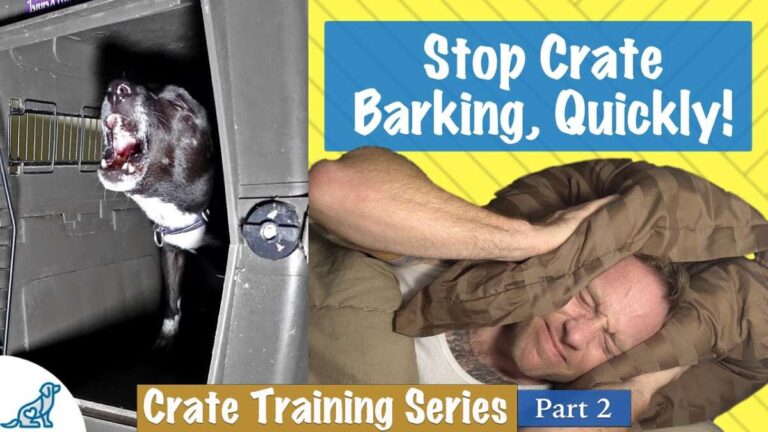
Why Do Dogs Bark Through Fences: Causes & Solutions
Why do dogs bark through fences? Learn the common causes and practical ways to reduce fence barking and help your dog stay calm.
Dogs bark through fences because barriers trigger territorial, fearful, frustrated, or highly excited reactions.
Understanding why dogs bark through fences helps you respond with patience instead of punishment. This behavior is common, but it is not always simple “bad behavior.” A dog may be guarding the yard, reacting to a passing dog, feeling trapped, or enjoying the excitement of the chase. With the right plan, you can lower the noise, improve safety, and teach calmer habits.

Why do dogs bark through fences?
Dogs bark through fences for many reasons, and more than one cause may be present at once. The fence changes how a dog sees and responds to the world. It blocks movement, limits access, and can make a passing person or animal seem more important.
The most common reasons include:
• Territorial behavior: Your dog sees the yard as part of its home area and tries to warn others away.
• Barrier frustration: Your dog wants to greet, chase, or investigate something but cannot reach it.
• Fear or worry: The fence may feel like a safety line. Barking helps create distance from a person, dog, bicycle, or vehicle.
• Social excitement: Some dogs bark because they are eager to play or greet.
• Predatory interest: Fast movement, such as a squirrel or jogger, may trigger chasing and barking.
• Learned behavior: If barking makes a person leave, the dog may learn that barking works.
• Boredom: A dog with too little exercise or mental activity may use the fence as entertainment.
This is why two dogs can bark at the same fence for very different reasons. One dog may be afraid, while another may be excited. The sound alone does not tell you the full story.

The role of territorial behavior
Territorial barking is one of the clearest answers to why do dogs bark through fences. Dogs often treat the yard as an extension of their home. When someone walks past, the dog may believe that an intruder has entered its space.
The fence can make this feeling stronger. Your dog may patrol the boundary, stare through gaps, and rush toward movement. It may bark until the person or animal disappears. To the dog, this can look like a successful defense.
However, the person usually leaves because they were already walking away. The dog does not understand that. It may think, “I barked, and the threat left.” This reward can make the habit stronger over time.
Territorial barking often includes:
• A stiff body
• A high tail or tight tail wag
• Forward weight
• Direct staring
• Repeated movement along the fence
• A deep, sharp, or steady bark
Do not assume that a dog showing territorial behavior is confident. Many dogs bark loudly because they feel unsure. A fence can give them courage while also preventing them from moving away.

Barrier frustration and fence aggression
Barrier frustration happens when a dog cannot reach something it wants. The dog may want to greet another dog, chase a cat, or investigate a stranger. The fence blocks access, so the dog becomes tense and vocal.
This helps explain why do dogs bark through fences even when they seem friendly in other settings. A dog that plays well at a dog park may still bark, lunge, or snap at a dog on the other side of a fence.
The barrier creates conflict. Your dog may feel both excited and frustrated. Its body wants to move closer, but the fence stops it. This emotional pressure can produce barking, jumping, pawing, and biting at the fence.
Barrier frustration is not the same as true aggression. Still, the behavior can become risky. A frustrated dog may redirect its bite toward another dog, a person, or even a family member who grabs its collar.
Watch for warning signs such as:
• Lunging into the fence
• Pacing back and forth
• Whining mixed with barking
• Jumping repeatedly
• Growling when a person approaches
• Inability to respond to its name
When a dog is this aroused, teaching is difficult. The first step is to create more distance and reduce visual access.

Fear, anxiety, and defensive barking
Some dogs bark through fences because they are afraid. A passing stranger, loud truck, or unfamiliar dog may feel dangerous. Barking is often an attempt to make the scary thing go away.
Fear-based barking may look aggressive, but the goal is often escape. The dog may lean back, lower its body, tuck its tail, pin its ears, or show the whites of its eyes. It may bark while trying to hide behind a person or fence post.
A dog can also develop fence-related anxiety after a frightening event. For example, another dog may have charged the fence, or a person may have teased the dog. One bad event can create a strong link between the fence and danger.
Punishment can make fear worse. Yelling, shock collars, or leash corrections may add pain to an already stressful situation. The dog may then associate the passing person or animal with both fear and punishment.
A safer approach is to:
• Increase distance from the trigger
• Block part of the dog’s view
• Reward calm behavior
• Avoid forcing greetings
• Work with a qualified positive-reinforcement trainer
If your dog has bitten, escaped, or caused injury, ask your veterinarian for a behavior referral.

Why do dogs bark through fences at other dogs?
Dogs often bark through fences at other dogs because the fence creates excitement, frustration, uncertainty, or territorial concern. The other dog may be close enough to see and smell but too far away to greet normally.
Body language gives useful clues. A loose body, curved movement, and relaxed tail may suggest social excitement. A rigid body, hard stare, raised hackles, and deep growl may suggest fear or conflict.
Some dogs also react to the other dog’s behavior. If one dog barks, the second dog may bark back. Soon, both dogs are in a cycle. Each dog hears the other as proof that something is wrong.
Fence-line arguments can become intense quickly. Even if neither dog shows aggression away from the fence, repeated practice can build a strong habit. It is best to interrupt the cycle early.
You can help by:
• Calling your dog inside before the other dog reaches the fence
• Using a visual barrier
• Moving your dog to a quiet part of the yard
• Rewarding your dog for looking at you
• Avoiding direct fence greetings
Do not let dogs “work it out” through a fence. The fence may prevent a bite, but it does not prevent stress or learning.
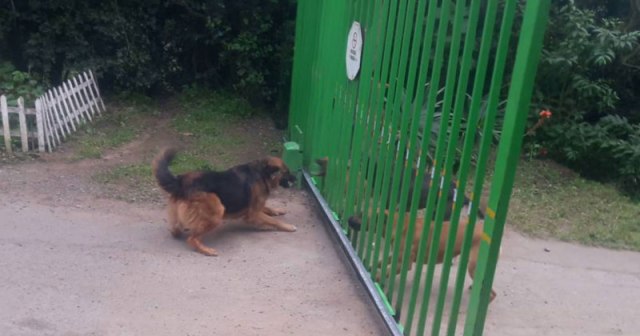
The fence itself can increase barking
Fence design can influence behavior. A chain-link or picket fence gives a dog a clear view of every person, animal, and vehicle. A solid fence blocks sight but may create surprise when something suddenly appears.
There is no perfect fence for every dog. The best option depends on your dog’s history, size, strength, and triggers.
Consider these changes:
• Add a safe visual screen to reduce constant exposure.
• Remove objects your dog can use to climb.
• Check for gaps where a nose or paw can fit.
• Keep gates locked and secure.
• Build a second barrier inside the property if needed.
• Avoid electric fencing for dogs with fear or high arousal.
A visual barrier can help, but it is not a complete treatment. If your dog hears every trigger, it may still bark. Pair fence changes with training, exercise, and supervision.
Never leave a dog outside alone for long periods when it is practicing fence barking. Repetition makes the behavior more automatic.

How to tell what your dog’s bark means
The bark matters, but the whole body matters more. Look at the dog’s posture, face, movement, and recovery time.
A dog that is excited may have:
• A loose, wiggly body
• A fast, relaxed tail wag
• Play bows
• Short pauses between barks
• Interest in treats or toys
A worried dog may show:
• A lowered body
• A tucked or low tail
• Ears held back
• Lip licking or yawning
• Avoidance
• Slow recovery after the trigger leaves
A dog that may pose a serious safety risk can show:
• A rigid posture
• A fixed stare
• Forward weight
• Repeated lunging
• Snarling
• Biting at the fence
Keep a simple behavior log. Write down the trigger, distance, time, body language, and what helped. This turns a confusing problem into a pattern you can address.
One lesson I have seen repeatedly is that owners often wait for a “big” barking episode before acting. Training works better when you notice the early signs, such as staring or stiffening, and respond before the bark begins.
How to stop a dog from barking through a fence
The goal is not to silence every bark. Some barking is normal communication. The goal is to reduce excessive barking and teach your dog a safer response.
1. Prevent repeated practice
Supervise your dog outdoors. If a trigger appears, call your dog inside or guide it to a quiet area. Prevention is not giving up. It protects the training process.
2. Reduce visual triggers
Use a fence screen, plants, or a second barrier. Make sure all materials are secure and do not contain toxic plants or sharp edges.
3. Teach a reliable recall
Practice “come” indoors first. Reward your dog with small, tasty treats. Then practice in a quiet yard before adding distractions.
4. Teach a calm replacement behavior
Train your dog to touch your hand, look at you, go to a mat, or walk indoors. Reward the behavior before your dog becomes highly excited.
5. Use counterconditioning
When your dog sees a trigger at a safe distance, give a treat. When the trigger disappears, stop the treats. Over time, the trigger predicts something good.
6. Keep sessions short
Practice for a few minutes at a time. End while your dog is still calm. Long sessions can cause emotional overload.
7. Meet your dog’s daily needs
Provide walks, sniffing time, food puzzles, training games, and social contact that suits your dog. Exercise alone will not fix fence barking, but a fulfilled dog often learns more easily.
Avoid yelling “quiet” from across the yard. Your dog may hear it as more barking. Avoid punishment tools unless a veterinary behavior professional specifically recommends a plan and explains the risks.
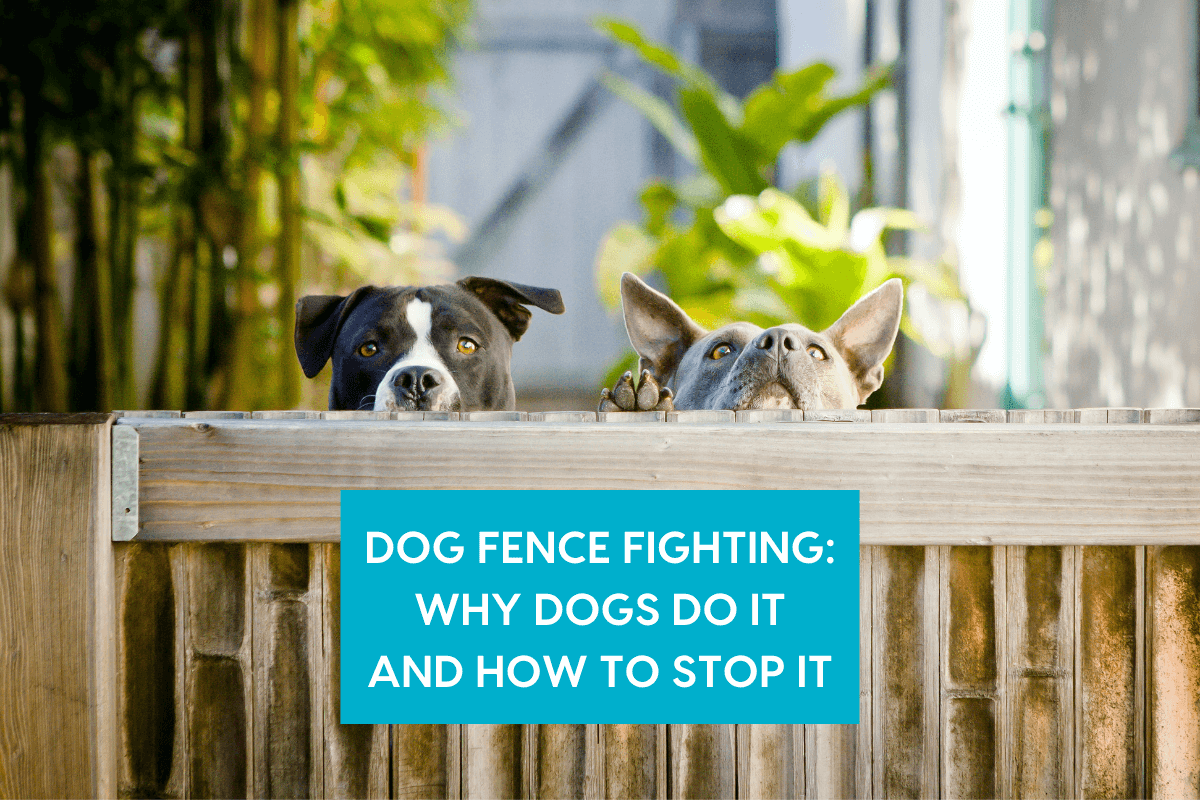
A practical training example
Suppose your dog barks at people walking past the front fence. Start at a distance where your dog notices the person but can still eat a treat.
The moment your dog looks at the person, say “yes” and offer food. When the person passes, the treats stop. Repeat this many times over several days.
If your dog barks, lunges, or refuses food, you are too close or the session is too hard. Move farther away. Training should feel like a gentle conversation, not a battle.
Over time, your dog may see a person, look back at you, and wait for a reward. That is the behavior you want. Progress may be slow, especially if the barking has continued for months or years.
A common mistake is rewarding the dog only after it runs inside. That can help, but it does not teach calm behavior near the fence. Reward calm looking, turning away, and responding to your voice.
When professional help is needed
Contact a veterinarian or qualified behavior professional if:
• Your dog has bitten a person or animal.
• Your dog breaks through fences or gates.
• Your dog redirects aggression toward you.
• Your dog cannot eat or respond near the trigger.
• The behavior began suddenly.
• Your dog shows signs of pain, confusion, or severe anxiety.
Sudden behavior changes can have medical causes. Pain, hearing loss, vision changes, and neurological problems may affect how a dog reacts.
Look for professionals with recognized education in animal behavior and humane training methods. Ask what tools they use, how they manage safety, and how they measure progress.
Medication may help some dogs with severe anxiety, but it should come from a veterinarian. Medication is usually most useful when paired with behavior change work.
Mistakes to avoid with fence barking
Many well-meaning owners make the problem worse without realizing it. Avoid these common errors:
• Leaving the dog outside to “get used to it”: Constant exposure may increase stress.
• Shouting from the house: Your dog may think you are joining the alarm.
• Using harsh punishment: Fear and frustration can grow.
• Allowing fence fights: Repeated conflict strengthens the habit.
• Rewarding frantic behavior: Opening the gate during barking may teach the dog that barking controls access.
• Expecting instant results: Emotional habits need time and steady practice.
• Ignoring safety: A fence is not a substitute for supervision.
The best plan is calm, consistent, and realistic. Think of the behavior like a well-worn path. Each calm choice helps create a new path, but it takes repeated steps.
Frequently Asked Questions About Why Do Dogs Bark Through Fences
Why do dogs bark through fences at people?
Dogs may bark at people because they are guarding their territory, feeling afraid, or reacting to movement. The behavior can become stronger if the person keeps walking away after the dog barks.
Is barking through a fence always aggressive?
No. Barking may come from excitement, play, fear, frustration, or territorial behavior. Read the dog’s full body language instead of judging the bark alone.
Will a privacy fence stop my dog from barking?
A privacy fence may reduce barking by blocking visual triggers, but it will not solve every cause. Dogs can still react to sounds, smells, and movement beyond the fence.
Should I punish my dog for barking through a fence?
Harsh punishment can increase fear and arousal, especially when the dog feels threatened. Use distance, visual barriers, rewards, and professional guidance instead.
How long does it take to stop fence barking?
The time varies with the dog’s age, history, health, and trigger. Small improvements may appear within weeks, but long-term habits often need months of steady training.
Can more exercise stop fence barking?
Exercise can reduce boredom and excess energy, but it is not a complete solution. Your dog also needs supervision, mental activity, trigger management, and reward-based training.
Conclusion
Why do dogs bark through fences? The answer may involve territory, fear, excitement, barrier frustration, boredom, or learned behavior. The right solution begins with observing your dog’s body language and identifying the trigger.
Reduce fence-line practice, block dangerous visual access, reward calm choices, and teach your dog what to do instead. Avoid yelling and harsh punishment, and seek professional help when safety or severe anxiety is involved.
Start with one small change today, such as supervising yard time or rewarding your dog for turning away from the fence. For more practical dog behavior guidance, explore trusted training resources and share your experience with other dog owners.

Pet Care Writer & Researcher
Daniel writes practical guides on daily care, feeding, and safety, turning complex topics into simple, actionable advice.