What Is The Best Bedding For Outside Dogs: Cozy Guide
What is the best bedding for outside dogs? Find cozy, weather-resistant options to keep your pet warm, dry, and comfortable in every season.
The best bedding for outside dogs is thick, dry, washable, and raised off cold, wet ground.
Choosing the best bedding for outside dogs takes more than picking a soft blanket. Outdoor bedding must manage moisture, block cold air, resist chewing, and stay clean through rain, mud, snow, and daily use. The right setup also depends on your dog’s coat, age, health, shelter, and local climate. This guide explains the safest materials, common mistakes, seasonal changes, and simple ways to make an outdoor sleeping area warmer and more comfortable.
What is the best bedding for outside dogs?
For most healthy dogs, the best bedding for outside dogs is a raised, weather-resistant dog bed with a washable cover and a thick layer of insulation. A durable outdoor cot, insulated pad, or waterproof mattress works well when placed inside a dry, well-ventilated shelter.
In very cold or wet areas, clean straw can be a useful bedding layer. Straw traps warm air and dries faster than many cloth blankets. However, straw should be dry, free of mold, and replaced often.
The best choice usually includes three parts:
• A raised base that keeps your dog away from cold or wet ground
• A thick sleeping layer that supports the body and holds warmth
• A waterproof or water-resistant cover that can be washed often
A soft bed on a damp floor can become cold and unsafe. Think of bedding as a winter coat for the ground. It must create a barrier between your dog and the weather.
Why raised bedding matters
Ground contact pulls heat away from the body. This is called conductive heat loss. Concrete, frozen soil, and wet grass can make a dog cold even when the air does not seem extreme.
A raised cot or platform allows air to move under the bed. It also keeps rainwater, mud, insects, and melting snow away from the sleeping surface. Even a few inches of lift can make a noticeable difference.
Why dryness matters more than softness
Moist bedding loses much of its insulating value. Wet fabric also encourages odor, mold, bacteria, and skin problems. A dry straw bed may protect a dog from cold better than a thick but damp blanket.
The best bedding for outside dogs should always be checked by hand. If it feels wet, clammy, or cold, remove it and replace it at once.

Best types of outdoor dog bedding
Different bedding materials work for different dogs and climates. No single product is perfect for every yard, season, or shelter.
Outdoor dog cots
An elevated dog cot is one of the best choices for outdoor use. It has a strong frame and a tight fabric surface that lifts the dog away from the ground.
Benefits include:
• Good air flow underneath
• Easy cleaning with a hose
• Less contact with mud and insects
• Strong support for many adult dogs
• Lower risk of water soaking into the sleeping surface
A cot alone may not provide enough warmth in winter. Add a fitted outdoor pad or insulated cover when temperatures drop. Make sure the added pad cannot bunch up or trap water.
Insulated outdoor dog beds
An insulated outdoor bed often has a foam core, a waterproof shell, or several layers designed for cold weather. These beds can provide good support and warmth when kept under a roof.
Look for:
• A sealed or water-resistant bottom
• A cover that comes off for washing
• Dense foam that does not flatten quickly
• Strong stitching and chew-resistant fabric
• A size that lets your dog curl up and stretch out
Memory foam can support older dogs, but it should stay dry. If rain can reach the bed, choose a product made for outdoor use rather than a regular indoor memory foam mattress.
Straw bedding
Clean straw is a practical choice for many outdoor dog houses. It is light, affordable, and holds pockets of warm air. Dogs can move it around and make a nest.
Use straw instead of hay. Hay contains more moisture and can spoil or grow mold. Straw should be golden, dry, and free from a musty smell.
Replace straw when it becomes:
• Damp or compressed
• Dirty with urine or feces
• Moldy or dusty
• Full of pests
Some dogs may chew or eat straw. A small amount may pass without trouble, but large amounts can cause digestive problems. Watch your dog during the first few days.
Fleece blankets
Fleece is warm and soft, but it is not always the best bedding for outside dogs. It can absorb water, freeze when wet, and become tangled around a dog’s legs.
Fleece can work in a covered, dry kennel during mild weather. It is a poor choice when rain, snow, or standing water can reach it. Wash it often and remove it if your dog chews fabric.
Rubber or waterproof mats
Rubber mats provide a dry barrier over concrete, wood, or packed soil. They are easy to rinse and can reduce pressure on a dog’s joints.
A rubber mat is not a complete bed. It does not trap much heat by itself. Pair it with a thick pad, cot, or clean straw layer.

How to choose the best bedding for outside dogs
The best bedding for outside dogs depends on more than the product label. Check the whole sleeping area before you buy anything.
Consider your dog’s coat and body type
A thick-coated dog may tolerate cool weather better than a short-haired dog. However, thick fur does not make a dog safe in freezing rain, strong wind, or extreme cold.
Small dogs, lean dogs, puppies, senior dogs, and dogs with health problems lose heat faster. Hairless and short-coated breeds need extra protection. A dog with arthritis may also need firm, supportive foam rather than a thin blanket.
Consider the climate
Your local weather should guide your choice.
In hot climates:
• Choose a raised, breathable cot
• Avoid thick foam in direct sun
• Provide shade and fresh water
• Use light bedding that does not trap too much heat
In rainy climates:
• Use a waterproof cover
• Keep the bed under a roof
• Raise it above the floor
• Check for hidden dampness each day
In cold climates:
• Use an insulated shelter with a small doorway
• Add dry straw or a winter-rated pad
• Block wind without sealing off ventilation
• Bring the dog indoors during dangerous weather
In snowy climates, brush snow from the shelter and check that the entrance does not freeze shut. Snow can melt under a dog and soak bedding from below.
Consider your dog’s behavior
A dog that digs, chews, or scratches needs tougher bedding. Loose blankets may not last long and can become a choking or swallowing hazard.
For destructive chewers, try:
• A heavy-duty elevated cot
• A fitted, chew-resistant cover
• A thick rubber mat beneath the bed
• Closely monitored straw in a secure dog house
Avoid loose strings, exposed zippers, sharp hardware, and torn foam. Inspect bedding every day for damage.
Consider the shelter itself
Even the best bedding for outside dogs cannot fix an unsafe shelter. The dog house should block wind and rain while still allowing airflow.
The shelter should:
• Have a solid, dry floor
• Sit above areas that flood
• Face away from strong prevailing winds
• Have enough room to turn and lie down
• Avoid being so large that body heat escapes quickly
The doorway should allow easy entry but not be oversized. A flexible flap can reduce drafts, though some dogs dislike walking through it.

Outdoor bedding materials to avoid
Some materials look comfortable but perform poorly outside. Others may create health or safety problems.
Wet towels and cotton blankets
Cotton absorbs water quickly and dries slowly. In cold weather, a wet towel can act like a cold sponge against the body.
Do not leave cotton bedding outside during rain or snow unless it sits inside a truly dry, protected shelter. Replace it immediately if it becomes damp.
Hay
Hay is made for feeding animals. It often contains more moisture than straw and can become moldy. It may also attract insects and create a dusty sleeping area.
Use clean straw for outdoor insulation instead. If straw is not available, use a purpose-built outdoor bed.
Loose foam
Dogs that chew can tear foam into small pieces. Swallowed foam may cause choking or an intestinal blockage. Use sealed foam beds with strong covers, and remove them if your dog damages the fabric.
Cedar and pine shavings
Wood shavings can create dust and may irritate the eyes, skin, or airways. Some dogs also eat them. Aromatic oils in certain wood products may cause problems, especially in poorly ventilated spaces.
If you choose any wood-based bedding, use only a product clearly labeled for animal use and ask your veterinarian about safety. For many dogs, a clean outdoor bed or straw is a simpler option.
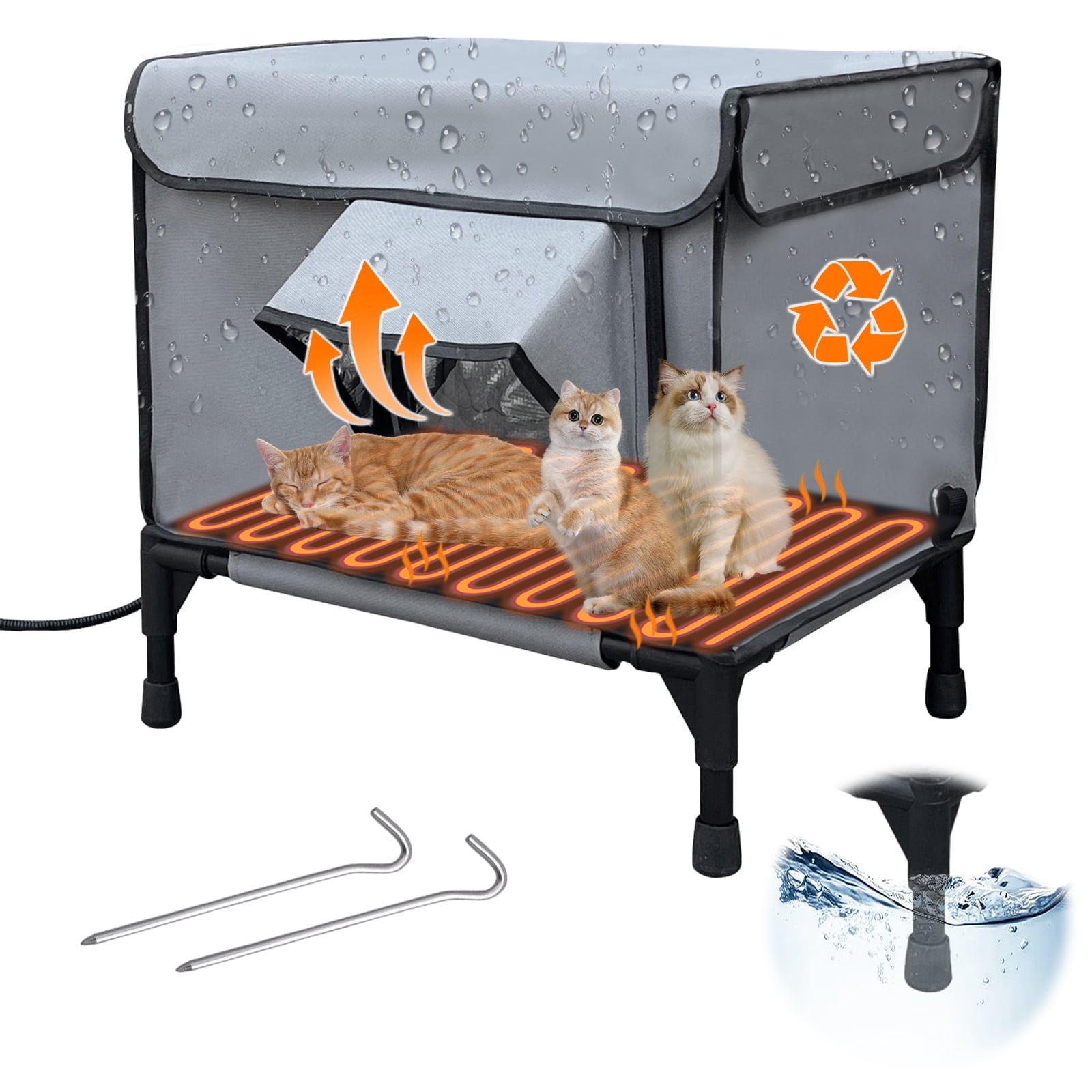
Electric heating pads
Human heating pads can burn dogs, chew through cords, or create fire risks. Never use an indoor heating pad outside without specific veterinary and manufacturer guidance.
A properly insulated shelter is safer. For elderly or medically fragile dogs, indoor warmth is usually the better solution.

How to make an outdoor dog bed warmer
The best bedding for outside dogs works best when the entire shelter is planned as a system. Start with the floor, then improve the walls, roof, and entrance.
Follow these steps:
-
Place the shelter on a raised platform or dry surface.
-
Add an elevated cot or waterproof mat.
-
Place a thick outdoor pad or clean straw above the base.
-
Check that the bedding stays several inches away from damp walls.
-
Add a wind flap if your dog can use it safely.
-
Inspect the shelter each morning for moisture, damage, and waste.
Do not pack the shelter with too much bedding. Your dog needs enough room to move and turn. Overfilled bedding can block airflow and make cleaning difficult.
A useful test is to kneel inside the shelter for a few minutes. Look for drafts, wet spots, sharp edges, and poor air flow. If the space feels damp or stuffy to you, it is not ready for your dog.
How much straw should you use?
Use enough straw to create a thick, loose nest. The exact amount depends on the size of the shelter and dog, but the bedding should not form a thin, flat layer over the floor.
Replace part of the straw when it becomes dirty. Replace all of it when it smells bad, feels wet, or loses its loft. Shake out the shelter and clean the floor before adding fresh material.
Should blankets go over straw?
A blanket may provide comfort in dry weather, but it can reduce the benefits of straw if it becomes wet. It can also trap moisture underneath.
If you use a blanket, choose a durable, washable one and check it often. Keep the main insulation dry and loose below it.
Cleaning and maintaining outdoor dog bedding
Clean bedding protects more than comfort. It helps reduce skin irritation, parasites, bad odors, and the spread of germs.
Create a simple routine:
• Check the bedding every day
• Remove feces and wet spots at once
• Wash removable covers as directed
• Dry every item fully before returning it
• Clean the shelter floor on a regular schedule
• Replace bedding before it looks heavily soiled
Use a mild, pet-safe detergent. Strong scents can irritate some dogs, and residue may bother sensitive skin. Never mix cleaning chemicals.
Wash your hands after handling dirty bedding. This is especially important if the dog has diarrhea, parasites, or a skin infection.
Watch your dog for signs of a bedding-related problem, such as:
• Red skin or bald patches
• Constant licking or scratching
• Sneezing or coughing near the bed
• Vomiting after chewing bedding
• Loose stool or a swollen belly
Contact a veterinarian if these signs continue or seem severe. Bedding can contribute to a problem, but it may not be the only cause.

Signs your outdoor dog is too cold or too hot
Bedding helps, but it cannot make dangerous weather safe. Dogs can develop hypothermia or heat illness while outdoors.
Signs of cold stress may include:
• Shivering
• Curling tightly and refusing to move
• Weakness or unusual sleepiness
• Pale or cool skin
• Slow breathing
Signs of heat stress may include:
• Heavy panting
• Excessive drooling
• Weakness or confusion
• Vomiting or diarrhea
• Collapse
Move the dog to a safe, temperature-controlled space and contact a veterinarian if you see serious signs. Heat stroke is an emergency.
There is no single temperature that is safe for every dog. Breed, age, coat, body weight, wind, humidity, and health all matter. Veterinary groups commonly advise extra caution with puppies, older dogs, short-haired dogs, and dogs with medical conditions.
When weather becomes severe, the safest bedding for outside dogs is indoor bedding in a safe indoor room. A dog house is not a replacement for protection during extreme heat, cold, storms, or freezing rain.
Common mistakes to avoid
Small mistakes can make a good bed unsafe. These are some of the most common problems seen with outdoor sleeping areas.
Using a soft indoor bed outside
Indoor beds often soak up rain and hold moisture. Choose a bed designed for outdoor conditions, or keep the indoor bed inside a dry shelter.
Placing bedding directly on concrete
Concrete becomes very cold and can also hold dampness. Raise the bed or place a thick insulating layer between the dog and the slab.
Ignoring ventilation
A sealed dog house may feel warm at first, but poor airflow creates condensation. Moisture can collect on walls and bedding.
Choosing the wrong size
A shelter that is too large may not hold body heat well. One that is too small can force the dog to sleep in a cramped position.
Waiting until bedding looks dirty
Bedding can be damp or contaminated before it looks bad. Daily checks are more reliable than appearance alone.
Leaving a damaged bed in place
Torn fabric, exposed foam, and broken fasteners can cause choking or intestinal injury. Remove damaged bedding right away.
A practical outdoor bedding setup
For a medium-sized adult dog in a cool, wet climate, a strong setup might include:
• A raised dog house on a stable platform
• A weather-resistant elevated cot
• A removable insulated pad
• A small amount of clean, dry straw around the sleeping area
• A roof that prevents rain from reaching the entrance
• A washable cover stored indoors between uses
For a short-haired dog or senior dog, add more insulation and monitor body temperature and comfort closely. For a dog that chews, skip loose fabric and use a secure, chew-resistant bed under supervision.
A useful lesson from real-world kennel care is that simple systems often work best. A bed that dries fast and can be cleaned in minutes is more useful than a plush bed that stays wet for days.
How often should you replace outdoor dog bedding?
Replace bedding when it becomes wet, moldy, flattened, torn, or strongly soiled. Straw may need replacement every few days in wet weather, while a durable outdoor bed may last for years if the cover stays intact.
Check the sleeping area more often during rain, snow, heat waves, and shedding season. Your dog’s habits also matter. A dog that tracks mud or has accidents will need more frequent cleaning.
Do not judge bedding only by its age. A new bed can be unsafe if it is wet, damaged, or poorly placed. An older bed can remain useful if it is clean, dry, supportive, and free from damage.
Frequently Asked Questions About the Best Bedding for Outside Dogs
What is the best bedding for outside dogs in winter?
Clean, dry straw inside a raised, insulated shelter is a strong winter option for many healthy dogs. You can also use a weather-rated insulated bed, but bring your dog indoors during extreme cold or dangerous weather.
Is straw or hay better for an outdoor dog bed?
Straw is usually better because it is drier and less likely to spoil than hay. Use straw that is clean, dry, and free from mold, then replace it when it becomes damp or dirty.
Are blankets safe for dogs sleeping outside?
Blankets can be safe in a dry, protected shelter, but they become risky when wet. Wet fabric can chill a dog, so inspect blankets often and remove them at the first sign of dampness or damage.
Should an outdoor dog bed be raised off the ground?
Yes, raising the bed helps reduce contact with cold, wet ground and improves air flow. A raised cot, platform, or thick insulating base can make the sleeping area much more comfortable.
Can dogs sleep outside during freezing temperatures?
Some healthy, acclimated dogs may handle cool weather with proper shelter, but freezing temperatures can still be dangerous. Puppies, seniors, small dogs, short-haired breeds, and sick dogs should generally sleep indoors when conditions are very cold.
How do I keep an outdoor dog bed dry?
Place it inside a waterproof shelter, raise it above the ground, and use a water-resistant cover. Check the bed daily and dry or replace any bedding that feels damp.
Is memory foam good for outdoor dogs?
Memory foam can support joints and comfort older dogs, but it must stay dry and have a durable outdoor cover. It is not a good choice if rain or flooding can reach the bed.
How often should I clean an outdoor dog bed?
Remove waste and wet spots daily, then wash covers and clean the shelter on a regular schedule. Clean more often if your dog is muddy, has allergies, or has accidents.
Conclusion
The best bedding for outside dogs is dry, supportive, washable, and suited to the weather. A raised cot with an outdoor pad works well for many dogs, while clean straw can add warmth inside a dry shelter. Avoid wet blankets, moldy materials, loose foam, and bedding that your dog can easily swallow.
Check the bed every day, improve the shelter when needed, and bring your dog indoors during extreme weather. A few simple changes can turn a cold outdoor space into a safer rest area. Choose the bedding carefully, watch your dog’s comfort, and explore more trusted pet-care resources or share your setup with other dog owners.

Pet Care Writer & Researcher
Daniel writes practical guides on daily care, feeding, and safety, turning complex topics into simple, actionable advice.